

A proper Hubei cuisine guide has to start with a correction. Most foreign visitors who “eat Hubei food” have actually only eaten Wuhan food — the hot dry noodles and the duck neck stalls of the capital. But Hubei is a whole province wrapping the middle Yangtze, and its cooking, often called Chu cuisine after the ancient Chu state, is far broader than one city’s street snacks. I have eaten my way from the river ports of Jingzhou to the mountain kitchens of Enshi, and the through-line is water: fish from the Yangtze and its lakes, lotus from the wetlands, and a style that is savory, gentle and built for rice. This guide covers the province; for the capital alone, our Wuhan food guide is the city-level companion.
Chu cuisine dishes to try
The Chu cuisine dishes to try span freshwater fish, pork and preserved vegetables. The flavor profile leans umami and mildly sweet, with steaming and braising as the signature techniques rather than the heavy frying of some neighbors. You will meet steamed fish, clay-pot soups, and the “three steams” method where meat, fish and vegetables are separately steamed with rice flour. Unlike the numbing heat of Sichuan or the vinegar tang of Shanxi, Hubei food is comforting and approachable — a good entry point for travelers who find other regional cuisines too aggressive. For context on where Chu cooking sits among China’s traditions, our Chinese food guide to the eight cuisines places it in the broader map, and it is worth a read before you start ordering so you can tell Chu from, say, Hunan on the next table.
Wuchang fish steamed recipe restaurant
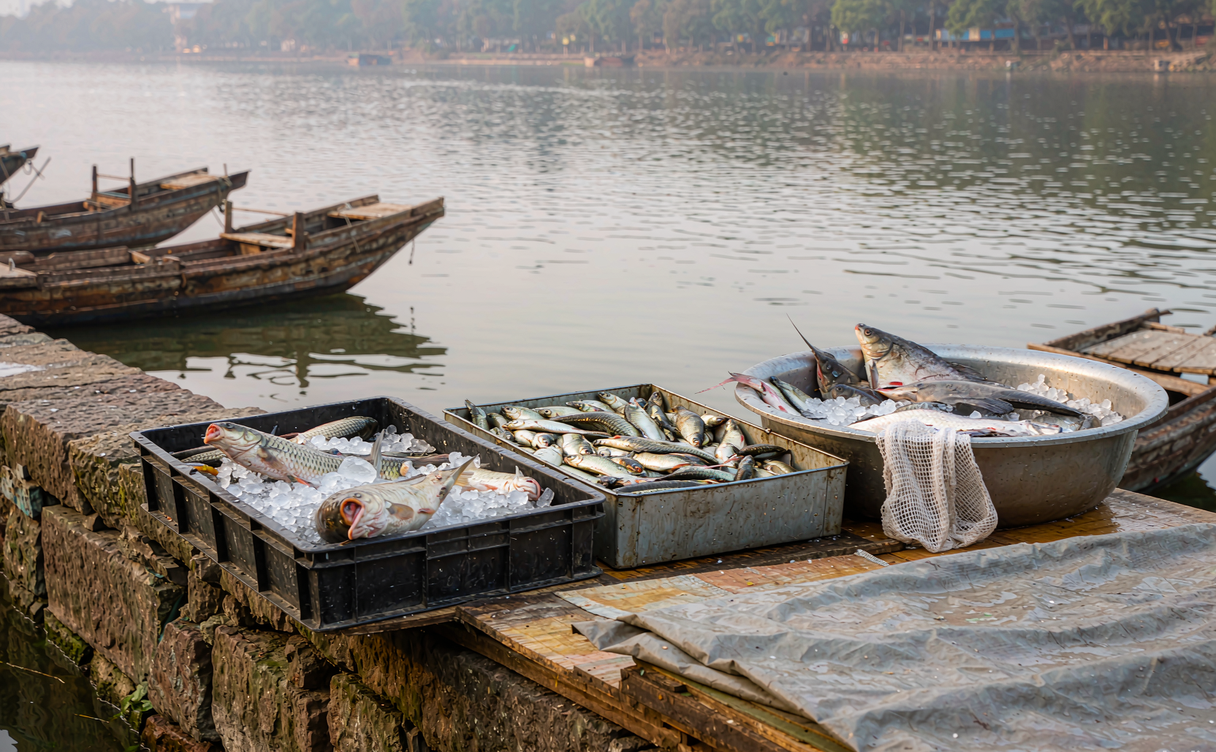
The dish every visitor should order first is Wuchang fish — a flat freshwater bream from the Yangtze near Wuhan, steamed whole with scallion, ginger and a light soy dressing. A Wuchang fish steamed recipe restaurant worth its name will serve it intact, bones and all, because the delicate flesh is the point. I still remember a lunch in a riverside restaurant where the fish arrived pearlescent and flaky, finished tableside with hot oil over the scallions. Prices run about ¥68–¥128 CNY for a whole fish depending on size and the restaurant’s standing. Order it steamed, not braised, the first time so you taste the clean river flavor. The dish is so tied to the province that it appears on nearly every festive table, and it anchors the Wuhan food guide as a must-order for anyone passing through the capital.
Hubei lotus root rib soup
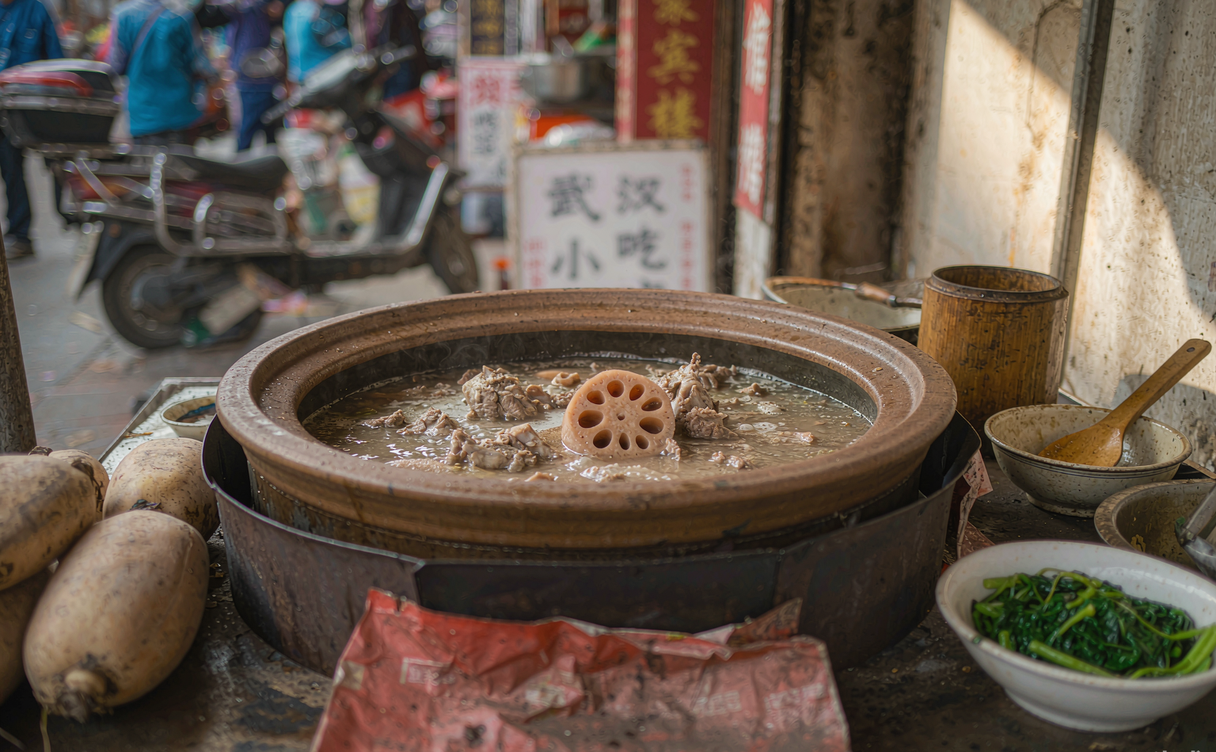
If there is one home dish that defines Hubei, it is the Hubei lotus root rib soup — a slow-simmered clay-pot broth of pork ribs and the region’s famous pink lotus root, which breaks down into a starchy, almost creamy texture quite different from the crunchy lotus you may know elsewhere. I have watched aunts in Wuhan kitchens keep it on a low flame for three hours, and the result is the ultimate cold-weather comfort bowl. A bowl in a casual restaurant costs around ¥18–¥35 CNY; a refined version in a banquet house more. The lotus root (ou) of Hubei is prized across China precisely because of this soft, floury quality, and the soup is the dish I recommend to travelers with a sensitive stomach — gentle, warm and restorative after a long train ride from the north.
Mianyang three steamed dishes
Moving downriver to the Jianghan plain, the Mianyang three steamed dishes (Mianyang san zheng) are a local classic: typically steamed pork with rice flour, steamed fish, and steamed vegetables or chicken, each cooked in its own bamboo basket. The method keeps the ingredients moist and lets the natural flavors speak. I tried a version in a small Mianyang restaurant where the pork ribs were coated in a fragrant rice-flour crust and the lotus-root slices steamed alongside — simple, hearty, and deeply satisfying with a bowl of rice. It is a humble dish with a long local pedigree, and it shows the steaming technique that runs through the whole province. If you only remember one cooking word from Hubei, make it “zheng” — steamed — because it appears on menus from the capital to the highlands.
Beyond Wuhan: Jingzhou, Enshi and Xiangyang
To really understand the province you have to leave the capital. Jingzhou, the old Chu capital on the Yangtze, is famous for fish cake (yu gao) — a steamed loaf of minced fish, pork fat and egg white that is sliced and stirred into soups or braised, springy and mild. I ate a version in a Jingzhou market stall that was nothing like the rubbery imitation you find frozen elsewhere; the Jingzhou travel guide points you to the right morning markets. Further west, the Enshi Tujia highlands bring smoke-cured pork (larou), sour-leaf hot pots and buckwheat noodles — a mountain cuisine shaped by the Tujia people and cooler climate. Up north, Xiangyang is home to a beef-noodle culture closer to the wheat-belt north, a reminder that Hubei’s cuisine shifts with its geography rather than staying one fixed thing.
Where to eat Hubei food
So where to eat Hubei food as a visitor? In Wuhan, the breakfast culture (zaocan) is the easiest door in — though for the noodle specifics, our Wuhan hot dry noodles guide is the focused read. For proper Chu banquet cooking, look for restaurants branded “Chu cuisine” or “Hubei cai” rather than generic Chinese spots; the better ones will list Wuchang fish, lotus root soup and steamed dishes prominently. Outside the capital, eat at the local morning markets and the busiest mid-priced restaurants — turnover means freshness. I budget about ¥60–¥120 CNY per person for a satisfying multi-dish meal, and ¥150–¥250 for a banquet-style dinner with fish and soup. A Wuhan travel guide helps you navigate the city’s districts once you are there, and it pairs naturally with this province-level view.
A sample Hubei meal to order
If you sit down at a Chu-cuisine restaurant and don’t know where to start, here is the spread I steer newcomers toward: one steamed Wuchang fish as the centerpiece, a clay pot of lotus root and rib soup for the table, a plate of Mianyang three steams for texture, a cold smashed-cucumber or preserved-vegetable side, and a simple greens stir-fry to cut the richness. Order rice by the bowl, and finish with a sweet steamed lotus seed or a bowl of glutinous rice wine if the kitchen offers it. That order feeds two to three people for roughly ¥180–¥320 CNY in a mid-range house, and it hits every technique — steam, braise, clay-pot — that defines the province. I have watched first-timers who ordered this way leave understanding Hubei far better than those who grabbed random dishes from photos on the wall.
A note on season and pairing
Hubei eating follows the water calendar: fish is best in the cooler months when the rivers run clear, lotus root soups peak in autumn and winter, and the steamed dishes work year-round. Pair the food with the province’s easy rice liquor or a cold local beer, and you have a meal that explains the place better than any museum. For the scholarly background on the tradition, the Hubei cuisine entry on Wikipedia is a reliable overview, and it lists the classic dishes without the tourism gloss.