

The first time I sent clients to Shizuishan (石嘴山) I got it wrong. I booked them into the old riverside district, and they spent two days commuting past slag heaps to reach a lake that turned out to be 50 kilometres the other way. Northern Ningxia rewards people who understand its layout, and punishes people who don’t. Shizuishan is a coal city stretched along the Yellow River at the northern tip of the Helan Mountains, with the Ulan Buh sands pressing in from the north and one of China’s strangest landscapes — a reed-fringed lake sitting directly against desert dunes — inside its boundaries. This Shizuishan travel guide is the version I wish I’d had, based on visits in autumn 2024 and May 2026.
Why come at all
Ningxia is small, cheap and genuinely underrated, and most itineraries stop at Yinchuan. Push 60 to 90 minutes north and the geography gets more extreme: mountain wall on your left, river on your right, desert ahead. Shizuishan gives you three distinct experiences that do not overlap — a wetland-and-dune reserve with serious birdlife, a Taoist temple complex in a Helan Mountain gorge, and an honest industrial-heritage story about anthracite mining that the city has started to present rather than hide.
It is also blissfully uncrowded outside the two national holiday weeks. I have walked reed boardwalks here in October with maybe thirty other people in sight. If you are assembling a first route through the country and wondering whether a stop like this earns its keep, our China travel guide for first-time visitors sets out how many days you realistically have to spend off the main circuit.
Understanding the layout before you book
Shizuishan is not one place. Dawukou District (大武口) in the west, at the foot of the Helan range, is the modern administrative centre and where you should sleep — this is where the hotels, the restaurants and the taxi supply are. Huinong District, east on the river, is the older industrial half. Pingluo County, to the south, is where Shahu Lake actually sits.
Before you reserve anything, check which district your hotel is actually in — booking sites list all three as “Shizuishan”, and the wrong one costs you two hours of driving a day.
Get that wrong and you burn hours in cars. My standing advice: base in Dawukou for everything, and do Shahu as a day trip on the way in or out. The distance from Dawukou to the Shahu gate is roughly 40 to 50 minutes by road, about ¥80–120 CNY one way by taxi, or ¥14–20 CNY on the intercity coach that runs the Yinchuan corridor and passes the entrance.
Shizuishan to Yinchuan train and other arrivals
Most people arrive from Yinchuan, which has the region’s airport. The Shizuishan to Yinchuan train picture has improved sharply since the Baotou–Yinchuan high-speed line came into service: D-train services now run this corridor in well under an hour, with a stop convenient to Shahu that puts you roughly 15 to 20 minutes from Yinchuan station. Fares on the fast services sit in the ¥40–90 CNY band. Older overnight K and T trains still call at Shizuishan South, but they are slow, awkwardly timed and only worth it if you are already on one. Timetables here were still being expanded when I last travelled, so check current departures rather than trusting an old blog.
Coaches from Yinchuan’s tourist bus station run to Dawukou frequently for around ¥20–30 CNY and take just over an hour. Driving from Yinchuan airport takes about 90 minutes on the expressway. Our China high-speed train guide for foreign travellers explains the booking and ID mechanics, which matter more at small northern stations where nobody speaks English.
Flying into Ningxia first? Read our Yinchuan travel guide and plan Shizuishan as a one-or-two-night northern extension rather than a same-day round trip.
Shizuishan Shahu Lake
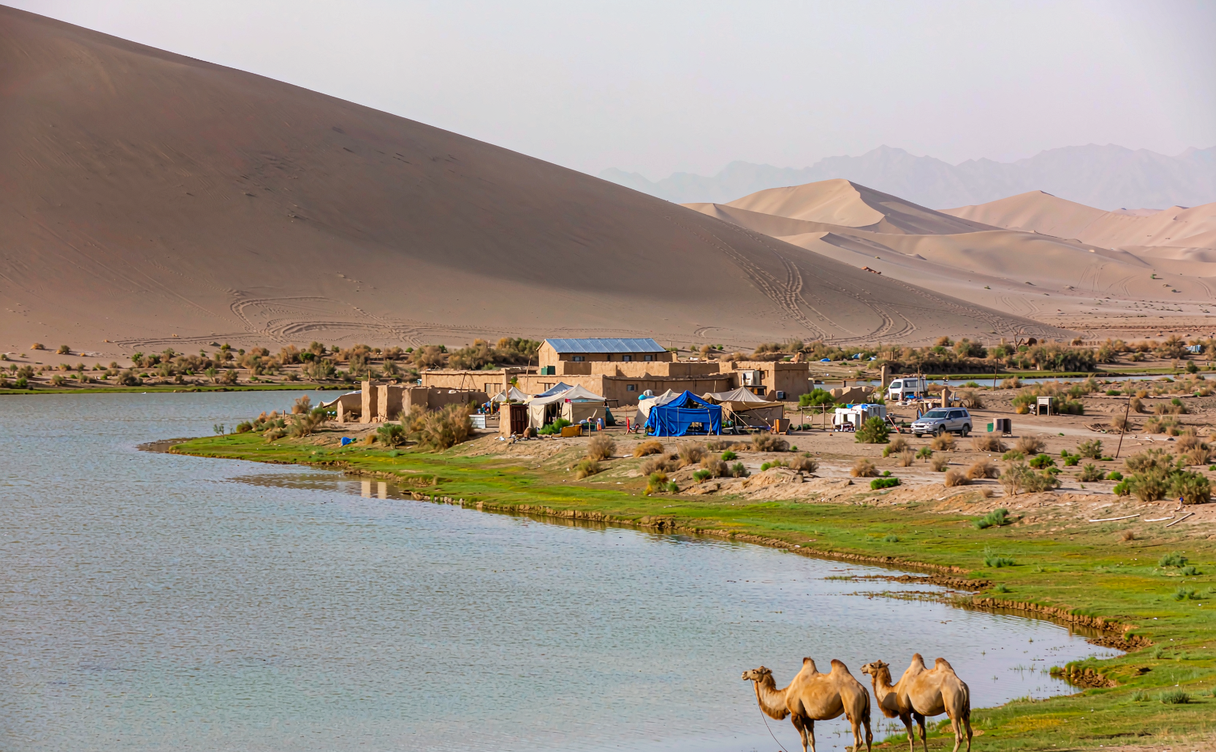
Shizuishan Shahu Lake (沙湖) is the headline. Shahu means “sand lake”, and that is literal: the northern half is open water, lotus beds and vast reed marsh, the southern half is dune field, and the two are separated by water you cross on a boat. There is no land bridge to the desert side, which is the single fact most visitors miss.
Ticketing has become bundled. A gate ticket alone was in the ¥60–80 CNY range, but the realistic all-in price with the boat crossing and access to the desert zone runs ¥150–250 CNY depending on which combination you buy, and camel rides, sand buggies and speedboats are extra. Buy online the night before — it is cheaper than the window and saves queueing. Gates ran roughly 08:00–17:00.
Go for the birds. Shahu is a major migration stop, and the two windows that matter are April to May and September to October, when herons, swans, cranes and huge duck flocks pass through. I have stood on the reed boardwalk at 07:30 in early October and watched a flock lift off the water in a mass that genuinely darkened the sky. Bring binoculars, bring sun protection — there is no shade — and start early, because the light and the birds both go flat by mid-morning.
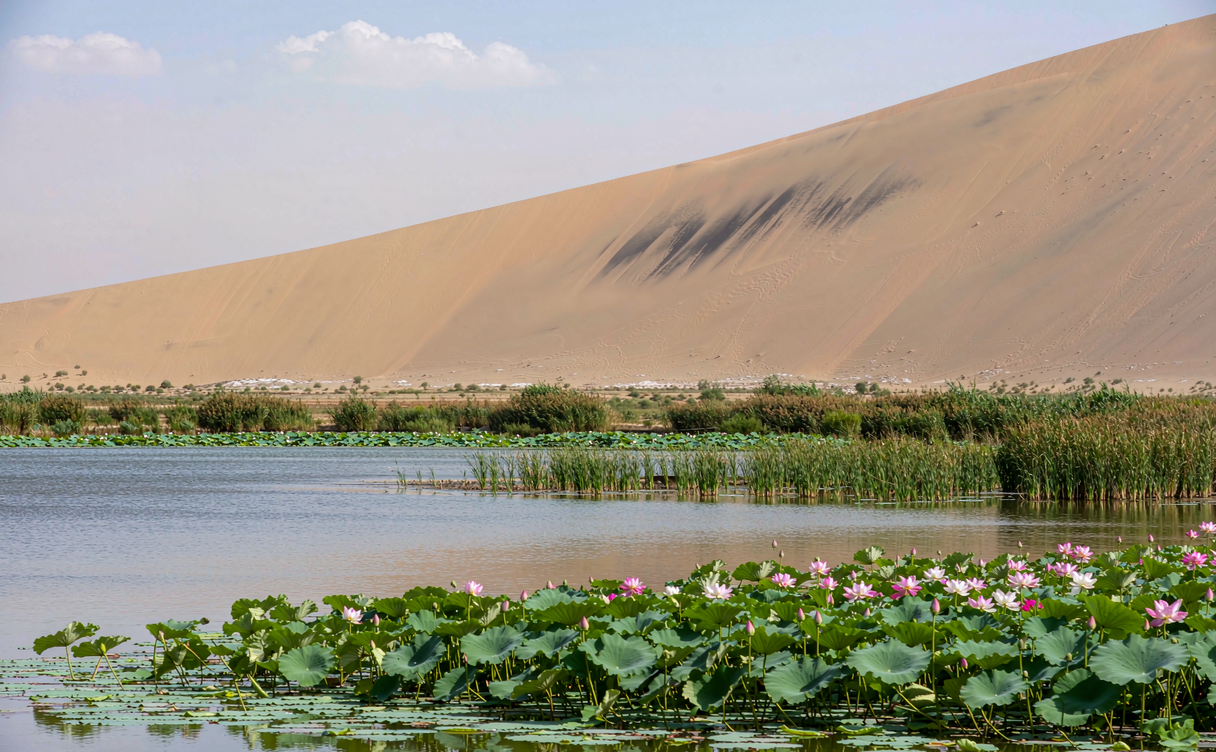
Shizuishan desert and lake beyond Shahu
The Shizuishan desert and lake theme repeats elsewhere, usually for free. Xinghai Lake (星海湖) sits on the edge of Dawukou, costs nothing, and is where locals walk at sunset with the black bulk of the Helan Mountains behind the water — my favourite hour in the city and completely tourist-free.
Northwest of Dawukou, the Beiwudang scenic area runs up a Helan Mountain gorge to a Taoist temple complex, with entry in the ¥40–60 CNY range and a geopark’s worth of exposed rock strata on the walk in. It is a two-to-three-hour visit and the trail is exposed; carry water. There is also a Yellow River red-willow forest area east of the city, around ¥40–60 CNY, pleasant in autumn when the willows turn rust-red against the water.
For a desert experience with more infrastructure — zip lines, dune boarding, the full Yellow River-meets-sand spectacle — our Shapotou desert guide covers the version at the province’s southern end, and it is a fair comparison to make before you choose.
The coal city, honestly
Shizuishan exists because of Taixi anthracite, an exceptionally low-ash coal mined from the Helan foothills and shipped worldwide. That history is visible everywhere: rail spurs, workers’ housing blocks from the 1960s and 70s, and the free coal geology museum in Dawukou, which is small but genuinely informative and has good English-free but self-explanatory displays of mining equipment.
I am upfront with clients about this. Parts of Huinong and the old mining valleys are scarred and dusty, and if you photograph industry you will find plenty of it. Some travellers find that far more interesting than another temple; others hate it. There is also a village at the mountain foot, Longquan, that has been reworked into a vine-shaded rural tourism spot — pleasant for lunch, mildly manicured.
Food, lodging and prices
Ningxia lamb is the reason to eat here, and the local style is plain boiled hand-pulled lamb (手抓羊肉), served with garlic and cumin salt. A shared platter at a proper lamb house costs ¥90–160 CNY per person and is worth every yuan; the meat is not gamey because the sheep graze salt-tolerant desert plants. Cheaper: mixed lamb offal soup at ¥18–30 CNY a bowl, and Dawukou cold noodles (大武口凉皮), a genuinely local specialty at ¥10–16 CNY. Order eight-treasure tea (八宝茶) instead of beer, and buy goji berries at the market rather than the airport.
Hotels in Dawukou run ¥160–320 CNY for a clean domestic double; the resort options near Shahu itself run ¥400–600 CNY and are only worth it if you want to be at the reed beds at dawn. I usually do two nights in Dawukou and one early start.
Comparing Ningxia’s desert options? Read both this guide and our best things to do in China roundup before you decide how many northern nights the trip can carry.
Best time to visit Shizuishan
The best time to visit Shizuishan is May to mid-October, and if you can pick precisely, target late September to mid-October: 12–24°C, dry, clear, migration in full swing, and the willows turning. May is the other strong month, with the spring bird passage and lotus not yet up.
Avoid March and April if you can — this is sandstorm season, and I have had a whole day where visibility at Shahu was under a kilometre. July and August reach 32–35°C with fierce sun and no shade at the lake; go at dawn or not at all. Winter drops to −10°C or lower, freezes the lake, and the scenic area pivots to ice sculpture and a small ski slope, which is charming but a different trip entirely. The diurnal swing is large year-round, so pack a layer even in summer. Wider seasonal planning is in our best time to visit China guide, and the city’s administrative and industrial background is on the Shizuishan entry at Wikipedia.
Things to do in Shizuishan: a two-night plan
The things to do in Shizuishan sort cleanly by day. Day one: arrive Dawukou, Xinghai Lake at sunset, lamb dinner. Day two: full day at Shahu, out by 07:00, back by mid-afternoon, cold noodles and the coal museum. Day three: Beiwudang gorge in the morning, then the train south to Yinchuan. Two nights is right; three only if you are birding seriously. My all-in spend, excluding intercity transport, was about ¥750–1,050 CNY per person including the Shahu combo ticket — one of the better value regions in the country.