

North of Wenzhou, where the mountains of Zhejiang fall toward the coast, a clear green river runs through one of the best-preserved stretches of old village China you can still walk for free. The Nanxi River (楠溪江) in Yongjia County is not a single sight but a 140-km valley system of shoals, bamboo groves, and Song-dynasty villages laid out on compass-grid plans that have barely changed in 800 years. We’ve sent travellers here to slow down after the chaos of Wenzhou or Yandang, and the appeal is exactly that slowdown: a bamboo raft, a pebble bar, a timber ancestral hall. This Nanxi River guide covers the bamboo rafting, the ancient-village route, the camping shoals, and how to get to Nanxi River from Wenzhou.
Why Visit the Nanxi River
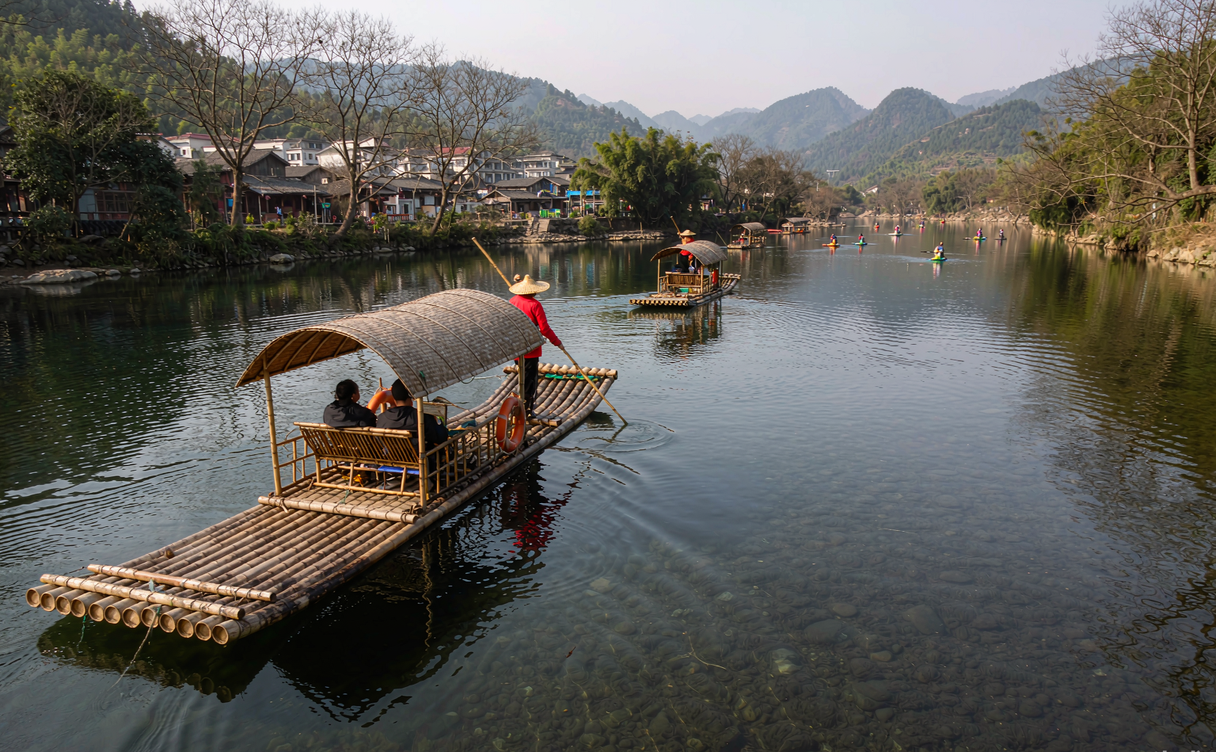
The Nanxi River drains the Yongjia hills north of Wenzhou and is prized for water clarity — on a calm morning you can see the riverbed ten metres down. What sets it apart from other Zhejiang waterways is the cluster of ancient villages: Furong (芙蓉村), Cangpo (苍坡村), Yantou (岩头村) and the remote Lincun (林坑) are laid out on scholarly, symmetrical plans with old stone gates, ponds, and clan halls. UNESCO listed the riverine landscape as a candidate for its harmony of settlement and nature, and the valley is a textbook of “village feng shui” you can read on foot. It is also one of the easiest places in coastal China to camp on a gravel bar and listen to the water. For travellers who want nature without a ticket booth at every turn, it is a favourite in our China glamping camping guide.
Best Time to Visit the Nanxi River
April to June — the best window. 18–27°C, high clear water after the plum rains, green terraces, and good rafting. This is the best time to visit Nanxi River for the combination of paddling and village walking.
September to November. 17–26°C, clear skies, golden rice before harvest (late Sep–Oct). The most comfortable walking weather; avoid the 1–7 October holiday when the villages fill.
July to August. Hot (30–36°C), the domestic summer peak, and the best months for Nanxi River swimming at the shoals. Afternoon thunderstorms are common; raft in the morning.
December to March. Cool to cold (5–14°C), low water, quiet. Good for empty villages and photography, less for swimming or rafting.
How to Get to the Nanxi River from Wenzhou
The Nanxi valley begins about 40–50 km north of Wenzhou city, spreading across Yongjia County. There is no single “gate” — you pick a village or a rafting section as your anchor.
| From | Mode | Duration | Approx. cost |
|—|—|—|—|
| Wenzhou South / city → Yongjia (Shangtang) | Bus / taxi | 45–70 min | ¥20–80 (US$3–11) |
| Wenzhou → Furong / Yantou villages | Bus from Xincheng | 60–90 min | ¥15–25 (US$2–4) |
| Wenzhou → Lincun (remote) | Bus + taxi | 2 hr | ¥40–70 (US$6–10) |
| Within valley | Scooter rent / taxi | per hop 15–40 min | ¥30–80 (US$4–11) |
| Wenzhou airport → valley | Taxi | 70–90 min | ¥160–220 (US$22–30) |
From Wenzhou we usually put clients in a taxi or private car straight to Yantou or Furong; the villages are scattered, so a car pays off more here than at a single gate. Buses leave Wenzhou’s Xincheng (新城) bus station for the upper valley. The wider Zhejiang base is in our Hangzhou travel guide, which explains using the provincial capital as the rail hub before heading south to Wenzhou.
Things to Do on the Nanxi River
Bamboo Rafting (竹筏漂流)
The signature activity. Long bamboo rafts poled by a boatman drift a stretch of the upper river — the Nanxi River bamboo rafting Yongjia runs near Yantou and the Lingshan sections — for about 40–60 minutes over clear shallows, passing shoals and willow banks. Cost is about ¥60–100 (US$8–14) per raft for a short hop, more for longer scenic runs. It is gentle, not whitewater, and ideal at dawn. We tell clients to go early: by 10:00 the sun is high and the rafts queue.
The Ancient Village Route
The core cultural walk. A sensible Nanxi River ancient villages route strings three together:
- Furong Village (芙蓉村) — a square walled Song village with a central pond and a clan hall; entry about ¥15 (US$2), or covered on a valley combo ticket.
- Cangpo Village (苍坡村) — laid out as a scholar’s ink-stone and brush, with a dramatic market-head gate; about ¥10–15.
- Yantou Village (岩头村) — the largest, with a water system and the Taishiyan riverside path; the practical lunch stop.
A combo valley ticket (¥50–80 / US$7–11) covers several villages. Allow half a day to walk all three at ease. For a wilder, higher settlement, Lincun is a wooden mountain hamlet an hour deeper in — no ticket, no crowds, just timber houses over a stream.
Shoal Camping and Swimming
The pebble bars (滩林) along the river are the camping draw. In summer locals pitch tents, wade, and barbecue on the gravel. Paid campsites near Yantou run about ¥50–120 (US$7–17) per tent including a fire pit; wild camping is tolerated in spots but pack out everything. This is the heart of the China glamping camping guide entry for Zhejiang.
Zhuo’ao and the Side Valleys
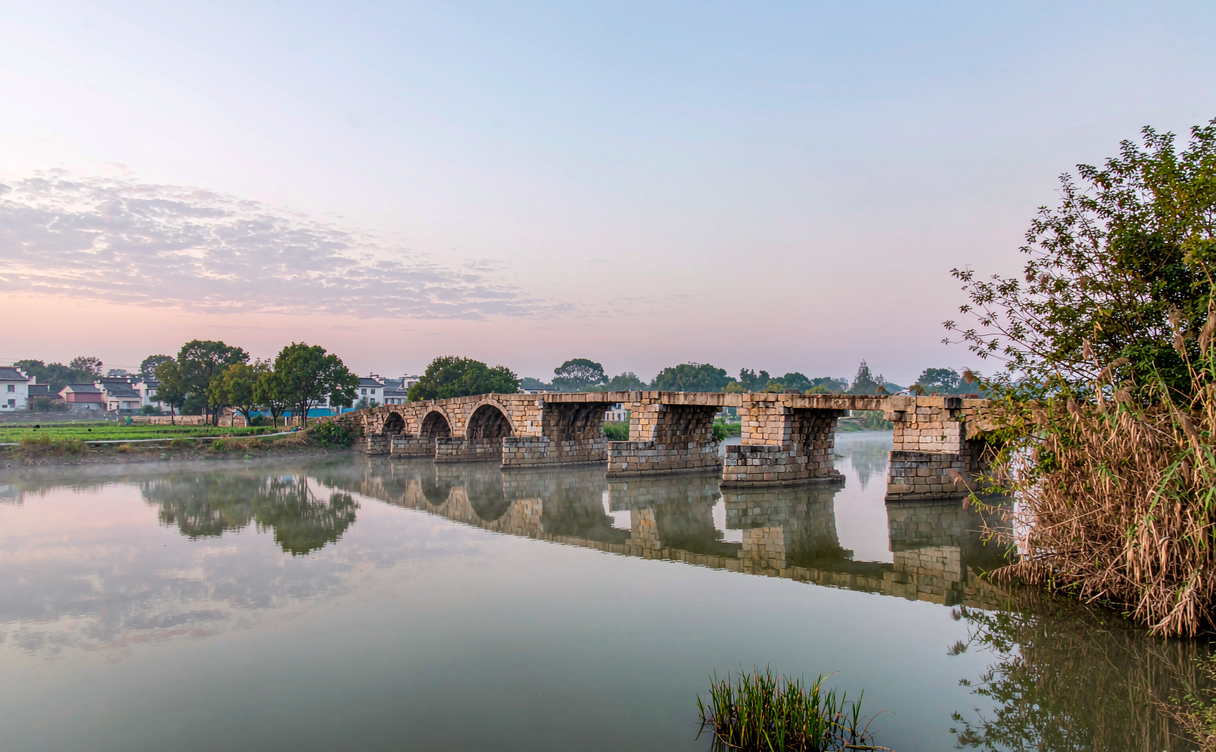
Smaller tributaries such as Zhuo’ao hold tighter gorges and fewer people. Good for a half-day walk if you have a car. The nearby Shiwei Rock (石桅岩), a 306-m freestanding pillar, is a short detour and a fine photo.
Where to Stay
- Village guesthouses (¥160–320 / US$22–44). Family-run inns in Yantou and Furong; basic, clean, with home cooking. Best for atmosphere.
- Riverside campsites (¥50–120 / US$7–17). Tent pitches near Yantou; bring your own gear or rent on site.
- Wenzhou city hotels (¥260–600 / US$36–84). Comfortable base if you day-trip the valley; 60–90 min out.
- Lincun homestays (¥150–260 / US$21–36). Remote and quiet; book ahead, few speak English.
All licensed stays register foreign passports.
What to Eat
Yongjia cooking is the seafood-meets-mountain end of Zhejiang.
- Nanxi river fish (楠溪江溪鱼), small fried stream fish, ¥38–60.
- Yongjia beef (永嘉牛肉), thin-sliced hotpot or stir-fry, ¥60–100 for two.
- Wheat cake (麦饼), a stuffed griddle flatbread, ¥8–15.
- River shrimp and water greens, ¥30–50.
- Homemade rice wine at village inns, ¥20 a pot.
Sample Itinerary: One Day from Wenzhou
- 08:00 taxi north from Wenzhou
- 09:30 Furong and Cangpo villages (2 hr)
- 12:00 lunch in Yantou
- 13:30 bamboo rafting (1 hr)
- 15:00 Yantou riverside walk and shoal time
- 17:00 campsite check-in or return to Wenzhou
- (Optional) stay over, Lincun next morning
Practical Tips
- Anchor on a village. The valley has no single entrance; pick Yantou as your hub.
- Raft at dawn. Clearest water, fewest crowds, best light.
- Combo ticket. Buy the valley village combo at the first village to save versus separate entry.
- Car helps. Villages are 10–20 km apart; a scooter (¥60–100/day) or taxi is the move.
- Passport. Needed for any hotel and the Wenzhou train.
- Cash. Village stalls and raft men may not take cards; keep ¥200.
- Swim safe. The river is shallow but has deep pools and strong current after rain; ask locals before swimming.
The river’s landscape and village heritage are outlined at Wikipedia’s Nanxi River page, a useful read before you go.
FAQ
Is the Nanxi River worth visiting?
Yes, for travellers who want old villages and slow river time without ticket fatigue. Skip it if you need big thrills — this is a wander, not a spectacle.
How do I get there from Wenzhou?
Taxi or bus 45–90 minutes north into Yongjia County; anchor on Yantou or Furong village. A car helps for the scattered sites.
Can I camp by the river?
Yes — paid campsites near Yantou, and wild gravel-bar camping is common in summer. Pack out your trash.
When is the water clearest?
Spring and autumn mornings, after the plum rains subside. Avoid right after heavy storms, when it runs brown.
Is it good for families?
Very — gentle rafting, wading shoals, and flat village lanes. The Taizhou Zhejiang travel guide adds nearby coastal stops if you extend the trip.
Written by Karl, China Travel Places — updated August 2026.