

Most foreign visitors to Gansu fly straight into Lanzhou and point their itineraries west toward Dunhuang. A good Baiyin travel guide has to make the case for stopping short of that well-worn route, because this industrial city 70 kilometers northeast of Lanzhou hides one of the most surreal landscapes in Northwest China: a stone forest of ochre sandstone pillars carved by the Yellow River, reachable by a donkey cart and a sheepskin raft. Baiyin (白银) is not a tourist city in the usual sense—it was built on copper and gold mines—but for travelers who like geology, quiet canyons, and the slow rhythm of rural Gansu, it is a genuine find.
Baiyin sits on the north bank of the Yellow River in central Gansu, where the Loess Plateau begins to break into dry gorges and alluvial flats. The city itself has about 1.7 million people across its districts, but the reason you come is the Jingtai County countryside, specifically the Yellow River Stone Forest (黄河石林) near the town of Longwan. We have sent travelers here who skipped the big Silk Road names for a day and told us afterward it was the most photographs they took in a single morning of the whole trip.
How to Get from Baiyin to Lanzhou and Beyond
The most common question we get is about Baiyin to Lanzhou transport, because almost everyone enters the region through Lanzhou Zhongchuan Airport. The two cities are linked by a fast, frequent highway and a conventional rail line. Trains from Lanzhou Station to Baiyin West take roughly 1.5 to 2 hours and cost 16 to 28 RMB in second class. Long-distance buses run even more often from Lanzhou’s North Bus Station and take about 1.5 hours for 35 to 45 RMB. We usually tell first-timers to take the train for comfort and the bus for flexibility, then hire a car for the final leg into Jingtai.
From Baiyin city to the Yellow River Stone Forest is another 100 kilometers, roughly 1.5 to 2 hours by road through Jingtai County. There is no convenient public bus that drops you at the scenic gate, so a private car or a pre-arranged driver is the practical choice. Budget 300 to 500 RMB for a full-day car from Baiyin, or join one of the small group tours run out of Lanzhou. If you are building a longer Northwest loop, our Lanzhou travel guide explains how to use the provincial capital as your hub, and our China Silk Road itinerary shows where Baiyin fits between Lanzhou and the Zhangye danxia.
Best Time to Visit Baiyin
The best time to visit Baiyin is late spring (May to early June) and early autumn (September to October). Summer is hot and glaring, with daytime highs of 28 to 34°C and little shade in the canyons, while winter is brutally cold and windy, with the stone forest looking dramatic but the river activities shut down. We favor September: the light is low and golden on the sandstone, the grapes and melons in Jingtai are in season, and the tourist numbers have dropped after the summer holidays.
Avoid the Chinese National Day week in early October if you can—domestic tour groups swell the stone forest, and the donkey carts and rafts run on long queues. A weekday in late September is close to perfect.
Things to Do in Baiyin
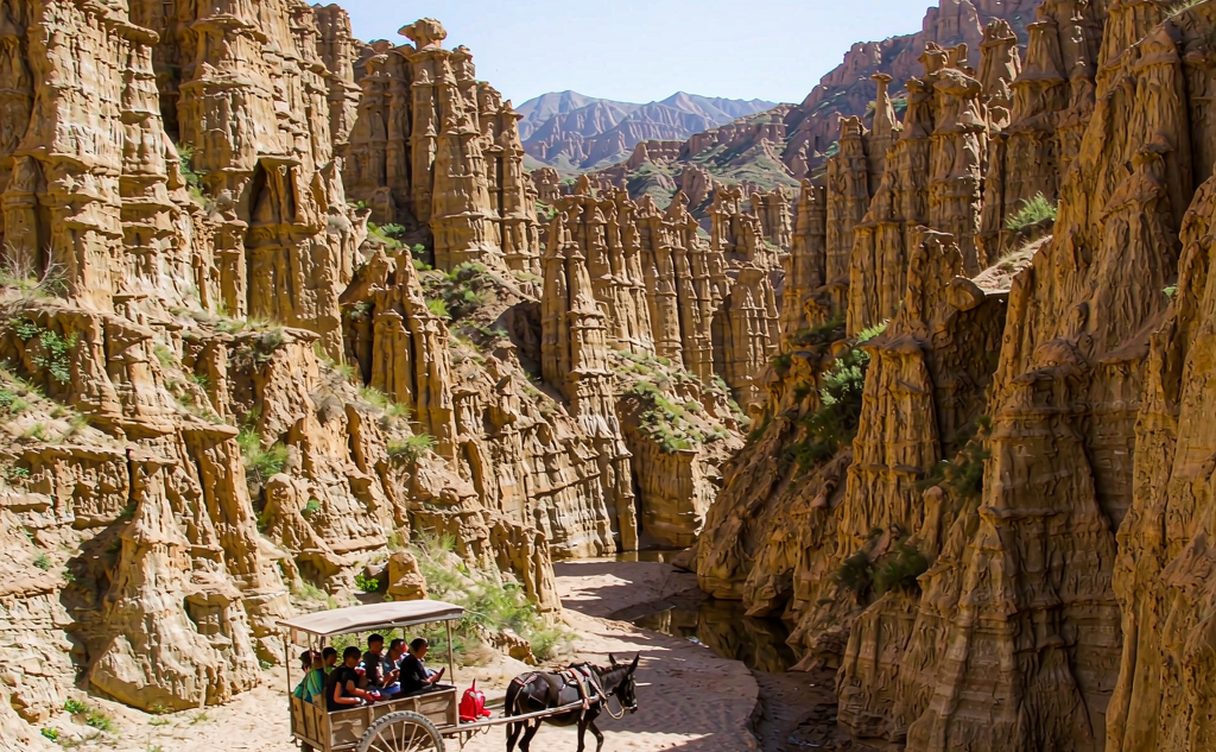
The headline experience, and the one that justifies the trip, is the Yellow River stone forest in Jingtai. The formation is a field of tall, narrow sandstone pillars—some 80 to 100 meters high—standing in a maze of dry gullies right where the Yellow River bends. You reach the canyon floor from the riverside village of Longwan by one of two ways. The classic approach is a sheepskin raft (羊皮筏子): inflated goat hides lashed to a wooden frame, poled across a side channel by a local boatman. It is gentle, photogenic, and faintly absurd, and we consider it unmissable.
The second signature activity is the Baiyin donkey cart canyon ride. From the canyon mouth, rows of wooden carts pulled by placid donkeys clip-clop you along the packed-earth track between the pillars. A round trip costs around 60 to 80 RMB per cart and lasts 40 to 60 minutes. The drivers double as guides and will point out formations named after animals and generals. In our experience the donkeys are well cared for and the pace is slow enough to shoot video from the moving cart.
Beyond the stone forest, things to do in Baiyin include the Yellow River shoreline itself, where you can walk the levees and watch irrigation channels feed the melon fields of Jingtai, and the nearby Shouluo Mountain and small temples around Jingtai town. Food is straightforward Northwest fare: hand-pulled lamian noodles (15 to 25 RMB), lamb skewers (3 to 5 RMB each), and sweet Jingtai melon in season. A filling noodle-and-skewer dinner for two runs 60 to 100 RMB.
A Suggested Baiyin Itinerary
A realistic Baiyin itinerary treats the stone forest as a full-day outing from Lanzhou or an overnight from Baiyin city. Day one: arrive Baiyin, rest, and drive to Jingtai in the afternoon. Day two: early start to Longwan village, raft across, donkey-cart through the pillars, late lunch, and back to Lanzhou by evening. Travelers who want more can add a third day exploring the quieter Loess Plateau villages and the local mining museum in Baiyin city itself, which honestly tells the story of the copper boom that built the place.
We always build buffer time into canyon trips, because the stone forest closes in high wind and the raft crossings pause in rough water. Our China off-the-beaten-path guide has a section on rural Gansu transport and why a flexible private driver beats chasing buses here.
Where to Stay and What It Costs
Baiyin city has decent, cheap business hotels: a clean mid-range room runs 180 to 320 RMB per night. Near the stone forest, Longwan village has a cluster of guesthouses and a couple of larger resorts priced 200 to 450 RMB, some with views over the canyon mouth. Book ahead on weekends in peak season. Taxis in Baiyin start at 6 RMB, but you will want a car for the scenic leg.
For a regional comparison, our Wuwei travel guide covers the next Silk Road stop northwest, and the Zhangye Danxia rainbow mountains are a logical continuation if you want more colored geology after the stone forest. Our best things to do in China list also flags both as top landscape experiences.
Background and Practical Notes
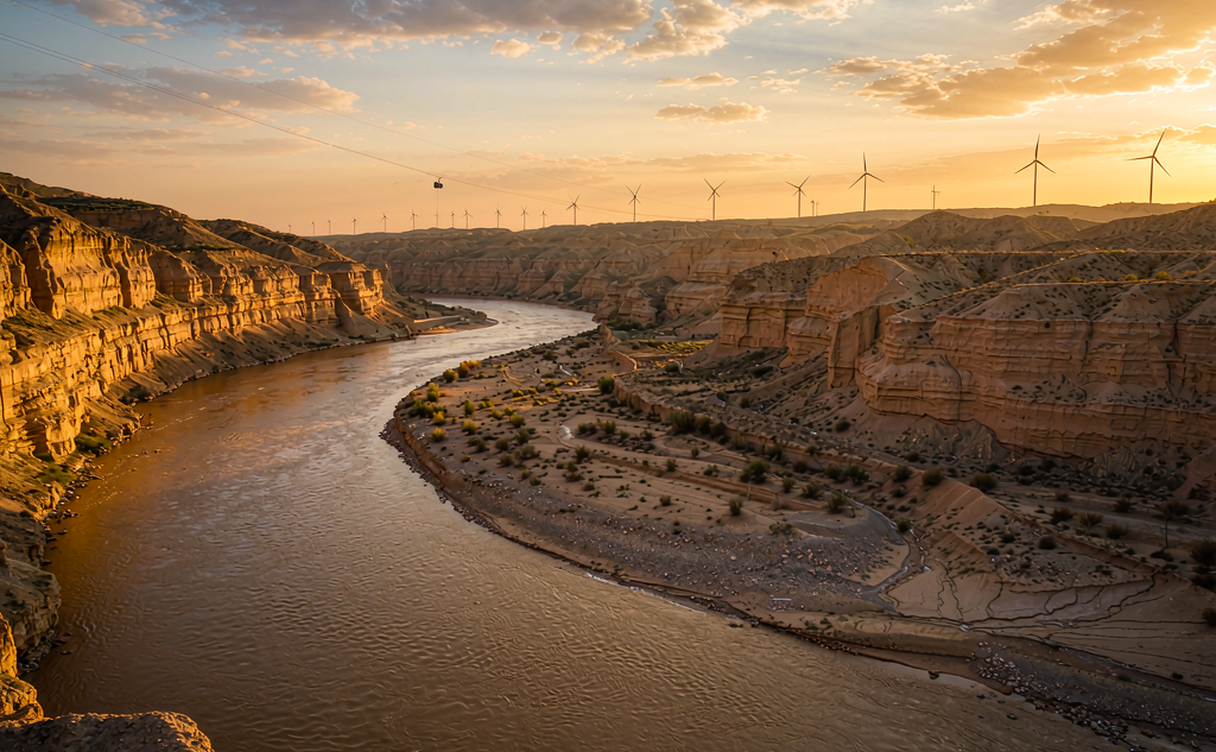
The Yellow River Stone Forest is a protected geological park; the pillars formed over millions of years as the Yellow River cut down through red sandstone of the Tertiary period. You can read about the river’s role in shaping North China’s landscapes on the Wikipedia page for the Yellow River, which explains the sediment and erosion that produced formations like this one. Inside the park, stay on marked tracks, carry water (the canyon has none), and wear a hat—there is no shade among the pillars. Mobile payment works at the gate and most stalls, but bring some cash for the raft and cart operators, who sometimes prefer it.
English signage is limited, so download an offline map and have your hotel write the destination in Chinese. The stone forest app and ticket counters accept foreign passports for the standard entry, which is around 80 to 100 RMB plus the raft and cart fees.
Is Baiyin Worth It?
A Baiyin travel guide should be honest that the city core is workaday and the real draw is an hour away. But that draw—a red sandstone labyrinth on the banks of the Yellow River, reached by raft and donkey cart—is exactly the kind of odd, memorable half-day that the big guidebooks skip. If your idea of a good trip includes places where you are one of maybe a dozen foreigners all year, Baiyin will reward the detour.