

If your image of Yunnan stops at Dali’s lake and Xishuangbanna’s temples, you are missing the southwestern corner where China’s tea story actually begins. This Lincang travel guide covers a prefecture-level city on the Myanmar border that grows some of the oldest tea on earth and holds a rebuilt Wa minority village straight out of an anthropology book. We’ve sent serious tea travellers here and the reaction is always the same: they had never heard of the place, and now they want to come back for the spring flush.
Why Visit Lincang
Lincang (临沧) sits in southwest Yunnan, about 500 km from Kunming and bordering Myanmar. It is one of the birthplaces of cultivated tea — the same Pu’er tea family that fills shops worldwide is grown in its misty hills — and it is home to the Wa (佤族), an Austronesian-related hill people with rituals and festivals found almost nowhere else in China. The draw is twofold: walk among Lincang ancient tea tree forest stands that are hundreds of years old, and visit the Wa villages of Cangyuan county, including the famous Wengding. It is remote, it is green, and in spring the hills smell of fresh leaf.
Best Time to Visit Lincang
March to May — the best window. Spring is warm (18–28°C), the first tea flush is being picked, and the Wa hold their biggest festivals. This is the best time to visit Lincang for both tea and culture.
September to November. Clear, dry, 16–26°C, good light for the hills and comfortable for driving the mountain roads.
December to February. Mild and dry, 10–22°C, but some high villages are cold at night. Quiet and cheap.
June to August — avoid if possible. The monsoon brings heavy rain, 24–30°C, and the risk of landslides on the rural roads to Cangyuan and the tea mountains. We reroute travellers to the city only in this period.
How to Get to Lincang from Kunming
Lincang is connected by both air and a new railway, but the easy route depends on your time.
| From | Mode | Duration | Approx. cost |
|—|—|—|—|
| Kunming → Lincang (flight) | Air | 1 hr | ¥400–700 (US$55–95) |
| Kunming → Dali (rail) | EMU | 2 hr – 2 hr 30 min | ¥140–200 (US$20–28) |
| Dali → Lincang (rail) | EMU | 3 hr – 4 hr | ¥70–120 (US$10–17) |
| Lincang city → Cangyuan (Wa county) | Bus / car | 2 hr 30 min – 3 hr | ¥60 bus (US$8) |
| Lincang city → Mengku tea area | Car | 1 hr 30 min | ¥200–300 car |
Flying is simplest from Kunming; by rail, change at Dali and treat it as a full travel day, or overnight in Dali first using our Dali Yunnan travel guide. Book flights and trains with your passport.
Things to Do in Lincang
Ancient Tea Tree Forests
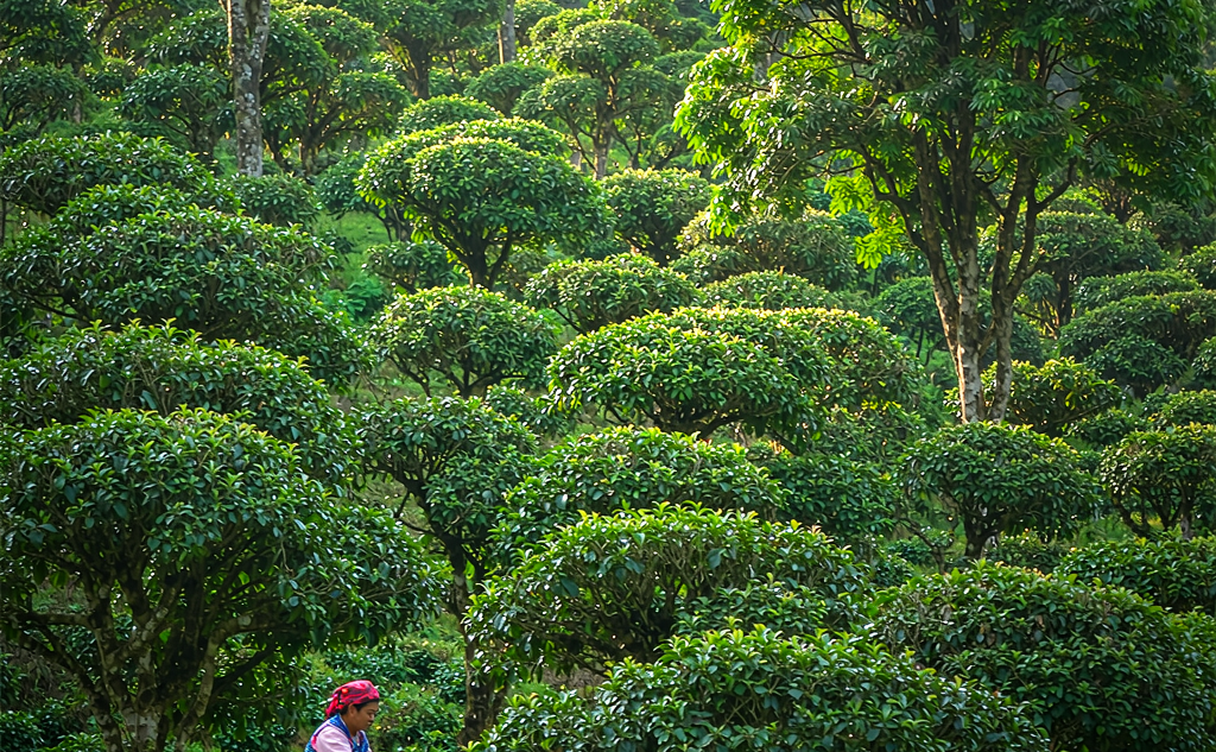
The headline experience. Lincang grows both wild and cultivated old tea, and the stands are genuinely ancient. In Shuangjiang county, the Mengku Daxueshan (勐库大雪山) wild tea-tree forest holds thousands of untended trees several hundred years old on a misty ridge you can hike. In Fengqing county, the Jinxiu Tea Ancestor (锦秀茶祖) is a cultivated tree dated at around 3,200 years — among the oldest living tea plants on the planet, with a fence and a small temple around it. A tea-farm visit with picking and a fresh-pot tasting runs about ¥50–120 (US$7–17) depending on the estate. The famous “Bingdao” (冰岛) village teas come from here too, though the name has nothing to do with the Nordic country — it is a local transliteration. For background on the leaf itself, our China tea tour guide explains the six tea families before you go.
Wengding Wa Village
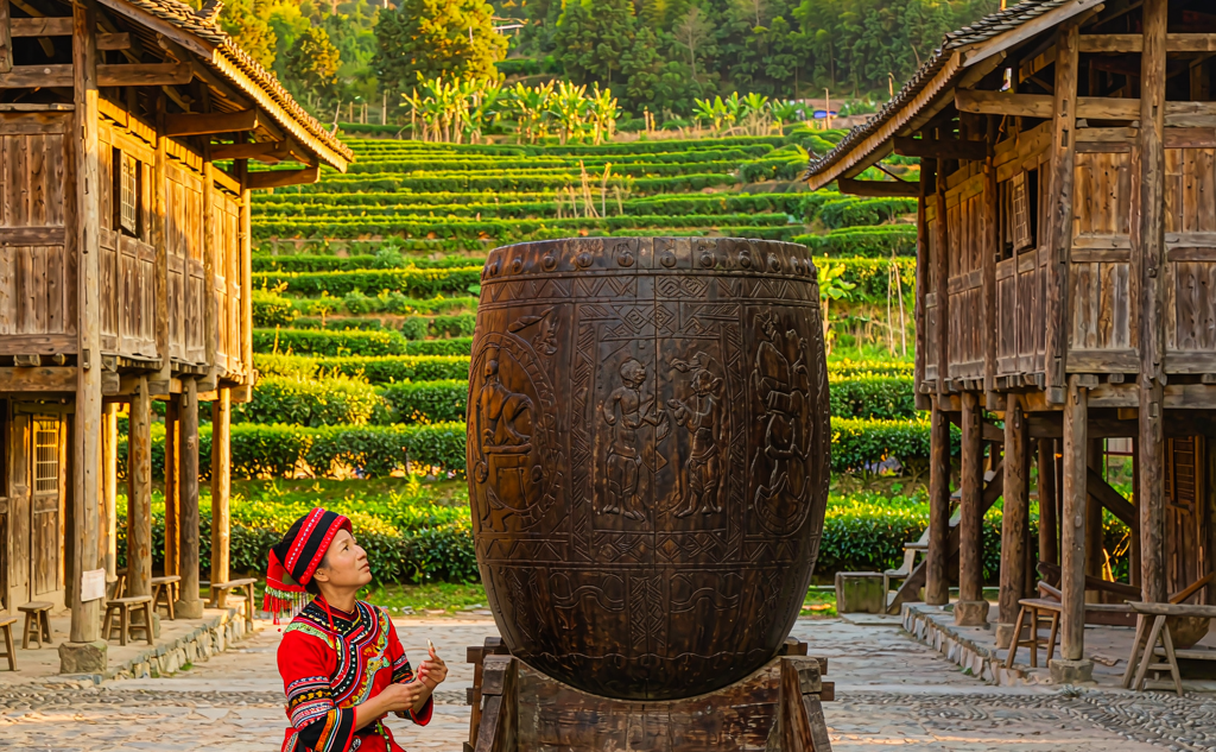
The most photographed minority site in Lincang. Wengding Wa village Lincang sits in Cangyuan county as a raised timber-and-thatch settlement of the Wa people, long promoted as “China’s last primitive Wa village.” A frank practical note: the original old village was destroyed by a fire in February 2021. What stands today is a reconstructed version on the same site, rebuilt with the same materials and layout, and it is still the best place in Yunnan to see Wa architecture, the wooden drums (木鼓), and daily village life. Entry is about ¥30–50 (US$4–7). Go early to avoid tour buses and to catch the morning smoke from the hearths.
Cangyuan Cliff Paintings (沧源崖画)
Also in Cangyuan, these are some of the most important Neolithic rock paintings in southwest China — red ochre figures of hunters, dancers and animals dated up to 3,000 years old, on cliff faces in the hills. A covered walkway protects several sites; combined with Wengding as a Cangyuan day trip. Entry is modest, around ¥20–40 (US$3–6).
Wa Festivals
If you time it right, the Munihei (摸你黑) festival in Cangyuan each May is the highlight — crowds smear each other with a herbal black paste for luck and the streets turn into a joyful mess. The Wooden Drum Festival (拉木鼓) and New Rice festival are quieter, village-level events. Check dates with the county tourism office, as they shift with the lunar calendar.
The City and the River
Lincang city itself is a low-key river town good for a night, with a riverside walk and a tea market where you can buy factory-pressed cakes far cheaper than the cities. The Lincang Tea Museum is small and worth an hour.
Where to Stay in Lincang
Budget — ¥110–180 (US$15–25). City chain hotels near the bus station. Clean, app check-in.
Mid-range — ¥240–400 (US$33–56). Riverside business hotels in Lincang city; the best base for the tea market and transport.
Splurge — ¥500–800 (US$70–110). A few comfortable hotels and tea-estate guesthouses; stay at an estate if you want to wake among the trees.
For Cangyuan, budget ¥200–400 (US$28–56) at small county hotels. All register foreign passports.
What to Eat in Lincang
Borderland cooking: sour, smoky and tea-forward.
- Wa grilled meat. Pork and chicken rubbed with chili, salt and wild herbs, cooked over wood.
- Sour bamboo shoot (酸笋). The regional flavour base, sour and funky, in soups and with rice.
- Tea-leaf salad and tea eggs. Young tea leaves blanched and dressed, or slow-cooked in broth.
- Cross-bridge rice noodles. The Yunnan staple, everywhere.
- Wild honey and walnuts. From the hills, sold at the tea markets.
For the wider minority-food picture, our China ethnic minorities travel guide maps the peoples and dishes across the southwest.
Sample Itinerary: Three Days
Day 1. Fly Kunming → Lincang. Afternoon tea museum and riverside market.
Day 2. Car to Mengku or Fengqing tea forests; tasting and the old tree; back to city.
Day 3. Bus to Cangyuan; Wengding village and the cliff paintings; fly or bus back.
Practical Tips
- Border zone. Lincang touches Myanmar; stay on the main routes and carry your passport — there are checkpoint-style ID checks on some roads.
- Rebuilt Wengding. Know it is reconstructed post-2021; it is still authentic in craft, not original in timber.
- Tea buying. Buy from a named estate and ask for a pressing date; the city market is honest but busy.
- Driving. Rural roads are winding; hire a driver (¥400–500/day) rather than self-drive.
- Language. Little English outside the city. Save addresses in Chinese.
- Background. The region’s place in Yunnan is set out at Wikipedia’s Lincang page — a useful primer before you fly.
FAQ
Is Lincang worth visiting?
For tea lovers and culture travellers, yes — the ancient trees and Wa villages are unique. For a first Yunnan trip, do Dali and Banna first.
How many days?
Three days covers tea and Cangyuan. Two if you skip one.
Can I visit as a day trip from Kunming?
No. It is a flight or an overnight rail journey away; plan at least two nights.
Is the border safe?
The tourist routes are calm, but stay on them and keep your passport. We do not send travellers across into Myanmar.
Written by Karl, China Travel Places — updated August 2026.