

Most foreign visitors fly into Hainan and head straight for Sanya’s beaches or Haikou’s old quarter, never realising that the island’s most relaxed stretch of coast sits quietly between them. This Qionghai travel guide covers a county-level city on Hainan’s east shore where a working fishing harbour, a river mouth full of sandy islands, and lanes of leaning coconut palms make an easy, low-cost stop on the round-island railway. We’ve sent travellers here as a one-night pause between Haikou and Sanya and almost everyone comes back surprised at how little effort it took.
Why Visit Qionghai
Qionghai (琼海) sits about 80 km southeast of Haikou and 160 km north of Sanya, on the eastern ring of Hainan’s coastal high-speed railway. The Wanquan River (万泉河) reaches the sea here at Bo’ao (博鳌), and the town of Tanmen (潭门) just south runs one of the last traditional fishing fleets on the island. What you get is a coastline without resort walls: you can eat fish pulled from the South China Sea that morning, walk a narrow sandbar with river on one side and ocean on the other, and ride a rented e-bike down coconut-shaded lanes for almost nothing. For travellers who want the flavour of Hainan without the Sanya price tag, Qionghai is the obvious choice.
Best Time to Visit Qionghai
November to March — the best window. Hainan’s east coast stays mild and dry through winter, with daytime highs of 22–28°C and low humidity. This is the best time to visit Qionghai if you want to eat seafood outdoors, cycle the coconut lanes, and take the Bo’ao river boat without sweating through your shirt.
April to June. Warming up, 28–33°C, with short afternoon showers. Still good, and the coconut groves are at their greenest.
July to September. Hot and humid, 30–35°C, and typhoon season. Ferries and boat tours can be cancelled on short notice. We recommend avoiding August unless you are already on the island and can be flexible.
How to Get to Qionghai
The Qionghai to Sanya train is the easiest way in. The Hainan eastern ring railway calls at Qionghai Station (琼海站), a 10-minute taxi ride from the city centre and about 25 minutes from Bo’ao.
| From | Mode | Duration | Approx. cost |
|—|—|—|—|
| Haikou East → Qionghai | High-speed rail | 50–70 min | ¥55–80 (US$8–11) |
| Sanya → Qionghai | High-speed rail | 60–80 min | ¥75–110 (US$10–15) |
| Bo’ao → Qionghai Station | Taxi / e-bike | 25–40 min | ¥35–50 (US$5–7) |
| Haikou Meilan Airport → Qionghai | Rail (via Haikou East) | 70–90 min | ¥60–90 (US$8–13) |
Book through the official China Railway 12306 app using your passport. Inside Qionghai, DiDi and local taxis are cheap, and shared e-bikes cost about ¥2–3 per 20 minutes — the best way to explore the coastal lanes. If you are building a longer Hainan route, our Haikou travel guide explains the airport and the old town 90 minutes north.
Things to Do in Qionghai
Tanmen Fishing Port
Tanmen is the working heart of Qionghai and the best reason to come. For centuries its wooden fishing boats sailed as far as the Spratly waters; today the harbour still fills each afternoon as the fleet returns. The Tanmen fishing port seafood market is the draw — you pick live fish, crab, shrimp or squid from the morning boats and have it cooked at a nearby stall for ¥15–30 per dish on top of the weighing price. A good seafood dinner for two runs ¥120–220 (US$17–31). Go before 10:00 for the widest choice. The town also has a small fishing-culture museum and a seafront promenade rebuilt after earlier typhoons.
Bo’ao and the River Islands
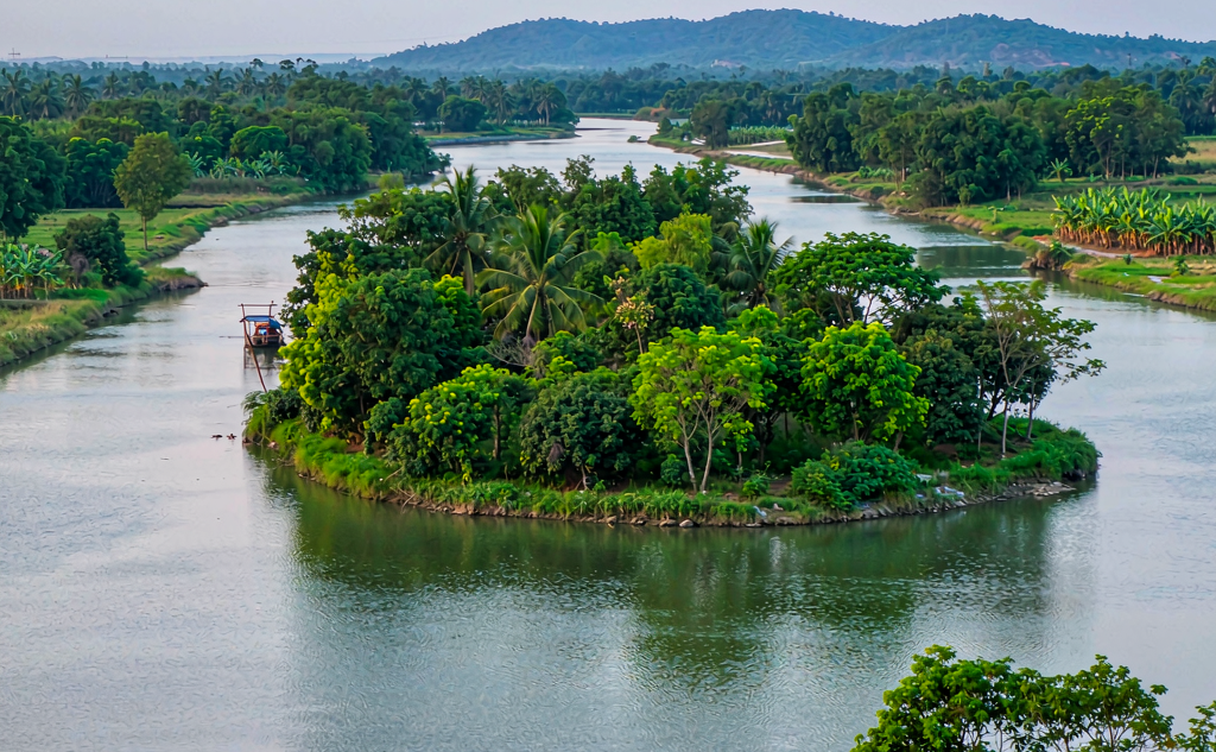
Bo’ao sits where the Wanquan, Longgun and Jiuqu rivers meet the sea. The signature sight is Yudai Beach (玉带滩), a narrow strip of sand about 2.5 km long that separates the freshwater river from the open ocean — walk it and you have river on your left, sea on your right. Boat tours from the Bo’ao ferry pier circle the river islands and sandbars of the estuary; a 40-minute ride costs about ¥60–90 (US$8–13) per person. The Bo’ao Forum for Asia conference centre is here too, but it is a modern building, not a sight worth a detour.
Coconut Lanes and the River Bank
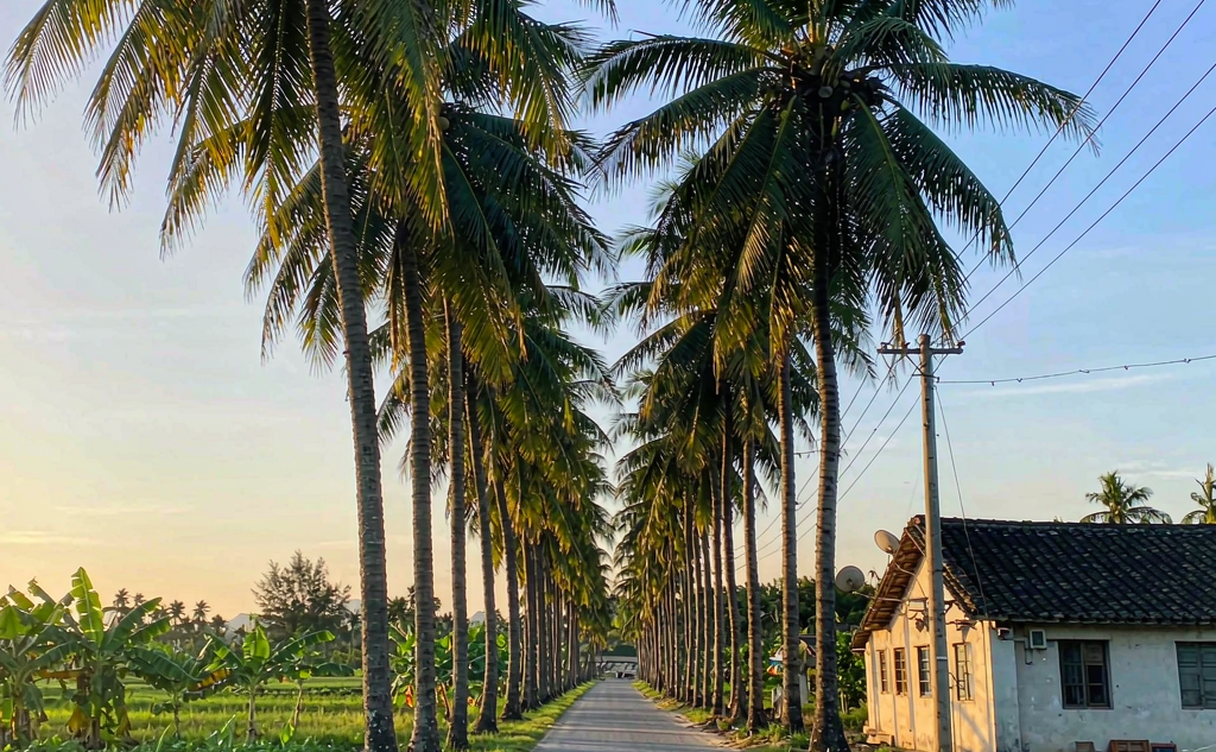
Qionghai markets itself as the “hometown of coconuts,” and the lanes south of the city and along the Wanquan’s lower bank are lined with leaning palms that give deep, free shade. The Qionghai coconut plantation village feel is best experienced by e-bike: ride from the city toward Tanmen and you pass small villages where every yard has a few palms and old women sell young coconuts (¥6–10) and coconut candy at the gate. Stop at the Wanquan River riverside park for a swim-free riverside walk and a cold drink.
Baishi Ridge (白石岭)
If you want a hill, Baishi Ridge is a 30-minute drive west of the centre, a quartzite outcrop with a cable car to a viewpoint over the plain and coast. Entry plus cable car is about ¥70 (US$10). It is pleasant rather than spectacular, and best on a clear winter morning.
Where to Stay in Qionghai
Budget — ¥110–200 (US$15–28). Chain hotels near Qionghai Station and along the main drag. Clean, app-based check-in, no English spoken.
Mid-range — ¥250–450 (US$35–65). The best base is Bo’ao, where small riverside hotels and guesthouses put you steps from the estuary and the seafood strips. Expect ¥300–500 a night in season.
Splurge — ¥600–1,000 (US$85–140). Bo’ao has a couple of resort-style hotels with pools and river views, quiet and far cheaper than Sanya equivalents.
All hotels register foreign passports, so carry the document at check-in.
What to Eat in Qionghai
Hainan cuisine here is light, sour and seafood-forward.
- Tanmen seafood. The headline meal: buy by weight at the harbour and eat it steamed, boiled with broth, or stir-fried with garlic.
- Wenchang chicken (文昌鸡). The island’s famous free-range chicken, poached and dipped in ginger-salt. A half bird is ¥50–80.
- Qionghai noodles (琼海杂粮 / 粉). Local rice-noodle soups and “zaopo” sour broth noodles, ¥10–18.
- Coconut snacks. Coconut candy, coconut cake and fresh young coconut water from roadside vendors.
- River fish. Freshwater fish from the Wanquan, often steamed with pickled vegetables.
For more island food context, our Wenchang travel guide covers the town that gave Hainan its chicken.
Sample Itinerary: Two Days
Day 1. Morning train from Haikou. Drop bags in Bo’ao. Lunch on Tanmen seafood. Afternoon e-bike the coconut lanes and a river boat at Bo’ao. Dinner by the estuary.
Day 2. Early Wanquan riverside walk, Baishi Ridge if energetic, lunch, afternoon train south to Sanya or north to Haikou.
Practical Tips
- Two hubs. Stay in Bo’ao for the water; stay near Qionghai Station for the train. They are 25 minutes apart.
- Cash for the harbour. The seafood stalls take Alipay and WeChat, but small coconut vendors may want cash. Keep ¥100.
- Boat weather. Estuary tours cancel in strong wind and typhoon alerts. Check the morning forecast.
- Passport. Train tickets, hotel and the occasional park entry all need it.
- Hainan facts. The island is China’s smallest province by land and its largest by sea area — background worth a read at Wikipedia’s Hainan page before you go.
FAQ
Is Qionghai worth a stop?
Yes, if you are already travelling the Hainan railway and want a real fishing town and quiet river mouth without resort prices. It is not a major sight, but it is a genuinely local slice of the island.
How many days do I need?
One full day covers Tanmen and Bo’ao. Two lets you ride the coconut lanes slowly and add Baishi Ridge.
Can I do Qionghai as a day trip from Sanya?
Possible but long — 60–80 minutes each way by train plus your time there. We prefer an overnight in Bo’ao.
Is there English signage?
Minimal. Translation apps and addresses saved in Chinese characters cover it.
Written by Karl, China Travel Places — updated August 2026.