

Qingyang sits in the east of Gansu province, a region known locally as Longdong, where the Loess Plateau rises in rolling yellow hills cut by deep ravines. A Qingyang travel guide leads you away from Gansu’s famous Silk Road cities and into a quieter, older landscape of Buddhist grottoes, cave dwellings, and terraced farmland. Foreign visitors rarely come here, which is exactly why it feels special: the welcome is warm and the sites are uncrowded.
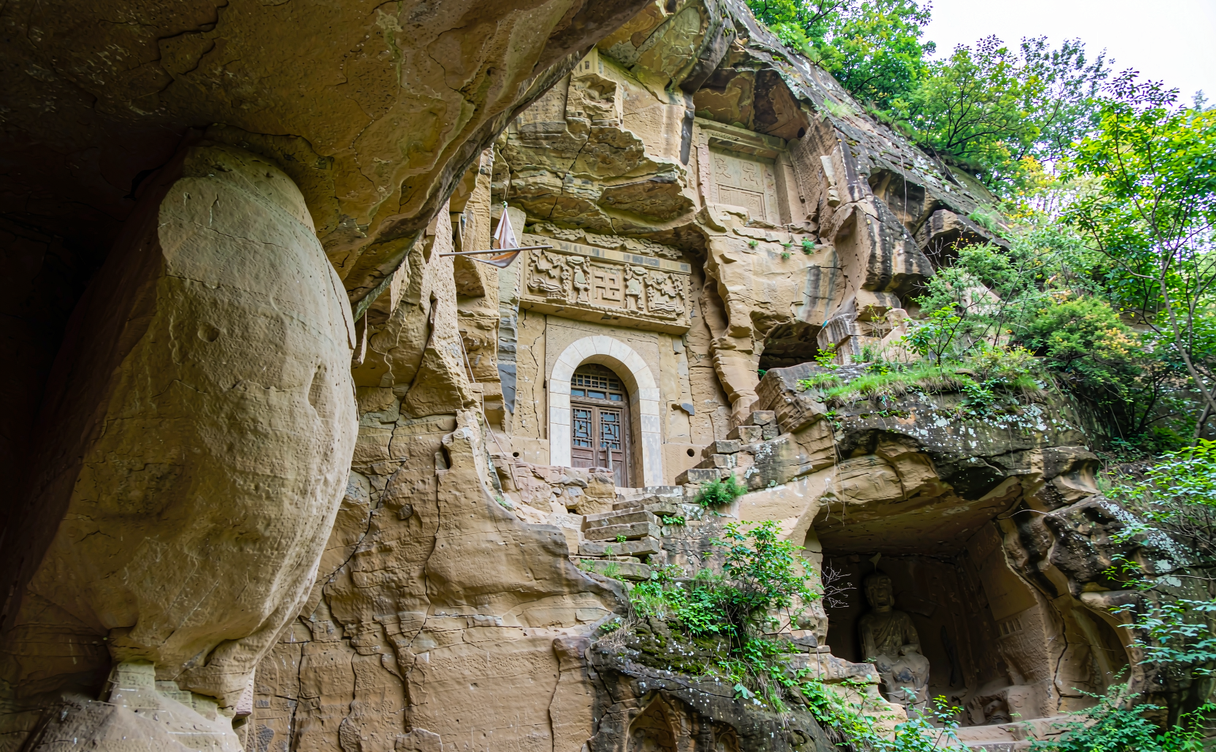
The signature sight is the North Grotto Temple, a cluster of rock cut Buddhist caves carved into a cliff above the Pu River. Work began in the Northern Wei dynasty and continued for centuries, leaving hundreds of niches and several colossal seated Buddhas that still gaze out over the valley. Standing at the base of a seven meter figure, with the loess hills glowing behind it, is one of the most peaceful experiences in the province. For travelers who love cave art, our Dunhuang Mogao Caves guide pairs naturally with a Qingyang stop, since both trace the spread of Buddhism along the old routes.
The caves are numbered rather than named, and the highlights are concentrated in the main cliff face. Look for Cave Seven, which holds the largest group of seated Buddhas, and the relief carvings of flying apsaras and donors that line the side walls. The stone has weathered to a warm honey color, and the quiet is broken only by wind through the ravine. A local guide can point out the dynasty marks carved above each niche, which turn the cliff into a rough timeline of a thousand years of devotion.
Most visitors reach Qingyang from Lanzhou, the provincial capital. The Qingyang to Lanzhou journey is about four hundred kilometers and takes five to six hours by car or bus along highways that climb steadily onto the plateau. Qingyang also has a small airport with flights to Lanzhou and Xi’an, which is the fastest option if you are coming from elsewhere. Trains are slower and less frequent, so many people build the trip as a road loop through eastern Gansu. A wider Gansu plan often continues west to the fortresses and painted mountains described in our Gansu Jiayuguan Fort guide.
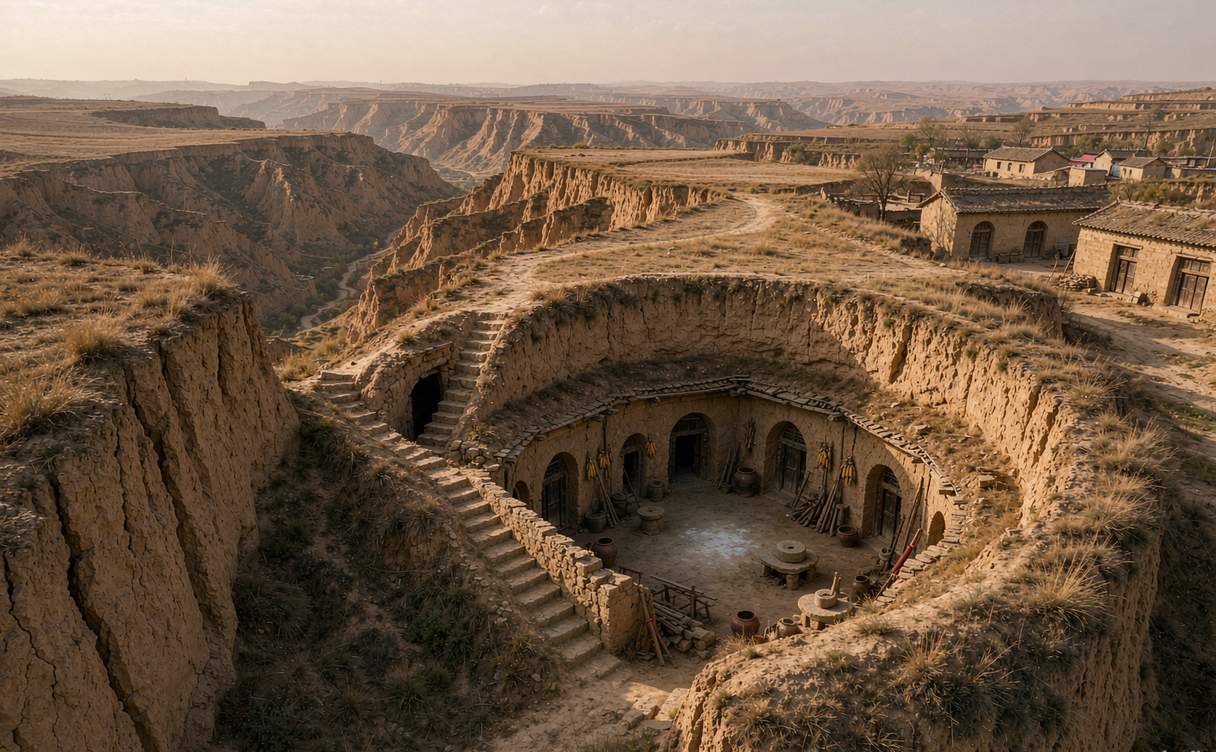
The Qingyang loess plateau is the backdrop to everything here. The soil is a fine, pale sediment blown in from the deserts over millennia, and it erodes into spectacular shapes: rounded hills, vertical gullies, and flat topped mesas. Local people have lived in cave houses dug straight into the hillside for generations, and you can still see whole villages of whitewashed cave homes with paper cut window decorations. A walk through the farmland above the Pu River, especially at dawn when the light is soft, shows the plateau at its most photogenic.
To really understand the plateau, visit a working cave home. Step inside and the first surprise is the cool, even temperature, a natural insulation that makes cave houses comfortable through both summer and winter. Families often keep a small vegetable plot out front and dry corn along the entrance arch. A few villages near the city welcome visitors, and a cup of strong tea with the host, through a translator app, is a genuine glimpse of rural Gansu that no museum can match.
Beyond the grottoes, things to do in Qingyang Gansu include climbing to the Zhouzu Mausoleum, a hillside park said to honor the ancestors of the Zhou dynasty, and browsing the Qingyang Museum for its red pottery and folk art. The city is also famous across China for its embroidered sachets, small fragrant pouches made by local women and sold in the markets, and for skilled paper cutting. Spending an hour with a craftsperson is a nice counterpoint to the big stone Buddhas.
Food here is hearty northern fare built around wheat and potato. Hele noodles, pressed through a wooden press into thick ribbons and served with a savory broth, are the dish to try, along with hand pulled noodles and fried potato cakes. The surrounding countryside grows fine apples and millet, and a cup of local yellow wine makes a warming end to a cold day on the plateau.
Save room for the street snacks that appear after dark. Grilled lamb skewers dusted with cumin, steamed buns stuffed with potato, and sweet roasted seeds are sold from small carts near the central square. The plateau’s apples are crisp and cheap in autumn, and a bag of dried slices makes a good trail snack for the grotto walks. Portions are generous, so ordering two or three dishes for two people is usually plenty.
The best time to visit Qingyang is late spring and early autumn, roughly May through June and September through October, when the plateau is green or gold and the temperatures are mild. Summers can be hot and dusty, while winters are cold and the caves feel forbidding. Time your Qingyang travel itinerary around the harvest if you want to see the sachet markets at their liveliest, and avoid the chilly lunar new year lull when some sites keep short hours.
Qingyang’s cultural calendar centers on the annual sachet fair, held in the fifth lunar month, when the city fills with stalls of embroidered pouches, each stitched with a different blessing for health or love. It is the best time to meet the artisans and watch the sewing hands at work. Even outside the fair, the folk art museum keeps a rotating display, and private workshops can arrange a short lesson if you ask ahead.
A realistic Qingyang travel itinerary runs two to three days. Give one full day to the North Grotto Temple and the river valley, another to the Zhouzu Mausoleum and the city’s museums and markets, and a half day to simply explore a cave dwelling village. Because public transport between the scattered sites is limited, hiring a car with a driver for the day is the most efficient way to move around.
Getting around Qingyang itself is easy, since the grottoes and mausoleum are within an hour of the city center. For the wider region, distances on the plateau are deceptive: what looks close on a map can be a slow drive through winding ravines. Build buffer time into every transfer, and keep fuel and water in the car.
Drivers here are used to foreign visitors and are patient with translation apps, but having your hotel write each stop in Chinese characters saves confusion at unmarked junctions. If you prefer not to drive, the local bus station runs frequent services to the main sites, though they stop early in the evening.
For context on the geology beneath all of this, the Wikipedia page on the Loess Plateau explains how the wind blown sediment shaped northern China’s farmland and history.
Where to stay is straightforward: Qingyang city has a solid range of mid range hotels, and the cave dwelling guesthouses on the outskirts offer a memorable night if you want the full plateau experience. Eat in the evening night market for noodles and grilled skewers, and buy sachets and paper cuts directly from the makers to support the craft.
A Qingyang travel guide should end with a practical note. The plateau sun is strong and the wind dries the skin, so bring sunscreen, a scarf, and lip balm. Roads are well signed in Chinese, so have your destination written in characters for the driver. With those small preparations, Qingyang rewards you with a side of Gansu that most itineraries miss entirely.