

Traveling as an LGBTQ visitor to mainland China is, for most people, refreshingly uncomplicated — provided you arrive with the right expectations. This China LGBTQ travel guide is not a survey of law or politics. It is a practical field manual for a comfortable, safe trip: where the welcoming scenes are, how locals actually behave, and which habits keep your travel smooth. The short version is that China is a popular destination for gay travel China visitors precisely because daily life is calm and curious rather than confrontational.
Is China Safe for LGBTQ Travelers
The first question most people type is “is China safe for LGBTQ?” In ordinary tourist settings, yes. Violent hostility toward foreigners or toward same-sex couples is rare, and China’s big cities are busy, anonymous places where most people are focused on their own evening. What you will not find, in much of the country, is open political advocacy or the kind of pride parade common in Europe and North America. The social atmosphere is pragmatic: people generally leave others alone.
That said, public behavior follows local norms. Chinese couples, straight or otherwise, tend to keep affection low-key in public. Holding hands is common among friends of any gender and will not draw a second look; long kisses on the metro will draw eyes regardless of who is doing it. Matching that baseline of discretion is the single most useful thing a visitor can do. Our China travel safety tips cover the general picture, and most of it applies equally here.
Where the Welcoming Scenes Are
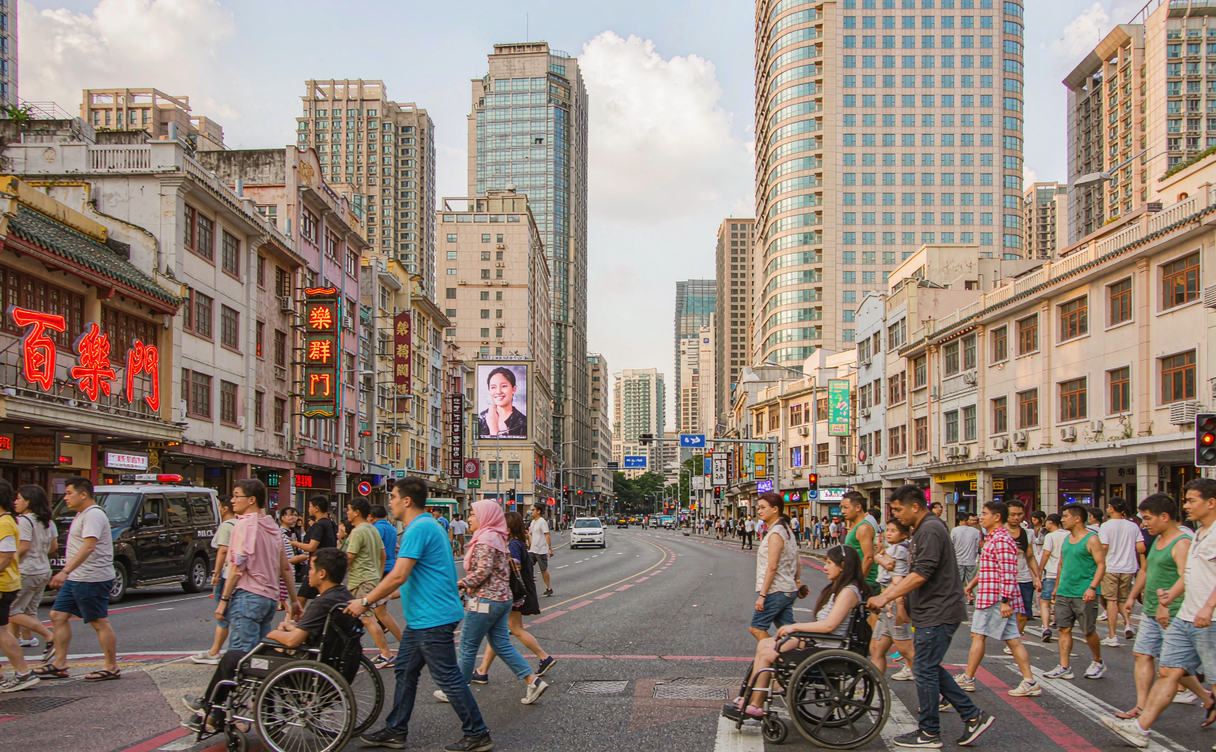
The LGBTQ friendly China experience is concentrated in a handful of cities. Shanghai has the most visible scene, particularly around the former French Concession and Jing’an, where bars and clubs are relaxed and used to foreign faces. Beijing’s Sanlitun district mixes expat and local crowds and is easy to navigate. Chengdu, Kunming, and Guangzhou each have smaller but genuine venues. None of these are “gay districts” in the Western sense; they are mixed neighborhoods where a specific bar or night happens to be the gathering point.
For an overview of venues and etiquette, the China nightlife and bar guide is a good starting point, though venue names change, so treat any list as a snapshot and ask recent travelers or your hotel concierge for what is current.
Apps and Meeting People
Dating and social apps work in China, but with a wrinkle: Grindr and some Western platforms have been restricted, so travelers often rely on locally popular alternatives or a VPN. Plan ahead if staying connected matters to you, and read our things to know before visiting China for the practical internet situation. In major cities, international hotels usually have reliable Wi-Fi, and co-working cafes are another option.
China Nightlife for Gay Visitors
The China nightlife gay scene is smaller than in Bangkok or Berlin but perfectly hospitable. Expect modest cover charges, a mix of Chinese and English music, and a crowd that is more interested in a good night than in anyone’s paperwork. Bouncers are professional, and drink prices are posted. As anywhere, keep an eye on your drink and your phone, and arrange your ride home before you are tipsy — ride apps in China are covered in our China travel guide for first-timers.

Practical Etiquette
A few LGBTQ travel tips China visitors find useful: do not assume a local’s orientation or relationship status, and do not out anyone. Chinese concepts of privacy around family differ, and some travelers are not out to their parents. If you are traveling as a same-sex couple, booking a hotel room with two beds (“twin”) rather than one is rarely questioned and removes any awkward moment at check-in. Our China etiquette guide for tourists goes deeper on politeness and face-saving, which smooths far more situations than orientation ever complicates.
Solo Travelers and Women
Solo women, LGBTQ or not, report few problems in China’s cities, especially when sticking to well-lit, busy areas. The solo female travel safety guide lays out the standard precautions — keep copies of your passport, share your route, and trust your instinct about a venue or a ride. Harassment exists but is less common than in many destinations, and public transport is safe late into the night.
Language and Coming Out
You do not need to announce anything to travel well here. The Chinese word for gay is “tongzhi” in community usage, but you can also simply talk about a partner the same way any traveler would. Most interactions with hotel staff, taxi drivers, and restaurant servers never touch on personal life. If a question about family comes up and you would rather not answer, a smile and a change of subject works in every language.
A Note on Official Information
For the broadest context on visiting, the official Chinese government English portal at gov.cn publishes travel and entry information that is useful for planning logistics, visas, and seasonal considerations. Treat community venue details as living information that shifts year to year.
The practical takeaway is that China rewards the traveler who treats it as a normal, modern country rather than a special case. Book the same hotels, ride the same trains, and wander the same night markets as everyone else, and you will mostly be left to enjoy yourself.
Cities Worth Prioritizing
If a social scene matters to your trip, weight your itinerary toward Shanghai and Beijing, then consider Chengdu for its famously relaxed attitude and excellent food. Smaller cities are not unwelcoming, but the venues are fewer and the language barrier higher, so build in more downtime and fewer fixed plans.
Whatever your route, keep your plans flexible enough to follow a local recommendation. The best nights in China are rarely the famous ones — they are the small bar a friend mentions, the rooftop with the right view, the karaoke room that somehow fits ten new acquaintances.
Staying Comfortable
Carry your passport or a clear photo of it; police checks on foreigners are rare but real, and having ID settles any situation fast. Keep emergency numbers saved, and know the address of your embassy. None of this is specific to LGBTQ travel — it is simply how to be a prepared visitor anywhere. China is a vast, varied country, and the travelers who do best are the ones who stay curious and unbothered.
Smaller Cities and the Countryside
The scene thins quickly outside the top four or five cities, and that is not a warning so much as a description. In a county town or a village, you may be the first openly foreign visitor anyone has met, and questions will be curious rather than hostile. If you travel as a couple, expect occasional double-takes and, more often, friendly nosiness about where you are from. Discretion here is about local comfort, not fear. A practical tip: in smaller places, booking a room with two beds removes the one moment that might otherwise require an explanation you did not plan to give.
Events and Community Gatherings
Occasional community events and informal parties happen in the big cities, often announced through word of mouth, expat bulletin boards, or hospitality-app groups rather than public posters. They are low-key and welcoming to travelers who show up solo. Do not photograph people without asking, and do not treat the room as a spectacle; the easiest way to be accepted is to behave like anyone else enjoying a night out. The same etiquette that governs any bar in the world — buy your round, mind your belongings, and leave gracefully — applies.
Reading the Room
China is a place of enormous regional variation, and attitudes shift from coast to interior, from metropolis to market town. The traveler who stays alert to context, rather than assuming one rule fits the whole country, will have the smoothest time. Most awkward moments come not from hostility but from simple cultural mismatch, and a little patience dissolves nearly all of them.
In the end, China is a place where most people’s first question is “have you eaten?” rather than “who are you?” Answer that warmly, and the rest tends to take care of itself.