

Shangqiu rarely appears on first-time China lists, and that is exactly why it is worth a visit. This Shangqiu travel guide is for travelers who like layers of history you can actually walk on. The city claims roots going back to the Shang culture that gave the region its name, and its old town is a rare surviving example of a Ming-era walled city laid out on a bagua (eight-trigram) plan, complete with a moat. For visitors already exploring Henan’s better-known sites, Shangqiu adds a quieter, older counterpoint without the tour-bus density.
How to Get to Shangqiu
Shangqiu is a major rail junction, which makes it simple to reach even though it is not a headline destination. High-speed trains from Zhengzhou take about an hour, and from Kaifeng roughly 40 minutes, so it pairs naturally with both. Heading east, the Xuzhou travel guide covers the Jiangsu city that is the next major stop, and from there the Jinan travel guide continues into Shandong. Trains also run north–south on the Beijing–Kowloon line, so you can fold Shangqiu into a much longer route. Inside the city, taxis are cheap and the old town is walkable once you are through the gates.
Getting Around Shangqiu
Working out how to get to Shangqiu is straightforward; the part that catches visitors out is the geography once they arrive. The modern city and the ancient city are two separate places. The high-speed station and most hotels sit in the newer districts, while the walled old town lies several kilometres north, so budget fifteen to twenty-five minutes by taxi between them and do not plan to walk it.
Within the old town itself, walking is the only sensible way to move. The bagua street plan makes for short blocks and odd diagonal junctions that vehicles navigate badly, and half the pleasure is losing the thread of the grid for a while. Electric tricycles wait at the main gates and will run you across to the far side for a small negotiated fare, which is welcome at the end of a long day on the wall.
For anything beyond the city, plan around distance rather than optimism. Mangdang Mountain in Yongcheng is the main case: it is well over an hour east, and while buses run, the tomb complex is spread out once you arrive and a driver who waits for you saves the whole afternoon. Confirm the return arrangement before you leave, because getting back from Yongcheng late in the day is harder than getting there.
Things to Do in Shangqiu
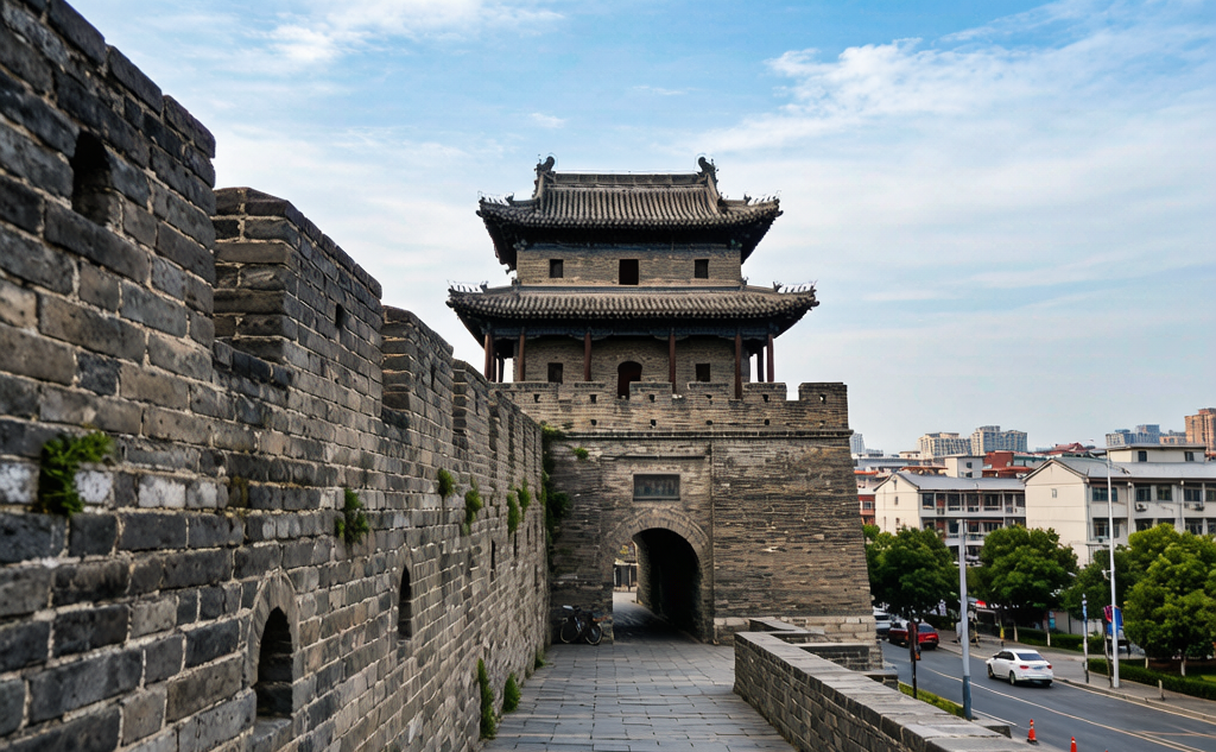
Start at Shangqiu Ancient City (商丘古城). The current walls date to the Ming dynasty, but what makes the place special is that earlier cities were built directly on top of one another here, so you are standing on perhaps six layers of urban history. The bagua layout means the streets radiate and cross on a plan tied to the eight trigrams, which is unusual and fun to trace on foot. Walk the top of the wall for the moat views, then drop into the grid of lanes where courtyard houses, small temples, and tea shops still function as a living neighborhood.
The Fire God Terrace (火神台) and the nearby Suiren Tomb commemorate figures from Chinese legend associated with fire and the birth of civilization here. The terrace is an earthen platform used for seasonal ceremonies, and the surrounding park is a calm spot away from the lanes. For scholarship history, the Yingtian Academy (应天书院) was one of the four great academies of classical China and sits in the Suiyang district; even in rebuilt form it gives a sense of how seriously this region took education.
East of the city, in Yongcheng, Mangdang Mountain (芒砀山) holds a cluster of Han-dynasty tombs carved into the rock, including the elaborate burial of Prince Liu Wu. The carved stone chambers, with relief panels and a layout modeled on above-ground palaces, are the highlight, and the site is tied to the legend of Liu Bang beheading the white snake. Budget half a day if you are coming from the city, since Yongcheng is a separate county-level hub.
Local food follows the Henan wheat tradition: shui jian bao (pan-fried buns), duozi yangrou (pressed mutton rolls), and the local sesame twisted dough sticks make good snacks between sites. The night market outside the south gate is the easiest place to sample a range.
Best Time to Visit Shangqiu
The best time to visit Shangqiu is spring (April to May) and autumn (September to October), when the weather suits walking the wall and the open sites. Summers are hot and can be sticky, while winters are cold and grey, which dulls the appeal of the outdoor ruins. Because most of the main sights are open-air or semi-open, the shoulder seasons let you cover more in a day without heat fatigue.
Linking Shangqiu to Henan and Beyond
Shangqiu works as the eastern anchor of a Henan circuit. From here you can train west to the Zhengzhou travel guide and the Luoyang travel guide, or north to Kaifeng travel guide for the Song-dynasty riverside town. Each city shows a different slice of the province, and together they make a coherent story of northern Chinese capital culture without repeating the same exhibits.
A Shangqiu Itinerary
A tight Shangqiu itinerary runs two days. Day one is the ancient city itself: walk the wall in the morning, explore the bagua lanes and courtyards midday, and catch the Fire God Terrace at golden hour. Day two splits between the Yingtian Academy in Suiyang and an outing to Mangdang Mountain in Yongcheng if you want the Han tombs; if tombs are not your thing, spend the second day simply absorbing the old town and its food streets. Travelers with a third day often train to Kaifeng and shift eras.
What a Shangqiu Trip Costs
Shangqiu is one of the cheaper places to travel in Henan, largely because it has never been organised around tourism. Hotels in the new districts near the rail station are plentiful and priced for business travellers rather than visitors, which means solid mid-range rooms at rates well below what Luoyang or Zhengzhou charge in peak season. A handful of small guesthouses operate inside the old town, and they are the atmospheric choice if you want to be on the lanes at dawn, though facilities are simpler.
Entry costs are modest and fragmented. The ancient city charges for the wall walk, while the Fire God Terrace, the Yingtian Academy, and the Mangdang Mountain tomb complex each sell their own tickets, so there is no single pass to buy. Mangdang Mountain is the most expensive of them and also the one where a combined ticket for several tombs usually makes sense. Food will barely register in your budget: a filling plate of pan-fried buns or a bowl of noodles at the south gate night market costs pocket change, and even a full sit-down meal with mutton rolls stays cheap. The one place to spend properly is a car for the Yongcheng day trip, which is the difference between seeing the Han tombs comfortably and spending your afternoon waiting for a bus. Keep small cash on hand, as several of the lesser gates still prefer it.
Shangqiu Travel Tips
A few things help. The old town is large, so wear good walking shoes and carry water in summer. English is scarce, so keep a Chinese-character note of your hotel name for taxis. The ancient city is a real residential area, not a cleaned-up theme park, so respect the people who live there and ask before photographing inside courtyards. Some satellite sites close on Monday, so check ahead. As elsewhere in the region, carry a little cash for markets and small entry gates.
For an independent summary of the city’s background and administration, Shangqiu on Wikipedia is a useful reference.