

Most visitors know Hainan for its coastline, but the island’s green heart is just as remarkable. This Hainan Tropical Rainforest National Park guide takes you past the resorts and into the jungle, covering Wuzhishan hiking in Hainan, an Yinggeling rainforest tour, how to get to Hainan rainforest from Sanya, the elusive Hainan gibbon in Bawangling, and the best time to visit Hainan rainforest. If you want a side of nature with your beach holiday, this is where to find it.
Established as one of China’s first national parks, Hainan Tropical Rainforest National Park protects more than 4,000 square kilometres of montane forest across the island’s central spine. It shelters the Hainan gibbon, the world’s rarest primate, along with waterfalls, misty ridges and some of the oldest dipterocarp trees in Asia. For most travellers the beaches of Sanya beach travel guide are the entry point, but the park is only a few hours inland.
How to get to Hainan rainforest from Sanya
Understanding how to get to Hainan rainforest from Sanya depends on which section you target. The most accessible hub is Wuzhishan city, about two to three hours northwest of Sanya by car or bus. The coastal route passes through farmlands and small Li and Miao ethnic villages before climbing into cooler, greener hills. From Haikou, the provincial capital covered in our Haikou travel guide, the drive to the park’s northern edge is similar in time.
Public buses run from Sanya bus station to Wuzhishan, and ride-hailing or a hired driver gives more flexibility for reaching trailheads. Because the park is spread out, a private car is the easiest way to link multiple sections in one day. Our China hiking treks guide has tips on preparing for humid tropical walks.
Costs are modest. A seat on the intercity coach from Sanya to Wuzhishan runs roughly ¥40–55 (about US$6–8), with departures clustered between 07:00 and 17:00 and the last return leaving Wuzhishan in the late afternoon — miss it and you are staying the night. A car with driver for a full day costs ¥600–900 (US$85–125) depending on how many sections you link, and split between four people that often beats piecing together buses. Ride-hailing works inside Wuzhishan city but thins out sharply at trailheads, so if you take a taxi in, agree a pickup time and save the driver’s number. Mobile signal drops out in the deeper valleys, so do not rely on calling for a lift later.
Wuzhishan hiking in Hainan
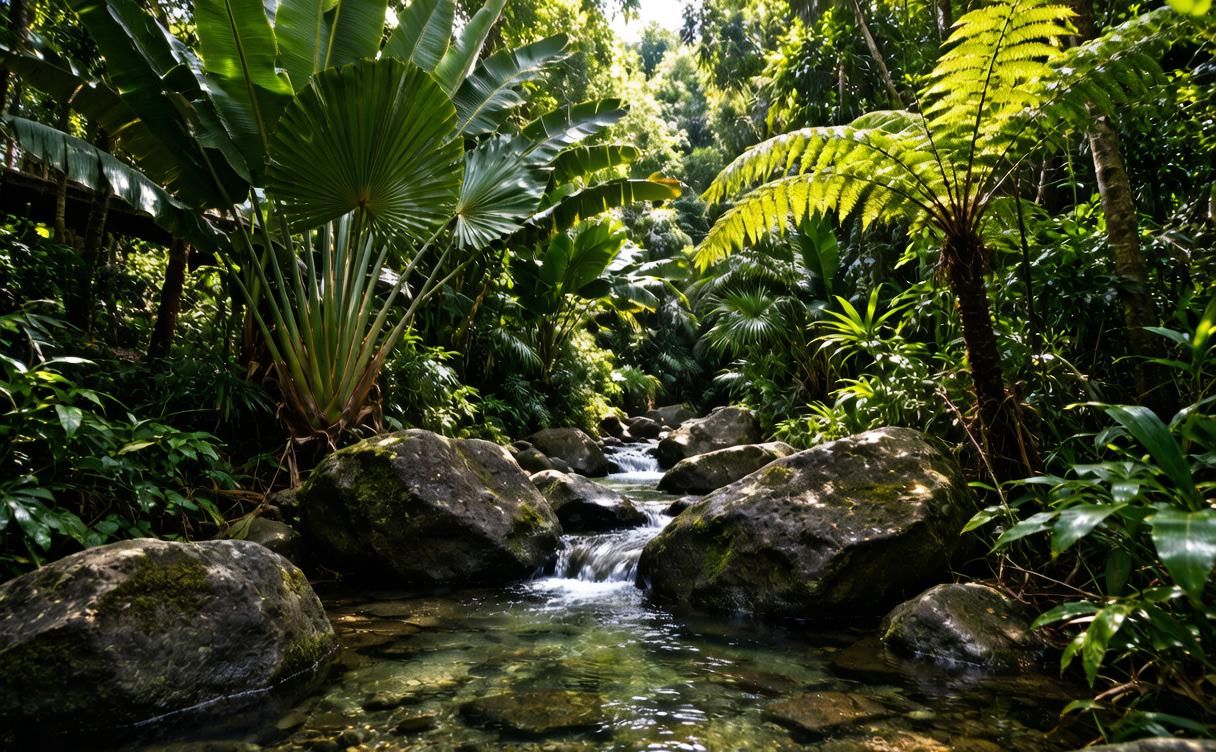
The name means “Five Finger Mountain,” and the peaks do resemble a splayed hand. Wuzhishan hiking in Hainan ranges from short boardwalk loops to a demanding ascent of the main summits, which sit above 1,800 metres. The lower trails wind through fern gullies and past stream pools where you can cool off, while the ridge routes reward fit hikers with cloud forest and panoramic views across the central highlands.
A good first hike is the waterfall trail near the Wuzhishan visitor centre, an easy two-hour round trip suitable for families. More ambitious walkers can attempt the higher ridgeline with a local guide, who will point out medicinal plants used by the Li people for centuries. Start at dawn; by midday the tropical heat and afternoon showers settle in.
Some numbers help you plan. Entry to the Wuzhishan scenic area is around ¥45 (US$6), the waterfall loop covers roughly four kilometres with a gentle 200-metre climb, and the full summit route is a twelve-kilometre round trip taking six to eight hours. A local guide for the ridge costs about ¥300–500 (US$42–70) per group and is required on some routes during the wet months. The usual mistake is underestimating humidity: at 90 per cent moisture and 28°C, a trail rated “moderate” feels twice as hard as the same walk at home. Carry three litres of water per person, wear grippy shoes rather than fashion trainers — the granite steps stay slick even on dry days — and tuck your trousers into your socks if you walk after rain, when leeches wake up on the lower slopes.
Yinggeling rainforest tour
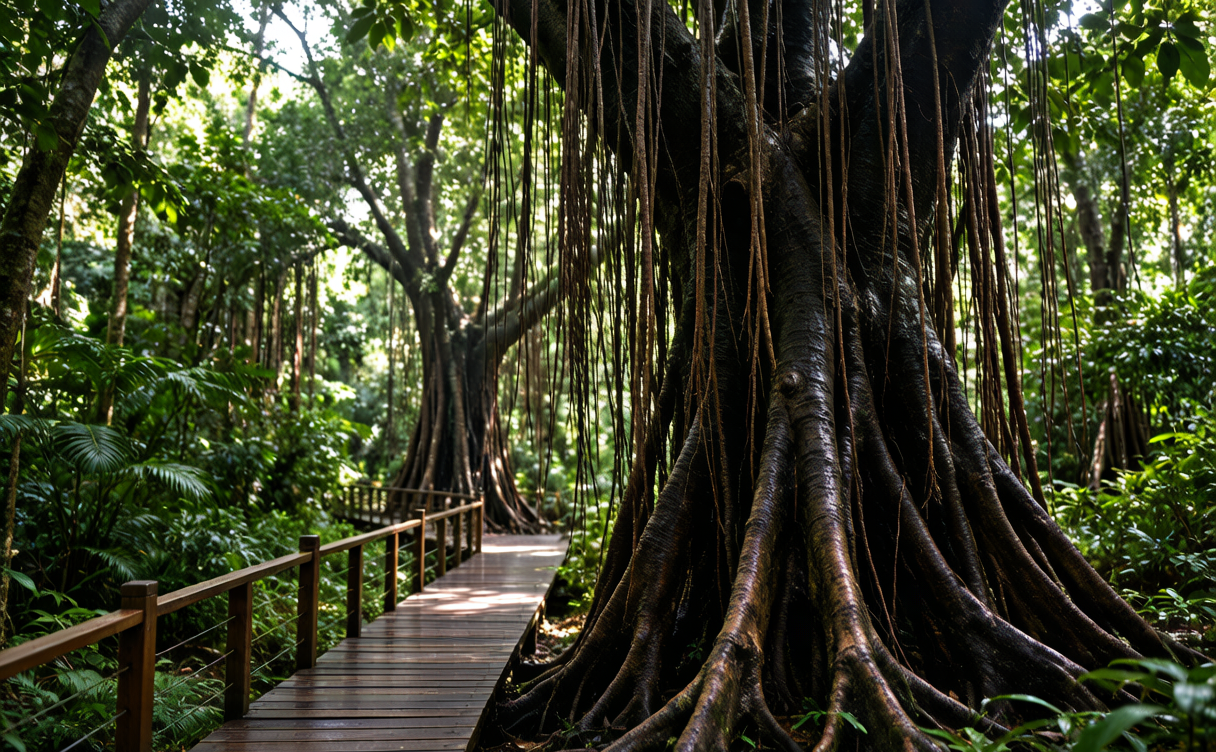
For raw wilderness, an Yinggeling rainforest tour is the highlight. Yinggeling, in the park’s southern interior, is one of the least disturbed tracts of lowland rainforest in China and a stronghold for the Hainan gibbon. Access is restricted and usually arranged through approved guides or small eco-tours, which helps protect the fragile ecosystem. Expect long drives on rough roads, then walking beneath towering trees draped in epiphytes and lianas.
Because visitor numbers are capped, book an Yinggeling rainforest tour well in advance and be ready for basic facilities. The reward is silence broken only by birdsong and the chance, with luck, of hearing the gibbon’s haunting call at dawn. It is a world away from the loungers of Yalong Bay or the diving at Wuzhizhou Island.
Budget ¥800–1,500 (US$110–210) per person for a guided one- or two-day Yinggeling trip covering permits, transport and simple village meals, and expect the operator to ask for passport details a week or more ahead so the permit can be issued in time. Groups are usually capped at eight to twelve people. Accommodation nearby is basic guesthouse standard, and there is no ATM in the villages, so bring cash as well as a mobile payment app.
Hainan gibbon in Bawangling
The Hainan gibbon in Bawangling is the park’s most famous resident and one of conservation’s great comeback stories. Once down to fewer than ten individuals, the population has slowly recovered under strict protection in the Bawangling section of the park. Seeing one is rare and never guaranteed, but the viewing hides and early-morning listening posts give patient visitors a chance.
Bawangling also has good general trails, waterfalls and a canopy walkway, making it a strong alternative if Yinggeling permits are full. The gibbon’s survival is tied directly to the forest’s health, which is why the whole national park matters far beyond tourism. For context on China’s protected landscapes, our China national parks guide explains how the system works and which other parks to combine.
Best time to visit Hainan rainforest
The best time to visit Hainan rainforest is the dry season, from November to April, when humidity drops, trails are firm, and leeches are scarce. This also avoids the summer typhoon risk and the heaviest rains of June to September. Even in the dry season, pack a light rain shell and quick-dry clothing, because showers can appear on the peaks.
Winter is pleasantly cool at altitude and ideal for hiking, while spring brings flowering trees and active birds. If you time a visit between beach days on the coast, you get the full range of what Hainan offers without leaving the island.
A sample two-day plan from the coast
Day one. Leave Sanya by 07:00 and reach Wuzhishan city around 09:30. Drop your bags at a guesthouse, then walk the waterfall loop before lunch while the air is still cool. Eat in town — Li-style river fish with wild mountain vegetables costs ¥60–100 (US$8–14) for two — and spend the afternoon on the lower boardwalks or visiting a Li village. Dusk arrives early behind the ridges, near 18:30 even in midsummer.
Day two. Start at 05:30 for the higher ridge with your guide, aiming to be above the cloud line by 08:00. Descend in the early afternoon, shower, and drive back to the coast in time for dinner. With a third day, swap the return for a run west to Bawangling and its canopy walkway.
Two nights inland is the sweet spot: one makes the driving feel wasteful, three starts to repeat itself.
Common questions about the Hainan rainforest
Is the park suitable for children? The boardwalks and waterfall trails are, easily. The ridge climbs are not — heat, exposure and distance make them a poor choice for anyone much under twelve.
Do I need cash? Some, yes. Mobile payment works throughout Wuzhishan city, but village stalls, small guesthouses and a few park kiosks still prefer notes. Carry ¥300–500 in small bills.
Will I actually see a gibbon? Probably not. Fewer than fifty animals live across the whole park, they travel high in the canopy, and even researchers rely on hearing rather than seeing them. Treat a sighting as a lottery win and the dawn chorus as the real prize.
Is anything dangerous? Nothing that hunts people. Watch for leeches after rain and mosquitoes at dusk, and stay on the trail.
Plan your jungle escape
Give the rainforest at least one full day, ideally two, and base yourself in Wuzhishan city or a nearby village homestay. Combine it with a few days of coast so the contrast between jungle and sea becomes the trip’s signature memory. The park is large, so choose one or two sections rather than trying to see everything.
For conservation status, research and the gibbon recovery programme, the International Union for Conservation of Nature maintains the Hainan gibbon species page on its Red List, the authoritative source for the primate’s population and threat level. Planning with that background makes a visit to Hainan Tropical Rainforest National Park more meaningful, and helps you travel in a way that protects the forest for the next traveller.