

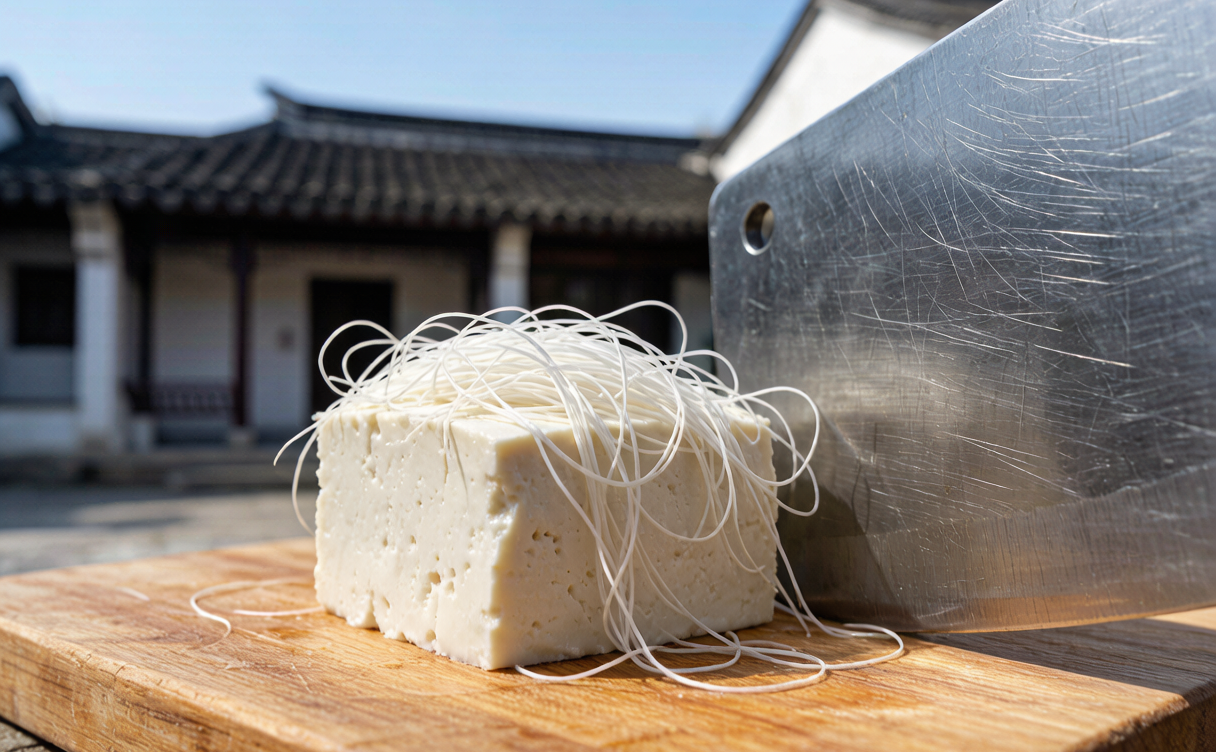
Watch a chef in Yangzhou make wensi tofu and you will understand the cuisine before you taste anything. He lays a block of silken tofu on a wet board and, in about two minutes of steady cleaver work, reduces it to a few thousand threads finer than sewing cotton, none of them broken. Then he slides the pile into clear chicken broth, where it opens out like a chrysanthemum. Nothing is fried, nothing is chilli-hot, and the entire point is that you can still taste the tofu. This Huaiyang cuisine guide covers the food of the Grand Canal cities of Jiangsu — what it is, which dishes to order, when to eat them, and where to find them without paying banquet prices.
Content Preview
- What Huaiyang food is and why it became China’s banquet cuisine
- The knife work behind the simplicity
- Dishes to order, with Chinese names and pinyin
- Huaiyang breakfast culture and morning tea
- Where to eat it in Yangzhou, Huai’an, Zhenjiang and Nanjing
- Practical tips on prices, seasons and ordering
- FAQ
What Is Huaiyang Food?
Huaiyang cuisine (淮扬菜, huáiyáng cài) is one of China’s eight great regional cooking traditions, and it takes its name from two cities: Huai’an on the Huai River and Yangzhou on the Yangtze. Add Zhenjiang and Nanjing and you have the core territory — a flat, wet, fertile stretch of Jiangsu province stitched together by the Grand Canal.
That canal explains everything. For a thousand years it carried grain, salt and tax silver north to the capital, and the merchants who controlled the salt monopoly at Yangzhou became some of the wealthiest people in the empire. They spent that money on gardens, opera and, above all, dinner. Emperors travelling south were fed here, so the cooking evolved to impress people who had already eaten everything: technically difficult, seasonal to the week, and deliberately restrained in flavour.
If you are asking what is Huaiyang food in one sentence, it is this — freshwater ingredients treated gently. River fish, shrimp, crab, eel, duck, bamboo shoots, and tofu in a dozen forms. Cooking methods run to steaming, simmering and slow stewing rather than the roaring wok heat of Guangdong or Sichuan. Seasoning is light, faintly sweet, and never allowed to bury the ingredient. Chilli barely appears. When state banquets are held in Beijing, this is usually the cuisine on the table, precisely because it offends nobody and demonstrates enormous skill.
The Knife Work Behind the Simplicity
Every regional Chinese cuisine has a signature discipline. Huaiyang’s is the cleaver.
Wensi tofu is the showpiece, but the everyday example is dazhu gansi: a palm-sized brick of pressed dried tofu, sliced horizontally into eighteen to twenty-four sheets, stacked, then cut into threads the width of a noodle and simmered in a rich stock with shrimp and ham. It arrives looking simple. It is not.
Then there is santao ya, the three-set duck from Huai’an, in which a pigeon is boned and stuffed inside a boned wild duck, which is boned and stuffed inside a domestic duck, and the whole thing stewed for hours until you can spoon through three birds at once. No bones, no seams, no visible trickery.
This is why Huaiyang restaurants feel calmer than other Chinese dining rooms. Most of the work happened hours earlier, with a knife.
Dishes to Order: A Huaiyang Cuisine Guide to the Classics
These are the best Huaiyang dishes to order on a first visit. Point at the Chinese characters if the menu has no English — most places outside the big teahouses will not.
| Dish | Chinese / pinyin | What you get |
|—|—|—|
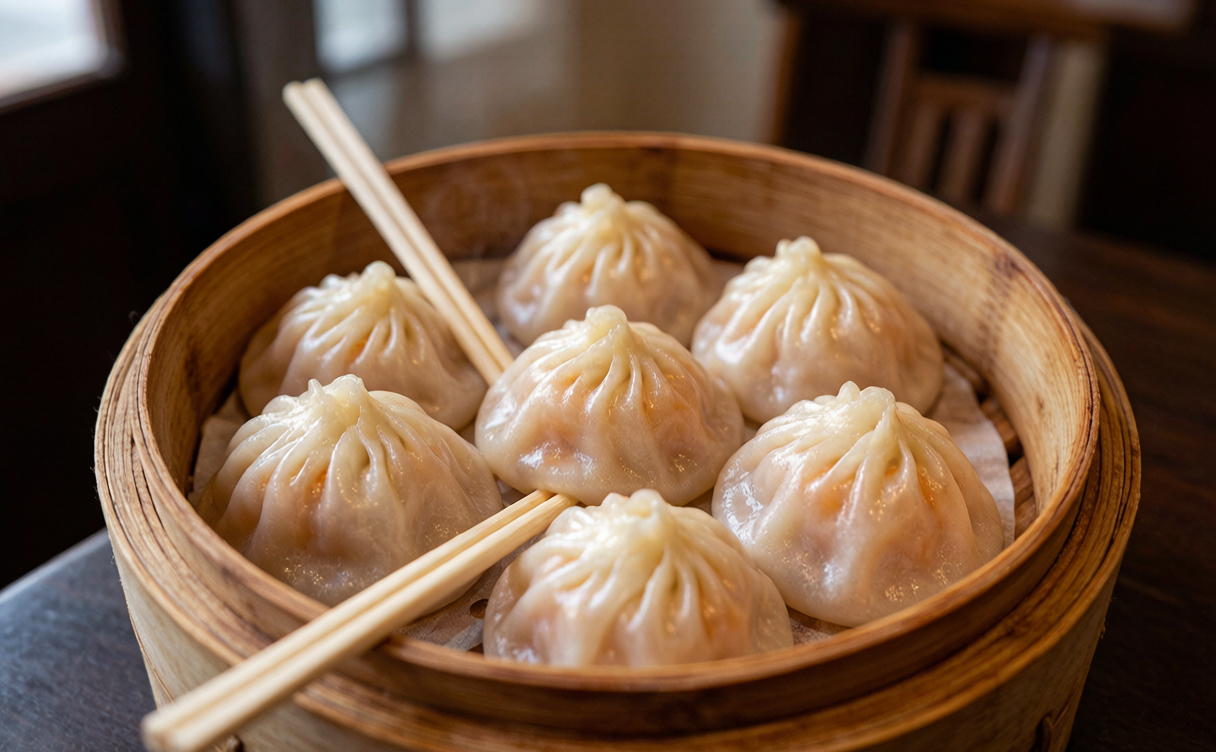
| Crab roe soup dumplings | 蟹粉汤包 / xièfěn tāngbāo | A fist-sized translucent dumpling filled with soup and crab roe, drunk through a straw |
| Braised lion’s head meatball | 清炖狮子头 / qīngdùn shīzitóu | One enormous hand-chopped pork meatball poached in clear broth, soft as custard |
| Shredded dried tofu in broth | 大煮干丝 / dàzhǔ gānsī | Threads of pressed tofu simmered with shrimp and ham in stock |
| Wensi tofu soup | 文思豆腐 / wénsī dòufu | Silken tofu cut to hair width, floating in clear chicken broth |
| Yangzhou fried rice | 扬州炒饭 / yángzhōu chǎofàn | Egg-coated grains with shrimp, ham, bamboo shoot and peas — no soy sauce |
| Three-set duck | 三套鸭 / sāntàoyā | Pigeon inside wild duck inside duck, stewed whole |
| Crystal pork terrine | 水晶肴肉 / shuǐjīng yáoròu | Zhenjiang cured pork set in its own clear jelly, eaten cold with ginger and vinegar |
| Salt-water goose | 盐水鹅 / yánshuǐ é | Poached goose in spiced brine, sold by weight from street counters |
A note on the dumplings, because this trips people up. The crab roe soup dumplings China is famous for come in two forms. Yangzhou and Huai’an make the large single tangbao — thin-skinned, palm-sized, served alone in a basket with a straw. Further south you get the small pleated six-to-a-basket version covered in our Shanghai soup dumpling guide. Order the big one here.
Yangzhou fried rice deserves defending too. The version served worldwide with dark soy sauce and frozen vegetables is not what the city makes. The local standard is pale gold, every grain jacketed in egg, studded with river shrimp, diced ham, bamboo shoot and shiitake. It costs ¥38–68 (US$5–10) in a proper restaurant.
Huaiyang Breakfast Culture: Morning Tea on the Canal
Yangzhou people describe their day with two phrases: pi bao shui in the morning, shui bao pi at night — skin wrapping water, then water wrapping skin. The first is morning tea. The second is the bathhouse.
Huaiyang breakfast culture is the most enjoyable way into this food and the cheapest. Between about 06:30 and 10:00, teahouses fill with retirees, families and businesspeople doing deals over a pot of green tea. You order tea first, then a rolling series of small plates:
- Sanding baozi (三丁包) — steamed bun stuffed with diced chicken, pork and bamboo shoot
- Qianceng yougao (千层油糕) — a translucent, faintly sweet layered steamed cake
- Feicui shaomai (翡翠烧卖) — jade-green open dumplings of glutinous rice and greens
- Tangbao (汤包) — the crab roe soup dumpling, ordered singly
- Yangchun noodles (阳春面) — clear broth, thin noodles, nothing else
Budget ¥45–95 (US$6–13) per person for a full spread, more if crab is in season. Come hungry and do not rush; nobody else is.
Where to Eat It
Yangzhou. The obvious answer to where to eat Huaiyang cuisine in Yangzhou is the pair of century-old teahouses: Fuchun (富春茶社) in a lane off Guoqing Road, and Yechun (冶春) on the canal near Slender West Lake. Both are touristed, both are still good, and both are best before 08:30. For dinner, the restaurants along Dongguan Street cover the classics at ¥80–150 per head.
Huai’an. The other half of the name, and far less visited. This is the place for three-set duck and for pingqiao doufu, a tofu stew of near-liquid delicacy. Prices run 30% below Yangzhou.
Zhenjiang. Come for crystal pork terrine with slivered ginger and the city’s famous black vinegar, plus guogai mian — noodles boiled with a small wooden lid floating in the pot.
Nanjing. The provincial capital sits at the edge of the tradition and adds its own salted duck and duck blood vermicelli soup. It also has the best transport links, English menus and hotel range.
One neighbour is worth folding in: Wuxi cooks in a distinctly sweeter register, and its sticky spare ribs are a shock the first time. Our Wuxi travel guide covers where to try them.
All of these cities sit on the waterway that made them rich, now inscribed as a UNESCO World Heritage site — you can walk to a canal lock from most of the restaurants above.
Practical Tips
Season matters here more than elsewhere. Crab roe runs late September to November, river shrimp are best in spring, bamboo shoots peak in March. A crab roe dumpling in July is made with paste.
Order fewer dishes than you think. Portions are large and the flavours subtle, so four dishes between two people beat seven.
Drink the dumpling correctly. Bite a small hole at the base, wait thirty seconds, then use the straw. People burn their mouths on the first one daily.
Costs. Teahouse breakfast ¥45–95, a solid lunch ¥60–120 per person, a full banquet-style dinner with crab ¥200–400. Pay by Alipay or WeChat Pay; a few old teahouses still take cash only at the counter.
Vegetarians do reasonably well. Wensi tofu, dazhu gansi and most tofu dishes are built on chicken or ham stock, so ask for quán sù (全素) and expect a smaller menu of stir-fried greens, bamboo and tofu.
FAQ
Is Huaiyang food spicy?
Almost never. Chilli is not part of the tradition. Flavours are savoury, lightly sweet and stock-driven, which makes this the safest of the eight cuisines for travellers who do not want heat — and the most interesting one for people who think Chinese food is only heat.
What is the difference between Huaiyang tangbao and Shanghai xiaolongbao?
Size and service. The Huaiyang version is one large dumpling per basket, thin enough to see through, eaten with a straw. Shanghai’s are small, pleated and eaten several at a time with vinegar and ginger. Both hold hot soup; only one requires equipment.
Which city is best for Huaiyang cuisine?
Yangzhou, for the teahouse breakfasts and the concentration of famous kitchens. Huai’an is better value and more authentic for banquet dishes. Nanjing is easiest to reach and has the widest choice of hotels.
How much should I budget for a meal?
Breakfast ¥45–95 (US$6–13) per person, lunch ¥60–120, dinner ¥120–250 unless you order crab or three-set duck, which push a table well past ¥400.
Is Yangzhou fried rice actually from Yangzhou?
Yes, though the city’s version bears little resemblance to the takeaway dish. The local standard uses no dark soy sauce and includes shrimp, diced ham, bamboo shoot and shiitake. Order it in Yangzhou at least once for comparison.
Written by Karl · Updated August 6, 2026