

When the Qing court needed cooks, it hired them from Shandong. When Beijing restaurants standardised their menus in the nineteenth century, they were largely copying Shandong ones. Most travellers arrive in China with Sichuan and Cantonese food on their list and have never heard of the tradition that shaped the northern table — which is why the food here surprises people. This Shandong Lu cuisine guide explains what Lu cuisine actually is, the dozen dishes worth crossing a province for, and where to eat them in Jinan, Qingdao and Qufu.
Content Preview
- What is Lu cuisine, and its three distinct branches
- The seasonal calendar: sea cucumber, prawns, scallions and crab
- Getting to Shandong by rail, with a cost table
- The dishes to order, from Yellow River carp to nine-turn intestines
- Where to eat and stay, a four-day eating route, and ordering tips
What Is Lu Cuisine
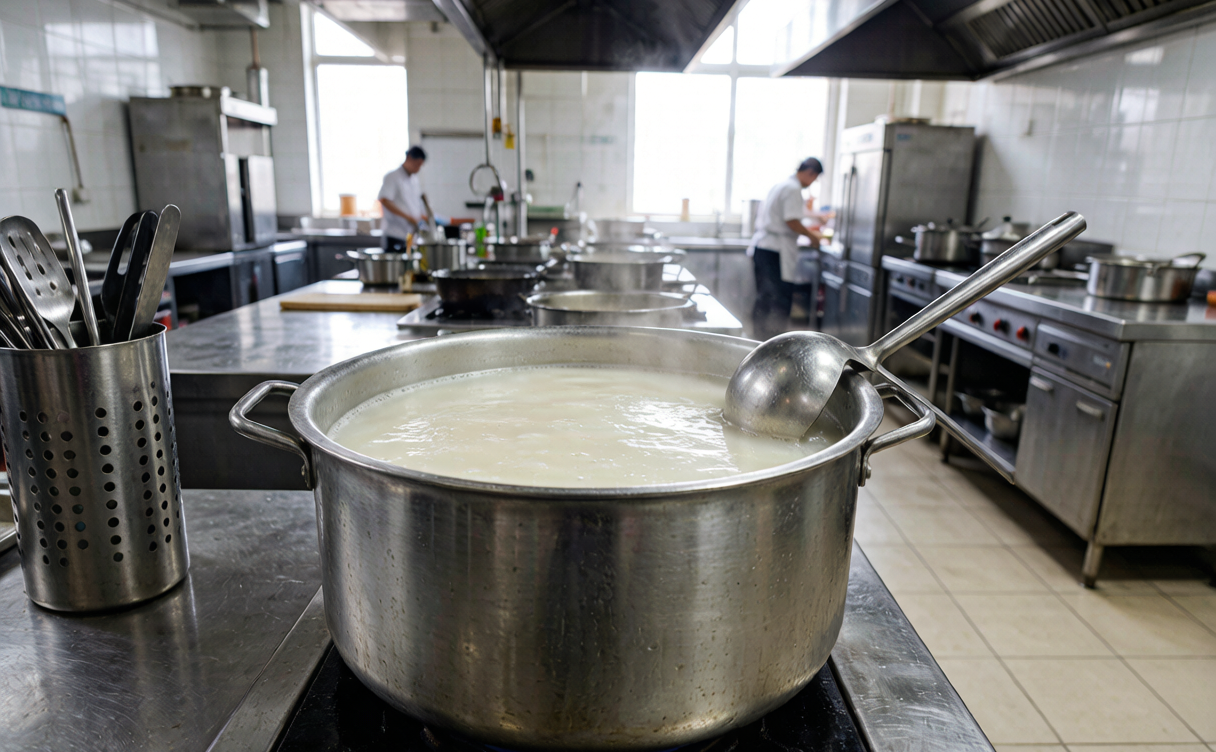
Lu cuisine (鲁菜, from Lu, the ancient state that covered this region) is the oldest of China’s Eight Great Cuisines and the one the others reacted against. Its logic is not chilli or sugar but stock. A serious Lu kitchen keeps two: qing tang, a clear consommé simmered from chicken, duck and pork then clarified with minced meat until it is transparent, and nai tang, a milk-white emulsified broth from bones boiled hard. These go into everything, and they are the reason the food tastes deep rather than loud. Historical background is set out in the Shandong cuisine entry at Wikipedia.
The other signatures are scallion, garlic, vinegar and technique. Bao (爆) is a violent few-second stir-fry over maximum heat that keeps offal and shellfish crisp. Zhangqiu scallions grow taller than a person and are sweet enough to eat raw.
Three branches matter:
- Jinan style, inland: soups, quick-fried dishes, freshwater fish, offal handled with respect.
- Jiaodong style, from the Qingdao and Yantai coast: seafood, lightly seasoned, fast.
- Confucian family cuisine (孔府菜) in Qufu: banquet cooking developed over centuries for the Kong household, ornate and heavy on symbolism.
If you want the broader map, our guide to China’s eight cuisines puts Lu in context against the southern schools.
Best Time to Visit
April to June. Spring prawns and razor clams on the coast, first scallion harvest inland, and comfortable 15–27°C. May is excellent for a food trip.
July and August. Hot, 28–34°C, and humid on the coast. Qingdao is at its best — beer festival in August, cold clams, seafood at every corner — while inland Jinan is uncomfortable. Eat coastal in summer.
September to November — the strongest season. Crab from September, sea cucumber at its best in autumn, Zhangqiu scallions harvested in November, and dry 12–24°C weather. This is when to plan the trip.
December to March. Cold, −5°C to 8°C, which is exactly when the braises and thick soups make sense. Sea cucumber is a winter tonic food here, and hotel rates are at their lowest.
How to Get There
Shandong is well served by high-speed rail on the Beijing–Shanghai line, and the three food cities sit close together.
| From | To | Mode | Duration | Approx. cost |
|—|—|—|—|—|
| Beijing South | Jinan West | High-speed rail | 1 hr 25 min | ¥185 (US$26) |
| Shanghai Hongqiao | Jinan West | High-speed rail | 3 hr 20 min | ¥400 (US$56) |
| Beijing South | Qingdao North | High-speed rail | 3 hr | ¥315 (US$44) |
| Jinan West | Qingdao North | High-speed rail | 1 hr 40 min | ¥180 (US$25) |
| Jinan West | Qufu East | High-speed rail | 35 min | ¥60 (US$8.50) |
| Qufu East | Qingdao North | High-speed rail | 2 hr 20 min | ¥230 (US$32) |
| Jinan airport | City centre | Metro line 3 or taxi | 40 min | ¥7 / ¥90 (US$13) |
Within cities, metro and Didi cover everything; a cross-town Didi in Jinan is ¥20–35.
The Shandong Lu Cuisine Guide to Dishes You Should Order
Sweet and sour Yellow River carp
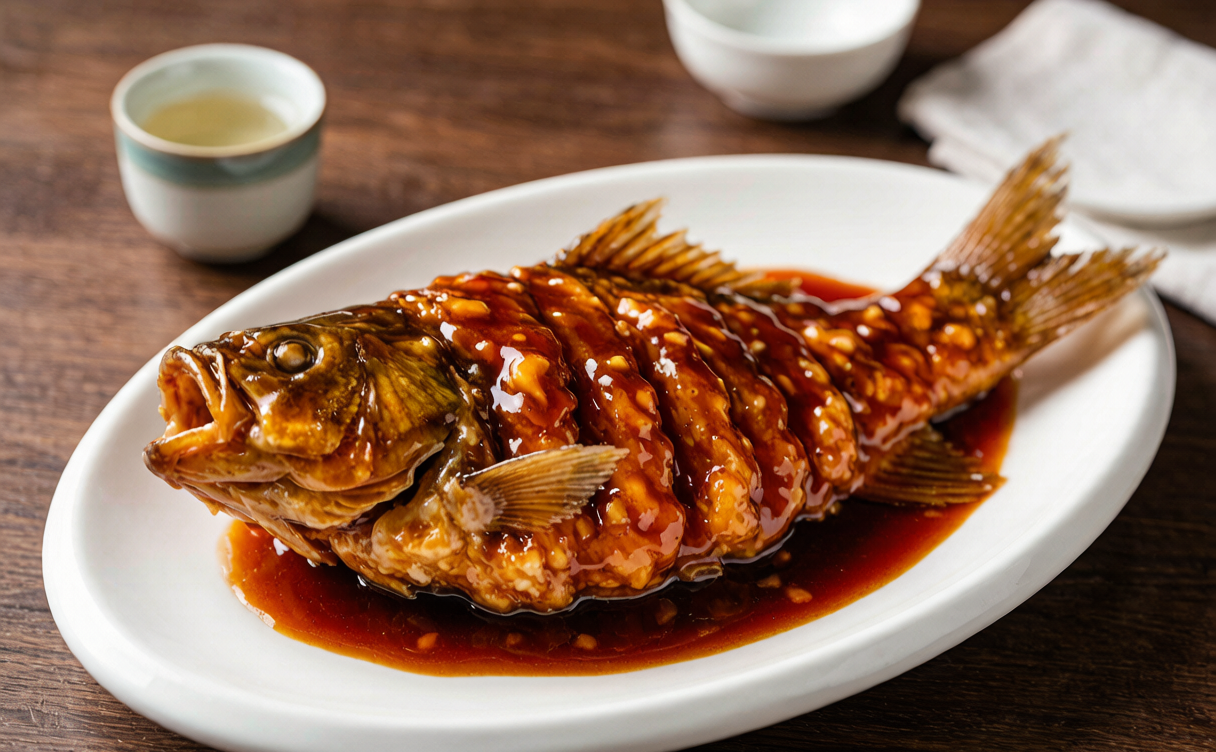
Tangcu Huanghe liyu (糖醋黄河鲤鱼) is the province’s emblem. A whole carp is scored, fried until the flesh opens into ridges, then covered in a dark amber glaze poured at the table so it hisses. Good versions are crisp outside, moist inside, balanced rather than syrupy, and served with the head towards the guest of honour. Expect ¥120–200 (US$17–28) — a dish for two or more.
Braised sea cucumber with scallions
Cong shao haishen (葱烧海参) is the benchmark by which Lu chefs are judged. Sea cucumber has almost no flavour of its own; the dish is texture plus the scallion-infused brown sauce it absorbs. Expensive at ¥150–400 (US$21–56) a portion, and the one to order if you order a single costly thing. Texture is the sticking point for many foreign diners — think firm gelatine rather than seafood.
Nine-turn large intestine
Jiuzhuan dachang (九转大肠) is Jinan’s most famous dish and its hardest sell: pork intestine cleaned repeatedly, nested in coils, then braised in a sauce that hits sweet, sour, salty, bitter and spicy in sequence. Properly made it is rich and completely clean-tasting. Order it if you are curious; it is one of the great technical dishes in Chinese cooking.
Quick-fried and clear-soup dishes
Youbao shuangcui (油爆双脆), pork tripe and chicken gizzard flashed in oil for a few seconds, is the showcase for bao technique — the texture should squeak. Qing tang dishes look like the plainest things on the menu and are usually the most expensive, because the broth takes a day.
Coastal Jiaodong dishes
On the Qingdao and Yantai coast the cooking gets simpler and faster: braised prawns (油焖大虾), spicy stir-fried clams (辣炒蛤蜊) eaten with draught beer sold in plastic bags, sea urchin steamed with egg, and whole flounder. Our Qingdao seafood guide covers the markets where you buy the fish and pay a restaurant to cook it.
Confucian banquet cooking
In Qufu, the Kong family developed a court-adjacent cuisine of its own over generations of imperial visits. Dishes carry literary names — Shili yinxing (诗礼银杏), “poetry and ritual ginkgo nuts”, is candied ginkgo, and Yipin doufu (一品豆腐) is a stuffed tofu named for the highest official rank. Set banquets near the Confucius Mansion run ¥200–600 (US$28–85) a head.
Street and everyday food
- Bazi rou (把子肉) — soy-braised pork belly over rice, ¥15, the Jinan working lunch.
- Dezhou braised chicken (德州扒鸡) — sold at railway stations for over a century, ¥40.
- Jianbing juan dacong (煎饼卷大葱) — a chewy grain pancake rolled around a raw scallion and bean paste. Aggressively rustic and genuinely good.
- Youxuan (油旋) — a spiral scallion pastry, ¥3, best with tianmo millet porridge for breakfast.
- Zibo barbecue — small tabletop grills, thin pork skewers, a pancake and a scallion to wrap them in. A national craze a few years ago and still excellent.
Where to Stay
Jinan, budget — ¥150–280 (US$21–39). Chain hotels around Quancheng Square and Furong Street, within walking distance of the snack lanes and several classic restaurants.
Jinan, mid-range — ¥350–600 (US$49–85). Business hotels near Daming Lake and Baotu Spring; the metro reaches Jinan West in half an hour.
Qingdao — ¥300–900 (US$42–127). The old German quarter near Zhongshan Road for seafood restaurants, or Badaguan for quiet and sea views. Summer rates double.
Qufu — ¥200–500 (US$28–71). Courtyard hotels inside the old walls, minutes from the Confucius Temple.
Sample Itinerary: Four Days of Eating
Day 1 — Jinan
- Breakfast: youxuan pastry and tianmo porridge near Furong Street
- Lunch: bazi rou over rice at a canteen
- Dinner: a proper Lu restaurant — carp, nine-turn intestines, a clear soup
Day 2 — Jinan and Zhangqiu
- Morning at Baotu Spring, then the Zhangqiu scallion fields in season
- Dinner: braised sea cucumber with scallions, the full version
Day 3 — Qufu
- Morning train; Confucius Temple and Mansion
- Confucian banquet lunch; ginkgo, yipin tofu, clear soups
- Afternoon train to Qingdao
Day 4 — Qingdao
- Morning seafood market, then a cook-my-catch restaurant
- Afternoon in the old town; clams and fresh beer in the evening
Practical Tips
- Portions are large. Two people should order two dishes and rice, not four. Lu restaurants cook for banquet tables and rarely offer half portions.
- Ask for the stock dishes. If qing tang or nai tang appear on the menu, that kitchen takes itself seriously.
- Payment. Alipay and WeChat Pay work everywhere, including street stalls, and accept international cards. Keep ¥100 cash for markets.
- Menus. Big restaurants often have photo menus and sometimes English. Small places have neither — point, or use a translation app on the wall menu.
- Saying no to offal. Wo bu chi neizang (我不吃内脏) is worth saving on your phone.
- Baijiu. Shandong hosts drink, and a toast will come your way. Raising tea instead is entirely acceptable.
- Timing. Lunch runs 11:00–14:00 and dinner 17:00–20:30; popular places stop taking orders early.
FAQ
What is Lu cuisine in one sentence?
The cooking of Shandong: stock-driven, scallion-scented, technically demanding northern food that shaped the imperial kitchen in Beijing and sits at the root of most northern Chinese restaurant cooking.
Is Shandong food good for foreigners who dislike spice?
Very. Lu cuisine is savoury and mildly sweet rather than hot, with almost no chilli outside a few coastal stir-fries. It is one of the easiest Chinese regional cuisines for a first-time visitor.
What are the best Shandong dishes to try if I only get one meal?
Sweet and sour Yellow River carp, braised sea cucumber with scallions, and a clear soup. If you are adventurous, add nine-turn large intestine.
Where should I eat Lu cuisine in Jinan?
Old-name restaurants around Quancheng Square and the Furong Street area cover the classics, while the snack lanes handle breakfast and street food. Book dinner at weekends — the well-known kitchens fill up.
Do I need to visit Qufu for Confucian cuisine?
Only if you care about the context. The banquet dishes appear on menus in Jinan too, but eating them a few hundred metres from the Kong family compound is a different experience — see our Qufu travel guide.
Written by Karl · Updated August 6, 2026