

Southern Guizhou hides one of China’s greenest corners: a maze of cone-shaped karst hills wrapped in subtropical forest, threaded by rivers so clear they look dyed. Libo County is the gateway to the Zhangjiang Scenic Area, whose two headline sections — Xiaoqikong (Small Seven Arches) and Daqikong (Big Seven Arches) — deliver waterfall after waterfall along jade-green streams. The area forms part of the South China Karst site inscribed by UNESCO, yet it still sees only a fraction of the foreign visitors who crowd Guilin. This Libo travel guide covers everything you need: how to get to Libo, ticket and shuttle logistics, the best walking routes, and where to sleep and eat once the day-trippers leave.
Why Libo Is Worth the Detour
Libo’s magic is concentration. In a single morning at Xiaoqikong you can walk past the 68-step Layered Waterfall (a staircase of small cascades tumbling through forest), cross the 180-year-old stone bridge that gives the park its name, wander the Water Forest where trees grow straight out of a rushing stream, and swim-gaze into Mandarin Duck Lake’s blue-green water. Daqikong, next door, is wilder and quieter, built around a dramatic natural bridge and a gorge walk. Beyond the parks, Yao and Buyi minority villages sit among rice terraces, and the whole county moves at a pace that feels decades behind China’s east coast. If you enjoyed the scale of Huangguoshu Waterfall near Anshun, Libo is its intimate, forested counterpoint — smaller falls, but dozens of them, and far fewer tour flags.
Best Time to Visit Libo
The best time to visit Libo is April to early July and September to November. Spring and early summer bring the highest water levels, which matters in a destination built around cascades; the forest is at its most saturated green and temperatures sit around 20–28°C. July and August are hot, humid and busy with domestic family travel, though the water is still full. Autumn offers stable weather, thinner crowds and clear river color, with water levels gradually dropping. Winter (December–February) is quiet and still photogenic, but some smaller falls shrink to a trickle and mornings can be cold and misty. Avoid the first week of October, China’s National Day holiday, when Xiaoqikong hits capacity. For a broader look at regional weather patterns, see our month-by-month guide to the best time to visit China at when to travel across China’s regions.
How to Get to Libo
Libo has its own small airport (Libo Qiannan Airport) with limited flights, but most travelers arrive by high-speed rail. The Guiyang–Nanning line stops at Libo Station, roughly 20 minutes’ drive from the county town.
| Route | Option | Time | Approx. Cost |
|—|—|—|—|
| Guiyang → Libo | High-speed train | 1.5–2 hours | RMB 100–150 (US$14–21) |
| Guilin → Libo | High-speed train (via Nanning line) | 2.5–3 hours | RMB 150–200 (US$21–28) |
| Nanning → Libo | High-speed train | 2–2.5 hours | RMB 130–180 (US$18–25) |
| Guiyang → Libo | Long-distance bus | 4–5 hours | RMB 100 (US$14) |
| Libo Station → Xiaoqikong | Shuttle bus / taxi | 30–45 min | RMB 10–60 (US$1.50–8) |
Book train tickets in advance through the official China Railway 12306 platform or a booking app; foreign passports work at station gates. If this is your first rail journey in China, our practical high-speed train guide for foreign travelers walks through booking, ID checks and luggage rules.
Tickets, Shuttles and Park Logistics
Xiaoqikong and Daqikong are ticketed separately. Expect around RMB 130 (US$18) for Xiaoqikong plus a mandatory internal shuttle ticket of roughly RMB 40, and about RMB 55 for Daqikong. Combination tickets covering both areas over two days are usually available and are the best value. The parks typically open around 8am and stop admissions in late afternoon; buy tickets online via WeChat mini-programs or at the gate with your passport.
Xiaoqikong is long and linear — about 7 km end to end — so the hop-on shuttle system matters. Buses run between the West Gate, East Gate and a string of named stops (Wolong Pool, Water Forest, 68-Step Waterfall, Small Seven-Arch Bridge). The classic strategy: enter at the West Gate, ride to the far end, then walk back downhill stop by stop, using the shuttle only when your legs give out. Boards at each stop show the route in English and Chinese.
What to See: Top Experiences in Libo
Xiaoqikong (Small Seven Arches)
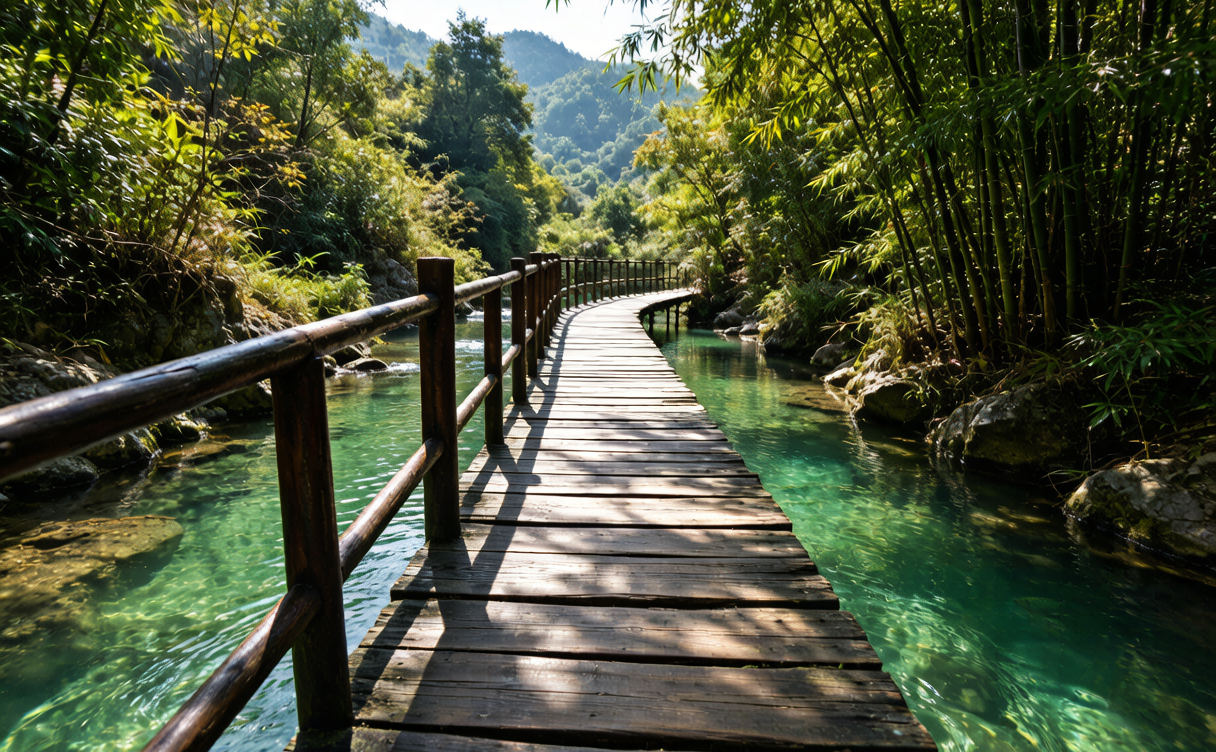
The signature section. Don’t miss the 68-Step Layered Waterfall, where the river descends a forested staircase of cascades; the ancient Small Seven-Arch Bridge, built in 1835 and framed by ferns; Wolong Pool, an improbably blue spring-fed pool; and the Water Forest, where a boardwalk runs through trees rooted mid-stream. Allow four to six hours to walk the highlights properly.
Daqikong (Big Seven Arches)
A gorge walk leading to the Tianshengqiao natural bridge, a 60-meter rock arch that dwarfs everyone beneath it. Optional short boat rides run on the emerald river when water levels allow. Two to three hours is enough, making it an easy same-day pairing with a late Xiaoqikong start or a relaxed second morning.
Maolan Karst Forest Reserve
Serious hikers should ask about access to Maolan, a protected primary karst forest with funnel-shaped sinkhole woods and guided trail options. Arrangements are easiest through Libo guesthouses, as independent entry rules change.
Yao Villages and Rice Terraces
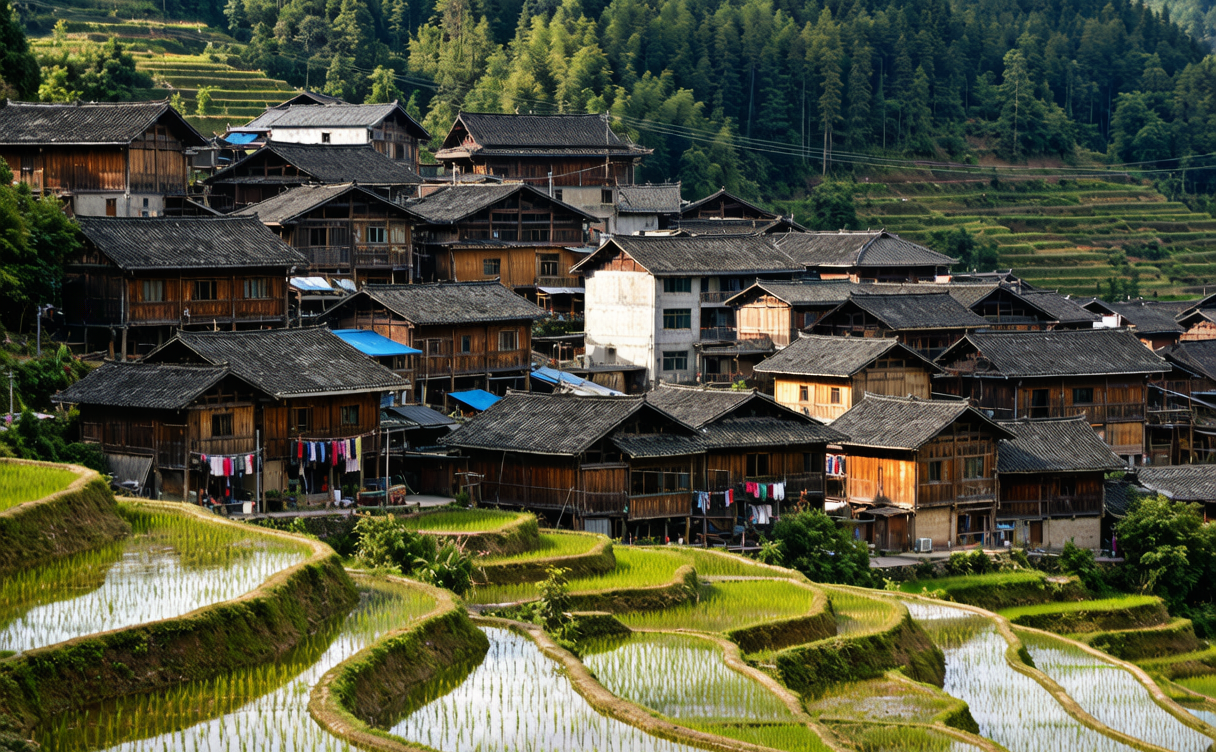
Yaoshan Ancient Town and surrounding Yao minority villages offer weaving workshops, dark-indigo traditional dress and quiet terrace scenery — a cultural counterweight to the waterfalls, and one of the more genuine things to do in Libo beyond the parks.
Where to Stay
Base yourself either in Libo county town (more restaurants, easier transport) or at the small tourist village near Xiaoqikong’s West Gate (walk-to-the-gate convenience). County-town business hotels run RMB 150–300 (US$21–42); comfortable boutique guesthouses near the park charge RMB 250–500. A growing cluster of design-minded lodges with river views sits along the Zhangjiang between the two parks — worth the splurge for one night. Book ahead for weekends in May–August.
What to Eat
Libo’s table is classic southern Guizhou: sour and spicy. Order suantang yu (fish in sour tomato broth), the county’s beloved yang rou fen (goat meat rice noodles) for breakfast, sticky rice in bamboo tubes, and smoked pork stir-fried with local greens. Night-market stalls in the county town grill skewers and river fish after dark. Vegetarians manage easily with tofu dishes and wild mountain vegetables — point-and-choose counters make ordering simple even without Chinese.
Sample Itinerary: 2 Days in Libo
Day 1 — Xiaoqikong in full. Arrive at the West Gate for the typical 8am opening. Shuttle to the far end, then walk back: Mandarin Duck Lake, Water Forest, 68-Step Waterfall, Small Seven-Arch Bridge, Wolong Pool. Late lunch at the gate village, then check into a riverside guesthouse. Evening stroll and sour-fish dinner in Libo town.
Day 2 — Daqikong and villages. Morning gorge walk to the Tianshengqiao natural bridge (2–3 hours). Afternoon visit to Yaoshan Ancient Town or a Yao village for weaving and terrace views. Catch a late-afternoon high-speed train onward to Guiyang, Guilin or Nanning.
With a third day, add Maolan forest hiking or simply repeat your favorite Xiaoqikong stretch at opening time for empty boardwalks.
Practical Tips
- Carry your passport: it’s required for train travel and park ticket purchase.
- Wear grippy shoes; boardwalks near waterfalls stay wet and slick year-round.
- Mobile signal is decent in the parks, but download offline maps for village excursions.
- Cash is rarely needed, but set up Alipay or WeChat Pay before arriving; small vendors prefer QR payments.
- Summer downpours are short and heavy — pack a light rain shell rather than an umbrella you’ll fight on narrow paths.
- Pair Libo with Huangguoshu for a full Guizhou water circuit: our Huangguoshu Waterfall guide covers China’s biggest single falls, three hours away by train and bus.
- For background on the region’s geology, the UNESCO listing for the South China Karst explains why Libo’s cone karst earned World Heritage status.
FAQ
How many days do I need in Libo?
Two days is the sweet spot: one full day for Xiaoqikong, a half day for Daqikong, and time for a village visit. Hardcore hikers adding Maolan should plan three.
Is Libo suitable for travelers who don’t speak Chinese?
Yes, with mild effort. Park signage is bilingual, shuttle routes are numbered, and translation apps cover restaurants. English-speaking staff are rare outside the better guesthouses.
Xiaoqikong or Daqikong — which one if I only have time for one?
Xiaoqikong. It has the density of sights the area is famous for. Daqikong is a worthy add-on, not a substitute.
Can you swim in the rivers?
No — swimming is prohibited inside the scenic areas to protect water quality and for safety near cascades.
Is Libo crowded?
By Chinese standards, only moderately, except during July–August weekends and the October holiday week. Arriving at opening time guarantees quiet trails almost year-round.
What’s the nearest major city?
Guiyang, Guizhou’s capital, is the usual hub, though Libo also connects easily to Guilin and Nanning by high-speed rail.
Written by Karl Huang, updated July 2026.