

Halfway up a 1,519-meter mountain in Hunan, a hole punches clean through the rock — Tianmen Cave, the “Heaven’s Gate,” 131 meters tall and visible from downtown Zhangjiajie on a clear day. Getting there involves one of the world’s longest cable car rides, a road with 99 hairpin bends, glass skywalks glued to sheer cliffs, and an escalator bored through the mountain’s core. Tianmen is engineering spectacle as much as natural wonder, and it packs into a single day what most scenic areas spread over three. This Tianmen Mountain guide explains the confusing ticket lines, which route beats the crowds, and how Tianmen differs from the Avatar-famous national forest park up the road.
First, clear up the classic mix-up: Tianmen Mountain rises directly above Zhangjiajie city, while Zhangjiajie National Forest Park (the sandstone pillars from the film) lies 35 km north. They are separate parks with separate tickets. Tianmen is the easy add-on — its cable car station sits a few minutes from the railway station — and many travelers do it on arrival or departure day.
Best Time to Visit Tianmen Mountain
The best time to visit Tianmen Mountain is September to November, when autumn skies are clearest and the summit forest turns amber. April and May are lush and mild but mistier — though Tianmen in mist has its own drama, with the cave mouth breathing clouds.
Summer is warm, busy, and prone to afternoon storms that occasionally pause cable car service; go early. Winter delivers the sleeper hit: rime ice coats the summit boardwalks after cold snaps, crowds vanish, and the glass skywalks feel genuinely otherworldly — dress warmly, as the summit runs about 10°C colder than the city. Avoid the first weeks of May and October, China’s national holidays, when queues balloon. Match Hunan’s seasons to your wider route with our best time to visit China guide.
How to Get There
Zhangjiajie city is the hub, reachable by air and rail from most major Chinese cities.
| From | Option | Time | Approx. Cost |
|—|—|—|—|
| Changsha | High-speed train to Zhangjiajie West | ~2.5–3 hours | RMB 140–170 (USD 20–24) |
| Beijing / Shanghai / Guangzhou | Direct flight to Zhangjiajie Hehua Airport | 2–3 hours | USD 80–250 |
| Zhangjiajie West Station | Bus/taxi to cable car station downtown | 20–30 min | RMB 5–30 |
| Zhangjiajie National Forest Park | Bus or taxi to city | ~1 hour | RMB 20–100 |
| Fenghuang Ancient Town | Direct bus or train combo | 1.5–2.5 hours | RMB 60–90 |
The mountain ticket (typically around RMB 235–278 including cable car or shuttle) is sold for specific routes — more on that below. Book online a day ahead in peak season; entry is passport-linked. Our high-speed train guide for foreigners covers ticketing step by step.
Cable Cars, Routes, and What to Expect
The Cable Car and the 99-Bend Road
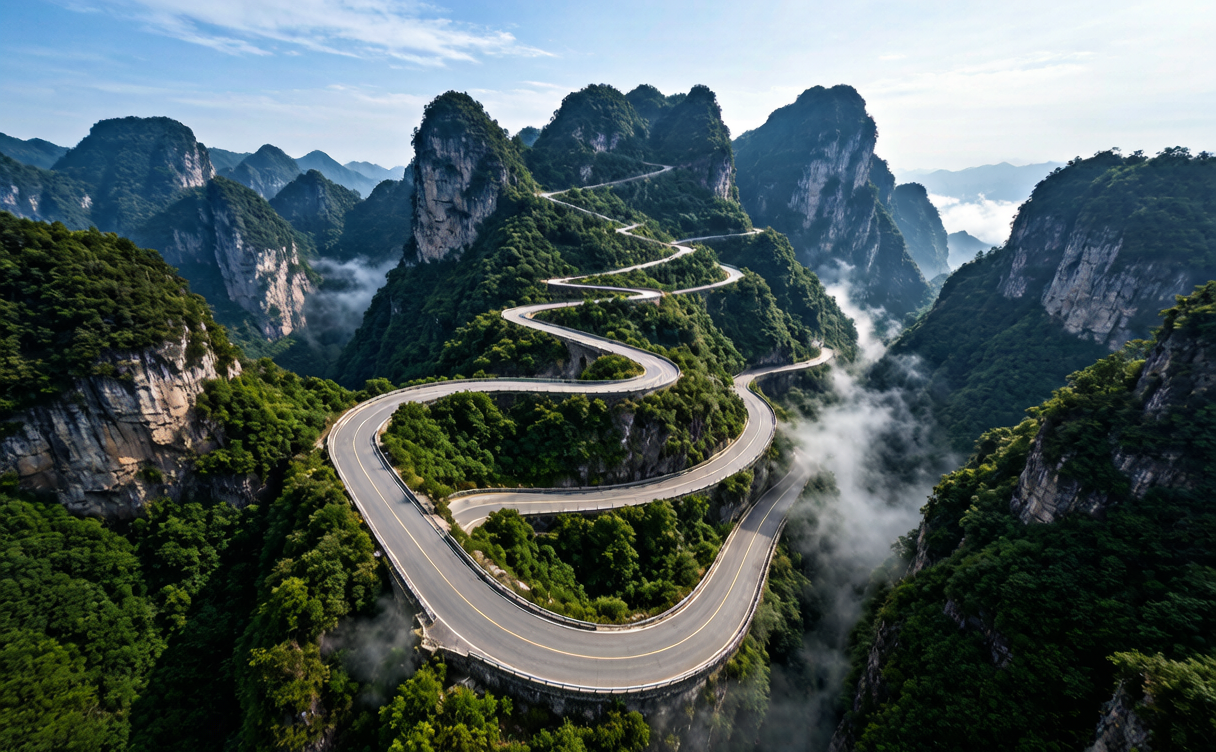
The Tianmen cable car is the headline act: 7,455 meters long, climbing from downtown Zhangjiajie to the summit in about 28 minutes, swinging over rooftops, farmland, and finally the absurd switchbacks of Tongtian Avenue — the 99-bend road. Tickets are sold as route packages:
- Route A: cable car up, bus down (through the 99 bends) — the classic choice, since the long ascent by cable car is the better direction for views.
- Route B: bus up, cable car down — same sights, shorter morning queues.
- Route C: bus both ways, cheaper, skipping the big cable car.
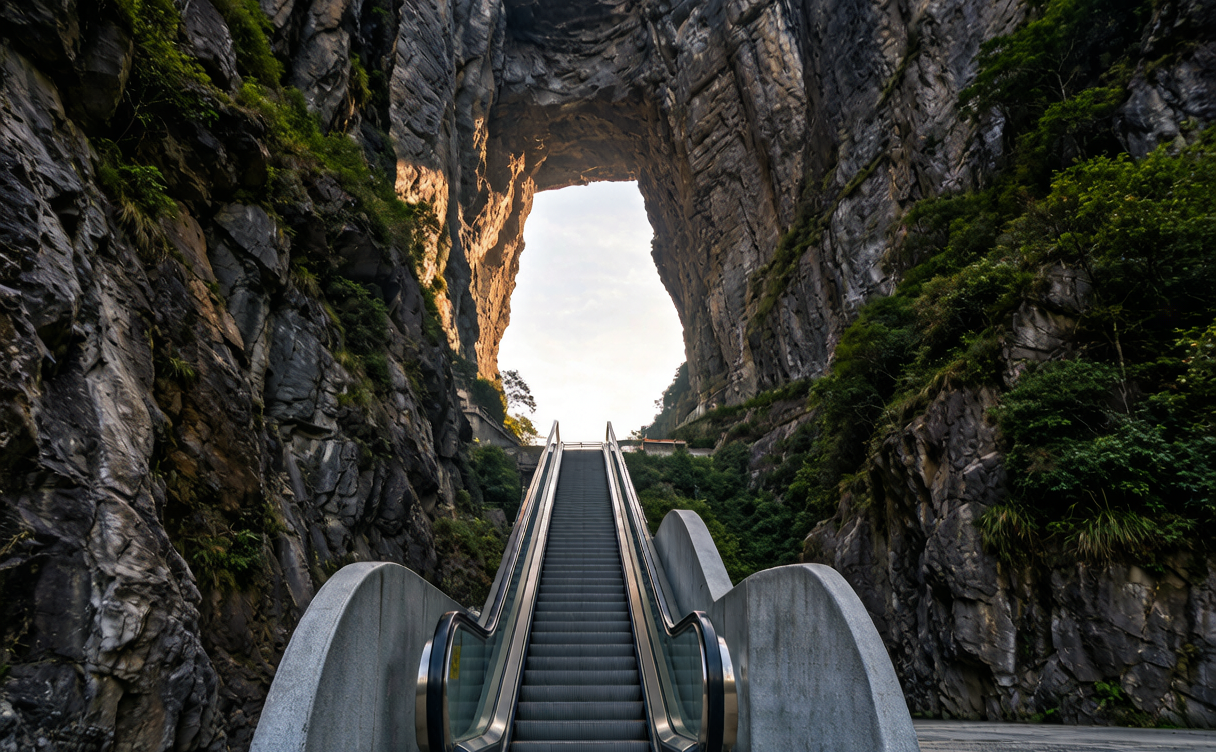
Whichever you choose, the Tianmen Cave staircase — 999 steps from the roadhead up to the arch — or the mercifully modern escalator system (small extra fee, around RMB 32) links the cave with the summit area.
Summit Walks and Difficulty
The summit is a looped network of clifftop boardwalks rather than a hike — mostly flat, railed, and doable by anyone comfortable walking 3–5 km:
- West Line: the busiest, home to the main glass skywalk (about RMB 5 for shoe covers), a 60-meter transparent ledge over a straight drop.
- East Line: quieter, with the Cliff-Hanging Walkway and views toward the karst hinterland.
- Tianmenshan Temple: a rebuilt Tang-founded temple at the summit’s heart, reachable by a short chairlift or forest path.
Difficulty is low: the only strenuous option is climbing the 999 steps to the cave, a 30–50 minute thigh-burner that pilgrims consider auspicious. Everything else is escalators, chairlifts, and boardwalk. Serious hikers looking for real trail mileage should aim for the national forest park — see our China hiking and treks guide for the region’s best routes.
Altitude and Safety
At 1,519m, altitude is a non-issue — the considerations here are exposure and weather. Boardwalks are well railed, but rain makes stone surfaces slick, and the skywalk closes in high wind or storms. Cable car service pauses during lightning; if afternoon storms are forecast, ride up early. Those with severe vertigo can simply skip the glass sections — parallel stone paths exist. Standard precautions for solo and family travelers are in our China travel safety tips.
Where to Stay
There is no lodging on the mountain itself, which keeps things simple:
- Near the cable car station (downtown Zhangjiajie): the smart base — business hotels and boutique stays from RMB 200–500, with the station, night market, and railway links all walkable.
- Higher-end: the Pullman and Sheraton near the city center run RMB 600–1,000.
- Wulingyuan town: stay here (RMB 150–600) if the national forest park is your main event, and day-trip to Tianmen by bus or taxi.
Book ahead for autumn weekends and holidays; the city fills up fast.
What to Eat
Western Hunan food is smoky, sour, and hot. Seek out sanxiaguo, the local “three-pot” stew of cured pork, tofu, and radish; tujia-style bacon fried with chili; sour fish soup; and wild kiwi juice from the surrounding hills. The Xibu Old Street night market near the cable car station does skewers, sticky rice cakes, and stinky tofu for RMB 5–15 a portion. On the mountain, food is limited to snack kiosks and a summit fast-food hall — eat a proper breakfast in town and carry water and snacks up with you.
Sample Itinerary: 1 Day
Early morning: Arrive at the ticket hall by 7:30am (it typically opens around 8am, earlier in peak season). Take Route A — the 28-minute cable car to the summit.
Morning: Walk the West Line boardwalks and the glass skywalk before tour groups peak, loop past Tianmenshan Temple, then cover the quieter East Line.
Afternoon: Ride the through-mountain escalators down to Tianmen Cave, descend (or climb, for bragging rights) the 999 steps, and catch the park bus down the 99 bends. You’ll be back in the city by late afternoon — in time for the night market or an evening train.
With a second day, add the Grand Canyon glass bridge east of Wulingyuan or start on the national forest park proper.
Practical Tips
- Buy tickets online the night before and go on a weekday if you can; queues at 9am–11am are the day’s worst.
- Check the webcam or simply look up from the city — if the cave is buried in cloud, consider swapping your day.
- Shoe covers are mandatory on the glass skywalk; slip-on shoes make life easier.
- The escalator between cave and summit costs extra but saves a punishing staircase in the humid months.
- Cable car operations pause for storms and maintenance windows (typically announced locally) — build slack into tight travel days.
- Official park information is published by the Zhangjiajie tourism authority, useful for holiday-crowd notices.
FAQ
Is Tianmen Mountain the same as the Avatar mountains?
No. The floating-mountain scenery is in Zhangjiajie National Forest Park, 35 km away. Tianmen is the cable-car-and-cave mountain above the city — most itineraries include both.
How long do I need?
Five to seven hours covers the summit loops, the cave, and both transfers. Half-day visits are possible but rushed.
Is it scary for people afraid of heights?
The glass skywalk and cliff walkways are intense, but every glass section has a conventional stone alternative. The cable car is smooth and enclosed.
Can seniors and kids manage it?
Yes — escalators, chairlifts, and buses remove almost all mandatory climbing. The 999-step staircase is entirely optional.
What does a visit cost?
Roughly RMB 280–350 per person including the route ticket, escalator, and skywalk shoe covers — budget extra for the chairlift and food.
When does the mountain get foggy?
Spring mornings and summer afternoons most often. Fog swallowing the cave can be atmospheric, but for the full 99-bend panorama, autumn gives the best odds.
Written by Karl Huang, updated July 2026.