

Liuzhou smells like nowhere else in China. Step out of the train station and there it is — the funky, fermented perfume of luosifen, the river snail rice noodle soup that turned this Guangxi industrial city into an unlikely food pilgrimage site. But stay a day or two and Liuzhou reveals a second act: a jade-green river looping through karst peaks in a near-perfect horseshoe, night cruises past illuminated bridges, and one of the most surprising industrial museums in the country. This Liuzhou travel guide covers how to eat, cruise, and climb your way through Guangxi’s most underrated city.
Why Visit Liuzhou
Guilin gets the postcards, Nanning gets the flights, and Liuzhou — sitting between them — gets the trucks. It’s the manufacturing heart of Guangxi, home of the tiny Wuling EVs you’ll see buzzing everywhere. That working-class DNA is exactly why the food is outstanding and the prices are low. Among Guangxi cities to visit, Liuzhou is the one where you’ll likely be the only foreigner at dinner, and where a $2 bowl of noodles carries protected geographical-indication status and a multibillion-RMB industry behind it.
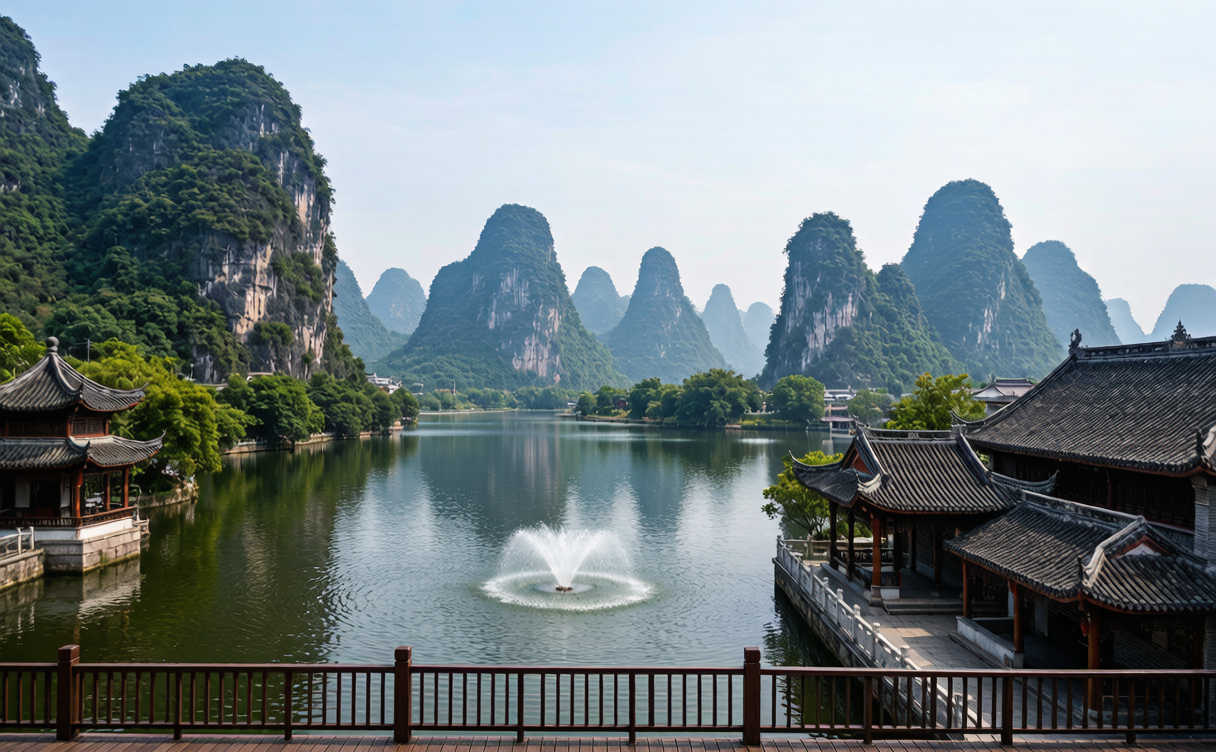
The setting seals the deal. The Liujiang River wraps the city center in a tight U-bend, so nearly every viewpoint delivers water, bridges, and karst hills in one frame.
Best Time to Visit Liuzhou
The best time to visit Liuzhou is October through early December, when humidity drops, skies clear, and daytime temperatures sit around 20–26°C. April brings a second draw: tens of thousands of purple bauhinia trees bloom across the city, briefly turning ordinary streets into flower tunnels — locals call it Liuzhou’s “purple sea.”
Summer (June–August) is hot, sticky, and stormy, though the river cruises run nightly and evening temperatures are bearable. January and February are cool (8–15°C) and gray but fine for eating your way through town. Avoid the National Day week in early October, when domestic tourism peaks everywhere in China.
How to Get There
Liuzhou is a major rail junction, so getting in is easy from any direction.
| From | Option | Time | Approx. Cost |
|—|—|—|—|
| Guilin | High-speed train | 1–1.5 hr | $8–12 |
| Nanning | High-speed train | 1–1.5 hr | $10–15 |
| Guangzhou | High-speed train | 3–4 hr | $25–35 |
| Guiyang | High-speed train | 2–2.5 hr | $20–30 |
| Shanghai / Beijing | Flight to Liuzhou Bailian Airport | 2.5–3.5 hr | $80–200 |
| Hong Kong, China | High-speed train via Guangzhou | 4.5–5.5 hr | $45–60 |
How to get to Liuzhou by rail is straightforward: nearly all bullet trains stop at Liuzhou Station, which sits close to the city center — a rarity in China, where high-speed stations are often 30 minutes out. If this is your first bullet-train booking, our China high-speed train guide for foreigners walks through the passport-based ticketing system step by step.
Top Things to Do in Liuzhou
Slurp Luosifen at the Source
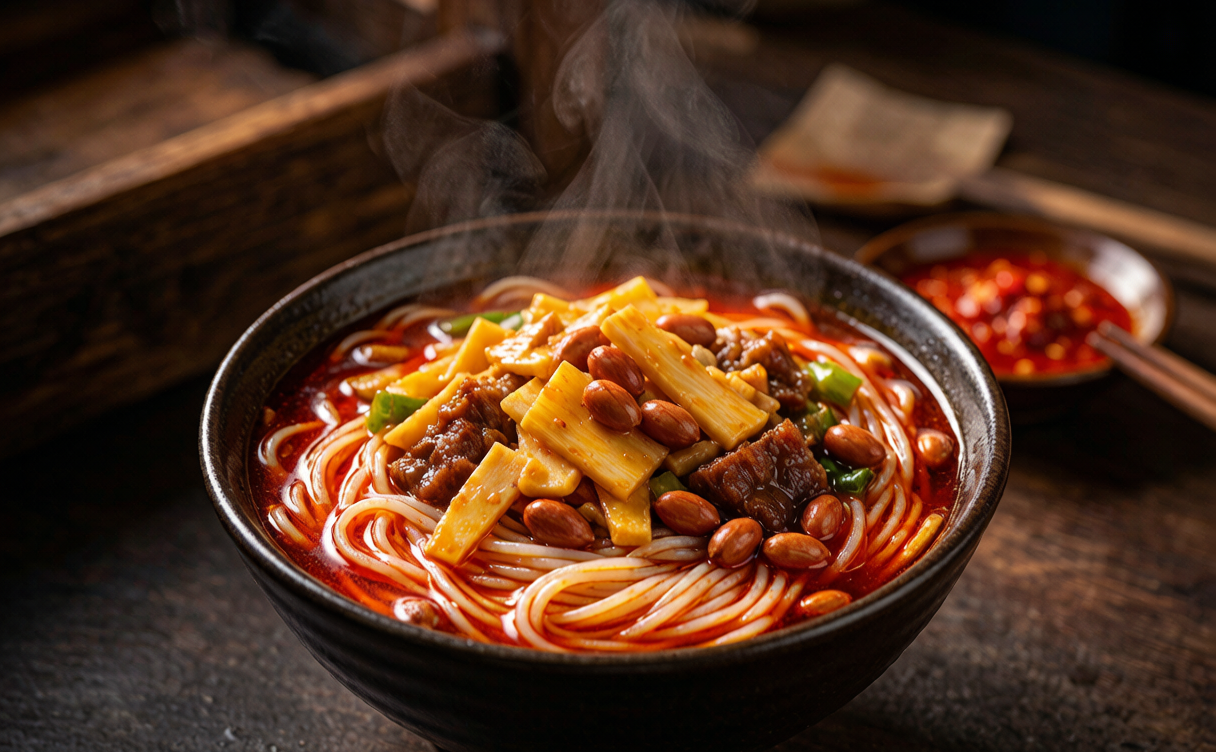
Luosifen Liuzhou style means rice noodles in a broth simmered from river snails and pork bones, loaded with pickled bamboo shoots (the source of the famous smell), fried tofu skin, peanuts, and wood-ear mushrooms. The taste is sour, spicy, and savory — far better than the aroma suggests. Classic local chains and hole-in-the-wall shops charge ¥12–18 ($2–3) a bowl. For the full story, there’s even a dedicated Luosifen Museum in the suburbs with a factory tour and tastings.
Climb Ma’anshan for the Horseshoe View
Ma’anshan (Saddle Hill) rises right beside the city center. A staircase — or an elevator inside the karst, a few RMB — brings you to the summit platform where the Liujiang River’s U-bend wraps the glowing downtown skyline. Come 30 minutes before sunset and stay for the blue hour; it’s one of the best free urban viewpoints in southern China.
Take the Liuzhou River Night Cruise
The Liuzhou river night cruise (roughly ¥88–128, about 70–90 minutes) glides past 20-plus illuminated bridges, lit karst cliffs, and the world’s largest man-made waterfall group cascading off the Liujiang embankment. Boats leave from the downtown docks most evenings, typically starting around 7:30–8pm; buy tickets at the pier or via your hotel.
Visit the Industrial Museum
The Liuzhou industrial museum is free and genuinely fun: vintage trucks, tractors, and the story of how a small river town became an auto-manufacturing giant. It’s a window into the China most travel itineraries skip. Typically open Tuesday–Sunday; allow two hours.
Day-Trip to Chengyang or the Dong Villages
Two hours north by train, the wind-and-rain bridges of the Dong minority villages around Sanjiang make an excellent overnight extension, with wooden drum towers and terraced tea fields.
Where to Stay
- Riverside downtown (best overall): Hotels along Binjiang Road put you within walking distance of Ma’anshan, the night-cruise docks, and the old-town food streets. International-standard rooms run $40–70; solid domestic chains $25–40.
- Wuxing commercial district: Malls, metro access, and endless street food, $20–45.
- Budget: Clean domestic chain hotels near Liuzhou Station from $18 — convenient for early trains, though the area is charmless.
Book ahead for April’s bauhinia bloom and any October holiday dates.
What to Eat Beyond Luosifen
Liuzhou’s food scene rewards the adventurous. Look for yashijie (duck feet braised in the same sour-spicy register as luosifen), screw-snail duck-foot pot, a bubbling street-side stew combining both signatures, oil tea (youcha) from the northern counties — a savory tea-and-puffed-rice soup that locals drink for breakfast — and grilled river fish with sour bamboo. Qingyun Food Street and the lanes around Zhongshan Road pack most of these into a couple of blocks. Dinner rarely tops $8 per person.
Sample Itinerary: 2 Days in Liuzhou
Day 1 — River and noodles. Arrive by morning train from Guilin. Lunch on your first luosifen near Zhongshan Road. Afternoon at the industrial museum, then climb Ma’anshan for sunset over the river bend. Evening night cruise, followed by grilled snacks on Qingyun Food Street.
Day 2 — Parks and culture. Morning in Liuhou Park, dedicated to Tang-dynasty poet-governor Liu Zongyuan, and the adjacent old streets. Optional Luosifen Museum run for noodle obsessives, or an early train north to Sanjiang’s Dong villages. Depart via high-speed rail — Nanning and Guilin are both about an hour away; see our Nanning travel guide if you’re continuing south.
Practical Tips
- Payments: Alipay/WeChat Pay everywhere; keep ¥100 in small cash for market stalls.
- Getting around: Metro lines cover the center; Didi rides across downtown rarely exceed ¥15.
- Language: Very little English. Save your hotel’s name in Chinese characters and use a translation app in noodle shops.
- Smell management: Pickled bamboo aroma clings to clothes — locals genuinely plan laundry around it. Consider it a souvenir.
- Onward travel: Liuzhou pairs naturally with Guilin and Yangshuo’s karst scenery — under 90 minutes door to door.
- Official info: For rail schedules, the national operator’s booking site China Railway 12306 shows live timetables in English.
FAQ
Is luosifen safe for sensitive stomachs?
Generally yes — the broth is long-boiled and stalls turn over fast. Ask for “wei la” (mildly spicy) your first time, and skip the raw pickle top-ups.
How many days do I need in Liuzhou?
One full day covers the essentials; two lets you add museums and a slower food crawl; three brings the Dong villages into range.
Is Liuzhou worth visiting compared to Guilin?
They do different jobs. Guilin delivers scenery; Liuzhou delivers food, city energy, and zero tourist pricing. Since they’re an hour apart, do both.
Do the night cruises run year-round?
Yes, weather permitting, though winter departures may be reduced. Summer evenings are the most comfortable time on the water.
Can I visit Liuzhou without speaking Chinese?
Absolutely — menus with photos, QR ordering, and translation apps carry you through. Patience and pointing go a long way.
Written by Karl Huang, updated July 2026.