

Most travelers arrive in China with a checklist of cities and walls, then discover — usually too late — that the country holds some of the wildest protected landscapes on Earth. Since 2021, China has been rolling out a formal national park system that now anchors everything from panda forests in Sichuan to the high-altitude source of three great rivers on the Qinghai-Tibet Plateau. This guide to China national parks explains what the system actually covers, which parks are realistic for foreign visitors, and how to build wildlife watching and hiking into a normal China trip without a science degree or a government permit headache.
Understanding the China National Park System
In October 2021, China designated its first five official national parks: Giant Panda National Park, Sanjiangyuan National Park, Northeast China Tiger and Leopard National Park, Hainan Tropical Rainforest National Park, and Wuyishan National Park. Together they protect roughly 230,000 square kilometers — an area larger than the United Kingdom.
The system sits on top of an older, messier network of scenic areas, forest parks, and nature reserves. Famous names like Zhangjiajie and Jiuzhaigou are technically “national forest parks” or “scenic areas” rather than national parks in the 2021 sense, but for a traveler the distinction barely matters: they are the best nature reserves China opens to independent visitors, with real infrastructure, ticketing, and trails.
A practical way to think about it:
- The five official national parks protect ecosystems first and tourists second. Access ranges from easy (Wuyishan) to nearly impossible (core zones of Sanjiangyuan).
- Legacy scenic areas — Jiuzhaigou, Zhangjiajie, Fanjingshan, Huangshan — are built for visitors, with shuttle buses, boardwalks, and cable cars.
- Buffer-zone experiences — panda bases, birding lodges, community homestays — let you touch the wild parks without entering restricted cores.
Best Time to Visit
There is no single season for protected areas China travel, because the parks span tropical rainforest to 5,000-meter plateau.
- April–June: Prime for Sichuan’s panda country — mild weather, rhododendrons blooming, fewer crowds than summer.
- July–August: The only comfortable window for Sanjiangyuan and other plateau regions, though it is also Chinese school-holiday season, so book early.
- September–October: The overall sweet spot. Jiuzhaigou’s lakes hit peak color in late October; Wuyishan is dry and clear; northeast forests turn gold.
- November–March: Snow transforms Zhangjiajie’s sandstone pillars and cuts crowds by half or more, but plateau parks are effectively closed by cold.
Avoid the first week of October (National Day holiday) everywhere — visitor caps sell out days in advance.
How to Get There
Every major park region hooks into China’s high-speed rail or a regional airport. Typical routes from the nearest hub city:
| Park / Region | Gateway City | Transport | Time | Approx. Cost |
|—|—|—|—|—|
| Giant Panda NP (Sichuan) | Chengdu | Bus/car to Dujiangyan or Ya’an sectors | 1.5–3 hr | $10–40 |
| Jiuzhaigou | Chengdu | Flight to Jiuzhai Huanglong + shuttle | 1 hr + 1.5 hr | $80–150 |
| Zhangjiajie | Changsha | High-speed train | ~3 hr | $20–35 |
| Wuyishan NP | Fuzhou / Shanghai | High-speed train to Wuyishan East | 1–4.5 hr | $15–60 |
| Fanjingshan | Guiyang | High-speed train to Tongren + bus | 1.5 hr + 1 hr | $15–25 |
| Sanjiangyuan (edges) | Xining | Train/car toward Yushu | 8–12 hr | $30–80 |
If you plan to link several parks by rail, our high-altitude and cross-country hiking guide for China pairs well with route planning, since many trailheads sit within an hour of a bullet-train station.
Top Parks and Experiences
Giant Panda National Park, Sichuan
The flagship. The park stitches together 67 former panda reserves across Sichuan, Shaanxi, and Gansu, protecting about 72% of the wild giant panda population. Wild sightings are extremely rare — pandas are solitary and live in dense bamboo — so most visitors combine a buffer-zone hike in the Dujiangyan or Dengsheng areas with a morning at a research base. For the classic base visit plus city logistics, see our Chengdu panda bases and city guide.
Sanjiangyuan National Park, Qinghai
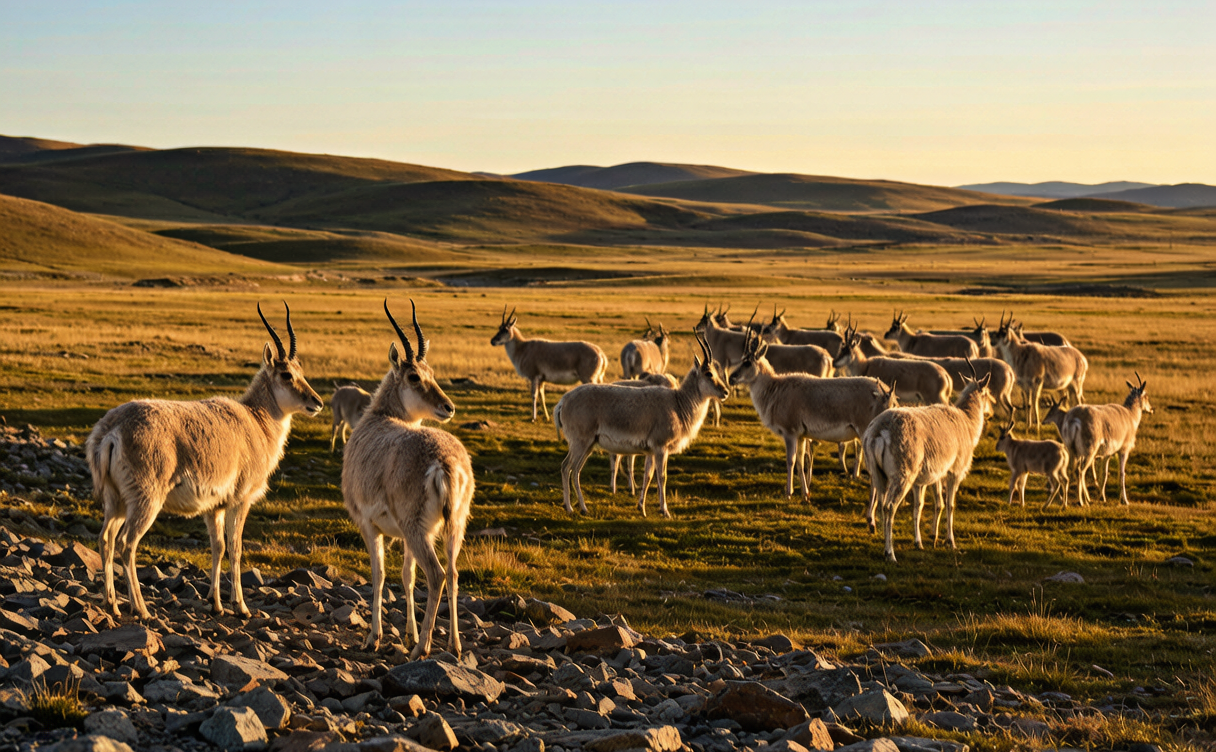
The largest park in the system at 123,100 square kilometers, Sanjiangyuan national park guards the headwaters of the Yangtze, Yellow, and Lancang (Mekong) rivers. Core zones are closed to casual tourism, but community-run experiences on the periphery — particularly around Angsai in the Lancang valley — offer some of the best wildlife watching China can deliver: snow leopards, Tibetan antelope, wild yaks, and black-necked cranes. These trips must be arranged through licensed local cooperatives, typically $150–300 per day including a required local guide.
Wuyishan National Park, Fujian
The most accessible official park. UNESCO-listed Wuyishan combines subtropical forest, tea terraces, and the bamboo-raft float down the Nine-Bend River. Boardwalk trails suit any fitness level, and the tea culture (this is the home of da hong pao oolong) gives rainy days a purpose.
The Great Legacy Parks
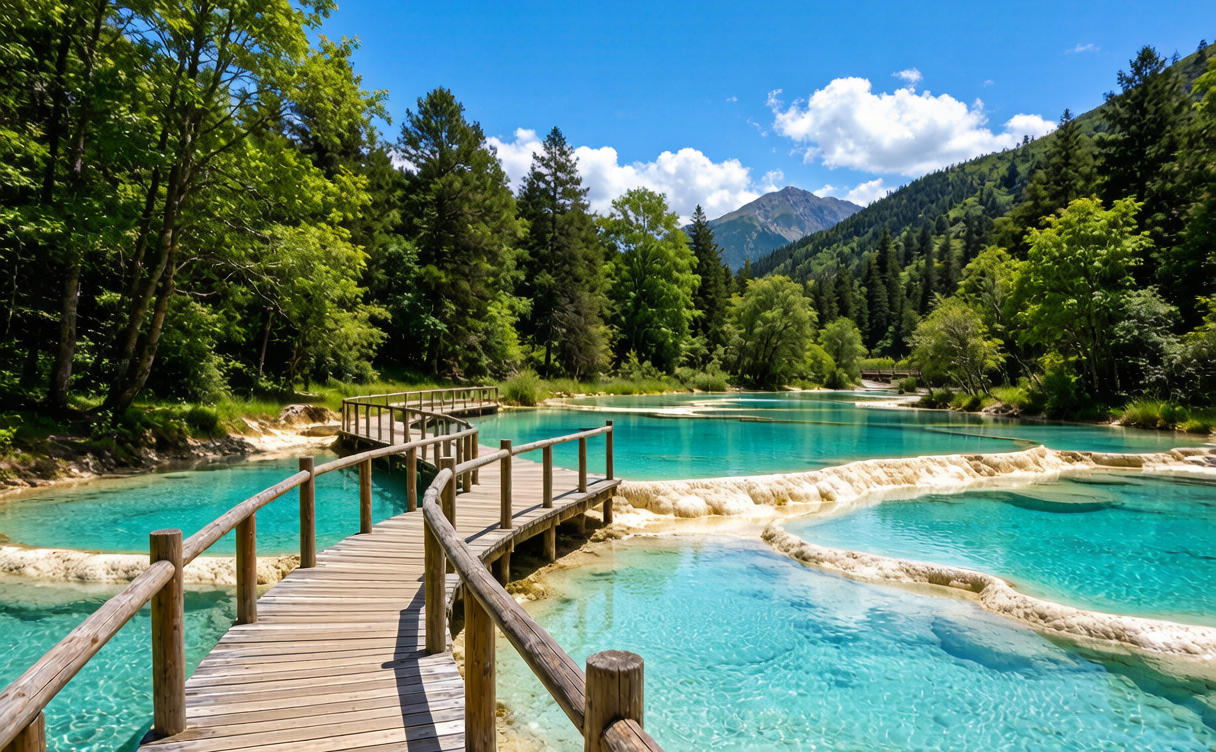
Don’t skip the older reserves just because they missed the 2021 list. Jiuzhaigou’s travertine lakes remain the most photogenic water on the planet, and Zhangjiajie National Forest Park — the “Avatar mountains” — offers the most dramatic single day of hiking national parks China has to offer. For something quieter, the mushroom-shaped rock summit of Fanjingshan in Guizhou is a UNESCO site that most foreign itineraries still miss.
Where to Stay
Park cores prohibit overnight stays almost everywhere, so you’ll sleep in gateway towns:
- Chengdu / Dujiangyan for panda country — everything from $20 hostels to boutique courtyard hotels near the Dujiangyan irrigation works.
- Wulingyuan town for Zhangjiajie — hundreds of guesthouses within walking distance of the park gate, $25–80 per night.
- Zhangzha town for Jiuzhaigou — Tibetan-run guesthouses with hearty breakfasts, $30–70.
- Wuyishan resort strip — riverside hotels from $40; tea-farm homestays in the buffer zone are the memorable choice.
- Yushu city for Sanjiangyuan approaches — functional hotels around $30–50; acclimatize here (3,700 m) before going higher.
What to Eat
Gateway-town food is half the fun. In Sichuan panda country, order bamboo-shoot dishes and Dujiangyan’s spicy bean-jelly noodles. Around Jiuzhaigou, Tibetan and Qiang influences mean yak-meat hotpot, butter tea, and highland barley pancakes. Wuyishan pairs smoked bamboo shoots and wild mushrooms with endless oolong tastings. On the Qinghai plateau, expect yak yogurt with wild honey, hand-pulled noodle soups, and very little else — pack snacks for long drives.
Sample Itinerary: 3 Days in Panda Country
Day 1 — Chengdu to Dujiangyan. Morning at the Dujiangyan Panda Base (volunteer programs typically start around 8:30am; book weeks ahead). Afternoon walk through the ancient irrigation system, evening back in a Dujiangyan guesthouse.
Day 2 — Buffer-zone hiking. Full-day guided walk in the Longxi-Hongkou section of Giant Panda National Park: old-growth forest, golden pheasant territory, and — if you’re lucky — fresh panda droppings, which guides treat like trophies. Around $60–90 with a local guide.
Day 3 — Qingcheng Mountain. Taoist temples strung along a forested ridge, easy cable-car options, and a high-speed rail ride back to Chengdu in under an hour.
Practical Tips
- Book entry online. Major parks cap daily visitors and sell timed tickets via WeChat mini-programs; your hotel can usually book for you with a passport photo.
- Carry your passport — it is your ticket ID at nearly every gate.
- Altitude matters. Fanjingshan tops out near 2,570 m, fine for most people; Sanjiangyuan sits above 4,000 m and demands two acclimatization days.
- Drones are banned in almost all protected areas China travel involves — don’t risk confiscation.
- Cash is nearly useless; set up Alipay or WeChat Pay before you fly.
- For rules, maps, and the official park list, check the UNESCO World Heritage listings for China, since many parks overlap with inscribed sites.
FAQ
Can I see wild pandas in Giant Panda National Park?
Realistically, no. Fewer than 2,000 wild pandas live across a vast forested range. Visit a research base for guaranteed sightings, then hike the buffer zones for the habitat experience.
Do I need a permit for China national parks?
For the mainstream parks, just a timed entry ticket. Sanjiangyuan’s community concessions and parts of the Northeast Tiger and Leopard park require pre-arranged local operators. Independent travel notes: areas of Tibet, China require separate travel permits arranged through agencies.
Which park is best for a first-time visitor?
Zhangjiajie or Jiuzhaigou for scenery with easy logistics; Wuyishan if you want an official national park with low effort.
How much should I budget per park?
Entry plus shuttles runs $25–45 at major parks. Add $30–80 per night for lodging and $60–100 per day if you hire guides.
Is English signage available?
Main trails at Zhangjiajie, Jiuzhaigou, and Wuyishan have bilingual signs. Remote reserves do not — translation apps and a guide close the gap.
Written by Karl Huang, updated July 2026.