

Sleeping under a sky full of stars on the Mongolian steppe or in a designer tent at the edge of the Gobi has become one of the country’s fastest-growing travel trends. Glamping in China pairs the romance of the outdoors with real beds, hot showers, and sometimes a glass dome that frames the Milky Way. This guide covers the best regions, the rules you must know, and how to book a night that feels wild but stays comfortable.
Why Glamping Took Off in China
After years of city living, domestic travelers rediscovered open space. Outdoor travel China surged, and entrepreneurs answered with luxury tents China styled like safari camps. The result is a spectrum: from a basic yurt with a shared toilet to a climate-controlled dome with a private deck. For most visitors, glamping is the sweet spot — you get the landscape without the logistics of carrying your own gear.
Best Glamping Regions
Inner Mongolia Grasslands
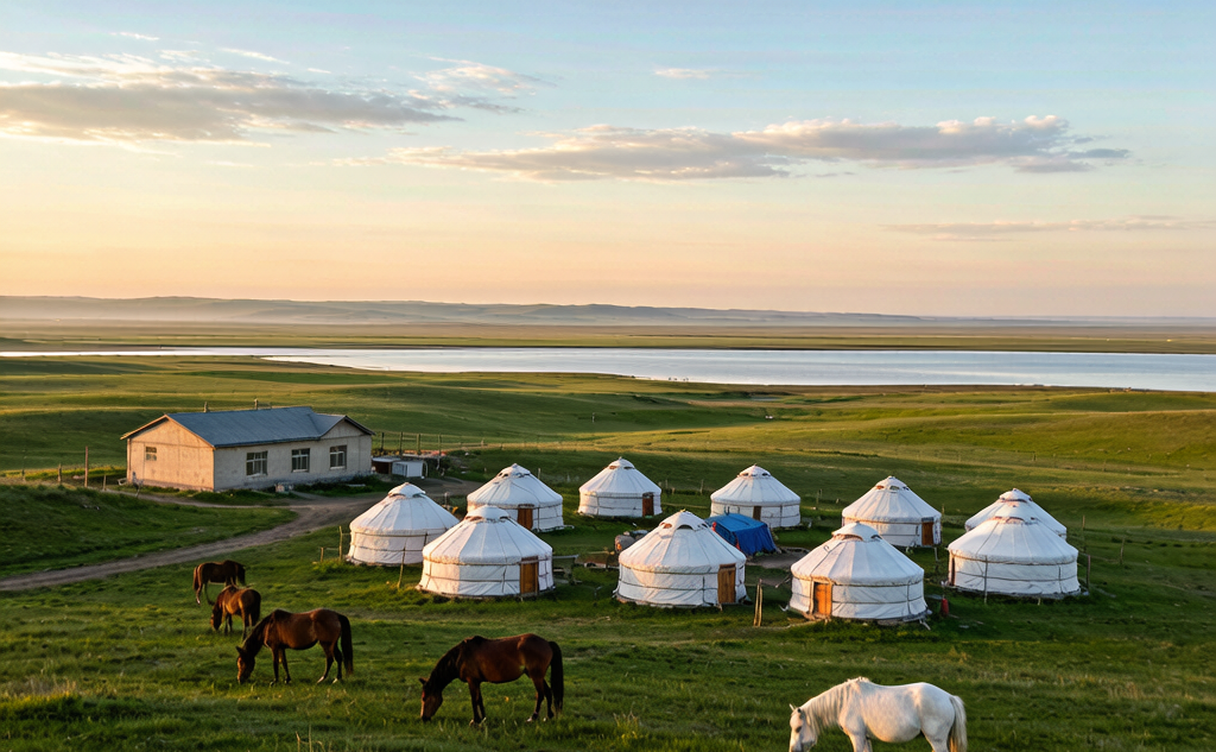
A grassland yurt stay Inner Mongolia is the classic steppe experience. At Hulunbuir or Xilingol you sleep in a felt yurt, ride horses at dawn, and eat lamb roasted over open coals. Our Inner Mongolia Hulunbuir grassland guide details the best seasons and how to reach the camps. Summer (July–August) brings wildflower meadows and comfortable nights; bring a warm layer even then.
Qinghai Lake
At 3,200 meters, the plateau around Qinghai Lake turns camping into a high-altitude adventure. Stargazing domes China here sit beneath some of the clearest skies in the country. Our Qinghai Lake travel guide explains altitude preparation and the cycling loop that passes several camps.
Dunhuang and the Gobi
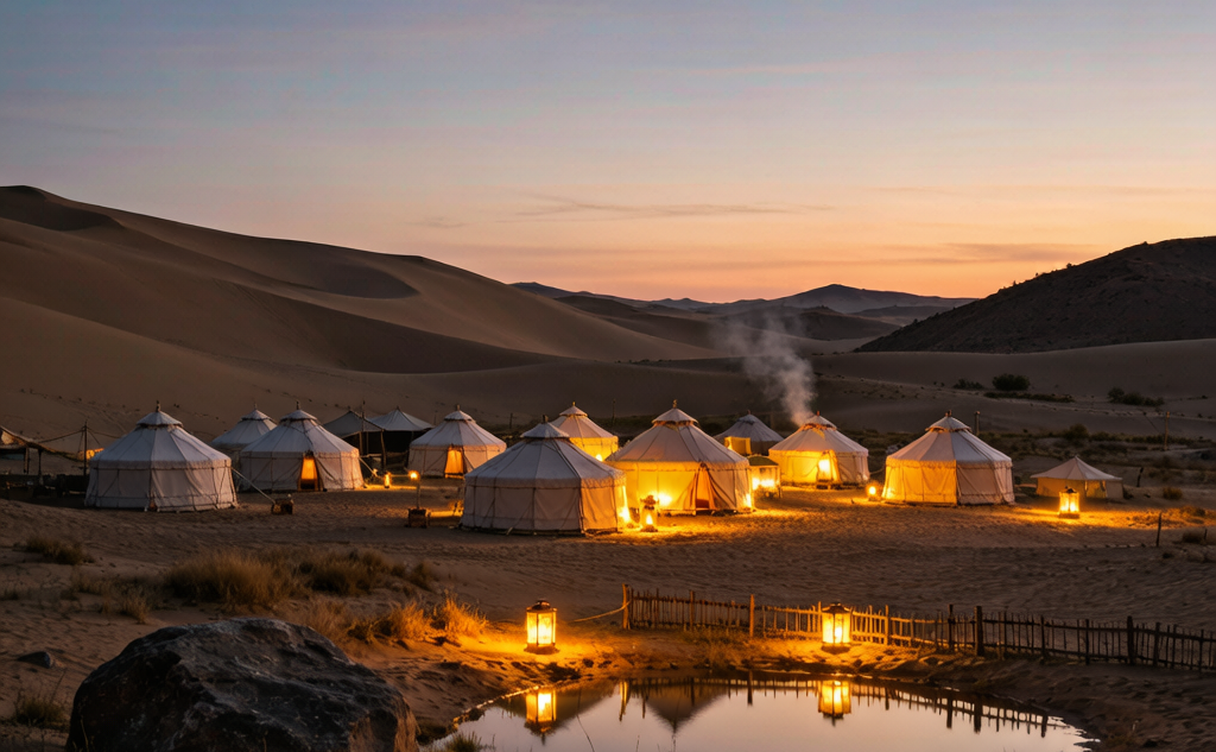
A desert camp Dunhuang puts you among singing sands and within reach of the Mogao Caves. Nights are cool and the stars are spectacular; days can be fierce. Our Dunhuang Mogao Caves guide pairs the cultural visit with a dune-side camp. This is where the best glamping sites China list often begins for first-timers.
Camping Rules You Must Know
Understanding camping in China rules prevents fines and protects fragile land:
- National parks and reserves often ban free camping to preserve ecology; use designated campsites.
- Open fires are restricted in dry regions — many deserts and grasslands forbid them entirely.
- Leave no trace: pack out all rubbish; yurt camps may compost but won’t handle plastic.
- Permits: remote trekking camps may need a local guide or permit; ask before heading out.
- Drones are restricted near military zones and some scenic areas — check locally.
The national Ministry of Culture and Tourism publishes official guidance on protected areas and responsible travel that is worth a read before you pitch a tent.
Glamping vs Wild Camping: A Quick Comparison
| Factor | Glamping | Wild camping |
|——–|———-|————–|
| Comfort | Real bed, bathroom | Self-supplied, basic |
| Cost/night | ¥400–¥1,500 | Often free or permit fee |
| Booking | Online or via agent | Navigate independently |
| Best for | Comfort + scenery | Adventure purists |
| Risk | Low | Weather, access, safety |
For hikers wanting the wilder end, our China hiking treks guide lists trails where a tent is part of the journey.
How to Book
- Platforms: Major Chinese travel apps list glamping packages; search the camp name plus the region.
- Via a tour: Many operators bundle transport, meals, and activities — easiest for non-Chinese speakers.
- Direct: Popular dome camps near cities book out weeks ahead in summer; reserve early.
- Homestay crossover: Some pastoral stays blend yurt sleeping with family hosting — see our China homestay guide.
What to Pack
- Layers: deserts swing 20°C between day and night.
- A headlamp and power bank; remote camps have limited charging.
- Reef-safe sunscreen and a brimmed hat for plateau sun.
- Your own sleep liner if you are particular about bedding.
- Cash for small camps that don’t take cards.
Best Time of Year for Each Region
Timing decides whether your glamping in China trip is blissful or bleak. The Inner Mongolia grasslands are at their green peak from late June to mid-August, but book the same weeks and you meet peak domestic crowds; early September offers golden grass and fewer people. Qinghai Lake is best in July and August, when the rape flowers bloom and the lake is ice-free, though nights stay near freezing. Dunhuang’s desert camps are most comfortable in spring (April–May) and autumn (September–October), avoiding summer’s 40°C days. Understanding these windows is the simplest camping in China rules of success: match the camp to the month, not the month to the camp.
Shoulder seasons also save money. Many stargazing domes China operators slash rates outside the summer rush, and the skies are often clearer in the dry autumn. If your only constraint is avoiding heat, spring in the Gobi and autumn on the plateau are the smart plays. Check each region’s local festival calendar too — a grassland naadam or a lake festival can turn a standard stay into a once-in-a-lifetime night, provided you reserve the camp months ahead.
Sample Itineraries
- Grassland weekend: Friday night train to the steppe, two nights in a yurt, Sunday return.
- Desert loop: Dunhuang caves by day, dune camp by night, camel trek at sunrise.
- Plateau stargazing: Qinghai Lake cycle by day, dome camp by night, birdwatching at dawn.
For more unusual stays, our China off-the-beaten-path guide extends the list beyond these headline regions.
Choosing the Right Camp for You
Not all best glamping sites China are equal, and the right pick depends on your tolerance for roughing it. Pure comfort-seekers should choose a domed or safari-tent camp with en-suite bathroom and a restaurant, usually found near Qinghai Lake or Dunhuang. Families with children often prefer yurt camps on the Inner Mongolia grasslands, where open space lets kids run free and horses are nearby. Photography enthusiasts chasing the Milky Way should prioritize high-altitude or desert sites with minimal light pollution. If your goal is genuine outdoor travel China immersion, ask whether the camp is owner-operated and small — those tend to offer the most authentic meals and local stories.
Food, Showers and Realistic Expectations
A common surprise for first-time glampers is how good the food can be — grassland camps serve hotpot and roasted lamb, while desert camps do noodle feasts under lanterns. Showers, however, vary: dome camps usually have proper wet rooms, but remote yurts may offer only a shared solar-heated facility. Hot water can run out when the camp is full, so shower early. Mobile signal is patchy to nonexistent at many sites, which is exactly the point for most guests. Remember that luxury tents China still sit in wild places — a sandstorm or a sudden grassland downpour can rearrange your plans, so build flexibility into any multi-camp route.
Staying Safe Out There
Altitude, weather, and distance are the real risks. Tell someone your plan, carry a fully charged phone (with a local SIM for signal), and avoid camping alone in remote areas. Glamping camps usually have staff on site, which removes most worry — another reason glamping in China suits first-time outdoor travelers.