

China’s rail network is famous for speed, but it also hides a slower, plusher side that most visitors never book. A proper China luxury train guide has to cover more than the bullet trains, because the real indulgence is a private sleeper that carries you across deserts and mountains while you sleep. Whether you want a fully catered Silk Road cruise or a business-class seat on the world’s fastest trains, this China luxury train roundup explains the actual routes, the carriages you ride, what you pay, and how to book without a travel-agent markup you do not need.
What This China Luxury Train Guide Covers
We break the options into four tiers: a private Silk Road sleeper, the high-altitude line to Tibet, China, business-class bullet trains for city hops, and the new panoramic tourist trains in the southwest. Pick one hero journey and build the rest of your trip around it, because the train itself becomes the memory. We also note which legs are worth the premium and which are not, because upgrading every carriage is the fastest way to inflate a rail trip that should feel indulgent, not reckless.
Why a China Scenic Train Beats the Plane
Trains let you watch the landscape change in real time, and a China scenic train trip turns a transfer day into the highlight of the trip. You skip airport security, you keep your phone charged, and in the west the routes themselves — across the Gobi and up to the roof of the world — are the attraction. For couples and photographers especially, the train is the better story. The trade-off is time, so match the train to the route rather than trying to luxury-ride the whole country.
The Shangri-La Express: The Classic Luxury Sleeper
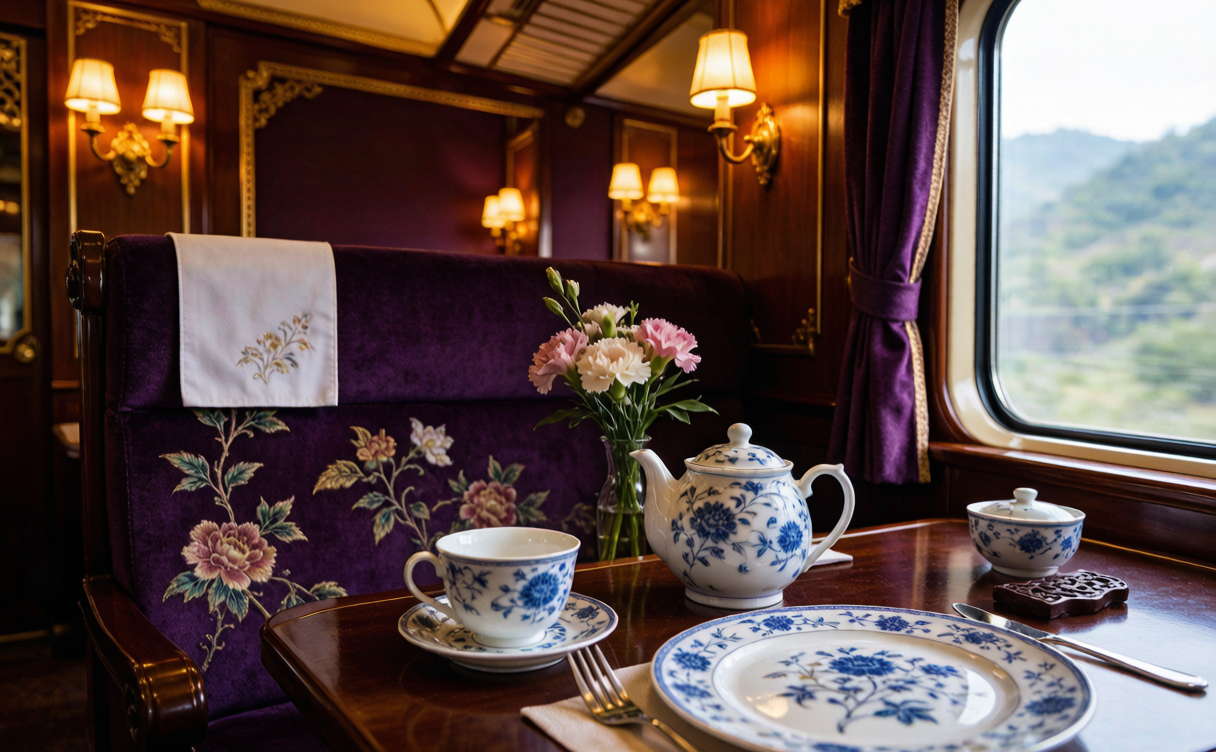
The Shangri-La Express is the country’s best-known private luxury train, a restored sleeper that runs the Silk Road from Xi’an west through Dunhuang, Turpan, Urumqi, and on to Kashgar in Xinjiang, China. Carriages have proper en-suite cabins, a dining car, and a bar, with staff handling luggage and meals so you only unpack once. Routes run as fixed multi-day packages, usually April to October.
Price range: Around USD 2,500 to 5,000 per person for a full westbound itinerary, depending on cabin class and season.
Booking: Sold through international rail-tour operators rather than at the station; book four to six months ahead, as departures are limited.
The Railway to Tibet, China via Qinghai
If altitude is your thrill, the rail journey to Tibet, China is the highest in the world, climbing past snow peaks and permafrost plains to Lhasa. It is not a private luxury train, but the premium soft-sleeper cabins with oxygen supply turn the 20-plus-hour climb into a comfortable adventure.
Price range: Soft sleeper fares run roughly USD 120 to 250 one way from Xining, a fraction of a private charter but far plusher than standard class.
Booking: Through the official 12306 English service or a licensed agent; reserve early because altitude cabins sell out in summer.
Business-Class Bullet Trains: Fast and Plush
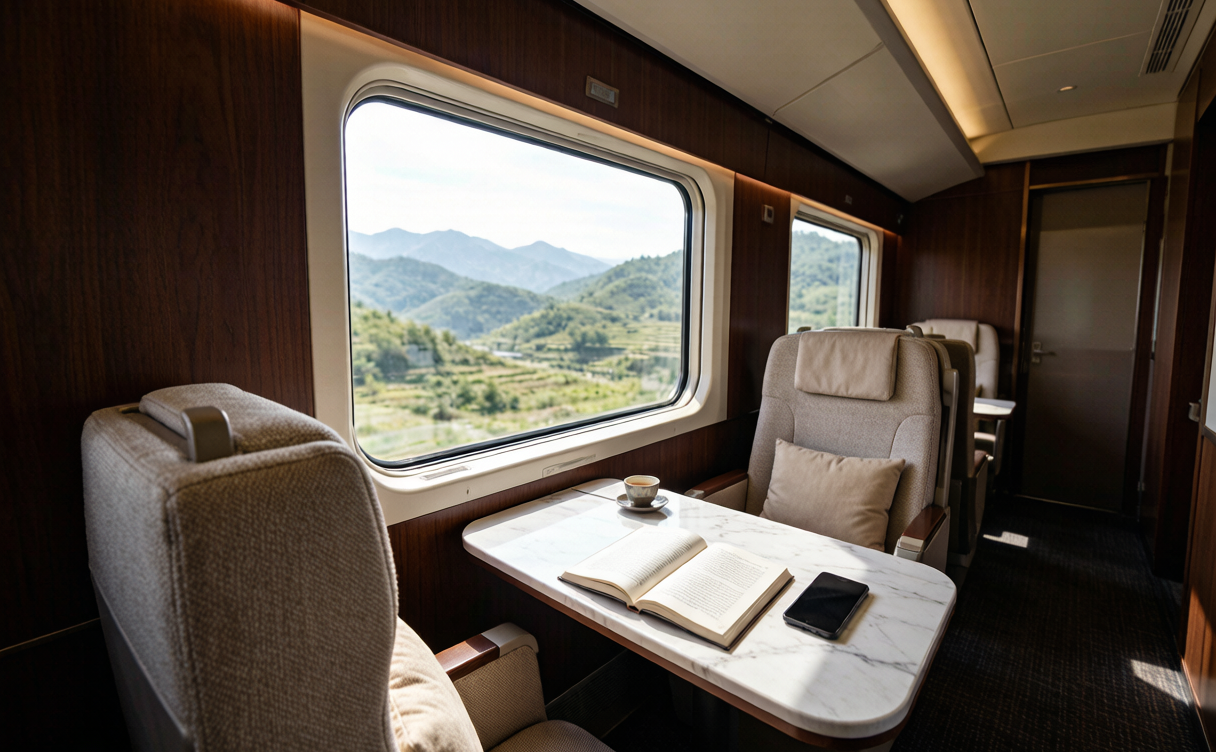
For city-to-city comfort, the Fuxing (Rejuvenation) bullet trains offer a business class with lie-flat-ish seats, quiet carriages, and free snacks on routes like Beijing–Shanghai and Beijing–Xi’an. This is the China luxury train experience for travelers short on time who still want to arrive rested.
Price range: Business class costs about three to four times second class — roughly USD 130 to 250 on Beijing–Shanghai.
Booking: On the official rail app or the China high-speed train guide for foreigners, which walks through passport booking step by step. The lie-flat angle is not a full bed, but the privacy divider and quiet car make a red-eye feel like a lounge.
New Panoramic Tourist Trains
A growing set of dedicated tourist trains adds glass-roof observation carriages and themed decor on scenic loops in the southwest, such as routes around Yunnan and Guizhou. These China scenic train services are mid-priced rather than ultra-luxury, but the windows and relaxed pace make them a smart pick for photographers.
Price range: Packaged day and overnight loops run roughly USD 200 to 600 including meals.
Booking: Through regional tourism bureaus and domestic travel platforms; some English booking is available via larger operators. These loops are the best value for photographers who want the big windows without the private-train price tag, and they run more often than the limited Shangri-La departures.
Sample China Luxury Train Itineraries
Two combinations work especially well. First, the Silk Road sleeper: fly to Xi’an, ride the Shangri-La Express west to Kashgar in Xinjiang, China over several nights, then fly home from Urumqi, Xinjiang, China. That puts the train at the center and uses planes only for the long return. Second, the high-speed sampler: business class from Beijing to Xi’an for the Terracotta Army, then onward to Chengdu, with a bullet-day trip to the pandas. This China itinerary suits travelers short on time who still want plush seats and quiet carriages. A third option pairs the Tibet, China railway soft sleeper with a few days in Lhasa before flying out. Whatever you choose, book the hero train first, then stitch standard bullet segments around it so the cost stays controlled. Luxury here is about one unforgettable carriage, not every mile in first class.
Practical China Travel Tips for Booking Trains
Lock in the headline sleeper routes first, because the Shangri-La Express and Tibet, China soft-sleeper cabins sell out months ahead. For everything else, the high-speed network is bookable with a passport, and our best time to visit China guide helps you avoid the summer and holiday surges that push fares and crowds up. Once you have sorted how to get to China — most visitors fly into Beijing or Shanghai — the rail network handles the rest, so build your China itinerary around one hero train journey and fill the remainder with standard bullet segments to keep costs sane. Most travelers overestimate how many legs need premium seating; one hero journey is enough to feel spoiled, and the rest of the trip rides comfortably in second class without anyone noticing the difference.
Best Time to Take a Luxury Train
Late spring (May) and early autumn (September) are ideal: clear skies for the Silk Road and Tibet, China routes, and fewer travelers than summer. Our best time to visit China guide maps the windows so your hero journey gets the best light.
FAQ
Do luxury trains in China run year-round?
The Shangri-La Express runs roughly April to October; the Tibet, China line and bullet trains run all year, weather permitting.
Is the Shangri-La Express worth the price?
If you want a guided, unpack-once Silk Road trip with comfort, yes. Budget travelers can replicate the route on public trains for a fraction of the cost.
Can I book these with a foreign card?
Bullet trains to Tibet, China, yes, via the English rail site. The private Shangri-La Express is sold through overseas tour operators who take international payment.
How far ahead should I book?
Four to six months for the private sleeper, a few weeks for bullet business class.
Final Thoughts
A China luxury train journey turns travel time into the trip itself, whether you choose a private Silk Road sleeper or a business-class bullet. Plan the hero route early, keep the rest flexible, and you will ride the country in style.