

This Changsha food guide is for travelers who believe the fastest way to know a Chinese city is through its street food. Changsha, the capital of Hunan, China, is loud, proud, and seriously spicy. Hunan (Xiang) cuisine uses smoked pork, fermented chilies, and fresh heat that builds slowly — different from Sichuan’s numbing mala. From sizzling stinky tofu at midnight to restorative bowls of rice noodles at breakfast, a Changsha food guide is really a guide to eating your way across one unforgettable weekend. If you want a wider Hunan route, pair it with our Zhangjiajie travel guide for the mountains just west.
Content Preview
- Changsha Food Guide: Best Time to Visit (and Food Festivals)
- Changsha Food Guide: How to Get There
- Top Dishes to Eat in Changsha
- Where to Eat & Stay in Changsha
- Sample Changsha Food Itinerary
- FAQ
Changsha Food Guide: Best Time to Visit
The best time to visit Changsha for food is spring (March–May) and autumn (September–November), when the weather is mild and the night markets are at their most comfortable. Hunan summers are hot and humid, which locals counter with extra chili — eating spicy food in August is a sweaty local ritual rather than a deterrent. Winters are chilly and damp; a hotpot meal then is pure comfort.
Changsha does not have a single giant food festival, but the rhythm matters: the city eats late. The famous night markets around Pozi Street and the Huogongdian area peak after 9 pm. If you visit during the Mid-Autumn or Spring Festival holidays, special rice dishes and sweet Osmanthus treats appear. More on seasonal planning is in our best time to visit China guide. The city’s history as a major Hunan hub is summarized on Wikipedia’s Changsha article.
One practical angle: because Changsha eats late, plan your evenings around food rather than sightseeing. Most museums close by 5 pm, but the stalls run past midnight, so flip the usual schedule — do daytime attractions like Orange Isle or Yuelu Academy in the morning, then make dinner the main event of the day.
Changsha Food Guide: How to Get There
Changsha is one of China’s best-connected cities. Huanghua International Airport (CSX) has direct flights from major hubs, and the city is a major high-speed rail crossroads — under 3 hours from Guangzhou and Wuhan, about 5–6 hours from Shanghai or Beijing. The metro from the airport reaches central Changsha in roughly 40 minutes. Foreign visitors relying on the train should read a dedicated high-speed rail guide before booking.
| Mode | Route | Time | Approx. Cost |
|——|——-|——|————–|
| Flight | Beijing → Changsha (CSX) | ~2h 40m | ¥700–1,400 |
| High-speed rail | Guangzhou → Changsha | ~2h 20m | ¥310–500 |
| High-speed rail | Wuhan → Changsha | ~1h 30m | ¥160–260 |
| Metro | Airport → city center | ~40m | ¥6–10 |
| Taxi | Airport → city center | ~45m | ¥100–140 |
Within the city, the metro and Didi cover most food spots; the pedestrian area near Huangxing Road is best walked.
Top Dishes to Eat in Changsha
Changsha’s menu is built around chili, smoke, and snacking. Here are the classics no Changsha food guide should skip.
| Dish | What it is | Where to try |
|——|———–|————–|
| Stinky tofu (臭豆腐) | Fermented tofu, fried, topped with chili and pickles | Pozi Street night stalls |
| Changsha hotpot (麻辣烫/火锅) | Smoky, oily, chili-forward broth | Huogongdian area |
| Rice noodles (米粉) | Beef or pork broth noodles, breakfast staple | Any morning diner |
| Smoked pork with dried vegetables | Wood-smoked meat, salty-sweet | Local Hunan restaurants |
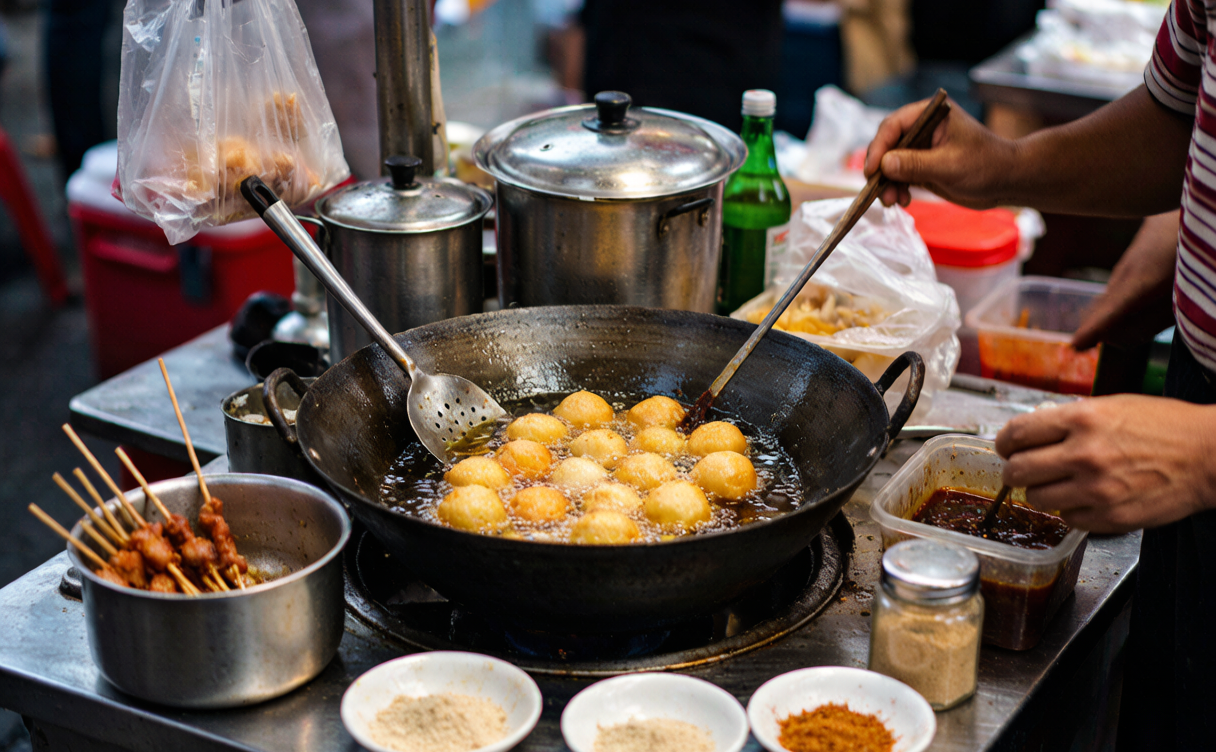
| Sugar-oil baba (糖油粑粑) | Fried glutinous cake, sweet | Street dessert carts |
| Osmanthus jelly | Floral cold sweet, summer | Tea houses |
The Changsha stinky tofu is the city’s signature dare: black, crisp, pungent, and addictive once dressed with garlic-chili sauce. The Changsha hotpot leans oily and smoky rather than numbing, perfect for cooling nights. For a gentler bite, the rice noodles at breakfast are the everyday soul of the city, and the sugar-oil baba is the sweet counterpoint you did not know you needed.
Beyond the headline dishes, Changsha’s appeal is the sheer density of its street food. Whole blocks near Pozi Street turn into open-air kitchens after dark, with grilled fish, skewers, and peanut candies competing for your attention. The trick is to graze: buy one item per stall, eat standing up, and move on. Locals call this “sa ye” — sweeping the night — and it is the most fun way to try six things in an hour without a formal meal.
Where to Eat & Stay in Changsha
Eat where the locals queue. Pozi Street and the Huogongdian (Fire Palace) complex are the tourist-friendly classics, while the areas around Wuyi Square and the universities hide cheaper, bolder holes-in-the-wall. For a sit-down Hunan meal, look for smoked-meat specialist restaurants away from the main drag, where the portions are generous and the chillies fresh.
Stay central — near Wuyi Square or Huangxing Road — so the night markets are a short walk away. Hotels range from ¥200 hostels to ¥600+ international brands. Book early during holidays. For more culinary context, our best things to do in China includes Hunan’s food stops.
Changsha Food Guide: Practical Tips
A few tips make a Changsha food guide run smoothly. Spice levels here are real — ask for “wei la” (mild) if you are unsure, and keep cold drinks handy. Many famous stalls are cash or mobile-payment only; set up Alipay or WeChat Pay before you arrive. Download a translation app with a camera function to read menus, since English is rare at small shops.
Eat early or late to dodge the biggest crowds at Pozi Street. Try one “weird” item (stinky tofu counts) even if hesitant — it is the local rite of passage. Watch hygiene: busy stalls that turn over food fast are safer than quiet ones. Carry tissues, as napkins are not always given. With these in mind, Changsha is a safe, joyfully noisy food city that rewards a curious appetite.
One note for solo travelers: hotpot portions are built for groups, so order a small broth and a couple of add-ins rather than a full spread. Tipping is not expected anywhere in China, and many bigger restaurants have photo menus — point if the language fails you. Keep your hotel’s business card in your pocket; a taxi driver can read the Chinese address even if you cannot pronounce it.
Sample Changsha Food Itinerary
Day 1: Arrive, drop bags, and hit Pozi Street after dark for stinky tofu and sugar-oil cakes.
Day 2: Breakfast rice noodles, a smoked-pork lunch, then a Changsha hotpot dinner and a riverside walk.
Day 3: Morning tea and Osmanthus jelly, last market snacks, and an evening train out.
FAQ
Is Changsha food very spicy? Yes, Hunan cuisine is chili-forward. Ask for mild if needed.
What is the must-try dish? Stinky tofu, then a smoky Changsha hotpot.
How do I get to Changsha? Fly into CSX or take high-speed rail; it is a major hub.
Is it safe to eat street food? Yes, at busy stalls. Choose high-turnover vendors and drink bottled water.
How many days for food? Two to three days covers the classics at a relaxed pace.
By Karl — Last updated July 27, 2026