

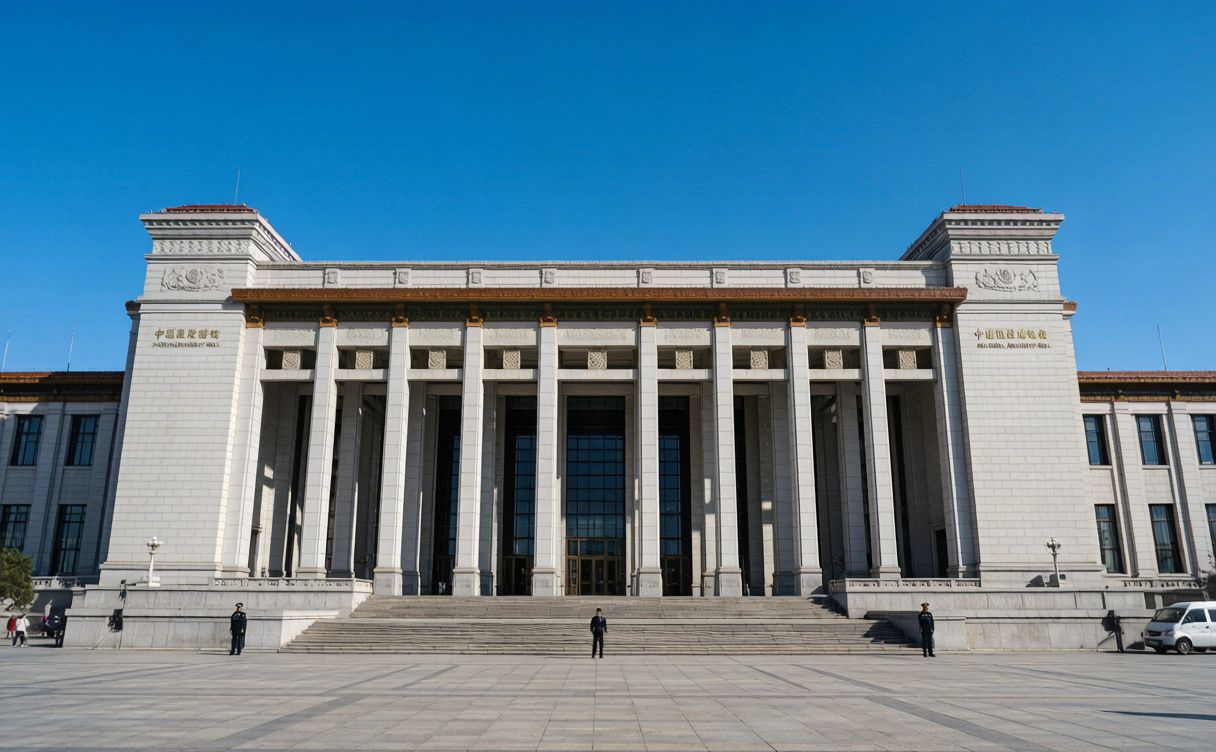
Standing on the east side of Tiananmen Square, the National Museum of China is the kind of place that humbles you the moment you walk in. I had been to Beijing before, ticked off the Forbidden City and the Temple of Heaven, but I kept putting off the museum because I assumed it would be a dull afternoon of glass cases. I was completely wrong. On my first visit I arrived at 9 a.m. planning two hours and stumbled out at closing time, my phone full of photos and my head spinning. If you only do one museum in China, make it this one.
Getting There
The museum sits on the eastern edge of Tiananmen Square, directly opposite the Great Hall of the People. The easiest way is the Beijing subway: take Line 1 to Tiananmen East Station, use Exit C or D, and you will pop up a short walk from the entrance. If you are coming from the north, many visitors combine it with a morning on the square itself.
A practical note: Tiananmen Square and the surrounding area sit inside a security zone. Bring your passport, because you will pass security checks both for the square and again at the museum door. Leave large bags and tripods behind if you can. I learned this the hard way when a friend’s backpack got turned away at the gate.
The museum is free to enter, but you must reserve a timed ticket in advance through the official system or mini-program. Walk-up entry is rarely possible on weekends and holidays, so book a few days ahead. If you are building a Beijing plan, our Beijing first-time travel guide walks you through the whole area, including how to sequence the square, the museum, and the Forbidden City next door.
What to See
The building is enormous, with nearly two hundred exhibition rooms spread across several floors. Trying to see everything in one day is a recipe for exhaustion, so I focus on two main threads: the ancient China galleries and the modern revolution galleries.
The Ancient China exhibition is the heart of the museum and the reason most people come. It is arranged chronologically, from early hominids and jade artifacts through bronze-age dynasties, the silk roads, and the last imperial court. The objects are staggering: ritual bronzes with inscriptions thousands of years old, complete sets of ceramic ware, Buddhist sculpture, and rare scrolls. Even if you drift through without reading every plaque, the sheer continuity of the displays tells a story no textbook can match.
Upstairs, the Road of Rejuvenation galleries cover the nineteenth and twentieth centuries, from the Opium Wars through the founding of the People’s Republic. This is where the modern narrative of China comes alive through photographs, uniforms, and personal effects. I found the contrast moving: one floor of five-thousand-year-old bronze, another of revolution-era letters, both part of the same national story.
There are also rotating special exhibitions, often devoted to a single dynasty, a foreign civilization, or a particular craft. On one of my visits a small show of Tang dynasty gold and silver left a bigger impression than I expected, proof that the permanent collection is only half the story. Check the schedule when you book, because a temporary show can easily be the highlight of your visit, and some are included with the same free reservation while others carry a separate ticket.
Highlights by Dynasty
If your time is limited, here is how I would prioritize by period:
- Shang and Zhou (bronze age): The ritual bronzes are the signature treasures. Look for the layered casting and the ceremonial vessels used in ancestor worship. The detail is so fine it is hard to believe they are three thousand years old.
- Han and Tang: Tomb figurines, silk, and Tang dynasty ceramics show a confident, cosmopolitan empire connected to Central Asia. The Tang ladies and horses are quietly charming.
- Song, Yuan, Ming, Qing: Porcelain reaches its peak here. The blue-and-white Ming pieces and the refined Song celadons are the ones you will see reproduced in gift shops across the city, but the originals are something else entirely.
- Modern era: The revolution galleries tie the ancient thread to the present, useful context before you explore elsewhere in the capital.
For a fuller sense of imperial art and garden culture beyond the museum walls, pair your visit with the Summer Palace or a wander through the Beijing hutongs, where everyday life still runs at a human scale.
Tips
A few things I wish I had known before my first visit:
- Book ahead and arrive early. Timed slots fill fast, especially in summer. Arriving at opening lets you enjoy the Ancient China halls before the crowds.
- Wear comfortable shoes. The floors are long and the building is huge. I easily walked eight kilometers inside without leaving the building.
- Start at the top or bottom and work systematically. Random wandering wastes energy. Pick the ancient or modern wing first, then the other.
- Use the free coat and bag check. Heavy bags are a burden in crowded galleries, and the cloakroom is free.
- Don’t skip the museum shop. The reproductions and books make better souvenirs than the generic stalls outside.
- Eat before you go or plan to leave for lunch. The on-site options are limited and the nearby square area has tight rules about where you can grab food.
If you want a broader picture of the country’s must-see sights, a good overall roundup is a helpful companion read before you fly.
Best Time
The museum is indoors, so weather barely matters, but crowds do. Weekday mornings are calmest; weekends and Chinese public holidays can be packed. Spring and autumn are the most pleasant seasons to pair the museum with outdoor Beijing sights, and summer brings the biggest crowds but also the longest daylight for a full day of culture. If you are visiting in winter, the warm, quiet galleries are a welcome break from the cold, and the shorter lines mean you can linger over the bronzes without feeling rushed. I actually prefer a crisp January morning there, when the square outside is nearly empty and the museum feels like a private library of the past.
For seasonal planning across the city, a good first-time guide also covers when to tackle the big outdoor attractions so you are not fighting weather and lines on the same day.
Good to Know
The National Museum of China is open most Tuesdays through Sundays, with Monday closures, though holiday schedules shift, so always confirm before you go. Entry is free with advance reservation, security checks are strict, and the official website is the most reliable source for current hours, exhibition listings, and the booking system: National Museum of China. Photography is allowed in most halls without flash, but some special exhibitions restrict it, so watch for signs. Plan three to five hours for a satisfying visit, more if you are a history lover.