

I first heard about Meili Snow Mountain from a truck driver in Shangri-La who told me, “If Kawagarbo shows his face, you are lucky for life.” I laughed at the time. Then, after three cloudy mornings at Feilai Temple, the clouds finally lifted for nine minutes and I understood exactly what he meant. This is a place that refuses to be photographed on demand, and that is precisely why it stays in your memory.
Meili Snow Mountain (Meili Xueshan) sits in the far northwest of Yunnan, in Deqin County near the border with Tibet. For Tibetan Buddhists, the main peak Kawagarbo is the most sacred mountain in the province, a deity rather than a rock. For travelers, it is one of the last great Himalayan ranges you can reach by road without a climbing permit. You cannot summit it — climbing has been banned since 2001 after local protests — but you can stand below it, watch the sunrise paint the snow gold, and feel small in the best possible way.
If you are building a Yunnan itinerary, Meili fits naturally after Shangri-La and before any Tibet-bound route. I have written up the practical pieces in our Shangri-La Yunnan travel guide and the famous Tiger Leaping Gorge trek that sits between Lijiang and Shangri-La, both of which I used on my own trips.
Getting There from Shangri-La
The simplest way to reach Meili Snow Mountain is to base yourself in Shangri-La and head west. The drive from Shangri-La town to Feilai Temple near Deqin is roughly 190 kilometers and takes about four to five hours by car or shuttle. The road winds over the Baima Snow Mountain pass at around 4,290 meters, so take it slow and watch for altitude effects.
I took a shared 7-seater van that my guesthouse arranged for 80 yuan. It left at 7:30 a.m. and stopped twice for photos and once for noodles. A private car costs more but lets you stop at the moon-shaped Yi Lake and the Baima pass viewpoint. If you are coming from Lijiang, plan two full travel days, because the gorge and Shangri-La break up the route nicely. Our Lijiang old town travel guide covers where to sleep before you start.
There is no train to Deqin yet, so road travel is the only option. Buses run daily but sell out in peak season, so book a day ahead. The final approach follows the Lancang (Mekong) River and the valley gets dramatically narrower as you near the mountain.
What to See
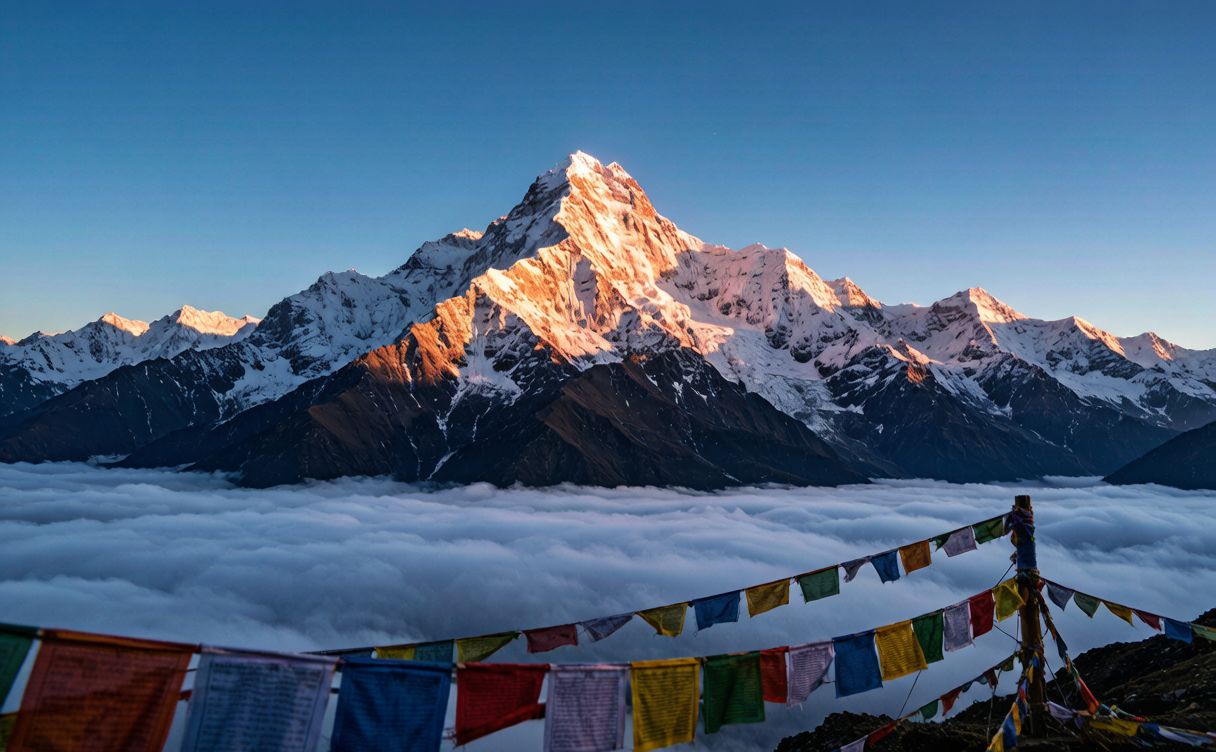
Most visitors stay at Feilai Temple (Feilai Si), a small cluster of guesthouses and a literal “flying temple” perched on a ridge across the valley from the peaks. From here you get the classic postcard view of the thirteen peaks of the Meili range. The viewing platform is a five-minute walk from most hotels.
Below the temple, the Mekong valley is dotted with Tibetan villages with white stupas and prayer flags. I spent an afternoon walking to Mingyong Glacier, the lowest-altitude maritime glacier in the northern hemisphere, which tongues down toward the forest at about 2,700 meters. The hike up is steep but the path is well marked, and yaks graze near the treeline.
A quieter option is the Wunongding viewpoint, a few kilometers past Feilai Temple, where fewer tour buses stop. I preferred it for sunset because the light hits the eastern faces differently. Either spot works; just do not expect solitude at sunrise.
The Kawagarbo Peak
Kawagarbo, at 6,740 meters, is the highest peak in Meili and the star of every photograph. The local belief holds that it is the guardian deity of the region, and the mountain has never been climbed — not for lack of trying. A Japanese expedition reached the summit in 1991 in a controversial claim, but the climbers died on the descent, and a 1996 attempt was abandoned after a monk’s prophecy. Yunnan then banned all ascents, and the ban holds today.
What this means for you is simple: you come to witness, not to conquer. The famous “sunrise on the golden mountain” happens when the first sunlight hits the snow while the valley is still in shadow. The window is short — sometimes under ten minutes — and clouds cancel it entirely. I tell every friend to budget at least two nights so you get a second chance.
The best light is between late November and early March, when the air is dry and clear. On my February visit the temperature at the platform was minus nine, but the view was worth frozen fingers. Bring a thermos and a thick jacket regardless of season.
Tips
- Altitude: Feilai Temple sits near 3,400 meters. Spend a night in Shangri-La first to acclimatize, and skip the heavy exercise on arrival day.
- Clouds are the rule, not the exception: Locals say Kawagarbo appears to only a third of visitors. Book two nights minimum and treat a clear morning as a bonus.
- Gear: A real winter coat, hat, and gloves even in “warm” months. The sunrise platform is exposed and cold. A zoom lens helps, but a phone works fine for the wide shot.
- Respect: This is an active pilgrimage site. Walk clockwise around stupas, ask before photographing monks, and never step on prayer flags.
- Money and signal: Cards and some foreign cards fail in Deqin. Carry cash in yuan. Mobile signal is patchy outside the temple strip.
- Getting around locally: Taxis in Deqin town are cheap, but to reach Wunongding or Mingyong you need a private car or the morning shuttle. Arrange it through your guesthouse the night before.
If you enjoy sacred mountains and want another dramatic summit later in your trip, our Guizhou Fanjingshan guide covers a very different but equally spiritual peak in the south, and the Chongqing Dazu rock carvings make a calm cultural counterpoint after all that altitude.
Best Time
The clearest, most reliable weather runs from late October through early March. Winter brings blue skies and the sharpest sunrise colors, with daytime highs around 8–12°C and freezing nights. It is cold but the mountain is most visible then.
Spring (April to May) has blooming azaleas in the valleys but more cloud. The summer monsoon from June to September turns the gorge green and lush, yet wraps the peaks in cloud for days at a time — I would avoid July and August if seeing snow is your goal. October is my personal favorite: clear air, golden forests, and fewer crowds than the National Day week at the start of the month.
Good to know
Meili Snow Mountain lies inside the Yunnan Three Parallel Rivers UNESCO area and is managed as part of the Diqing Tibetan Autonomous Prefecture. Entry to the Feilai Temple viewing area requires a scenic-area ticket (around 150 yuan, with the Mingyong Glacier route costing extra). Check current opening times and any seasonal road closures with the official Diqing tourism board before you travel: Diqing Culture and Tourism Bureau.