

The first thing you notice when the ferry’s engines cut out and the gangway drops is the silence. No horns, no engine hum, no scooter buzz — just the clack of your own shoes on pale stone and, somewhere uphill, the unmistakable trill of a grand piano drifting through the trees. That is Gulangyu Island in a single frame: a tiny patch of land off the coast of Xiamen where cars were banned decades ago and roughly one in every twelve households owns a piano. I had read the UNESCO line about “a unique blend of Eastern and Western architectural styles” a dozen times before I went, but nothing prepared me for how a place smaller than Central Park could feel like a whole anthology of forgotten empires.
Why Gulangyu Island Earned Its Piano Nickname
Here is the surprising fact that hooked me before I ever booked a ticket: this 1.9-square-kilometer island reportedly holds more than 100 upright and grand pianos, which is why locals and tour boards alike call it “Piano Island” — or, in the travel shorthand I kept seeing, piano island china. The nickname is not a marketing gimmick. In the late 19th and early 20th centuries, Gulangyu became an international settlement after Xiamen opened as a treaty port. Missionaries, consuls, and merchants from Britain, Japan, Spain, and beyond built villas here, and the piano — then a symbol of Western middle-class respectability — traveled with them. Generations later, the island produced a disproportionate number of China’s concert pianists, including the celebrated Yin Chengzong.
When I stepped off the ferry that first morning, a volunteer guide in a sun-bleached straw hat waved me toward the Shuzhuang Garden and said, with a grin, “Save your legs. The piano museum is only four minutes from here, but the hill behind it will cost you.” He was right about both.
Getting There: The Ferry From Xiamen
You cannot drive to Gulangyu, and that is the entire point. Every visitor crosses by ferry from Xiamen’s mainland to Gulangyu Island, and the 20-minute crossing is part of the experience rather than a chore. Most travelers depart from the Xiamen International Cruise Center (Dongdu), which is the terminal for tourists. Locals use a separate pier, so do not follow the crowd of commuters with grocery bags — they are headed somewhere else.
A few practical things I learned the hard way:
– Buy your round-trip ticket in advance through the official WeChat mini-program or the ticket windows; same-day walk-up slots in peak season vanish by mid-morning.
– The ride itself is a breezy 20 minutes. Grab a spot on the open stern deck if the weather is kind — the view back toward Xiamen’s skyline with Gulangyu rising ahead is the cheapest postcard you will ever get.
– Keep your ticket. You need it to board the return ferry, and the QR code is scanned both directions.
If you are building a Fujian itinerary, pair this with our full Xiamen travel guide for where to stay on the mainland and how to reach the broader province by high-speed rail.
What to See: Colonial Villas and Quiet Lanes
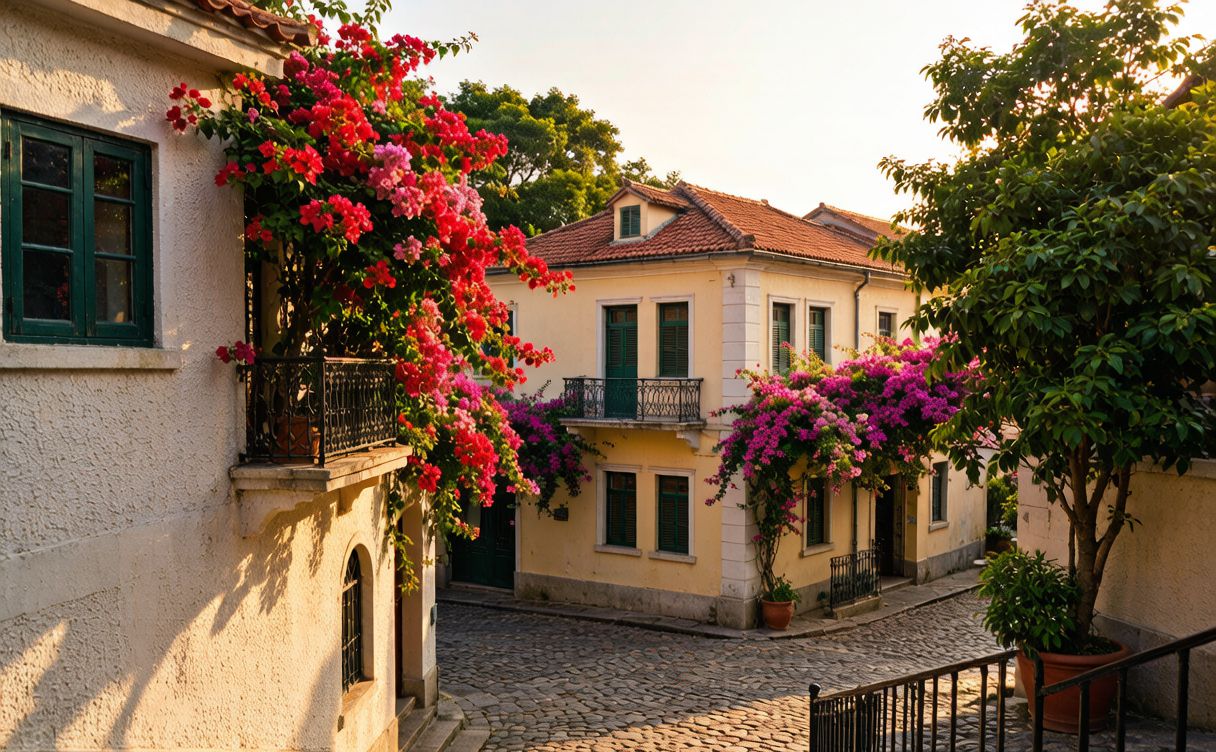
The architecture on Gulangyu Island is the real draw, and it is gloriously strange. Walking the lanes, you pass a Gothic church next to a Hokkien courtyard house next to a faded art-deco villa with peeling pink stucco. Gulangyu Island was inscribed on the UNESCO World Heritage List in 2017 as a “Historic International Settlement,” and you can read the official description here: UNESCO — Kulangsu (Gulangyu Island). The listing notes more than 900 historic buildings, which sounds like a lot until you realize the island is a maze of them.
My favorite stretch was the slow climb toward Sunlight Rock (Riguang Yan), the island’s highest point at 92 meters. A resident told me, as we both caught our breath on the switchbacks, “Everyone races to the top for the photo. But the old organ in the chapel halfway up — that is the thing they miss.” He was right. The chapel’s pipe organ, rescued and restored, still fills the stone room on weekend afternoons.
Other stops worth your time:
– Shuzhuang Garden — a private garden built into the hillside and shoreline, with hidden windows that frame the sea like painted scrolls.
– The Piano Museum inside Shuzhuang Garden — dozens of antique pianos, including a hand-cranked model and a gilded concert grand.
– Haoyue Garden — a seaside park with a large statue of Zheng Chenggong (Koxinga), the Ming-era naval hero who launched from Xiamen.
– Organs Museum near the ferry — smaller, cooler, and usually empty, which makes the silence feel intentional.
Best Walks: Getting Lost Is the Plan
Because there are no cars, xiamen gulangyu is one of the few places in coastal China where getting deliberately lost is a pleasure rather than a hazard. On Gulangyu Island, the lanes are paved in pale granite polished smooth by a century of footsteps, so wear shoes with grip. I spent an unhurried afternoon tracing the ring road that hugs the coast, then ducking into the interior lanes whenever a courtyard gate or a breadfruit tree caught my eye. The island’s paths are paved in pale granite and polished smooth by a century of footsteps, so wear shoes with grip — it gets slick after the frequent subtropical drizzle.
A short loop I recommend: ferry → Longtou Road (the main commercial strip, good for a quick snack) → turn inland toward the Piano Museum → climb toward Sunlight Rock from the back, quieter side → descend to the west coast for the late-afternoon light → finish at the organ museum near the pier. That is roughly three hours with photo stops, or five if you linger.
Where to Eat: Seafood, Peanut Soup, and Patience
On Gulangyu Island, the food scene is touristy near the ferry and genuinely good once you walk five minutes away from it. The local specialty is sea worms (túsǔn), a chewy coastal delicacy I tried once and respect but will not pretend to love. Far safer bets:
– Peanut soup (花生汤) — a sweet, velvety breakfast bowl sold at hole-in-the-wall shops on Longtou Road. Order it with a fried dough stick.
– Oysters and razor clams — grilled or steamed, priced by the piece at the small seafood counters.
– Xiamen satay noodles — a coconut-and-peanut broth that tastes like the island’s history in a bowl.
A word of warning from experience: the “free tasting” fruit stalls near the pier are a soft hustle, and the seafood restaurants with the most aggressive touts are rarely the best. Walk past the first three and pick the one where local day-trippers are eating.
How Long to Spend
This is the question everyone asks, and my honest answer is half a day to a full day. If you are passing through Xiamen on a bigger trip, a single afternoon on Gulangyu Island covers the ferry, the Piano Museum, a coastal walk, and a seafood dinner before the last boat back. If you are a slow traveler who likes old buildings and quiet lanes, book a guesthouse on the island and stay one night — the place transforms after the day-trippers leave at six, when the only sounds are pianos and the tide.
I stayed overnight and do not regret it. After dark, I sat on a sea wall with a thermos of tea while a family three doors down ran through a Chopin nocturne, window open, not performing for anyone. That is the Gulangyu I came for.
Practical Tips Before You Go
- Best season: Spring (March–May) and autumn (September–November) are kindest on Gulangyu Island. Summer is hot, humid, and packed with domestic tourists; winter is mild but grey.
- Cash vs. card: Mobile pay rules in Xiamen, but carry some cash for the tiny food stalls. See our notes on paying in China as a foreigner before you arrive.
- Crowds: Arrive on the first ferry to Gulangyu Island (around 7:10 a.m.) to have the lanes to yourself for an hour. By 10 a.m. the day-trippers land.
- Accessibility: The car-free lanes are flat near the coast but the interior climbs are steep and paved with uneven stone. Not ideal for wheelchairs beyond the ring road.
Final Thought
Gulangyu Island is not the easiest place in China to reach, and it is not the cheapest half-day you will spend on a Fujian trip. But gulangyu island xiamen delivers something increasingly rare on the tourist trail: a car-free destination that slows you down on purpose. Few visitors realize that Gulangyu Island was a car-free zone long before “pedestrian-friendly” became a travel buzzword. No traffic, no rush, just pianos in the trees and a century of quiet architecture waiting for someone to notice. Go early, walk slowly, and let the silence do the selling.