

The first time I stood at the edge of Five Flower Lake, I genuinely forgot to take a photo. The water was such an impossible shade of turquoise that my brain kept telling me it had to be dyed. This Jiuzhaigou travel guide is the one I wish I’d had before that trip — a straight-talking, no-hype rundown of the lakes, the waterfalls, the ticket system, and exactly how to get to Jiuzhaigou without losing a day to bad planning. I’ll cover what makes the valley special, the must-see spots, getting there from Chengdu, altitude tips, and where to sleep. By the end you’ll be able to book with confidence.
What Jiuzhaigou Actually Is
Jiuzhaigou sits in the far north of Sichuan province, near the edge of the Tibetan Plateau, about 330 km from Chengdu as the crow flies. The name means “Nine Village Valley” — nine Tibetan villages once lived inside the park, and a few still do. Any honest Jiuzhaigou travel guide will tell you those villages are part of what makes the place feel lived-in rather than staged. Locals call it the “fairyland of lakes,” and after a day there you’ll see why. The valley is a UNESCO World Heritage site, recognized both for its natural scenery and its Tibetan cultural heritage. UNESCO has a solid overview of the protected area if you want the official write-up on Jiuzhaigou Valley.
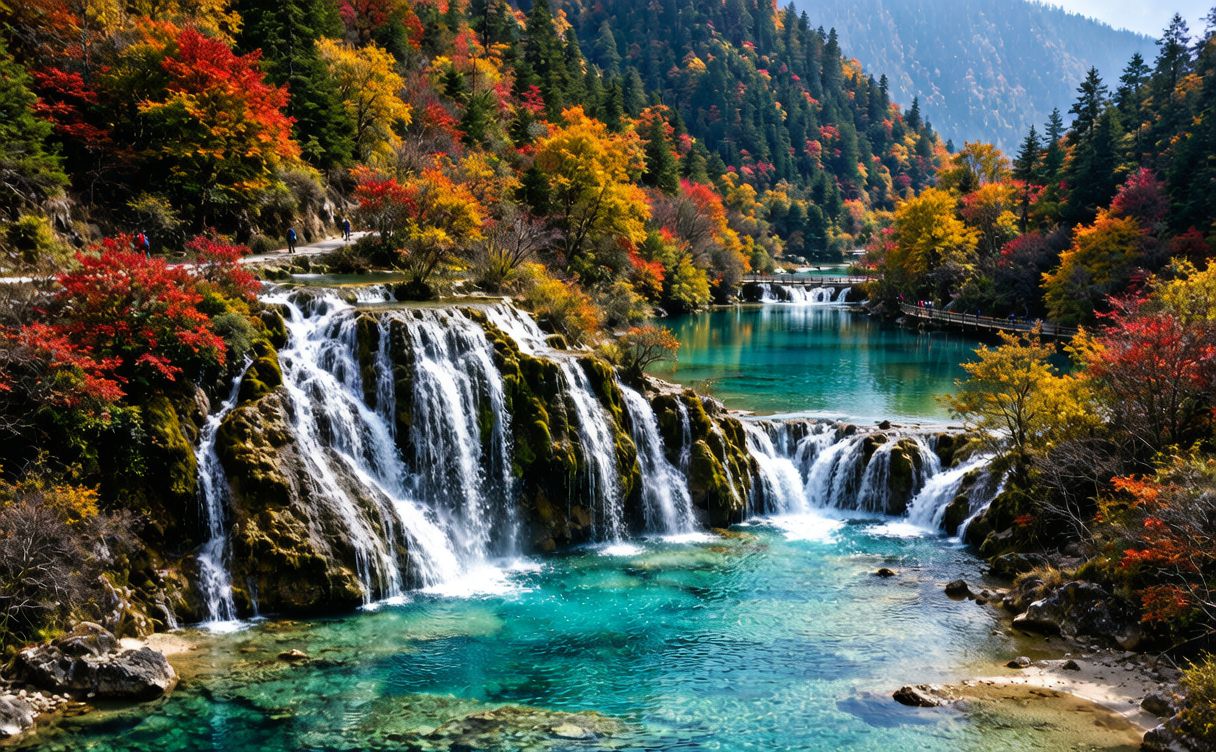
What you’re really looking at is geology doing something rare. Glacial activity, limestone, and a lot of calcium carbonate in the water combine to create lakes so clear and so colored that they look edited. The park runs as a Y-shape: a central Shuzheng Valley plus two arms, Rize (to the south) and Zechawa (to the east). Most visitors ride the shuttle to the top of one arm, then work back down on foot and by shuttle, which is the only sane way to cover the distance.
A note worth knowing before you go: the valley was badly hit by a 7.0-magnitude earthquake in August 2017. Several lakes and boardwalks were damaged and the park closed for years of rebuilding. It reopened in 2019 and has been steadily restored since. Some of the famous spots look a little different now, but the water is as unreal as ever.
The Must-See Lakes and Falls
You could spend a week here and not see everything, but a single day hits the headlines — which is why this Jiuzhaigou travel guide focuses on the four you’ll actually remember. These are the ones people actually remember.
Five Flower Lake (Wuhua Hai)
This is the poster child, and it earns it. The lake is shallow, and fallen tree trunks lie on the bottom in crystal water tinted blue, green, and yellow depending on the light. Go early if you can — by mid-morning the boardwalk gets crowded and the reflection suffers.
Mirror Lake (Jing Hai)
On a windless morning, Mirror Lake does exactly what the name promises: it mirrors the surrounding peaks so perfectly you can’t tell where water ends and sky begins. It sits near the entrance of the Rize arm. Calm, windless mornings are the only time it works, so this is a first-stop kind of place.
Pearl Shoal Waterfall (Puzha Lang)
A wide, shallow sheet of water spills across a sloped terrace of rock — the “pearl” is the way sunlight catches the spray. It’s one of the most photographed spots in the park and featured in old Chinese TV dramas. The viewing platform gets busy, but the walk along the boardwalk above it is quieter.
Nuorilang Falls
At the junction of the three valleys, Nuorilang is the widest highland waterfall in China. In autumn it’s framed by red and gold leaves; in winter it partly freezes into something out of a snow globe. This is also where you change shuttles between the Rize and Zechawa arms, so you’ll pass it at least twice.
Getting to Jiuzhaigou from Chengdu
The single biggest planning mistake travelers make is underestimating the journey, and the first job of any Jiuzhaigou travel guide is to fix that. The valley is remote, and “how to get to Jiuzhaigou” has three realistic answers.
Fly. Jiuzhai Huanglong Airport (JZH) sits about 88 km from the park entrance, roughly an hour’s drive. The fastest route in any Jiuzhaigou travel guide is the one-hour Chengdu flight, even after you add the airport transfer. Direct flights from Chengdu take around one hour and run most days. From the airport you’ll still need a pre-booked transfer or a bus to the park — budget 1.5 to 2 hours on a winding mountain road. Flying saves a full day but adds cost and a second leg.
Bus. Long-distance buses run from Chengdu’s Xinnanmen or Chadianzi stations. The drive is 8 to 10 hours on mountain highways, often with delays. I’ve done it once and wouldn’t again unless the flight was sold out — it’s a long, twisty day.
Private car or tour. A private driver from Chengdu runs roughly 7 to 9 hours and lets you stop at Huanglong on the way. This is the most comfortable option and pairs well with a Sichuan loop that also includes our Chengdu panda and city guide, since nearly everyone routes through Chengdu anyway.
Tickets, the Shuttle, and the One-Way Route
As this Jiuzhaigou travel guide keeps emphasizing, entry is quota-controlled and timed. Peak-season tickets (roughly April to November) run about ¥190 plus a ¥90 shuttle bus fee, so call it ¥280 (around $39). Off-season drops to about ¥80 plus ¥80 for the bus. Children and students get discounts; bring your passport, since tickets are tied to ID.
Buy online in advance through the official platform or a trusted agent — same-day tickets at the gate are not guaranteed in autumn. The park opens around 7:00–7:30 a.m. and last entry is mid-afternoon; the shuttle stops running in the evening, so plan to be on the last bus down.
The route is essentially one-way by design, and this is the part of the Jiuzhaigou travel guide that saves you the most walking. You ride the shuttle to the far end of an arm, then drift back toward the entrance, hopping on and off at marked stops. Walking between lakes is on flat, well-built boardwalks, so it’s easy going — the challenge is distance, not terrain. Pick one arm if you’re short on time; the Rize arm holds most of the famous lakes.
Altitude and Acclimatization
Here’s the part first-timers overlook, and the part this Jiuzhaigou travel guide refuses to downplay. The valley floor starts around 2,000 m and the high points reach about 3,100 m. That’s not Everest, but it’s enough to leave you breathless on stairs if you arrive from sea level the same day.
Take the first day easy. Don’t run for the first bus, don’t over-plan, and skip the heavy hike on arrival. Drink more water than feels necessary, ease off alcohol for the first night, and let your body adjust. Most people feel fine within a day. If you have a heart or lung condition, talk to your doctor before flying straight into a high valley. The nearby Huanglong scenic area sits even higher (over 3,500 m), so if altitude bothers you, do Jiuzhaigou first and judge from there. Our China travel safety tips cover altitude, weather, and basic health prep in more detail.
Best Time to Visit
Autumn is the headline season, and mid-October is the sweet spot — the one date this Jiuzhaigou travel guide tells everyone to circle. The leaves turn red and gold, the water is still full from summer rain, and the contrast is the reason most photos you’ve seen exist. The catch: mid-October is also the busiest and most expensive window, and tickets sell out. Book months ahead if you target it.
Spring (April–May) brings fewer crowds and fresh green, though some lakes run lower. Summer (June–August) is lush and full but rainy, with the occasional landslide closure on the mountain roads. Winter is cold and quiet, some arms shorten their hours, but the frozen waterfalls and near-empty boardwalks are a different kind of magic — and cheap. Few Jiuzhaigou travel guide readers go in winter, which is exactly why it’s peaceful.
Where to Stay
You have two realistic bases, though most readers of a Jiuzhaigou travel guide end up in the same one. Inside the park is not really an option for most visitors — the old in-park lodges are limited and pricey, and the nine villages aren’t a tourist hotel zone. Jiuzhaigou Town (also called Zhangzha Town), just outside the entrance, is where almost everyone stays. It’s packed with hotels from budget hostels to four- and five-star resorts, plus restaurants and tour desks. Stay here and you’re a 10-minute shuttle ride from the gate at opening.
Staying in town also means you control your morning. Being at the gate when it opens beats arriving at 10 a.m. behind three tour buses.
Safety and Weather Notes
The boardwalks are safe and well maintained — the point every Jiuzhaigou travel guide makes — but they get slick after rain and ice in winter — wear real shoes, not sandals. Weather shifts fast in the mountains; a sunny morning can turn to a cold drizzle by noon, so pack a light rain shell even in summer. The shuttle system keeps you off the road, which is the main hazard in this region.
Cell coverage is decent near the entrance and along the main arms but drops in spots — download your maps and tickets offline. Cash is rarely needed, but keep a little for small vendors. For a full picture of costs on the road, our China travel budget guide breaks down daily spending across the country, Jiuzhaigou included.
The Bottom Line
Jiuzhaigou rewards the planner and punishes the improviser, which is the whole reason this Jiuzhaigou travel guide exists. Fly from Chengdu rather than bus if you value your time, buy tickets ahead, take altitude seriously on day one, and aim for mid-October if color is what you’re after. One full day covers the famous lakes; two lets you breathe. It’s a long way to go for water and trees, but it’s the most photogenic water and trees in China — and possibly anywhere you’ll stand this year.
Written by Karl — last updated July 2026. Karl has spent three years helping foreign visitors plan low-stress trips across China.