

The first time I was served shizitou in a Yangzhou restaurant, I reached for my chopsticks and nearly made a mess. I clamped onto the enormous meatball, lifted, and felt it fold and slump back into the broth before it ever cleared the bowl rim. The waiter quietly set a soup spoon next to my rice. That is the whole lesson of this dish in one gesture: a properly made lion’s head cannot be picked up with chopsticks, and it is not supposed to be. It is a meatball engineered to surrender to a spoon.
That softness is not an accident of overcooking. It is the point of one of the most technically demanding dishes in the Huaiyang canon, and it is why the recipe rewards patience and punishes shortcuts. Here is how to understand it, order it, and make it at home.
Why Is It Called a Lion’s Head Meatball? Name Origin and History
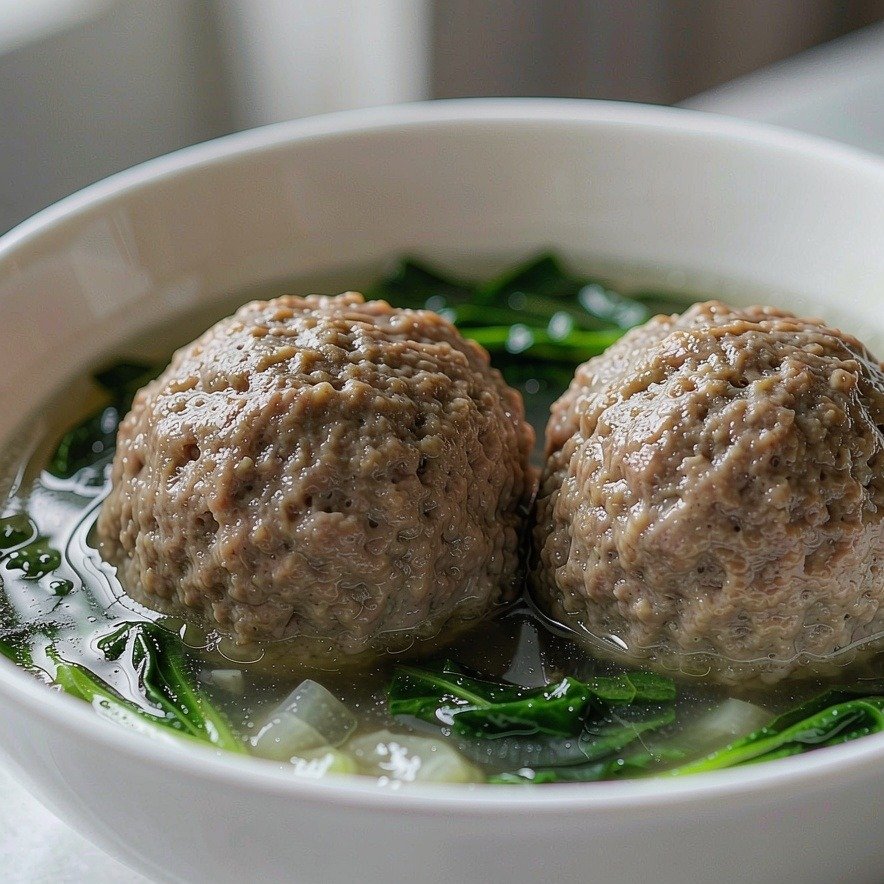
The name is pure shape-watching, not exotic ingredients. A finished ball is roughly the size of a fist, its surface left deliberately rough and pitted from hand-chopping, and it sits among a ring of dark green cabbage or bok choy leaves that read, to a Chinese diner, as a lion’s mane around the face. The guardian lions that flank temple gates provided the mental image. Nothing about the dish involves lion meat, and any menu translation that suggests otherwise is simply wrong.
The lion’s head meatballs history is part folklore, part documented record. The popular story runs back to the Sui dynasty, when Emperor Yang toured Yangzhou and his cooks supposedly created a dish called “sunflower chopped meat” in honour of the city’s famous gardens. Centuries later, at a Tang-era banquet, a nobleman named Wei Zhi was served these vast meatballs; his guests teased that a man of his military standing deserved a lion’s seal, and the dish was renamed in the joke’s honour. Food historians treat that tale as colourful storytelling rather than proven fact. The firm evidence is later and quieter: a mid-Qing Yangzhou salt merchant named Tong Yuejian wrote down a large chopped-pork ball in his Tiaoding Ji, and Xu Ke’s Qing Bai Lei Chao gave a fuller description — pork half fat and half lean, “finely cut and coarsely chopped,” bound with egg white, bedded on cabbage in a clay pot and cooked over the gentlest possible fire. Read that recipe and you are reading the modern dish almost verbatim.
In 2018 the dish was named one of Jiangsu’s ten classic dishes in a national “Chinese cuisine” selection, which is a fair reflection of its status: Huaiyang cuisine is one of the great historical cooking traditions of eastern China, and this is one of its signature banquet plates.
White or Red? The Two Styles of Chinese Pork Balls
Ask for shi zi tou in Yangzhou and you will most likely get the “white” version: pale, gently stewed or steamed in a near-clear broth with napa cabbage or the local short-stemmed greens called aijiao huang. The liquid is light but deeply porky, the meatball is left untouched by soy, and the whole thing arrives in a bowl that demands a spoon. Cross to Zhenjiang and the “red” style is more common: the balls are browned first, then braised in a soy-based sauce until they gleam a dark mahogany, sometimes with bamboo shoots or tofu alongside. Red lion’s head leans sweeter and more savoury; white lion’s head is about purity of texture.
This is soft geography, not a border crossing — you will find both styles in both cities and in Shanghai, where nineteenth- and twentieth-century migrants carried the dish onto banquet menus. If you only ever taste the red version, you have missed half the argument. The clear-broth one is where a cook’s hand is most exposed.
What Does a Lion’s Head Meatball Taste Like?
People asking what does a lion’s head meatball taste like are often braced for something heavily spiced, because the name sounds so theatrical. The reality is remarkably quiet. The first note is sweet pork fat, rendered slowly until it coats the tongue; then the slight resistance of coarse meat grains; then, if the cook is skilled, a small crunch of water chestnut that keeps the bite from turning mushy. There is no chilli, no Star Anise bomb, no smoky char. White pepper, ginger and Shaoxing wine are there only to lift the meat.
The writer Wang Zengqi described the ideal texture as “fluffy but not loose” — a paradox that makes sense the moment you eat a good one. A spoon slides through with almost no pressure, yet the meatball holds its shape in the bowl and tastes distinct on the tongue rather than dissolving into generic pâté. That combination is what separates a real lion’s head from an ordinary Chinese pork ball.
Lion’s Head Meatballs Ingredients: Why the Fat Matters
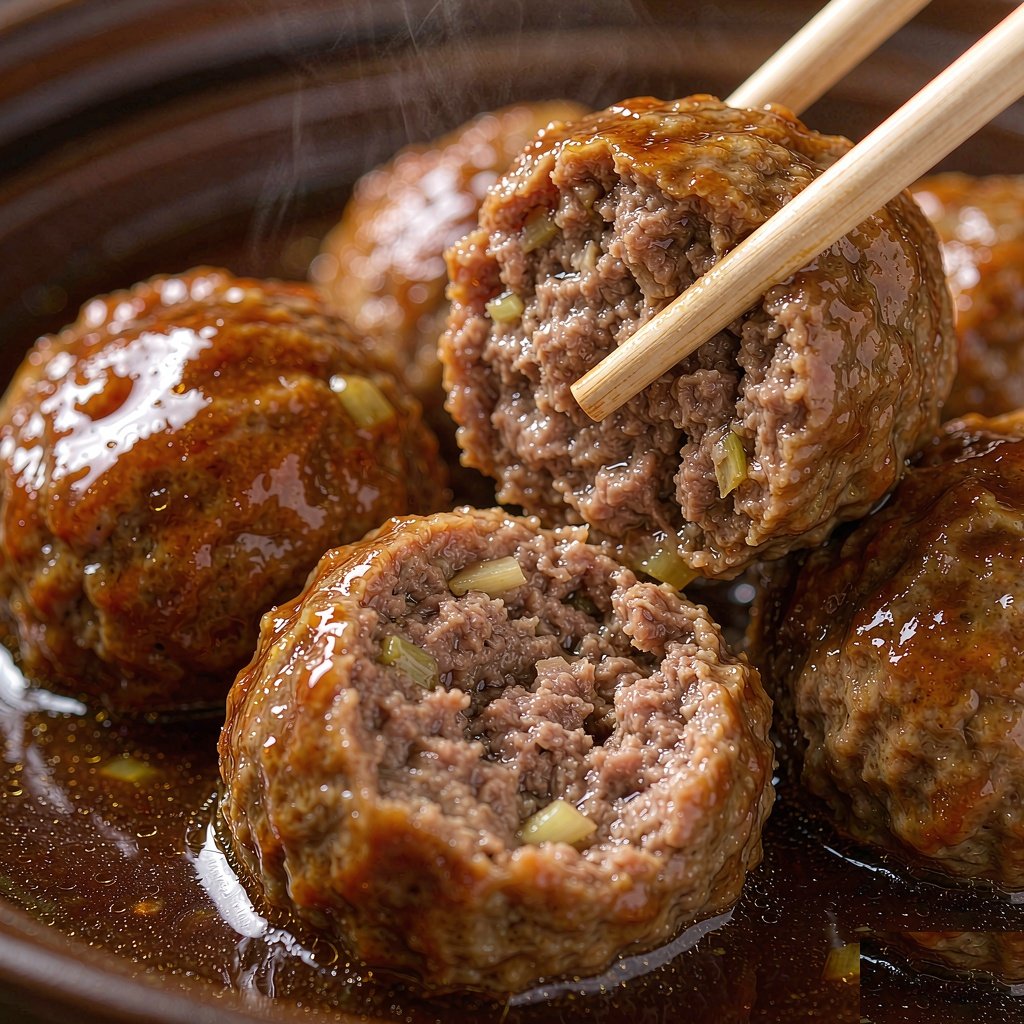
For four generous balls you want 700 g of pork shoulder or belly with roughly 30 percent fat, or a cleaner 500 g lean shoulder plus 200 g of pork fatback. Do not trim it. The fat is structural: it melts through the long cook and is the only reason the finished ball can be spoon-soft instead of a dense, dry golf ball. Alongside it, prepare 80 g of peeled water chestnuts (six to eight, roughly diced), one egg white, 15 g of cornstarch, 60 ml of ginger-scallion water, 15 ml of Shaoxing wine, 5 g of salt, 3 g of sugar, a pinch of white pepper, a small napa cabbage and about 700 ml of light chicken or pork stock. For the luxury crab roe lion’s head meatballs variation, fold 50 g of crab meat into the pork and press a little crab roe onto the surface of each ball before cooking.
The essential lion’s head meatballs ingredients list is short, so technique does all the work. Slice the pork thin, cut the slices into strips, dice the strips, then run the knife through the dice only a few times. You want visible grains of fat and lean, not paste. A food processor is the single most common way to ruin this dish: it emulsifies the fat into the meat and produces a springy, rubbery ball — the exact opposite of the goal.
How to Make Lion’s Head Meatballs at Home, Step by Step
This lion’s head meatballs recipe is straightforward once you accept that low heat is non-negotiable.
- Chop, don’t blitz. Hand-chop the pork to a coarse grain with small, distinct flecks of fat. Transfer to a wide bowl.
- Season and drink the water. Add ginger, scallion, wine, salt, sugar and white pepper. Pour in the ginger-scallion water 20 ml at a time, stirring in one direction until each addition is fully absorbed before adding the next. This is what stops a very large meatball from drying out in the middle.
- Bind last. Stir in the egg white and cornstarch, then fold through the diced water chestnuts. Overworking at this stage makes the mixture tight.
- Throw the balls. Divide into four and shape each by tossing it firmly from palm to palm ten to fifteen times. This knocks out air pockets and compacts the surface so the ball survives the pot.
- Brown gently. Heat a thin film of oil in a wide pan and brown the balls for about two minutes per side, moving them with two spoons. You are building a fragile crust, not cooking them through.
- Bed them down. Line a heavy clay pot or casserole with a few cabbage leaves, set the balls on top, tuck the remaining greens around them and pour in stock until they are two-thirds submerged.
- Simmer, never boil. Bring to a bare bubble, cover, and cook at the faintest simmer for 50 to 60 minutes. Do not stir, turn or poke. A rolling boil will tear these balls apart.
- Test with a spoon. Press one gently: a spoon should sink through with almost no resistance. If it pushes back, give it another 15 minutes. Serve each ball in a bowl with greens and a ladle of the cooking liquid.
Practical Tips and the Mistakes That Ruin the Texture
- Keep the fat. If 30 percent fat looks excessive in the bowl, remember it will melt away. Lean lion’s head is a dense, disappointing thing.
- Use the cabbage cushion. Without leaves underneath, the balls scorch against the metal long before the centres are done.
- Resist the stir. Every spoonful of agitation risks breaking a ball that is held together by very little.
- Follow the seasons. Yangzhou cooks change the additions through the year: river mussel in early spring, bamboo shoots around Qingming, shrimp in summer, lotus root and crab in autumn, water chestnuts in winter. Seasonal produce is the traditional way to keep the dish interesting.
Who Should Eat It — and Who Should Go Easy
A large ball with broth and rice lands around 450 to 550 lion’s head meatballs calories, most of that from pork fat and the starch used to bind it. For a banquet or a cold evening that is fair value: it is filling, warm and genuinely satisfying. It also suits people who find chewy meats difficult, since it needs no biting at all.
Those watching sodium should note the salt in the broth and, in the red version, the soy sauce. Anyone avoiding pork for religious or dietary reasons obviously needs a different dish, though vegetarian tofu-based “lion’s heads” do exist in Jiangsu home cooking. Red braised versions carry a little sugar, and the long-simmered stock is rich in purines, so people managing gout or blood sugar may want a small portion rather than a whole ball. This is general guidance, not medical advice.
Where to Find the Best Lion’s Head Meatballs in Yangzhou
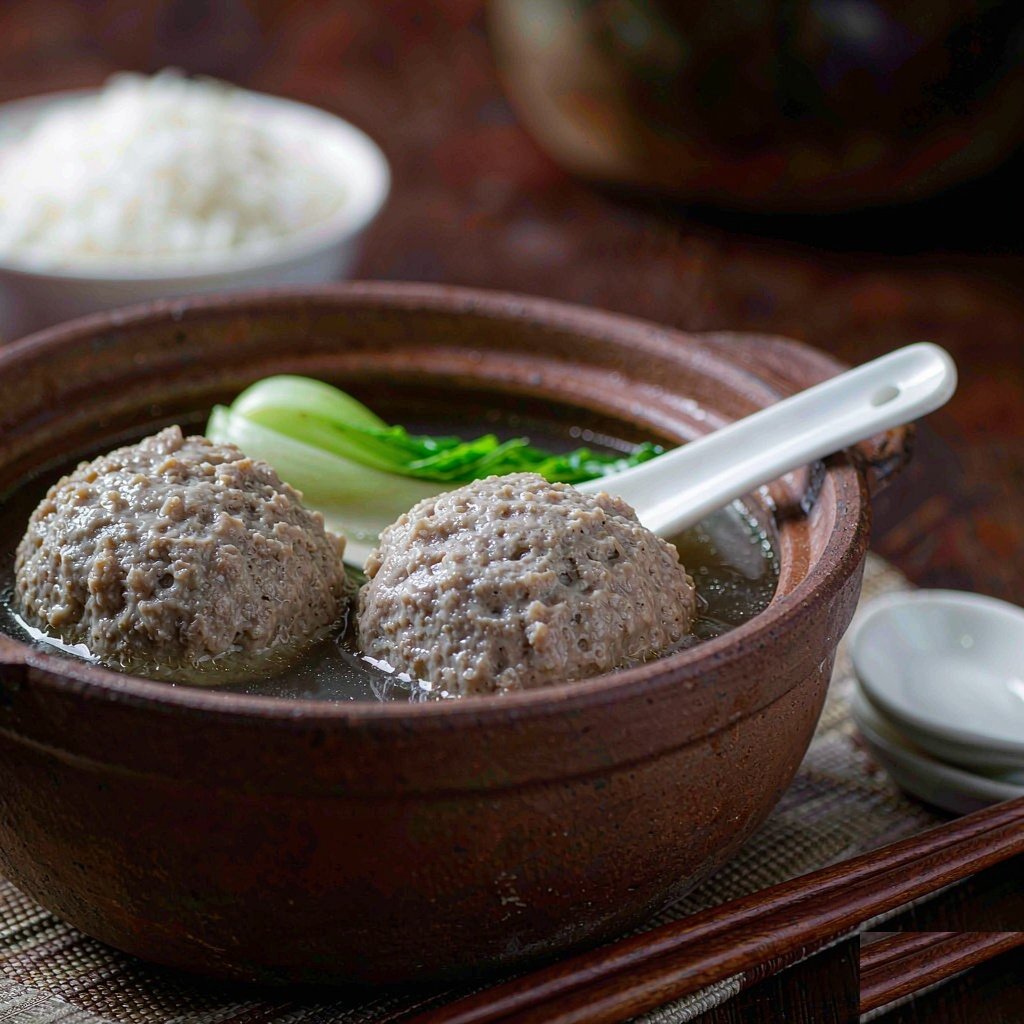
Yangzhou is the dish’s spiritual home, and the best lion’s head meatballs in Yangzhou are found in the old city’s tea houses and modest banquet rooms rather than in tourist-window displays. Order it as a shared centre dish with a bowl of rice and one green vegetable, and give the kitchen time — a proper ball takes the better part of an hour. Morning tea institutions serve a daytime version, while evening restaurants are more likely to offer the red-braised style or the crab-roe upgrade.
Because the dish is a marker of regional identity, it works well as a anchor point on a tour through China’s eight great regional cuisines: taste the clear Yangzhou version first, then compare it with a Zhenjiang red one a short train ride away. If your route runs through eastern China, a broader food-focused itinerary can easily include both, along with the city’s famous fried rice and shredded dry tofu. Shanghai restaurants inherited the dish through migration, so it is also a reliable order there when you want something gentler than the city’s heavier red-braised pork.
Lion’s Head Meatballs vs Sixi Wanzi and Western Meatballs
Northern Chinese banquets have their own large meatball, the sixi wanzi or “four joy” meatball. It is smaller, more tightly bound, and coated in a glossy brown gravy; bite into one and it pushes back. Lion’s head meatballs vs sixi wanzi is really a contrast between two textures: the northern ball is springy and substantial, the Huaiyang ball is loose and spoon-tender. The essayist Liang Shih-chiu made exactly this distinction when he placed lion’s head firmly in Yangzhou cooking rather than the north.
Against a Western meatball the gap is wider still. European-style meatballs are usually small, firmly browned, often a beef-and-pork mix, and served with a sauce that sits beside rather than through them. They are meant to be cut with a fork. An authentic lion’s head meatballs plate is one large, pale or mahogany ball that arrives in liquid and cannot be lifted intact. If your meatball bounces, you have made something delicious — but you have not made this.
Frequently Asked Questions
What does lion’s head meatball taste like?
Mild, sweet and pork-forward, with a coarse, spoon-soft texture and occasional crunch from water chestnut. Clear-broth versions taste clean and light; red-braised ones are richer, slightly sweet and soy-savoury. Neither is spicy.
How do I make lion’s head meatballs at home without a food processor?
Hand-chopping is the correct method, not a workaround. Slice, strip and dice the pork, then give it a few final chops so visible grains of fat remain. A machine purées the fat and gives you a rubbery ball. Add the ginger-scallion water slowly and throw the shaped balls between your palms before browning.
What is the difference between white and red lion’s head meatballs?
White (clear-stewed) lion’s head is pale, cooked gently in light broth with cabbage and associated with Yangzhou. Red lion’s head is browned and soy-braised, darker and sweeter, and more typical of Zhenjiang. Both appear across Jiangsu and Shanghai.
Can I prepare lion’s head meatballs ahead of time?
Yes. Shape and brown the balls a day in advance, keep them covered in the refrigerator, then braise them in the stock the next day. They also reheat well in their cooking liquid over a very low flame. Avoid a hard boil when rewarming, for the same structural reasons as the first cook.
Are lion’s head meatballs the same as Chinese pork balls?
They belong to the same family but are not interchangeable. “Chinese pork ball” covers many small, everyday meatballs. Lion’s head is a specific oversized Huaiyang dish with a hand-chopped texture, a long gentle cook and a spoon-eaten presentation.
How do you eat lion’s head meatballs — with chopsticks or a spoon?
With a soup spoon. The ball is intentionally too tender to lift with chopsticks; a good one breaks under the slightest pressure. Spoon out a portion with a little cabbage and broth and eat it over rice.
The dish asks for very little in the pantry and a great deal of restraint at the stove. Chop the pork by hand, keep the fat, add the liquid slowly and never let the pot boil. Do that, and the moment your spoon sinks through the finished ball without any resistance, you will understand why a plate of humble minced pork earned the head of a lion.