The plate that arrives before anything else
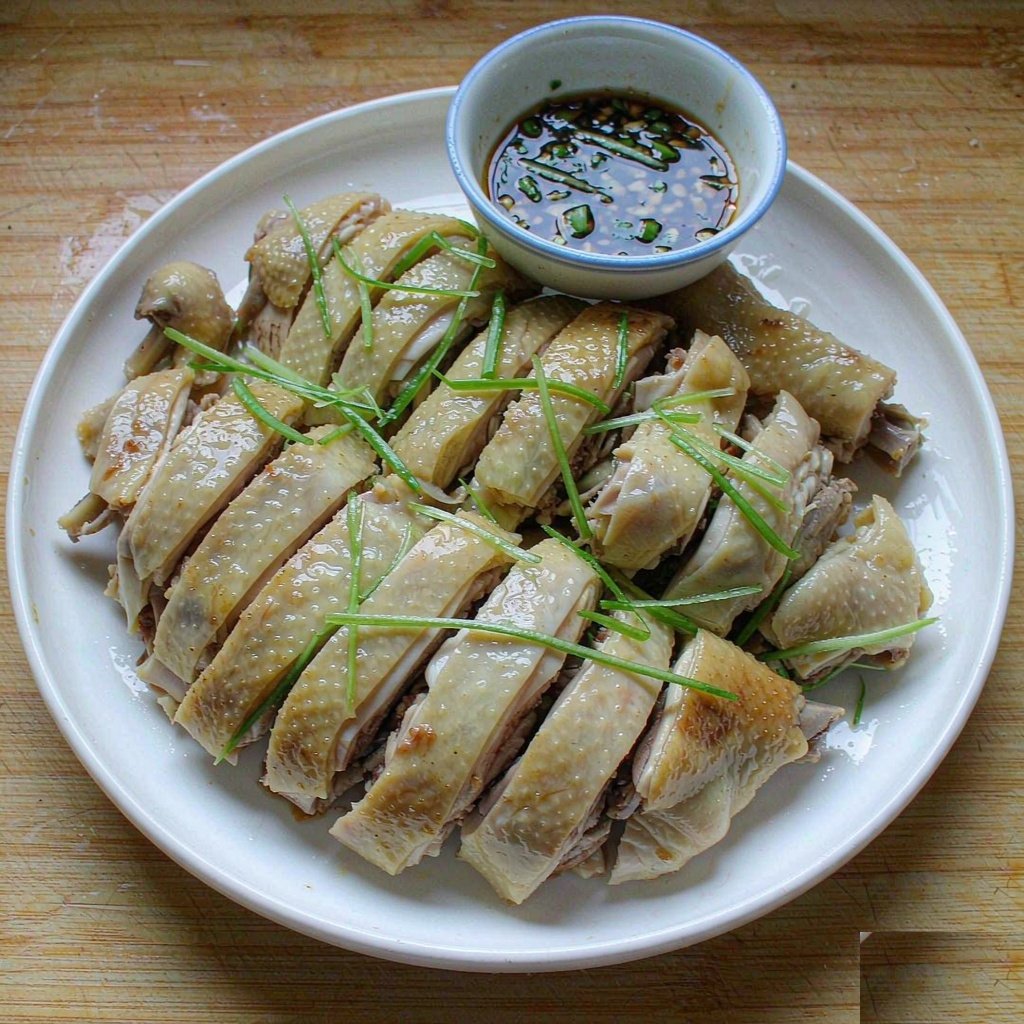
I still remember the first time a white cut chicken was set in front of me at a banquet outside Guangzhou. It was the opening dish, served cool, with no sauce poured over it and no glaze on the skin. Just a pale, ivory bird chopped through the bone and fanned across a plain white plate, a tiny bowl of chopped scallion and ginger oil sitting beside it. Nobody at the table touched the soy or the chili. They just dipped, bit, and nodded. Years later I understood why that plain plate mattered more than the lobster that came after: in Cantonese cooking, bai qie ji is the exam. If a chef can make a poached chicken taste like this, you trust everything else on the menu.
What white cut chicken actually is
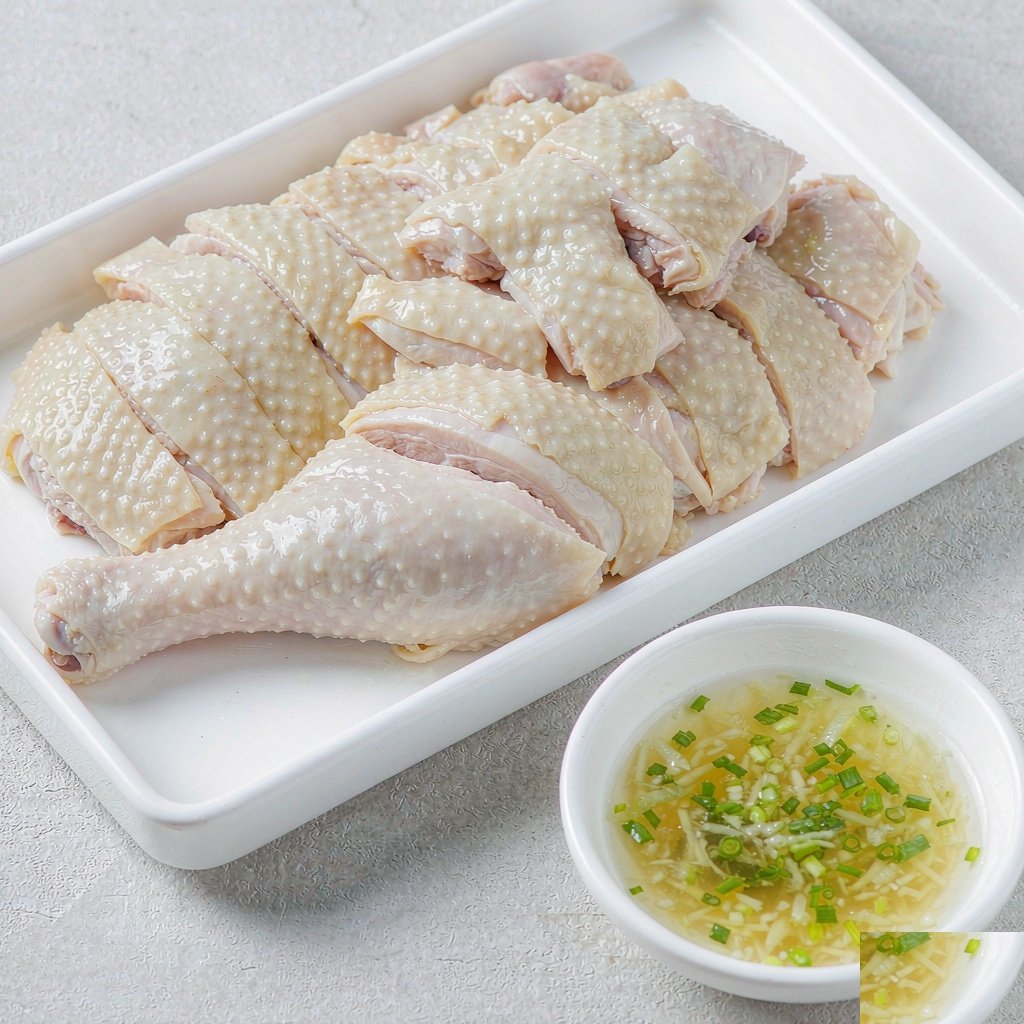
The name gives away the whole technique. Bai qie ji (白切鸡) translates loosely to “white cut chicken” — bai for the uncolored, unsoy-sauced skin, qie for the cleaver work of chopping it into serving pieces. It is a whole chicken poached gently in barely simmering water, then plunged into ice water so the skin tightens, and served at room temperature or lightly chilled with nothing but a dipping sauce. There is no marinade baked in, no five-spice rub, no browning. The bird does the talking.
This is precisely why it is treated as the benchmark of Cantonese food. A stir-fry hides behind sauce and heat; a roast leans on fat and caramelization. A poached chicken hides nothing. The quality of the bird, the timing of the water, and the sharpness of the cleaver are all on display. Get any one wrong and the table knows instantly.
What does white cut chicken taste like
If you arrive expecting the deep, loud flavors of a kung pao or a braised pork, you will be confused for the first bite. The taste is quiet. The meat is savory and clean, with a gentle chicken sweetness that mass-produced supermarket birds simply do not have. The skin is the surprise: properly made, it is firm yet tender, with a springy, almost gelatinous bite that Cantonese speakers describe as q (爽脆, a pleasant bounce). That texture comes entirely from the ice-water shock after poaching.
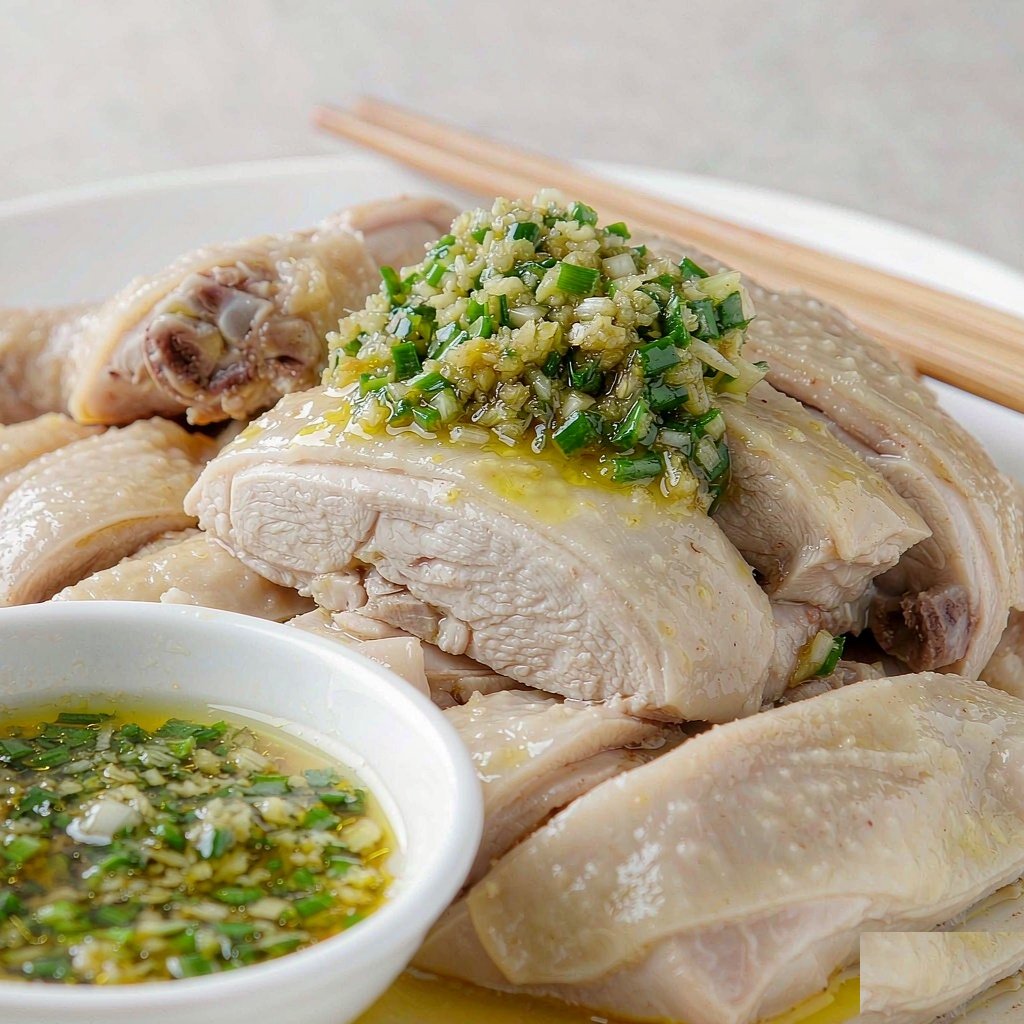
Then there is the sauce, and the sauce is where the flavor lives. A small spoonful of scallion-ginger oil against cool meat creates a contrast — cold, clean chicken against warm, sharp, aromatic grease — that is far more addictive than the dish looks on the plate. Eaten this way, white cut chicken is not bland. It is restrained, which is a different thing entirely.
The chicken and the short list of ingredients
Because the method reveals everything, the raw materials have to be right. The good news is the shopping list is short.
- One whole chicken, about 1.2 to 1.5 kg (2.5 to 3.3 lb). A young, tender bird is essential. In Guangdong this means a san huang ji (三黄鸡, “three-yellow chicken”) or a free-range pullet. An old laying hen will turn stringy and unforgiving.
- Fresh ginger, 60 to 80 g (about a 3-inch knob). Half goes into the poaching water, half into the sauce.
- Scallions (spring onions), 4 to 5 stalks. Same split — some for the pot, the green tops finely chopped for the dip.
- Fine sea salt, 1 to 2 teaspoons. Mostly for the dipping sauce, plus a pinch in the water.
- Neutral oil, 3 to 4 tablespoons. Peanut or a light vegetable oil, heated and poured over the aromatics.
- Optional: 1 tablespoon Shaoxing wine and a dash of sesame oil for the finished sauce.
That is the entire pantry. No soy in the cooking liquid, no sugar, no cornstarch. The discipline is the point.
The scallion-ginger dipping sauce
This is not a side note. For most home cooks, the white cut chicken dipping sauce is what makes or breaks the plate. The classic version is almost embarrassingly simple:
- Finely mince 40 g of ginger and the green parts of 3 scallions.
- Put them in a small heatproof bowl with 1 teaspoon of salt.
- Heat 3 tablespoons of neutral oil until it shimmers, then pour it over the aromatics so they sizzle and turn fragrant.
- Stir in a few drops of sesame oil. Some families add a teaspoon of the hot poaching broth to loosen it.
The result should be sharp, grassy, and warm, never oily or raw. A second, optional bowl of dark soy with a little sugar sits on the table for those who want a deeper note, but purists skip it so the chicken stays “white.”
How to make white cut chicken at home
The how to make white cut chicken at home method looks gentle, but the timing is exact. Here is the version that works in a normal kitchen.
- Prep the bird. Remove the giblets, trim excess fat, and pat the chicken dry. Rub the cavity with a little salt. Leave it at room temperature for 20 minutes so it cooks evenly.
- Build the poaching bath. Fill a pot with enough water to submerge the chicken. Add the smashed ginger, scallion whites, a pinch of salt, and the wine. Bring it to a bare simmer — bubbles should creep up the side, not roll.
- The three dips. Lower the chicken in, wait until the water returns to a simmer, then lift it out and let the water cool for 10 seconds. Repeat two more times. This heats the cavity gradually so the inside and outside finish together. Then submerge the bird fully.
- Poach off the boil. The moment the water returns to a whisper-simmer, turn the heat to its lowest setting, cover, and cook for about 15 to 18 minutes for a 1.3 kg bird. Do not let it boil.
- Rest in the pot, off heat. Kill the heat and let the chicken sit in the hot water, covered, for another 10 minutes. The carryover heat finishes the center without drying the breast.
- The ice shock. Move the chicken to a bowl of ice water for 5 to 8 minutes. This is what sets the skin into that signature ivory, snappy sheath. Pat dry.
- Chop and serve. Use a heavy cleaver to cut through bone and skin into serving pieces. Arrange skin-side up and pass the sauce separately.
Total hands-on time is short; the patience is in the waiting. The reward is a chicken that slices clean, with juices that run clear and a skin that actually snaps.
The mistakes that quietly ruin it
- Boiling instead of simmering. Rolling water toughens the protein and bubbles the skin loose from the meat. You want the water at a stage Cantonese cooks call “虾眼水” — tiny shrimp-eye bubbles, never a full boil.
- Skipping the ice bath. Without it, the skin stays floppy and the meat overcooks in its own heat. The bounce is non-negotiable.
- Using the wrong bird. A frozen, water-injected supermarket chicken will taste of nothing no matter how well you poach it. Source a fresh, young bird if you possibly can.
- Overcooking. The leg should wiggle loosely at the joint and the thickest part of the breast should read just done. A minute too long and the texture slides from silky to chalky.
White cut chicken in Guangdong, and why it travels badly
To eat white cut chicken in Guangdong is to understand the regional logic of the cuisine. It appears at weddings, at the opening of a banquet, at family dinners on the anniversary of someone’s birth, because a whole chicken is a symbol of completeness. In Guangzhou you will find it in humble neighborhood restaurants and grand hotels alike, often listed simply as “qing yuan ji” when a particular free-range breed is used.
It also explains why the dish is rare outside China in its true form. A poached, cool chicken with a side of raw-aromatic sauce does not survive a buffet line or a long flight. What gets served abroad as “steamed chicken” is usually a pale imitation. The real thing wants to be eaten within the hour, at a table that knows what it is looking at.
White cut chicken vs Hainanese chicken rice
The most common point of confusion is the relationship between white cut chicken vs Hainanese chicken rice. They share a DNA: both poach a young bird and serve it with rice cooked in the fragrant poaching broth. But they are not the same dish. Hainanese chicken rice, born in Hainan and perfected in Singapore and Malaysia, commits fully to the broth — the rice is the star, cooked in chicken fat and stock, and the bird is dressed with a sesame-soy dip and sometimes a chili sauce. White cut chicken keeps the rice separate (if there is rice at all) and refuses the soy, staying “white” and letting the scallion-ginger sauce do the single job of seasoning. Think of Hainanese chicken rice as the outgoing cousin who brought the whole pantry; white cut chicken is the quiet one who trusts the bird.
Who it is for, and who should pause
On the nutrition side, white cut chicken calories land around 165 to 200 per 100 g of meat, with almost no added fat beyond the tablespoon of dipping oil. It is one of the leanest celebratory dishes in Chinese cooking — no deep-frying, no sugar-laced sauce. For anyone eating clean or watching fat intake, it is close to ideal.
That said, two groups should think twice. The first is anyone deeply wary of poultry cooked to just-done; the center is cooked through but the serving temperature is cool, which unsettles some palates and some food-safety instincts. Use a thermometer if it helps — 74°C (165°F) at the thickest point is your floor. The second is travelers with specific dietary needs; if you track allergens or sensitivities, our China food allergies and dietary guide covers how to order safely and what to flag to a kitchen, because a “plain” chicken may still have been poached with ginger and shared equipment with shellfish.
Frequently asked questions
What does white cut chicken taste like if there is no sauce on it?
Without the dipping sauce the meat tastes clean, mildly savory, and gently sweet, with a springy skin. The sauce is what supplies the sharp, aromatic punch, so try a piece both ways — plain first, then dipped — to taste the contrast the dish is built around.
How do you make white cut chicken dipping sauce at home?
Mince equal parts ginger and scallion greens, add salt, then pour hot neutral oil over them until they sizzle. A drop of sesame oil finishes it. That three-ingredient base is the authentic version; soy is optional and kept in a separate bowl so the chicken stays “white.”
Is white cut chicken the same as Hainanese chicken rice?
No. Both poach a young bird, but Hainanese chicken rice builds a meal around broth-cooked rice and uses a sesame-soy or chili dip, while white cut chicken stays uncolored, keeps the rice separate, and relies on scallion-ginger sauce alone.
How can I tell white cut chicken is fully cooked?
The leg joint should move loosely, the juices at the bone should run clear, and a thermometer at the thickest part of the breast should read at least 74°C (165°F). Because it is served cool, confirm doneness before the ice bath, not after.
Can I make authentic white cut chicken without a cleaver or special pot?
Yes. A heavy chef’s knife or poultry shears will cut the bird, and any pot large enough to submerge it works. The non-negotiables are a young bird, a bare simmer rather than a boil, and the ice-water shock for the skin — not the equipment.
Why is it called “white” if the skin looks ivory, not white?
“White” means uncolored — no soy, no roasted glaze, no red-cooking liquor. The skin’s natural pale ivory after the ice bath is exactly the look a Cantonese cook is aiming for, and the name signals that nothing has been added to disguise the bird.
A dish that trusts the cook
There is a reason white cut chicken opens the banquet instead of closing it. It is the dish a Cantonese kitchen cannot hide behind, and the dish a home cook can absolutely master with one good bird and a little patience. Poach it gently, shock it in ice, chop it with confidence, and let the scallion-ginger sauce carry the flavor. The next time someone tells you Chinese food is all loud spice and heavy sauce, set this quiet plate in front of them and let the chicken answer.