

The First Sound of a Northern Chinese Morning
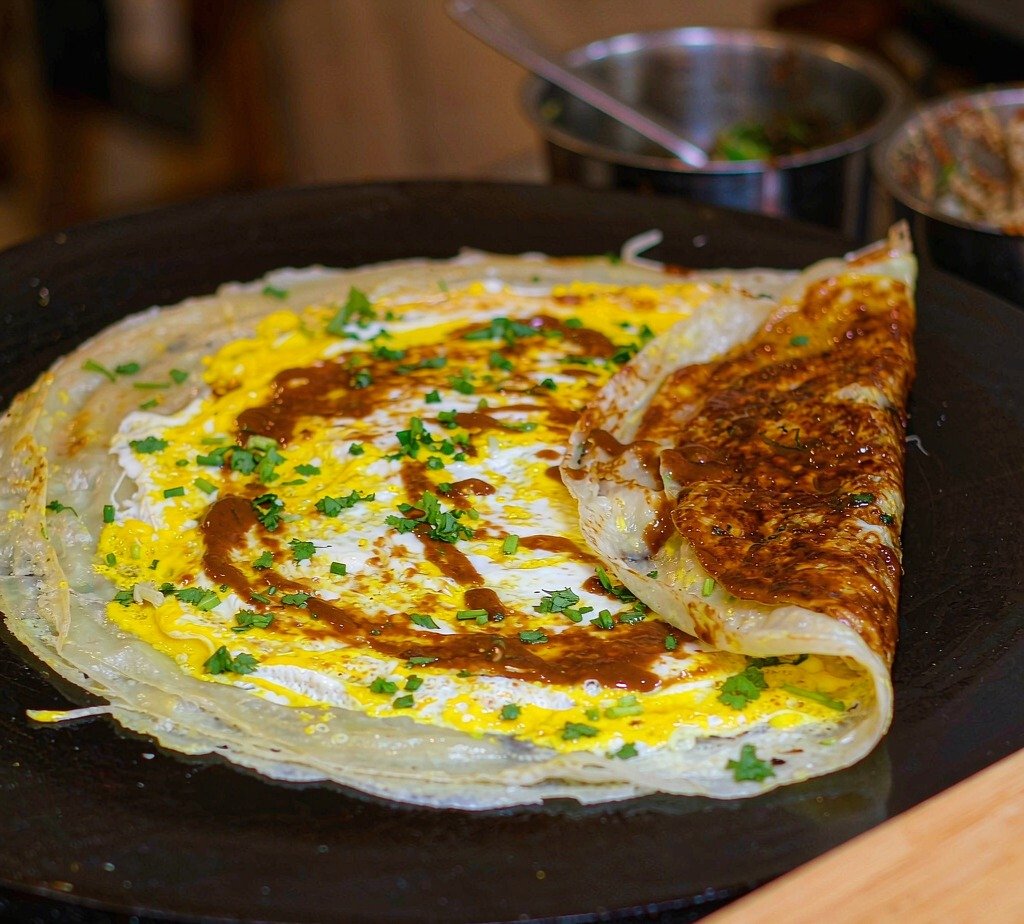
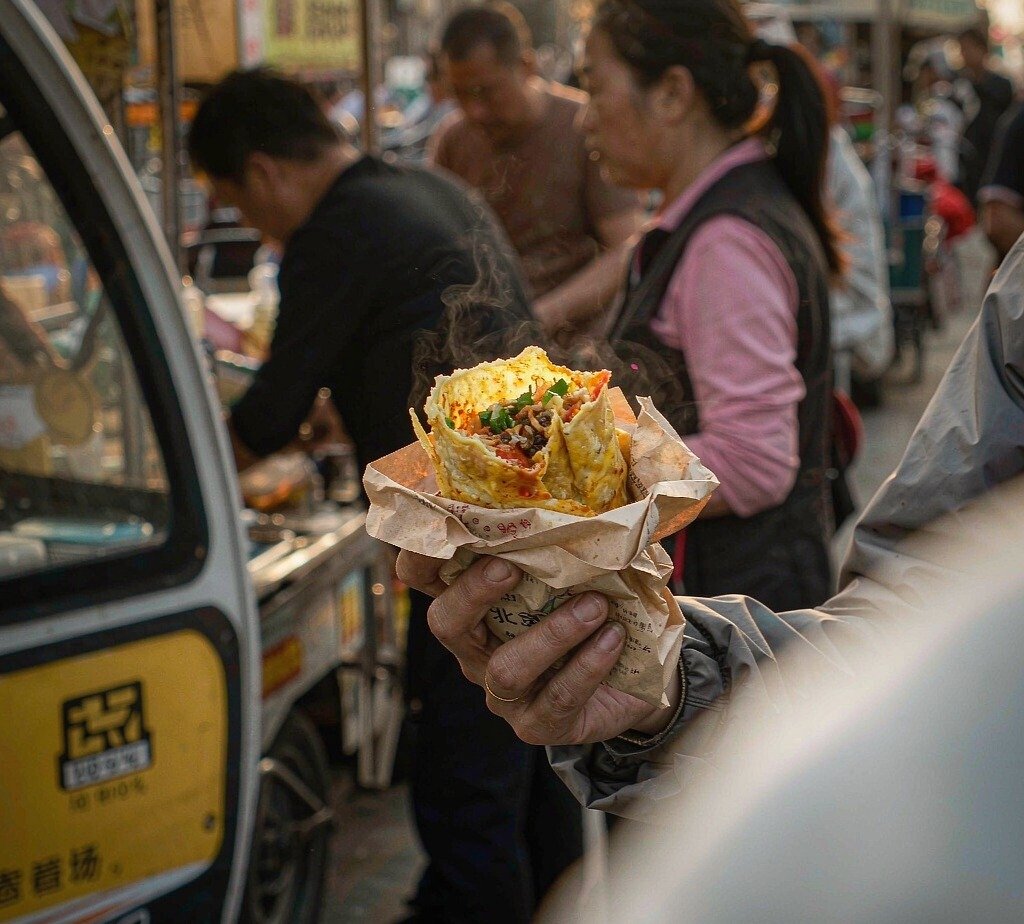
The first sound of a Beijing winter morning isn’t a bus or a boiling kettle — it’s the scrape of a flat bamboo spreader dragging a thin film of pale batter across a smoking black griddle. By the time I’d queued at the corner stall near Gulou, the vendor had already cooked six, each one finished in under ninety seconds, folded twice, and pressed into a paper sleeve still hot enough to steam my gloves. That paper-wrapped disc is jianbing, and once you’ve eaten one standing on a cold pavement at 7 a.m., no cafe croissant quite scratches the same itch.
Jianbing is often translated as “Chinese crepe,” but that label does it a disservice. It is a savory breakfast wrap built on a batter of milled mung bean and wheat, cooked paper-thin on a flat griddle, painted with egg, crisped with a fried cracker, brushed with sweet bean and chili sauce, and folded into a handheld package. If you came here hunting a jianbing recipe you can actually pull off in a home kitchen, you’re in the right place — but the dish is worth understanding before you cook it.
What Is Jianbing, Really?
At its core, jianbing is a northern Chinese street breakfast with roots in Shandong (Lu) cuisine. The name breaks into jian (fried/pan-cooked) and bing (a broad word for flatbreads and cakes), and the form is deceptively simple: a liquid batter, a hot surface, and a sequence of toppings laid down while the crepe is still molten. The taste is the payoff — a contrast of soft, eggy crepe against a shard of fried crispness, tied together by a sweet-savory sauce and a hit of raw scallion.
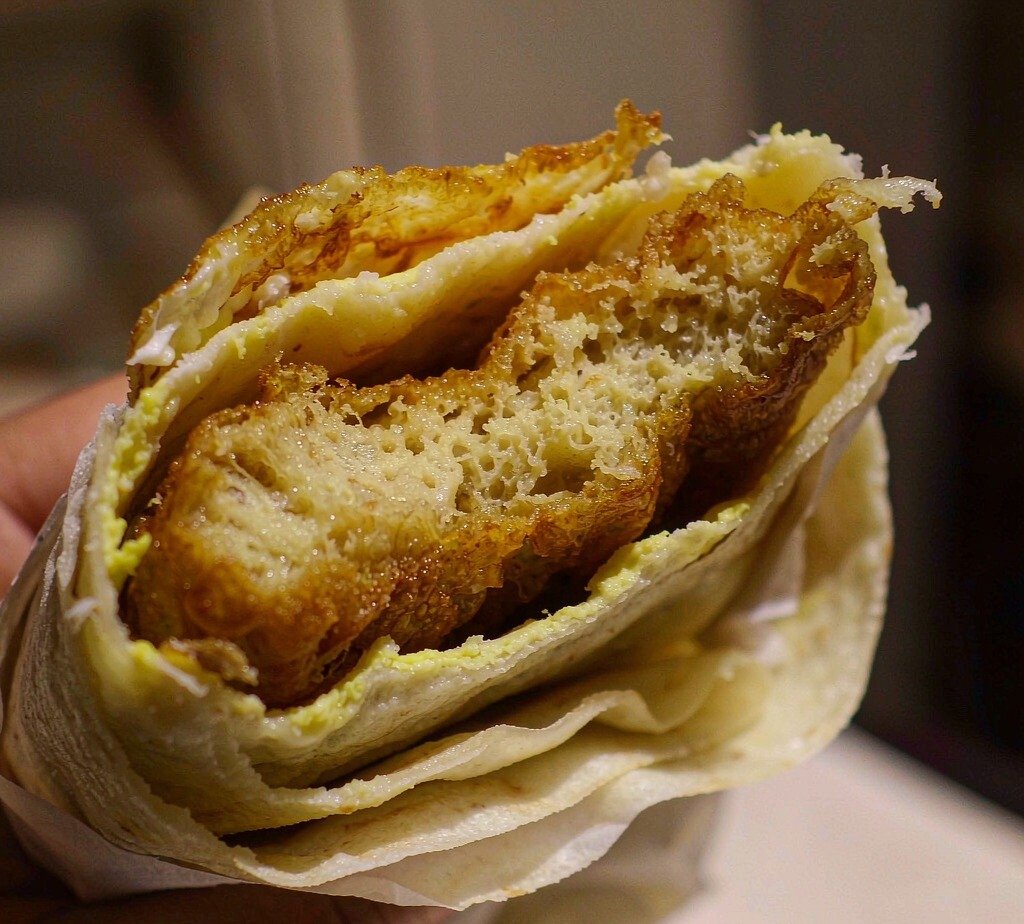
The version most travelers meet is jianbing guozi, the Tianjin street style that turned the dish into a national habit in the late twentieth century. Tianjin vendors tuck a whole fried dough stick (youtiao) inside; elsewhere you’ll find the thinner, shard-like baocui (also called bo cui), a crispy fried cracker that shatters into the wrap. Both deliver the textural jolt that defines the experience. The jianbing history is short but telling: a Shandong farm food that migrated to the city, got an egg and a sauce, and became the most efficient breakfast in northern China.
Jianbing vs a Western Crepe — What Actually Differs
Because “crepe” is the easy comparison, it’s worth being precise about the jianbing vs western crepe gap, because they share almost nothing beyond being thin and round.
- Batter: A French crepe is wheat-and-egg (or buckwheat for galettes). Jianbing leans on mung bean flour, which gives it a faintly nutty, less gluten-elastic bite and a greener, more delicate skin.
- The crunch: A crepe is uniformly soft. Jianbing is built around a deliberate crisp — youtiao or baocui — that survives the fold and stays loud in your ear.
- Sauce: Crepes go sweet (sugar, jam, Nutella) or lightly savory. Jianbing is unapologetically savory, lacquered with sweet bean paste, fermented chili, and often a salty hoisin-like sauce.
- How it’s eaten: A crepe is plated and forked. Jianbing is folded into a packet and eaten standing up, walking, with one hand.
So when someone asks what does jianbing taste like, the honest answer is: imagine a savory mung-bean pancake crossed with a breakfast burrito, but lighter, and with a crunch that shouldn’t be there but is.
The Core Ingredients, and Exactly How Much
A proper jianbing batter recipe is mostly mung bean with a little wheat to hold it together. For roughly four crepes:
- 100 g mung bean flour (split yellow mung beans, ground fine)
- 30 g all-purpose wheat flour
- 300 ml cold water, plus a splash more if the batter feels thick
- 4 eggs, one per crepe
- 4 pieces of youtiao or baocui cracker
- 4 tsp sweet bean sauce (tianmianjiang)
- 2 tsp fermented chili paste or chili oil
- A small handful of finely chopped scallion and cilantro per crepe
- Optional: toasted sesame, a few drops of sesame oil
Notice what jianbing ingredients do not include: milk, sugar, or butter. This is a savory, almost umami-forward food, which is exactly why it sits so comfortably at 7 a.m. The mung bean flour is the soul — if you substitute all wheat, you’ve made something closer to a Western pancake and lost the dish.
Who Should Order One — and Who Might Skip It
Jianbing is a near-universal crowd-pleaser, but a few people should think twice.
It’s ideal for: anyone who wants a hot, savory, filling breakfast for the price of a coffee; vegetarians (the standard version is egg-and-veg, no meat); travelers who like to eat standing among locals rather than at a table; and people who enjoy texture contrast in their food. It’s also one of the better budget meals in China — a full jianbing in most cities runs a fraction of a café breakfast, and it sits neatly alongside the other staples in our Chinese breakfast guide.
Less ideal for: anyone strictly avoiding gluten (the batter contains wheat, and the cracker is wheat-fried — so no, it isn’t gluten free despite the mung bean); small children who dislike chopped herbs (cilantro is easy to omit, just ask); and anyone who wants something sweet in the morning. If you hate messy hands, eat it over a bin — the sauce can drip.
How to Make Jianbing at Home, Step by Step
You don’t need a Tianjin street cart to learn how to make jianbing at home. A flat nonstick skillet stands in fine. This is an authentic jianbing recipe simplified for a home burner, and it walks through the whole thing jianbing step by step.
- Step 1 — Rest the batter. Whisk the mung bean flour, wheat flour, and cold water into a thin, pourable liquid with no lumps. Let it sit 30 minutes so the flours hydrate and the foam settles.
- Step 2 — Heat the griddle. Set a nonstick skillet or flat griddle over medium heat. A drop of water should dance, not boil away instantly. Lightly oil it.
- Step 3 — Spread the batter. Ladle about 80 ml onto the hot surface and immediately smear it into a thin circle with the back of a spoon or a flat spatula. Work fast — it sets in seconds.
- Step 4 — Add the egg. Crack an egg on top and spread it across the surface with the spoon until the crepe is webbed with egg. Scatter scallion and cilantro over the wet egg.
- Step 5 — Flip. When the egg side is set and the bottom releases, flip the whole disc so the egg faces down. Cook 20 seconds to toast the egg.
- Step 6 — Sauce and crisp. Flip back, egg-side up. Brush sweet bean sauce and chili across the surface. Lay a youtiao or a few pieces of baocui in the center.
- Step 7 — Fold. Fold the bottom third up, the top third down, then both sides in, into a compact rectangle. Press gently so the cracker breaks inside.
- Step 8 — Wrap and serve. Slide it onto paper or a plate. Eat within a minute — the crunch is a now-or-never thing.
Tips, Tricks, and Regional Twists
The home version rewards a few small habits. Rest the batter longer (even overnight, refrigerated) for a more pliable skin. Keep the heat medium — too hot and the mung batter scorches before you can spread it. And don’t skip the crisp: a jianbing without youtiao or baocui is just a sad egg pancake.
Regionally, the jianbing culture splits along a fun line. Tianjin insists on the full youtiao, soft and doughy inside the wrap. Beijing and Shandonglean toward baocui, the brittle shard that turns every bite into static. Some stalls fold in a sheet of tofu skin (doufu pi) for extra layers, and a few Tianjin old-timers add a smear of fermented tofu or a dab of chopped liver. None of these are “wrong” — jianbing is a street food precisely because every vendor tunes it.
Frequently Asked Questions
What does jianbing taste like?
Savory first, then sweet from the bean sauce, with a slow chili warmth and a sharp bite of raw scallion. The dominant sensation is texture: a soft, eggy wrap giving way to a sudden crunch. It’s filling without being heavy, and it tastes distinctly of street morning rather than restaurant plate.
How many calories are in a jianbing?
A standard jianbing with egg and youtiao runs roughly 350–450 calories, depending on sauce and oil. That makes it a reasonable jianbing calories figure for a substantial breakfast — lighter than a bacon-and-egg fry-up, heavier than plain toast. The cracker and the oil are where most of the energy sits.
Is jianbing gluten free?
No. Although the batter is mostly mung bean flour, it includes wheat flour for structure, and the youtiao or baocui cracker is wheat-based and deep-fried. A fully gluten-free version would need a wheat-free binder and a rice-or-chickpea crisp — possible at home, but not what you’ll buy on the street.
Can I make jianbing without a special griddle?
Yes. A flat nonstick skillet of any size works; you just spread a smaller circle. The only “special” tool is the bamboo spreader, and a silicone spatula or the back of a round spoon does the same job. The key is a hot, flat, lightly oiled surface and batter thin enough to pour.
Where do you find the best jianbing in China?
Ask ten people and you’ll get ten cities, but Tianjin and Beijing are the spiritual homes, and jianbing in Beijing is a daily ritual for millions. Search “jianbing near me” in almost any Chinese city and a cart will appear within a kilometer. For the best jianbing in China, the honest answer is the one cooking in front of you at a busy subway exit at 8 a.m. — freshness beats fame every time. If you want the wider morning ritual, our field guide to morning markets (zao fan) covers how cities wake up and eat.
What’s the difference between jianbing and a Western crepe?
Batter, crunch, and sauce. Crepes use wheat-and-egg and stay soft and sweet; jianbing uses mung bean, builds in a fried cracker, and is lacquered with savory bean and chili sauce. A crepe is a dessert-or-light-meal you sit down to; jianbing is a savory breakfast you eat on your feet. They share a shape, not a soul.
One Last Bite
There’s a reason jianbing has outlasted every food trend Beijing has thrown at it: it is fast, cheap, hot, and genuinely good, and it asks nothing of you but a free hand and a willingness to stand in the cold for ninety seconds. Learn the batter once and you can riff on it forever — more chili, less sauce, a shard of crisp or a whole stick — and suddenly your own kitchen smells like a northern Chinese street at dawn. That, more than any restaurant, is the real jianbing recipe worth keeping.