

The First Thing I Ever Learned to Fold Was a Spring Roll
The first thing I learned to fold as a kid wasn’t a dumpling — it was a spring roll. Every Lunar New Year’s Eve my grandmother would set a woven bamboo tray between us, lay out a stack of pale, almost translucent wheat wrappers, and let me press a cold spoonful of julienned vegetables into the center before she snapped the edges shut with a dab of flour paste. She called them little gold bars. A plate of fried spring rolls on the table, she insisted, meant the year ahead would be full — crisp on the outside, generous on the inside, and usually gone before anyone complained about the deep-fry smell hanging in the hallway.
Decades later I still judge a Chinese restaurant by its spring rolls before I order a single main. They tell you almost everything: the temperature of the oil, the freshness of the bean sprouts, whether the kitchen respects the wrapper enough not to overstuff it. A great vegetable spring rolls recipe lives or dies on those small disciplines, and once you’ve made them at home you stop accepting the soggy, greasy versions that some takeout counters pass off as authentic.
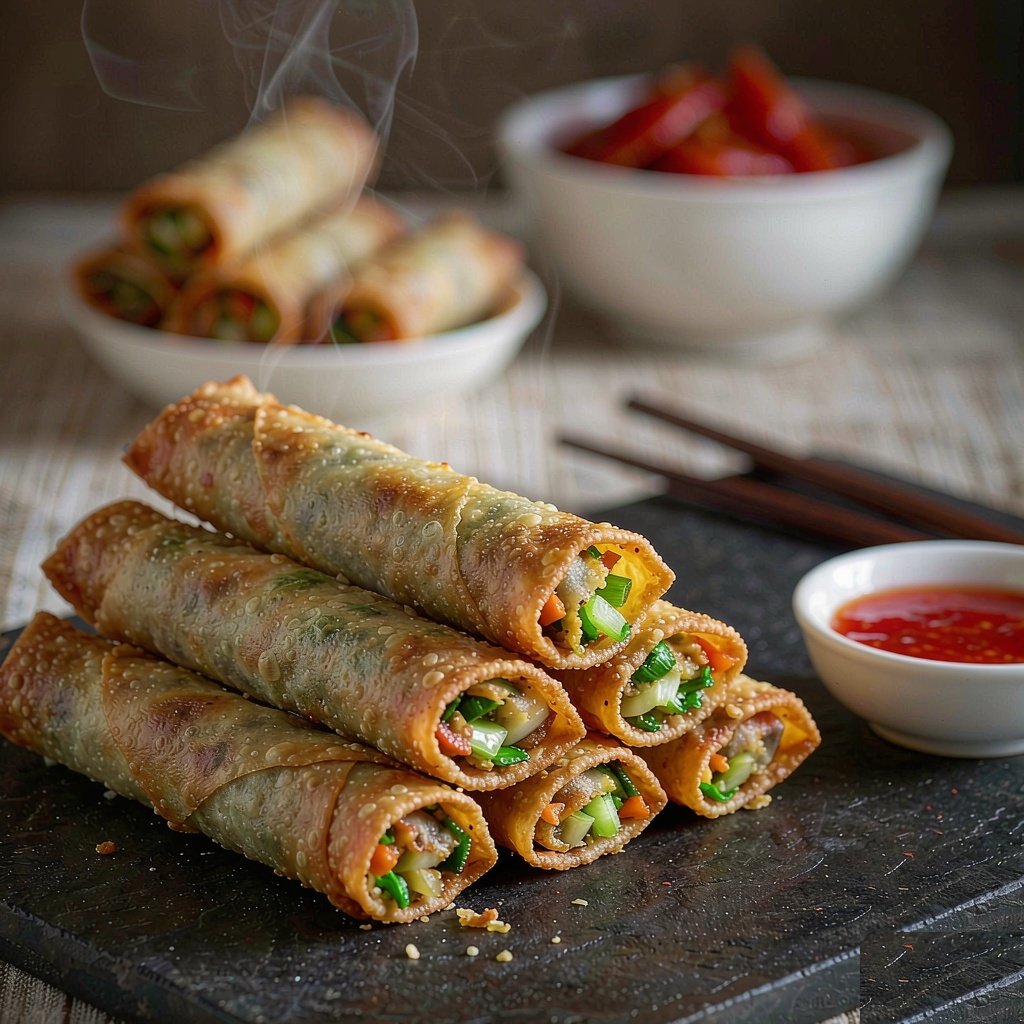
What a Spring Roll Actually Is (and Why It Is Not an Egg Roll)
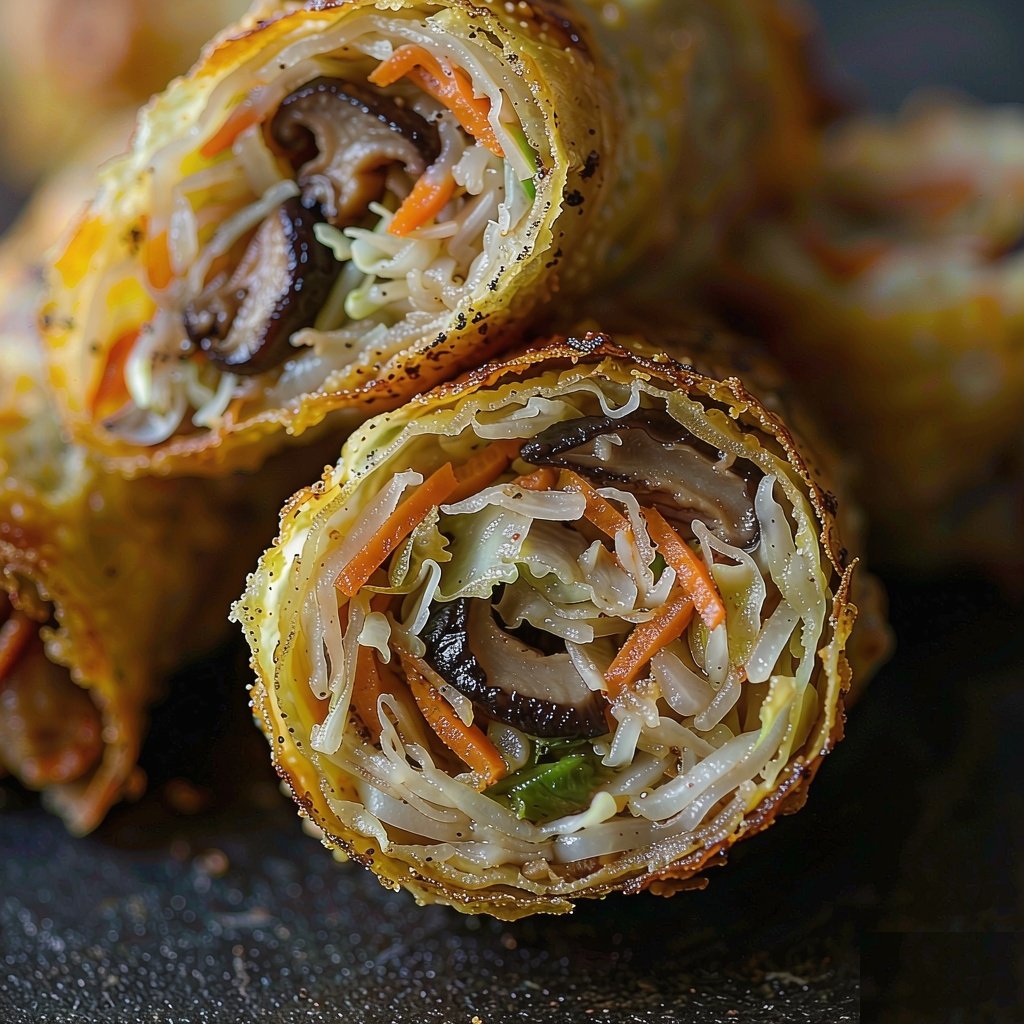
A spring roll — in Mandarin chunjuan — is a thin sheet of wheat pastry wrapped around a filling, rolled into a tight cigar shape, and deep-fried until the skin shatters like glass. The classic filling is vegetable-forward: shredded cabbage, carrot, mushrooms, and bean sprouts, lightly seasoned so the crunch of the wrapper stays the star. The result is a snack that is more about texture than heft, more about balance than spice.
This is where a lot of first-time travelers get confused, because the “spring roll” they know from a strip-mall menu is often something else entirely. Understanding the spring rolls vs egg rolls difference saves you from ordering the wrong thing on a trip. An egg roll uses a thick, bubbly egg-enriched dough that fries up heavy and chewy, is usually packed with meat, and is essentially a Chinese-American invention. A true chunjuan is lighter, mostly vegetarian, and far older. If you want the authentic experience, order the thin crisp one, not the fat doughy one.
What Does a Spring Roll Taste Like?
Picture an audible crackle at first bite, then a sudden release of warm, mildly savory steam. The interior is soft and barely cooked-through, with a sweetness from carrot and cabbage, a gentle earthiness from mushrooms, and a whisper of umami from soy and sesame. A well-made roll is not spicy, not greasy, and not salty — it should taste like vegetables that got a quick passport through hot oil rather than a deep dive. The authentic Chinese spring rolls vs western takeaway version is the difference between a crisp garden and a fried lump: the former lets you hear the vegetables, the latter buries them.
Spring Roll Ingredients — What Goes Inside
The beauty of the dish is how little you need. For about twelve rolls, this is the baseline spring roll ingredients list I use at home:
- Spring roll wrappers (thin wheat pastry), 12 sheets, roughly 8 inches / 20 cm square
- Green cabbage, 200 g, finely shredded
- Carrot, 1 large, cut into matchsticks
- Shiitake or wood-ear mushrooms, 80 g, sliced thin
- Bean sprouts, 100 g, tails trimmed
- Garlic chives or scallions, a small handful, chopped
- Garlic and ginger, 1 clove and a 1-inch knob, minced
- Soy sauce, 1 tablespoon; sesame oil, 1 teaspoon; salt, sugar, white pepper to taste
- Cornstarch mixed with water, for sealing the edges
- Neutral oil (peanut or sunflower), for deep-frying
Everything here is flexible. Glass noodles, firm tofu, or a few shrimp make it heartier; leaving out the shrimp keeps it fully plant-based. The one non-negotiable is moisture control, which I’ll come back to, because wet filling is the number-one reason home rolls burst.
How to Make Vegetable Spring Rolls at Home, Step by Step
This is the part people overthink. The folding looks fiddly the first time and then becomes muscle memory. Here is the spring rolls step by step method I teach friends:
1. Prep and dry the vegetables. Toss the cabbage, carrot, and mushrooms into boiling water for thirty seconds, then shock them in cold water and squeeze dry in a clean towel. This blanch relaxes the veg and, more importantly, removes the water that would otherwise steam inside the roll and split the skin.
2. Stir-fry the filling briefly. A minute with garlic, ginger, and the drained vegetables is enough — you are not cooking a stir-fry, just waking up the flavor. Season with soy, sesame oil, salt, sugar, and white pepper, then spread it out to cool completely. Warm filling turns the wrapper gummy.
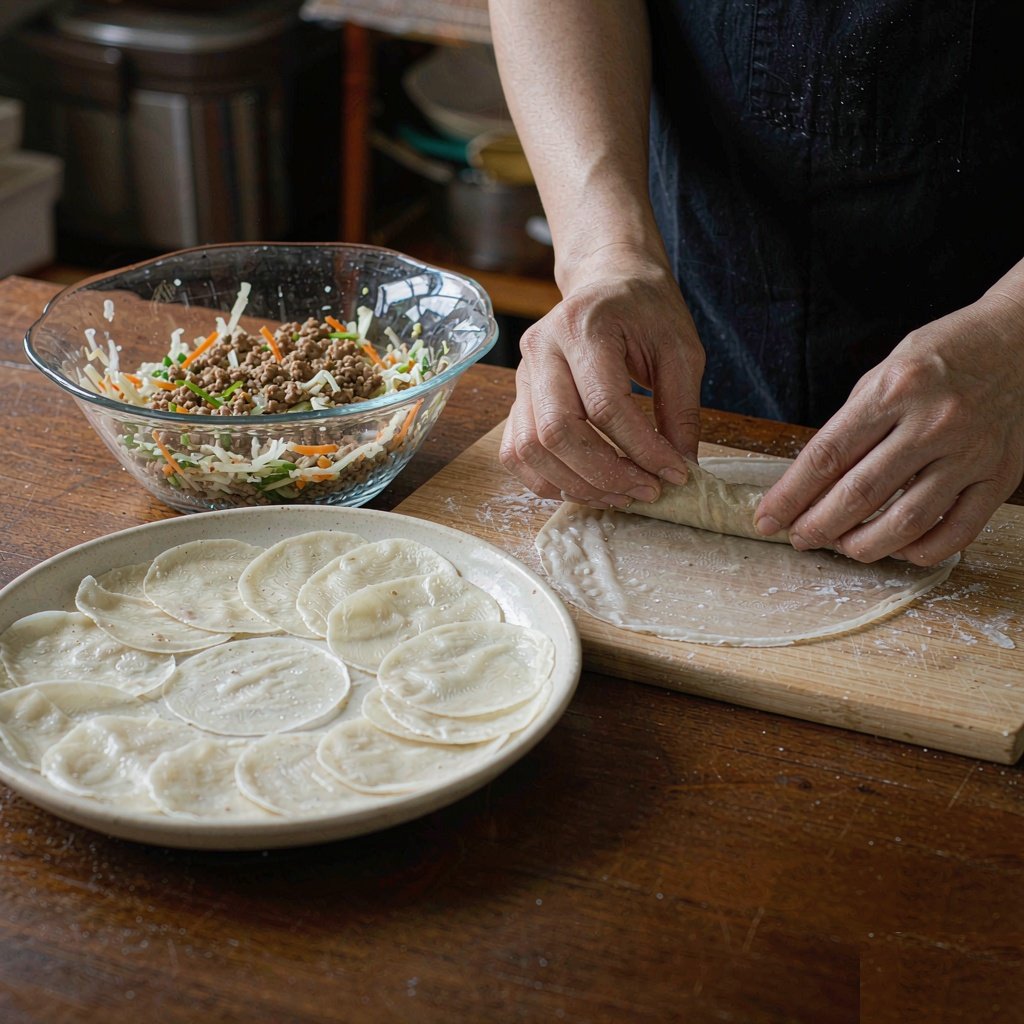
3. Set up a rolling station. Keep a small bowl of cornstarch slurry next to your wrappers. Work one roll at a time and keep the rest covered with a damp cloth so they don’t dry out.
4. Fold tightly. Lay a wrapper like a diamond. Place two tablespoons of filling near the bottom point. Fold that bottom point up over the filling, tuck in the left and right corners, then roll upward into a cylinder. Brush the top point with slurry and press to seal. Learning how to fold spring rolls without tearing is mostly about not overfilling — a thin roll fries more evenly than a fat one.
5. Fry in batches. Heat oil to about 175°C / 350°F. Slide in three or four rolls, never crowding the pot, and turn once until both sides are even gold. They go from pale to perfect in under two minutes, so stay close.
6. Drain and serve. Lift onto a rack or paper towel. Eat within minutes, while the skin still sings.
Spring Roll Wrappers: Rice Paper vs Wheat
Shop carefully, because the wrapper aisle is a trap. The thin wheat pastry used for fried chunjuan is different from the soft banh trang rice paper used for fresh summer rolls. If you buy rice paper by mistake you’ll get a chewy, translucent roll that won’t crisp no matter how long it fries. For this recipe you want the off-white wheat sheets sold frozen or refrigerated at any East Asian grocery, usually labelled “spring roll pastry” or “egg roll wrapper” — just confirm the ingredient list is wheat, not egg dough.
Who Should Eat Them — and Who Should Go Easy
Spring rolls are a friendly food. They are brilliant for vegetarians and vegans, for party platters, for kids who refuse “wet” vegetables, and for anyone who wants a crunchy opener before a big meal. They also travel well, which is why you’ll find them at food tours across China and at nearly every dim-sum service.
That said, three groups should moderate. Anyone watching fat and calories should remember these are deep-fried. People with celiac or gluten sensitivity can’t eat the wheat wrapper. And anyone with a delicate stomach may want to skip the oil-heavy versions sold from street carts where freshness is uncertain. The good news is that the baked or air-fried alternative below solves the first two concerns for the cautious eater.
How Many Calories Are in a Vegetable Spring Roll?
A standard fried vegetable spring roll runs roughly 80 to 110 calories, almost all from the wrapper and the frying oil rather than the filling. An egg roll of similar size can hit 180 to 220 because of the heavier dough and meat. If you air fry spring rolls or bake them with a light brush of oil, you typically cut 30 to 40 percent of the calories while keeping most of the crunch — a worthwhile trade for everyday snacking.
Practical Tips That Keep Them From Exploding
- Squeeze the filling drier than you think is necessary; water is the enemy of a sealed roll.
- Roll tight and seal the final edge thoroughly with slurry, or it unwinds in the oil.
- Never crowd the pot — the temperature drops and you get greasy, limp skins.
- Fry from frozen if you prep ahead; just add thirty seconds and don’t thaw first.
- Reheat in an oven or air fryer, never a microwave, or the crispness vanishes.
Regional Twists You’ll Meet Across China
China’s regional cuisines each put their stamp on the roll. Cantonese versions are slender and sometimes sweet, with shrimp or char siu peeking through the veg. Shanghai rolls are longer, yellower, and often mixed pork-and-vegetable. Fujian’s popiah skips the fryer entirely — a fresh, soft wrap with a sweet peanut sauce that is closer to a summer roll. Northern styles go bigger and more vegetable-dense. If you’re exploring the eight great regional cuisines of China, the humble spring roll is a fast, delicious way to taste the local philosophy of crunch.
Spring Rolls History and the Chinese New Year Connection
The spring rolls history runs deeper than most snack foods. The custom began over a thousand years ago as the “spring plate” (chunpan), a tray of fresh early-spring vegetables eaten at the start of spring to welcome the season. By the Ming and Qing dynasties that fresh bundle had been wrapped in pastry and fried, turning into the golden chunjuan we know. Because the fried roll resembles a bar of gold, it became a Lunar New Year auspice for wealth and a full larder — exactly the logic my grandmother was handing down when she called them gold bars on New Year’s Eve.
Where to Eat Spring Rolls on a Trip to China
You’ll meet them in four places: the dim-sum cart, the night-market stall, the banquet cold-appetizer plate, and the pre-New-Year market. Quality varies wildly, so look for a shop turning out small batches rather than a heat lamp. Vegetarian travelers will be glad to know that meat-free versions are common and sit comfortably within China’s vegetarian Buddhist cooking tradition, where the roll is often the quiet hero of the table.
Frequently Asked Questions
What does a spring roll taste like?
A spring roll tastes like a crisp, savory vegetable bundle: a loud crunch giving way to soft, lightly seasoned cabbage, carrot, and mushroom, with a faint sweetness and umami from soy and sesame. It is mild rather than spicy, and the oil should accent the vegetables rather than dominate them.
How do you fold a spring roll so it doesn’t burst open?
Use less filling than you think, roll tightly, and seal the final edge with a cornstarch slurry. Most bursts come from overstuffing or from wet filling steaming inside the roll. Keep the vegetables squeezed dry and the seam glued, and the skin will stay intact through the fry.
Are spring rolls vegetarian or vegan?
The classic vegetable spring roll is both vegetarian and vegan as long as the wrapper is plain wheat (no egg) and you skip shrimp or meat. Always confirm the sealing paste is flour-and-water rather than egg wash if you are strictly vegan.
Can you bake or air-fry spring rolls instead of deep frying?
Yes. Brush the rolls lightly with oil and air-fry at around 200°C / 390°F for eight to ten minutes, turning once, or bake at 200°C / 400°F for fifteen to twenty. You lose a little of the shatter but cut a third of the calories and most of the mess.
How many calories are in a vegetable spring roll?
A fried vegetable spring roll is about 80 to 110 calories; an air-fried or baked one drops to roughly 50 to 70. The filling is low-calorie, so the wrapper and frying oil account for nearly all the number.
What’s the difference between spring rolls and egg rolls?
Spring rolls use a thin wheat wrapper and fry up light and crisp, usually with a vegetable filling. Egg rolls use a thick, egg-enriched dough that becomes heavy and bubbly, and they are typically meat-filled. The egg roll is largely a Western-Chinese creation; the spring roll is the older, lighter original.
Why Bother Making Them Yourself
There is a reason the recipe survived a thousand years: it is cheap, endlessly adaptable, and genuinely fun to roll with other people. Make a batch on a cold evening, freeze half for a busy week, and the next time you sit down at a Chinese restaurant you’ll know exactly what a good one is supposed to sound like when you bite in. And if you ever find yourself in China during the New Year, order the fried chunjuan with the confidence of someone who knows they’re not just a snack — they’re a small, edible wish for a prosperous year.