

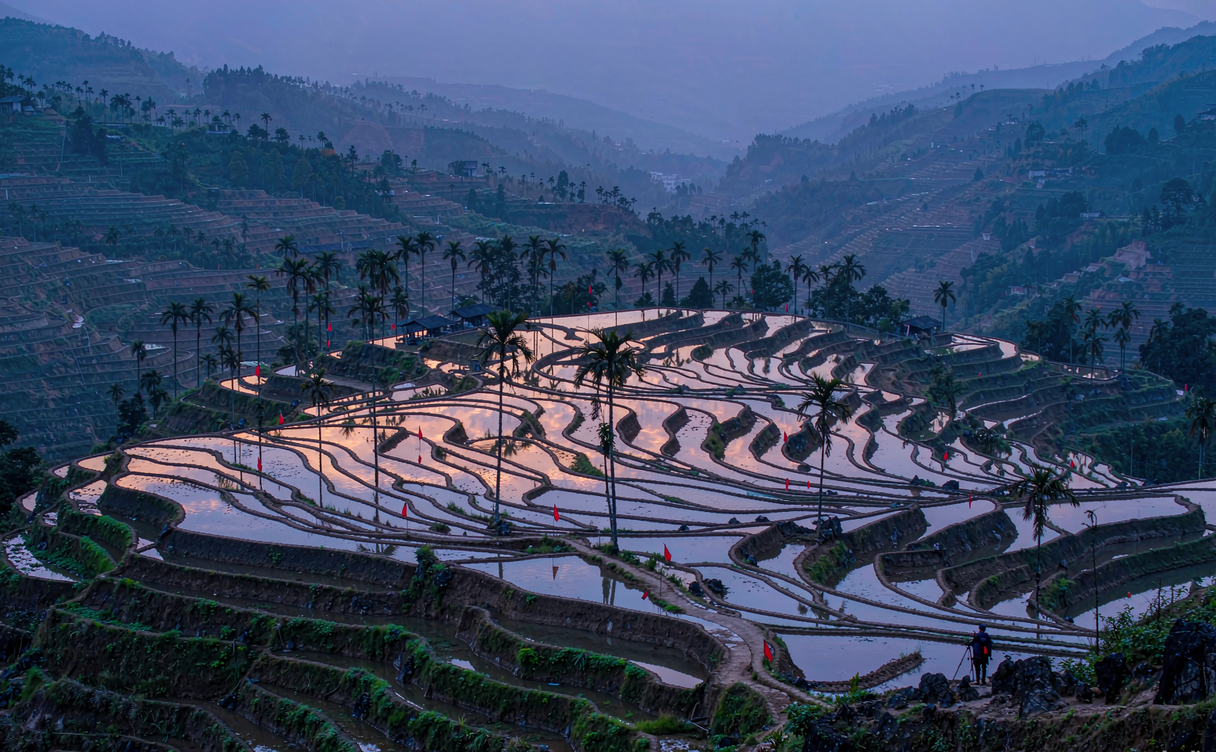
A Honghe travel guide begins with one image: thousands of flooded rice terraces stacked like mirrors across the Ailao Mountains, glowing red and gold at sunrise. Honghe Hani and Yi Autonomous Prefecture sits in southeastern Yunnan, about five to six hours south of Kunming by road, and it is home to the UNESCO-listed Hani Rice Terraces of Yuanyang. This guide covers how to get there, the best time for Yuanyang terraces sunrise, the most photogenic Hani villages, and practical tips for Yunnan rice terrace photography. Whether you are a first-time visitor or a returning landscape photographer, Honghe rewards slow travel: hire a local driver, chase the light, and let the terraces set your rhythm.
Why Visit Honghe
Honghe is one of Yunnan’s most underrated destinations, yet it packs world-class scenery into a compact region. The headline attraction is the Yuanyang Rice Terraces, carved into the mountains by the Hani people over more than 1,300 years. These terraces are not a single viewpoint but a vast living system of water, rice, forest, and village that still feeds local families today. Beyond Yuanyang, the prefecture includes the hot-spring town of Mile, the historic county of Jianshui, and the cross-border trade city of Hekou near Vietnam.
The appeal is partly the scale and partly the silence. Standing at a terrace edge at dawn, with mist sliding between the ridges and the first light striking the water, is a moment that justifies the long journey. For travelers who want something deeper than a checklist of sights, Honghe offers a chance to watch an ancient agricultural culture still in motion.
Getting to Honghe
Most international and domestic travelers reach Honghe through Kunming, Yunnan’s capital and the region’s main transport hub. From Kunming you have three realistic options: a long-distance bus, a self-drive or private car, and the faster train plus road combination.
The classic overland route is the Honghe to Kunming bus, which departs from Kunming’s southern bus station and takes roughly five to six hours to reach the Yuanyang area, depending on road conditions and how many stops the driver makes. Buses are cheap and run frequently, but they are slower and less comfortable than a private car. If you are traveling with luggage or a camera tripod, a private transfer or hired driver is worth the extra cost because it lets you stop at viewpoints along the way.
A growing alternative is to take the high-speed train part of the way and then connect by road. Trains have shortened the journey to nearby cities, and from there a local driver can take you into the mountains. No matter which mode you choose, plan to arrive in Yuanyang before sunset so you can scout positions for the next morning’s shoot.
Best Time for Yuanyang Terraces Sunrise
Timing is everything in Honghe. The best time for Yuanyang terraces sunrise is from late November to late February, when the terraces are filled with water after the harvest and before the new rice is planted. During these months the fields act like thousands of mirrors, reflecting the sky and creating the famous red and golden glow at first light.
November and December are popular because the water is fresh and the weather is cool and clear. January and February are equally good and a little quieter, though mornings can be cold, so pack a warm layer for those pre-dawn waits. Avoid the summer rainy season if your goal is photography; the terraces are green and lush then but clouds and mist often hide the sunrise, and the reflective water layer is gone.
For the actual sunrise, arrive at your chosen viewpoint at least 45 minutes early. Light builds slowly, the clouds shift, and the best frames often appear in the minutes just before and just after the sun clears the ridge. Bring a headlamp, a thermos, and patience.
Things to Do in Honghe Yunnan
There is more to the prefecture than one famous valley. Here are the experiences that define a good trip:
- Watch sunrise at Duoyishu, the most famous terrace viewpoint, where layered fields face east and catch the first light.
- Photograph the Bada and Laohuzui terraces, which offer different angles, deeper reds, and fewer crowds than Duoyishu.
- Walk through Honghe Hani villages such as Mushan and Azheke, where stone paths, mushroom-shaped houses, and terraced fields meet.
- Soak in the hot springs of Mile, a relaxed town known for wine, tulips, and geothermal baths.
- Explore Jianshui, a well-preserved county of Confucian academies, old bridges, and quiet lanes.
- Sample local food, including Hani sour fish, roasted rice cakes, and the broader Yunnan table found in nearby cities.
These things to do in Honghe Yunnan can fill five to seven unhurried days if you want to explore properly. If you only have two days, focus on Yuanyang’s three main viewpoints and one village walk.
Honghe Hani Villages
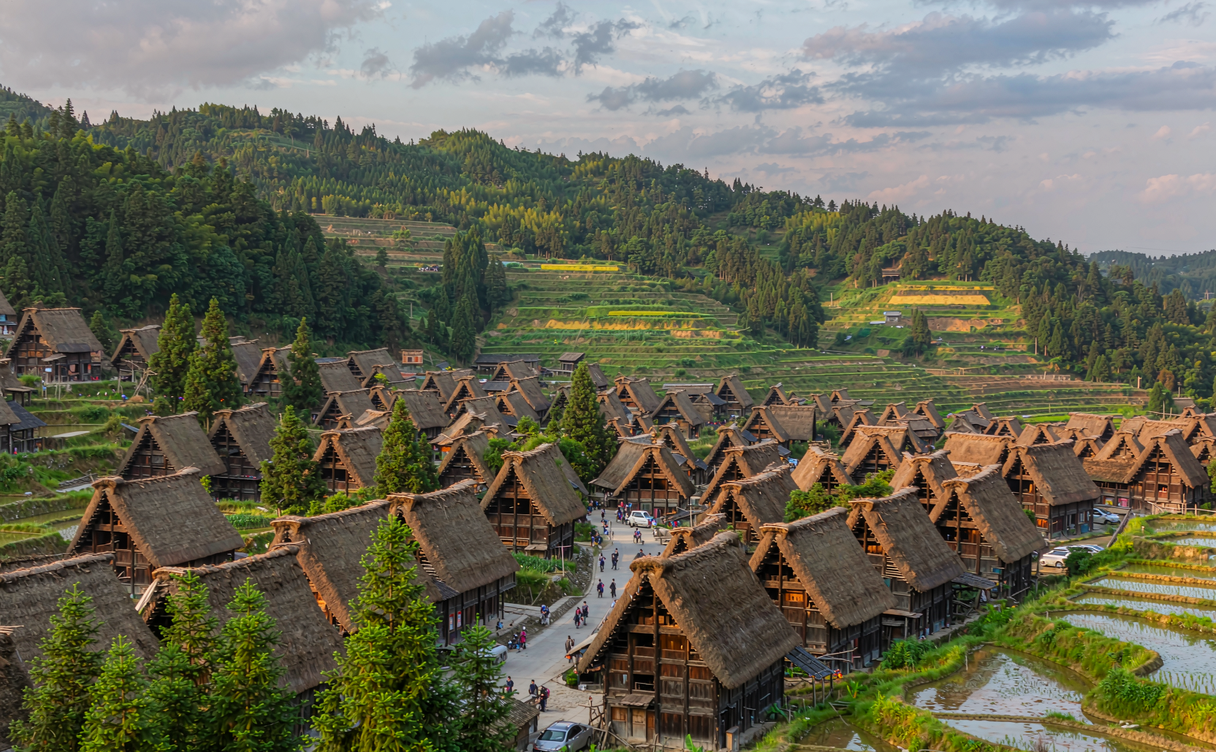
The human heart of the landscape is its villages. The Hani people built their settlements in a careful pattern: forest on top of the mountain for water, terraces in the middle for rice, and compact villages between the forest and the fields. This arrangement is not decorative; it is an engineered watershed that has sustained the terraces for centuries.
Azheke is one of the best-preserved Honghe Hani villages and has been opened to visitors with careful, community-led tourism that keeps the architecture intact. Mushan offers sweeping terrace views right from the lanes. Smaller settlements along the road between viewpoints let you step into daily life: women winnowing rice, elders tending fires, and children walking to school between the paddies.
When visiting, dress modestly, ask before photographing people, and consider hiring a local guide from the village. A guide turns a pretty view into a story about water channels, rice varieties, and the festival calendar that still governs the year.
Yunnan Rice Terrace Photography
Photographers come to Honghe from across the world, and for good reason. Yunnan rice terrace photography rewards both wide landscapes and small details. A sturdy tripod is essential for sunrise long exposures, and a polarizing filter helps manage glare on the water. Bring a wide lens for the big scenes and a telephoto for compressing the ridge lines into graphic patterns.
Shoot in the blue hour before sunrise to capture the terraces catching the first cool light, then stay through the golden hour as the water warms to copper and red. Reflections are strongest when the air is still, so calm mornings after a clear night are best. Don’t forget the human element: a farmer with a water buffalo, smoke rising from a village roof, or a line of ducklings on a path adds scale and life to an otherwise empty vista.
Battery life drops fast in cold mountain mornings, so carry spares and keep them warm in an inner pocket. And always respect private fields; walk the marked paths and never trample the bunds that hold the water.
Where to Base and Where to Go Next
Yuanyang county town is the usual base, with guesthouses near the terraces and larger hotels down in the valley. From there, day trips to the viewpoints are short and easy with a driver. If you want a slower, more comfortable stay, consider Mile or Jianshui, which have better hotels and good food without the early wake-up calls.
Honghe pairs well with other Yunnan highlights. If you enjoy mountain forest, the Ailao Mountain Yunnan guide explains the range that frames these terraces and its birding trails. For a city break before or after, our Kunming Western Hills guide covers an easy half-day trip above the lake. History lovers should read the Weishan Yunnan travel guide for one of the province’s oldest towns, and the Mile Yunnan travel guide details the hot-spring town inside Honghe itself.
Food is a reason to travel on its own. Warm up with our Yunnan wild mushroom hotpot guide before you head home, and if Kunming is your gateway, the best hotels in Kunming will help you choose a comfortable base for the first or last night.
Planning Tips and Practical Notes
A few practical points will make your Honghe trip smoother. Altitude here is moderate, so most travelers feel fine, but the mountain mornings are cold even in winter, so layer up. Roads in the terrace area are narrow and winding; a local driver who knows the viewpoints is safer than self-driving if you are unfamiliar with the area.
Cash is useful in small villages where card readers fail, though mobile payment works in towns. Mobile coverage is decent near the main viewpoints but patchy in deep valleys, so download maps and offline guides before you leave Kunming. Finally, build flexibility into your schedule: the best light sometimes appears on a day you had planned to leave, and missing it is the one regret travelers mention most.
The Hani Rice Terraces are recognized by UNESCO for their cultural landscape, and you can read the official description on the UNESCO World Heritage terraces page, which explains why this working farmland is considered of outstanding universal value.
Ready to build your Yunnan itinerary around the terraces? Browse our Yunnan destination guides and start sketching a route that pairs Honghe with Kunming, Mile, and beyond.
Want the sunrise without the stress of driving? Consider hiring a local driver from Kunming or Yuanyang for two or three days so you can focus on the light and the lens.
Planning a longer China trip? Pair this guide with our hotel and food articles, and book your Kunming base early during the November to February peak season for the terraces.