

Bazhong is a quiet city in the mountainous northeast of Sichuan Province, and it rewards travelers who skip the crowds. The core appeal of a Bazhong travel guide is simple: this is where you find thousand-year-old Buddhist cliff carvings carved into red sandstone, vast temperate forests draped over the Micang Mountains, and slow-living ancient towns that still keep their old timber courtyards. Most visitors use Bazhong as a base for the Guangwushan and Micang Mountain national parks, then spend a half day at the Nankan Grottoes just south of the city center. The best time to visit Bazhong is late spring and early autumn, when the forests turn gold and the hiking trails are dry. Transport is straightforward once you understand the regional rail and bus network, and the local food scene is built around hearty, peppery Sichuan country cooking. This guide covers the practical details you need to plan a trip that feels both adventurous and unhurried.
Why Bazhong Deserves a Place on Your Sichuan Trip
Bazhong sits where the Qinba mountains fold into the Sichuan basin, a region long used as a natural corridor between the Wei River plain and the southwest. That geography shaped its culture and its sights. Unlike the mega-destinations of central Sichuan, this corner of the province is a genuine Sichuan offbeat nature guide territory: think misty ridgelines, terraced valleys, and villages where tourism infrastructure is still light. History runs deep here too. Bazhong was a stronghold of the Sichuan-Shaanxi revolutionary base in the 1930s, and the region preserves that heritage alongside far older religious art.
For international travelers, Bazhong works best as a two- or three-night stop between larger hubs. It pairs naturally with nearby Guangyuan to the north and can be linked into a longer western Sichuan route if you want mountain scenery without the altitude of the plateau.
Things to Do in Bazhong Sichuan
The list of things to do in Bazhong Sichuan starts with rock and forest, then widens to old towns and living history. Below are the highlights, ordered by how much time most visitors spend at each.
Nankan Grottoes and the Cliff Carvings
The Nankan Grottoes are the headline attraction and the best answer to anyone asking about Bazhong cliff carvings and forests in one phrase. Cut into a red sandstone cliff face south of the city, the site holds more than a hundred niches and well over a thousand individual Buddhist statues, most dating from the Tang and late Tang through the Song period. The relief work is fine, the expressions are calm, and the setting, against a wooded hillside, is serene rather than grandiose. A raised walkway lets you view the niches up close without damaging them.
If you enjoy Nankan, plan a second half day for the nearby grottoes at Nancheng and the smaller cliff sites scattered through the hills. They are less restored and quieter still.
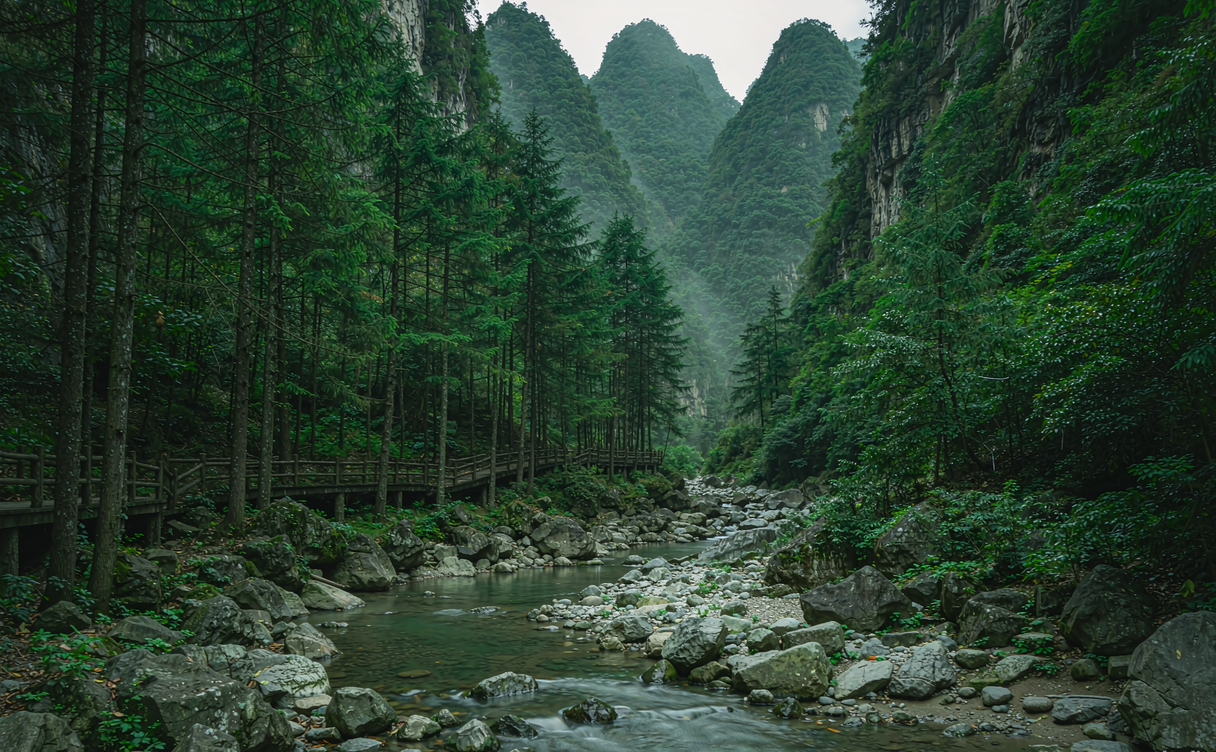
Micang Mountain National Forest Park
North of the city, Micang Mountain National Forest Park is the green heart of the region. Seasonal lakes, hanging waterfalls, and boardwalk trails wind through birch and pine, with the colors shifting from emerald in summer to fiery red and gold in October. This is the forest half of the Bazhong cliff carvings and forests pairing, and it is the easiest place to slow your pace. Cable cars cover the steepest sections, but the lower loops are walkable for most fitness levels.
Enyang Ancient Town
Enyang is the most atmospheric old town near Bazhong, built along a river with a surviving cluster of Ming and Qing timber buildings, stone bridges, and narrow lanes. It is less commercial than many restored towns in the province, and the early morning light on the water is worth a slow wander. Tea houses and small noodle stalls line the main lane, and the pace is genuinely local.
Guangwushan Scenic Area
Guangwushan, to the north toward the provincial border, is the region’s flagship nature reserve and a strong reason many travelers route through here at all. Its claim to fame is the autumn foliage, when the mountain slopes become a layered tapestry of red, orange, and yellow. Trails range from easy valley walks to longer ridgeline hikes. Because the park is large, give it a full day if you can.
Best Time to Visit Bazhong
The best time to visit Bazhong is October, when the forests reach peak autumn color and the weather is crisp and clear. Late April through May is the spring alternative, with fresh green canopy, blooming wildflowers, and comfortable hiking temperatures. Summer is warm and occasionally rainy, which can make mountain roads slick, while winter is cold and quiet with few tourists but limited high-elevation access.
A quick seasonal summary:
| Season | Weather | Why Go |
| — | — | — |
| Spring (Apr-May) | Mild, green | Wildflowers, clear trails |
| Summer (Jun-Aug) | Warm, humid | Lush forests, fewer crowds |
| Autumn (Sep-Oct) | Cool, dry | Peak foliage, best photography |
| Winter (Nov-Mar) | Cold | Solitude, low prices |
Planning the timing of your trip can make or break the experience. Read our seasonal breakdown and pick the window that matches your hiking goals.
Getting There: Bazhong to Guangyuan Transport
Understanding Bazhong to Guangyuan transport helps you build a logical north-south route through northeast Sichuan. Guangyuan sits roughly 130 kilometers north and is the gateway to the Jianmen Pass and the northern grottoes at Qianfoya. The two cities are connected by a mix of options:
- High-speed rail: The fastest link is the regional rail line, with several daily services taking around one to two hours depending on the stop pattern.
- Long-distance bus: Frequent buses run from Bazhong’s main bus station to Guangyuan, useful if you want a direct drop near the old town.
- Private car or taxi: A hired car gives flexibility for stops at roadside cliff sites and village markets along the way.
From Guangyuan you can continue northwest toward the Gansu corridor or loop back south through the Micang range. If your wider plan includes high mountain driving, our Sichuan-Tibet Highway guide explains how to prepare for long plateau routes beyond this region.
Bazhong Local Food
Bazhong local food is country Sichuan: bold, aromatic, and built to fuel a day on the trail. The signature dishes lean on preserved vegetables, free-range poultry, and the numbing heat of local peppercorns. A few staples to seek out:
- Bazhong tofu: Silky, freshly pressed, and served simply with scallion oil or in a clear broth.
- Enyang fermented noodles: A tangy, hand-pulled noodle unique to the old town, often topped with chili and pickled greens.
- Mountain mushroom hotpot: A lighter, broth-based hotpot using foraged mushrooms from the Micang range.
- Smoked pork with dried beans: A rustic braise common in village kitchens and small restaurants.
Meals are inexpensive and portioned generously. Ask for “less spicy” if you are new to Sichuan heat, but do not skip the peppercorn entirely, since it defines the local profile. For a broader taste of the province’s mountains, our Niubei Mountain guide covers the high pasture cuisine you can compare against Bazhong’s valley cooking.
A Suggested Three-Day Itinerary
- Day 1: Arrive, visit Nankan Grottoes in the afternoon, dinner in the city.
- Day 2: Full day at Micang Mountain National Forest Park or Guangwushan, depending on season.
- Day 3: Morning in Enyang Ancient Town, then onward to Guangyuan by rail or bus.
This pace leaves room to breathe and still covers the region’s essentials. If you have a fourth day, add the smaller southern cliff sites.
Practical Tips for Travelers
Bazhong is manageable without Mandarin fluency, but a translation app helps for menus and rural transport. Carry cash for small stalls, download offline maps, and book accommodation near the city center for easy bus access. Trails can be slippery after rain, so pack sturdy shoes. The city’s air is clean and the pace slow, which is exactly the point.
For deeper background on the area’s history and geography, the Wikipedia entry on Bazhong is a useful starting reference before you travel.
Final Thoughts
A Bazhong travel guide is really an invitation to slow down. The cliff carvings ask for quiet attention, the forests ask for a full day on foot, and the towns ask only that you sit, eat, and watch the river move. Pair the city with Guangyuan to the north, or fold it into a longer Sichuan nature route, and you will have seen a side of the province most itineraries miss. For the complete plan, read our full Bazhong travel guide and start building your dates around autumn color or spring green.
Ready to turn this outline into a booking? We can help you map transport, lodging, and trail passes for a custom Bazhong itinerary.
Love offbeat Sichuan? Join our newsletter for monthly route ideas, seasonal foliage reports, and honest reviews of China’s lesser-known destinations.