

You have about thirty seconds after the sesame paste lands on the noodles before the whole bowl seizes up. That is not a flaw of Wuhan hot dry noodles — it is the point of the dish. Everything arrives staged for a race: blanched noodles still steaming in one bowl, sesame sauce and pickles waiting on top, and you, chopsticks in hand, expected to toss it all together before the paste stiffens. Do it in time and every strand comes up glossy and amber. Hesitate, and the sauce clumps into stubborn knots that cling to nothing. Locals toss while standing at the stall counter, often while walking, sometimes mid-sentence. Learning to beat the clock is the first thing breakfast in Wuhan teaches you.
What Exactly Is Re Gan Mian — and Why “Dry” Is Not a Mistake
Re gan mian (热干面) translates, a little awkwardly, as “hot dry noodles,” and first-time visitors routinely assume the stall forgot the soup. It did not. The absence of broth is the design. This is Wuhan’s signature dish: chewy alkaline wheat noodles dressed in roasted sesame paste, cut through by pickled vegetables, scallion, and — if you want it — a ribbon of chili oil. The sauce is meant to coat, not drown, and the dryness is precisely what lets sesame flavor dominate in a way no soupy noodle can match.
Two technical details explain everything about the texture. First, the noodles themselves are jian shui mian — alkaline noodles — which gives them their faint yellow color and a distinctly springy, almost bouncy chew that ordinary wheat noodles never achieve. Second, no Wuhan stall cooks a bowl from scratch. The noodles are par-boiled until about ninety percent done, drained, tossed with sesame oil, and fanned out to cool — a step called shan mian, “fanning the noodles.” When you order, the portion is dunked back into boiling water for fifteen to thirty seconds, drained hard, and dressed. That pre-cook is why your bowl can hit the counter sixty seconds after you order, and why the noodles stay chewy rather than gummy.
There is a story — told in every version of the hot dry noodles history, and best taken as folklore — that a 1930s noodle vendor in Hankou, worried about leftover noodles spoiling in the summer heat, boiled them, oiled them, and spread them out to cool. The revived noodles sold so well that the method stuck, and a later master refined it into the dish Wuhan eats today. Whether or not the legend is literally true, the logic is sound: the par-cook-and-revive technique is the backbone of the dish, and the snack bars named after the family that perfected it in the late 1920s — most famously Cai Lin Ji — still run on it.
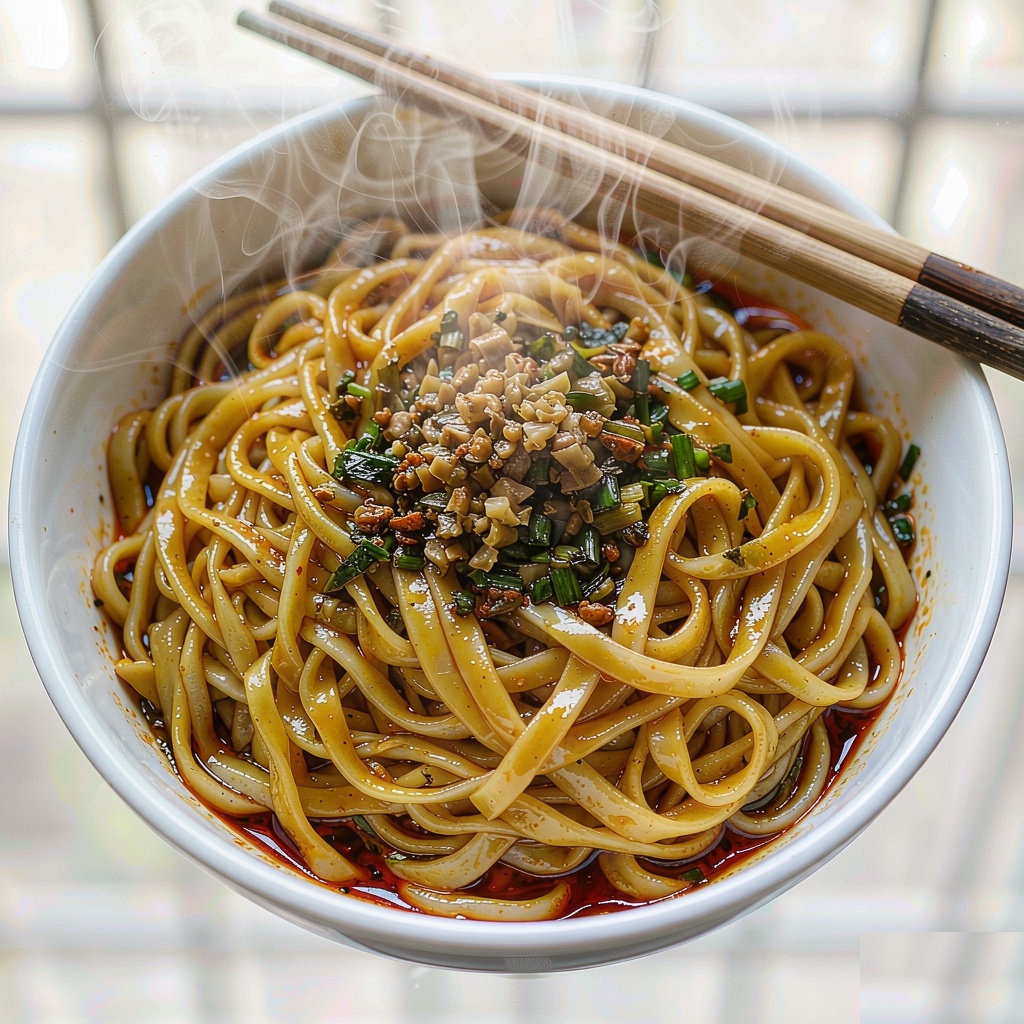
What Does Re Gan Mian Taste Like?
The dominant note is roasted sesame — deep, nutty, almost like thinned peanut butter’s more serious older sibling — layered over savory soy and a whisper of garlic from the garlic-water that most stalls splash into the bowl base. The noodles bring the chew; the alkali gives them a subtle mineral snap you notice more than you taste. Then the toppings do their work: zha cai (pickled mustard tuber) or diced pickled radish supplies sharp crunch, raw scallion adds a green bite, and chili oil, where you have asked for it, blooms slowly rather than blasting.
The mouthfeel is the real signature. Because the sauce is oil-thinned sesame paste rather than broth, the bowl reads dry but never chalky — richer and rounder than a vinaigrette-dressed cold noodle, lighter than an oil-drenched stir-fry. If you have had Sichuan-style cold sesame noodles, think of re gan mian as its hot, chewier, more disciplined cousin. If you have had nothing comparable, expect something like spaghetti al burro’s Chinese aunt: few ingredients, total dependence on technique, quietly addictive.
One honest warning for first-timers: the bowl is denser than it looks. Sesame paste is filling, and first-time eaters who order a large bowl plus sides usually leave half the noodles.
Wuhan Hot Dry Noodles Recipe: Ingredients for Two Bowls
If you want to know how to make wuhan hot dry noodles at home, it is easier than the technique suggests, provided you respect two things: the consistency of the sesame paste and the two-stage noodle cook. Here is what two generous bowls need.
- 300 g fresh alkaline noodles (jian shui mian) — sold in most Chinese grocers; see the FAQ below for substitutions
- 4 tbsp roasted sesame paste — pure roasted white-sesame paste (zhi ma jiang); many Wuhan shops blend in a spoon of peanut paste for roundness, which works well at home too
- 2 tbsp sesame oil, plus about 1 tbsp more for the par-cook
- 3–4 tbsp warm water or garlic water for thinning the paste
- 1.5 tbsp light soy sauce, ½ tsp salt, ½ tsp chicken bouillon powder (optional)
- 2 tbsp diced pickled radish or chopped zha cai — the crunchy counterpoint; do not skip it
- 2 tbsp finely sliced scallions
- 1 tbsp garlic water — 1 clove minced garlic steeped in 2 tbsp warm water for ten minutes
- Chili oil to taste, and a few drops of black vinegar if you like a sour edge
The single most important prep step is thinning the paste. Spoon the sesame paste into a bowl, add sesame oil and warm water one spoonful at a time, and stir in one direction until it flows in a slow ribbon off the spoon — thick enough to cling, loose enough to coat. Too thick and it seizes on contact with the hot noodles; too thin and you have soup pretending to be sauce. This is the part people get wrong when they first try a re gan mian recipe at home, and no amount of good noodles rescues a badly thinned paste.
How to Make Hot Dry Noodles, Step by Step
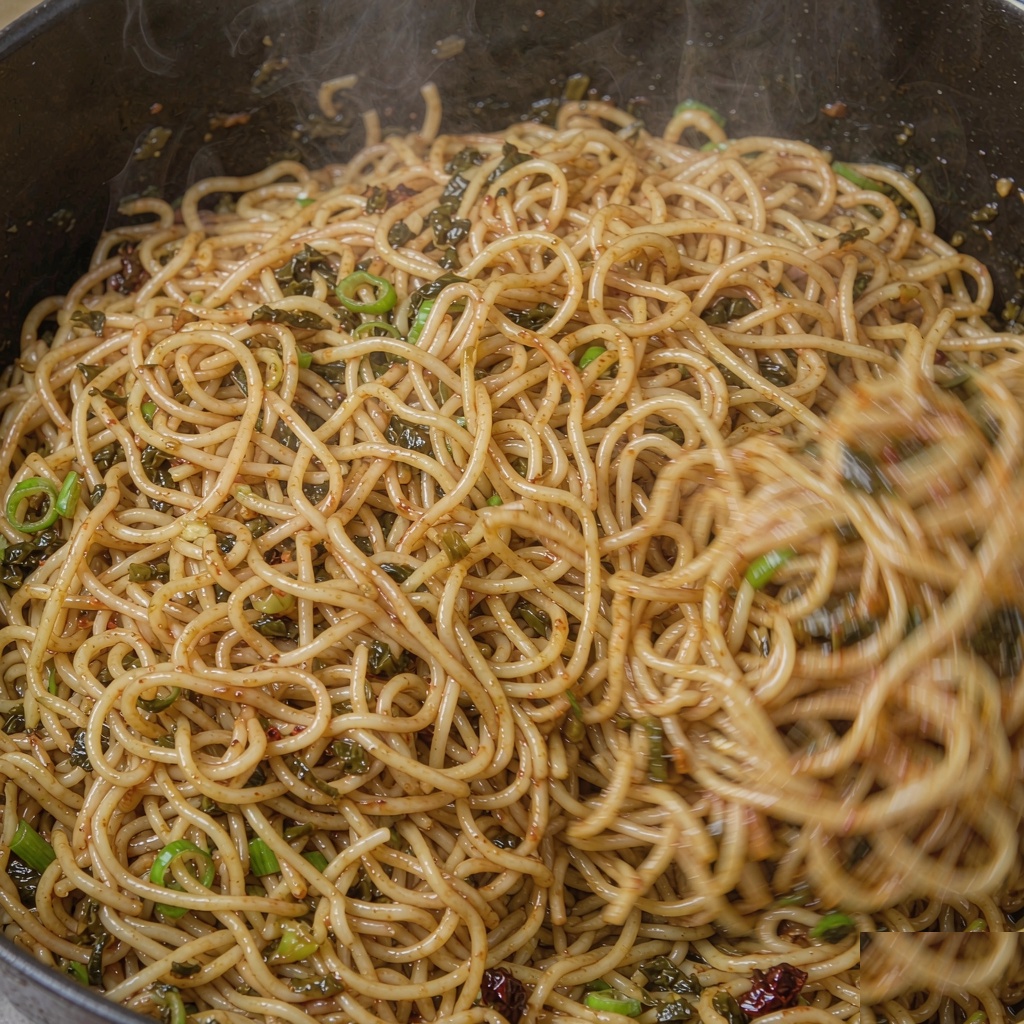
- Build the bowl base. Into each serving bowl: half the soy sauce, the salt and bouillon, the garlic water, and a teaspoon of sesame oil. Keep the paste, pickles, scallion, and chili oil separate for now — layering them on top at the end is what makes the toss work.
- Par-cook the noodles (shan mian). Boil the fresh alkaline noodles for two to three minutes until just short of done — there should be a firm, pale core. Drain, rinse briefly under cold water, spread them on a tray, toss with a tablespoon of sesame oil, and fan or refrigerate for twenty minutes. This step can be done a day ahead; it is why the dish exists at all.
- Revive before serving. Bring a pot of water back to a rolling boil. Dunk the portion in a strainer or noodle basket for fifteen to thirty seconds — just until hot and pliable all the way through. If you are cooking a single fresh portion and skipping the par-cook, boil to just done and drain immediately instead.
- Drain hard. Shake the strainer aggressively for a full five seconds. Water clinging to the noodles dilutes the paste and breaks the coating — the most common home-cook failure after paste thickness.
- Dress in order. Noodles into the bowl base. Sesame paste spooned over the center — not stirred in yet. Then pickles, scallion, and chili oil on top of the paste.
- Toss immediately. Lift from the bottom and fold over, chopsticks working fast, for about fifteen to twenty seconds until every strand is coated. Serve at once. The window really is that short.
A few pitfalls worth naming, because every one of them has ruined a bowl for someone: cold sesame paste straight from the fridge sets almost instantly on hot noodles, so bring it to room temperature first; over-thinned paste slides off and pools; and resting the finished bowl even two minutes turns the coating into a solid mass. Eat the moment the toss is done, standing if possible — it genuinely tastes better that way, and not only for romance.
Who It Suits — and Who Should Order Something Else
Re gan mian suits savory-toothed eaters, lovers of chew and sesame, anyone who finds plain congee breakfasts grim, and travelers who want maximum food per yuan. It is cheap, fast, portable, and sustaining — a genuine working person’s breakfast that has never pretended otherwise. Pair it with a cup of hot soy milk or Wuhan’s rice-wine breakfast drink dan jiu (蛋酒) and you have the classic combo.
Who should think twice: anyone with a sesame allergy — sesame is the dish, not a garnish, and there is no version without it; anyone avoiding gluten, since the noodles are pure wheat; and people who want a light, low-oil breakfast, because the bowl is dense and filling by nature. On heat: re gan mian is not spicy by default. Chili oil is an add-on, applied by you, in whatever quantity you choose — a small mercy for travelers who misjudged Sichuan the day before. Vegetarians can eat the classic version happily; vegans should confirm the stall uses no chicken bouillon in the base, which some do.
Guozao: Eating It in Wuhan Like a Local
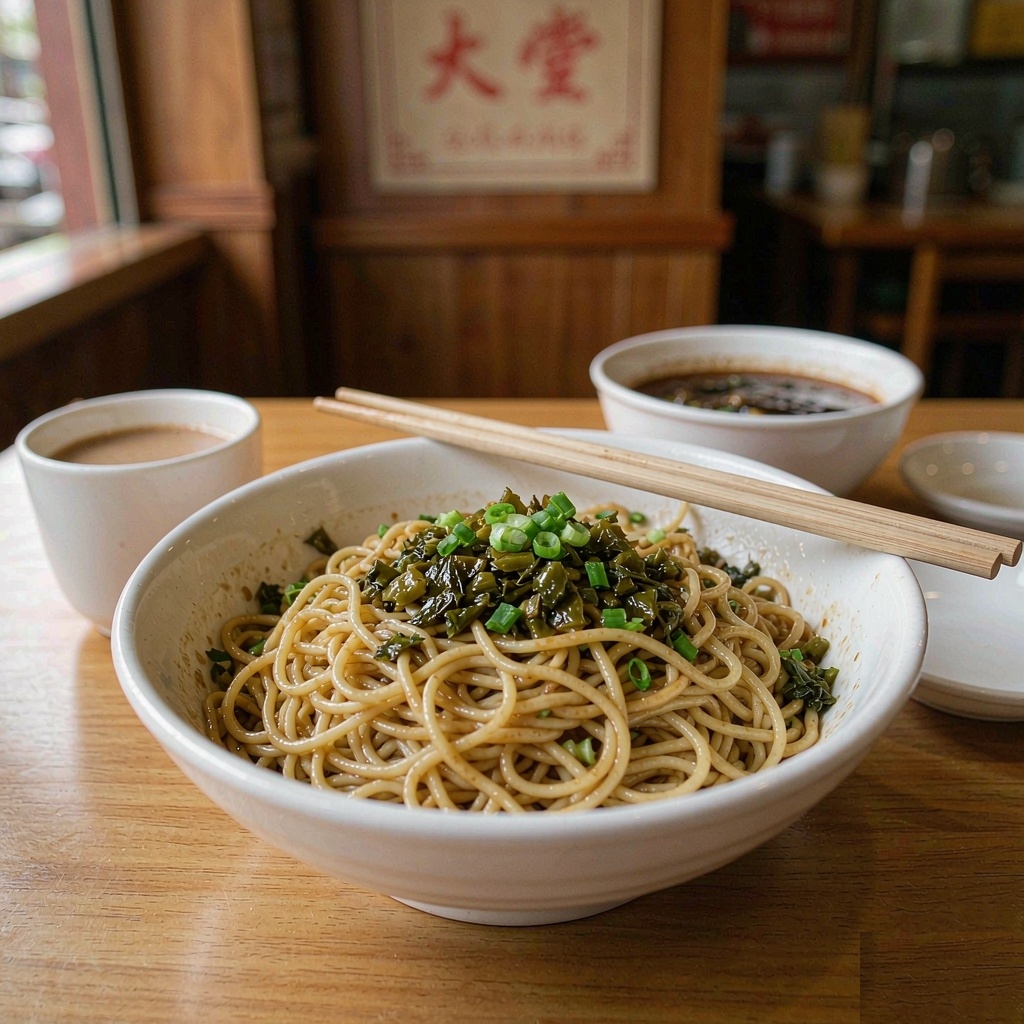
Wuhan treats breakfast as a verb. The local phrase is guozao (过早) — literally “passing the morning” — and it is the most distinctive Wuhan breakfast culture ritual in China: streets full of stalls from six in the morning, bowls of noodles eaten standing up, carried between the fingers while walking to work, or balanced on a stool by the curb. Where other cities do breakfast sitting down, Wuhan does it in motion, and hot dry noodles — broth-free, portable, toss-and-go — is the dish the ritual was practically built around. For the wider context of morning eating across the country, our guide to Chinese breakfast traditions traces how differently each region answers the first meal of the day.
Where to eat hot dry noodles in Wuhan depends on the experience you want. Cai Lin Ji, the famous chain that grew out of the 1920s original, serves a dependable, generously sauced bowl and is the easy first stop for visitors. Hubu Alley, the celebrated breakfast street near the Yangtze, is atmospheric but heavily touristed — worth one morning, less than the average neighborhood stall. The honest best bowls are usually at unmarked street counters near wet markets and bus depots, where the noodles are fanned before dawn and regulars line up before seven. A street-stall bowl typically runs five to eight yuan; expect to pay a few more at the famous names. Go between 6:30 and 9:00 a.m. — after ten, many stalls have sold out or switched to lunch. For a full plan, pair this with our Wuhan food guide, and our dedicated Wuhan hot dry noodles guide covers specific stalls and ordering phrases in more depth.
Hot Dry Noodles vs Dan Dan Noodles — and Its Other Cousins
Travelers frequently mix this dish up with other Chinese noodle standards, so here is the clean separation. Hot dry noodles vs dan dan noodles: dan dan is Sichuan, built on a spicy chili-and-Sichuan-pepper base with a topping of crumbled pork and usually a little broth at the bottom; re gan mian is sesame-forward, contains no meat topping, and carries no liquid at all. If you order expecting dan dan heat and get nutty richness instead, this paragraph is why. Against zhajiangmian, the Beijing-derived noodle, the difference is the sauce itself — fermented bean-and-pork paste versus pure sesame. Against cold sesame noodles, the difference is temperature and structure: the cold dish is served chilled and dressed loosely, while re gan mian is tossed hot and the paste is an integral coating, not a dressing.
Within Hubei itself, the bowl is the anchor of Hubei’s Chu cuisine — a cooking tradition that leans on freshwater fish, lotus root, and wok-fired street snacks rather than the fiery reputation of its western neighbor. Stalls in Wuhan now riff on the classic: beef-braised versions topped with a spoon of spiced stew, a chilled summer variant, even cheese-topped mutations that purists mutter about. Try the plain classic first. If a bowl cannot stand on sesame alone, the toppings were hiding something.
Is re gan mian spicy?
No — not by default. The classic bowl contains no chili at all; heat comes only from the chili oil you or the cook adds at the end. Order it plain for a completely mild bowl, or ask for la (辣) if you want warmth. Most stalls let you control the amount.
How many calories in a bowl of Wuhan hot dry noodles?
A standard street-stall bowl runs roughly 500 to 600 calories, depending on portion size, oil, and how generously the sesame paste is applied — the paste is the calorie engine. It is a substantial meal, not a snack, which is exactly why Wuhaners eat it as breakfast and stay full until mid-afternoon.
Can I make hot dry noodles without alkaline noodles?
Close substitutes exist. The best trick: boil regular dried spaghetti or linguine with half a teaspoon of baking soda per liter of water — the alkaline water turns the dough springy and gives it a convincing jian shui mian-like chew and faint yellow tint. Fresh ramen noodles also work acceptably. Plain wheat noodles without any alkali will taste like a different, sadder dish.
Why is it called “hot dry noodles”?
Because the bowl is served hot and contains no broth — the name is a direct, literal description of re gan mian, not a mistranslation. It distinguishes the dish from every soupy noodle on the same street: the sauce is sesame paste thinned with oil, not water or stock, so the finished bowl leaves the plate dry.
Where can I eat authentic hot dry noodles outside China?
Look in cities with substantial Hubei communities or Wuhan-run eateries — many overseas Chinese restaurants serve it under “hot dry noodles” or “Wuhan noodles” on weekend menus. Failing that, the recipe above reproduces the classic bowl closely; the two things that matter most are roasted (not raw) sesame paste and the par-cook-and-revive noodle technique.
Is hot dry noodles vegan or vegetarian?
The core components — noodles, sesame paste, pickles, scallion, chili oil — are all plant-based, and the classic version is effectively vegetarian. Vegans should ask whether the stall adds chicken bouillon or lard to the bowl base; at home, simply omit both and season with a little extra soy and salt.
Re gan mian does not photograph like Peking duck and does not perfume the street like a sizzling wok. What it offers instead is the rarest kind of food memory: a dish that is unglamorous, constant, and quietly perfect, eaten standing among a crowd of people who have eaten it ten thousand times and still line up before seven. Learn to toss the bowl in time, and you will carry the skill — and the craving — home with you.