

Tucked into the mountainous folds of western Sichuan, Miyalu Valley is one of China’s best-kept autumn secrets. Stretching roughly three hundred square kilometres along the Zagunao River, it holds the distinction of being among the largest red-leaf scenic areas in the country. When late October arrives and the larches, maples and birches turn, the entire valley ignites in shades of amber, crimson and gold. This Miyalu valley guide is built for travellers who want to see that colour ahead of the crowds that flock to better-known Sichuan destinations.
Most visitors first land in the provincial capital, which makes Chengdu the natural launch point. From there the valley sits about 260 kilometres to the northwest, a drive that climbs steadily into the Tibetan plateau foothills. The journey itself is a highlight: terraced fields, Tibetan villages with white stupas, and the first hints of mountain snow on the higher ridges.
The name Miyalu, sometimes written Miyaluo, loosely means “fun place” in the local Qiang and Tibetan languages. That spirit is easy to feel once you are among the forests. Unlike a single ticketed gorge, the valley is a sprawling corridor of villages, hot springs, lakes and high pastures, so the experience is as much about slow travel as it is about any one viewpoint.
Download our free Chengdu-to-Miyalu road map and start planning your autumn route today.
Best Time to Visit Miyalu Valley
The single most common question is the best time to visit Miyalu valley. The honest answer depends on what you want. Spring brings wildflowers and melting snow; summer is cool and green, perfect for escaping Chengdu’s humidity; winter is quiet and often road-blocked by snow. But the valley is famous for one thing only: autumn.
The colour season typically opens in early to mid-October at higher elevations and peaks across the lower valley in late October. If you want the most precise planning, the phrase Miyalu valley autumn colours best week usually refers to the final week of October. In most years that window delivers the deepest, most saturated gold before the first hard frost strips the leaves. Elevation matters: leaves at 3,000 metres turn a week or two earlier than those along the river at 2,000 metres, so a two-week trip lets you chase the colour downward as it migrates.
Weather in late October is crisp and dry, with daytime highs around 12–18°C and nights near freezing. Pack layers, a warm jacket and decent walking shoes. Mornings often begin with mist that lifts to reveal the full blaze of colour, and that is also the best light for photography.
How to Get to Miyalu Valley from Chengdu
Learning how to get to Miyalu valley from Chengdu is straightforward but takes planning. There is no airport at the valley, so overland travel is the only option. The most flexible choice is to hire a private car or join a small-group tour, which costs more but removes the headache of mountain driving. The drive runs west from Chengdu on the G317, passing Dujiangyan and Wenchuan before climbing toward Lixian County, the gateway town for the valley.
Public transport exists but is slower. Buses run from Chengdu’s Chadianzi station to Lixian, roughly five to six hours, and from there local minibuses or taxis reach the scattered scenic spots. Self-driving gives you the freedom to stop at roadside viewpoints, but note that the G317 is a working mountain road with trucks, switchbacks and the occasional landslide closure in wet weather. A 4G signal is decent near towns but disappears deep in the forest, so download offline maps before you leave.
The Miyalu Valley Hiking Loop
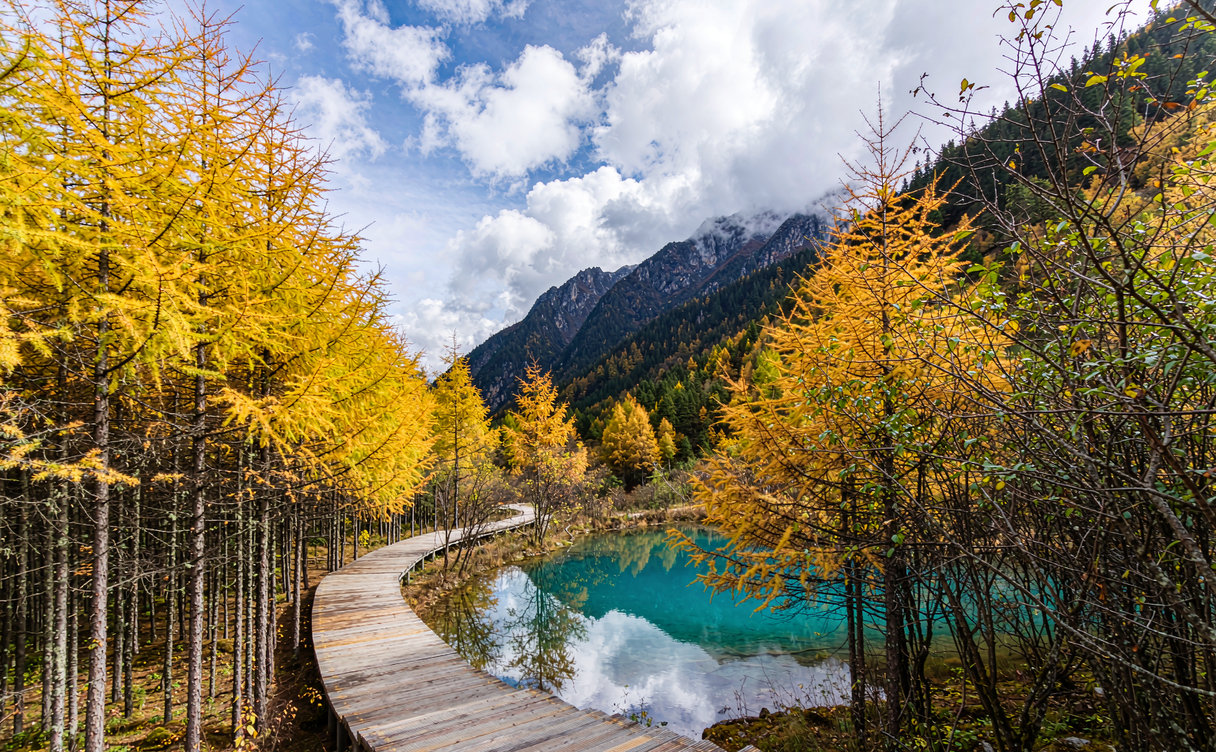
For active travellers, the Miyalu valley hiking loop is the heart of the experience. The classic loop begins near Lixian, follows the Zagunao River upstream through mixed deciduous forest, climbs to a cluster of alpine lakes, then descends via a quieter village trail past terraced farms and hot springs. A fit hiker can complete the core loop in two days, though three days lets you linger.
Day one is gentle, mostly along river paths with constant colour on both banks. Day two climbs toward the high lakes, where the larches turn pure gold against dark conifers and pale rock. The trail is well used but unmarked in places, so a local guide is wise if you are not confident with navigation. Carry water, snacks, a headlamp and a basic first-aid kit. Altitude tops out near 3,400 metres, so acclimatise in Lixian the night before to avoid headaches.
Photographers should aim for the loop’s mid-section, where a wooden bridge crosses a side stream and the reflection of red maples doubles the colour. That single frame is what most visitors remember.
Miyalu Valley Versus Bipenggou Autumn Colours
A fair comparison is Miyalu valley versus Bipenggou autumn colours, because the two sit close together and are often confused. Bipenggou, covered in our Bipenggou valley guide, is a ticketed, shuttle-bus scenic area with boardwalks and easier access. It is gorgeous and convenient, but it feels managed.
Miyalu is the opposite: wilder, larger and free to roam in many sections. You trade convenience for scale and authenticity. If your priority is a comfortable half-day visit with guaranteed viewpoints, Bipenggou wins. If you want to wander a three-hundred-square-kilometre canvas with almost no crowds, Miyalu is the better choice. Many travellers do both, spending one day in each.
Compare valley itineraries side by side and book the autumn trip that fits your style.
Where Miyalu Fits in a Sichuan Autumn Trip
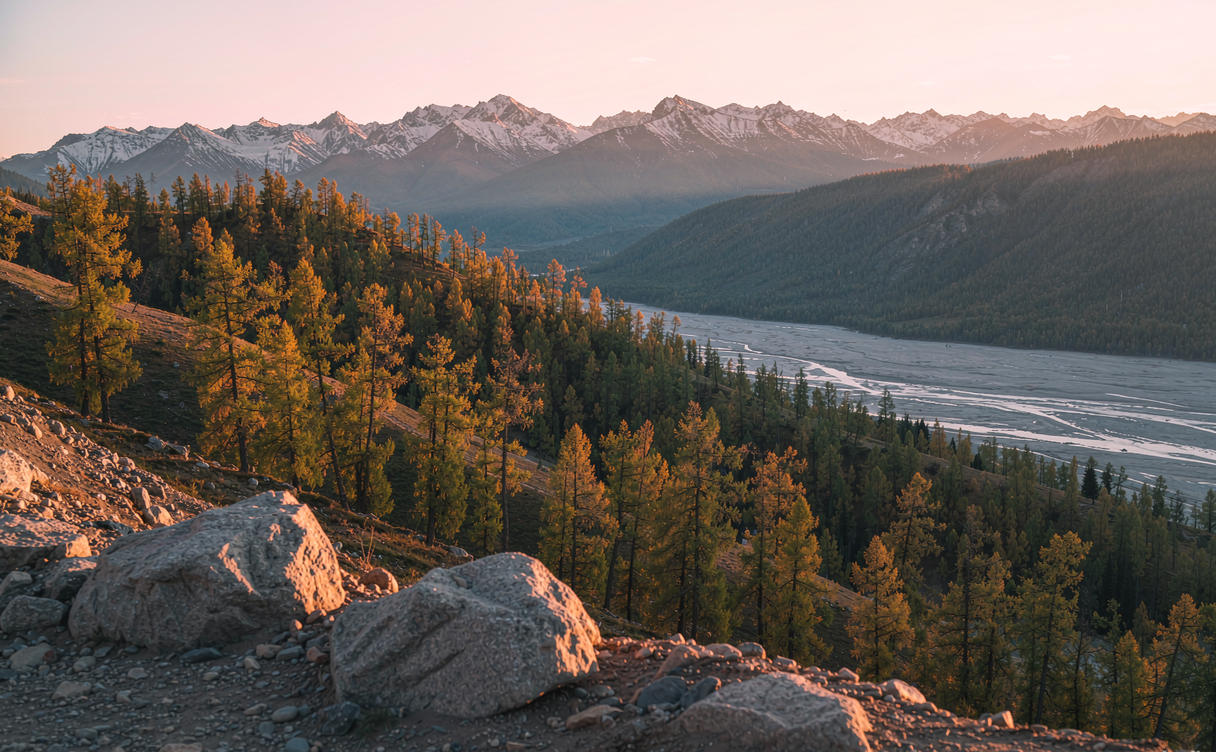
Miyalu is rarely a standalone destination. Most travellers pair it with other Sichuan highlights. The famous Jiuzhaigou travel guide and the broader Jiuzhaigou and Huanglong guide cover the turquoise lakes further north, which peak a little later and offer a different, water-focused kind of beauty. Combining Miyalu’s forest colour with Jiuzhaigou’s lakes makes for a complete Sichuan autumn.
For broader inspiration, our roundup of best autumn destinations in China places Miyalu among the country’s top leaf-peeping spots, and the best things to do in China list shows how it fits a wider national itinerary. Both are useful when you are deciding how many days to allocate.
Practical Tips for the Valley
Accommodation is mostly in Lixian and nearby villages, ranging from simple guesthouses to a few comfortable hot-spring resorts. Book ahead for late October, when the peak week fills up. Food is hearty mountain fare: yak meat, Tibetan noodles, wild mushrooms and plenty of warming soup. Credit cards are unreliable, so carry cash for small vendors.
Respect local culture. The valley sits in a Qiang and Tibetan area, and you will pass prayer flags, stupas and monasteries. Ask before photographing people, and stay on marked trails to protect the fragile forest floor. The region’s ecology is part of the broader Sichuan landscape described on Wikipedia’s Sichuan page, which is worth a read before you go for context on the mountains and rivers that shape the valley.
Finally, leave no trace. The reason Miyalu still feels like a secret is that it has not been loved to death. Pack out what you pack in, keep noise low, and the next visitor will thank you.
Subscribe to our Sichuan autumn newsletter and get the exact peak-colour week sent to your inbox.
Miyalu Valley rewards those who plan a little and wander a lot. Time your visit for the final week of October, base yourself in Lixian, and let the three hundred square kilometres of gold do the rest. Whether you hike the loop, compare it with Bipenggou, or chain it to Jiuzhaigou, this corner of Sichuan delivers one of the most generous displays of autumn colour in all of China.