

Tucked into the northern folds of Sichuan province, where the Qinba mountains slope toward the border with Shaanxi, Guangwu Mountain is one of China’s most quietly spectacular landscapes. This Guangwu Mountain guide is for travelers who want to trade crowded megacity itineraries for misty ridgelines, crimson forests, and a labyrinth of underground rivers. The area is formally recognized as the Guangwushan–Nuoshuihe UNESCO Global Geopark, a status that signals both its geological importance and its well-managed trails. If you are assembling a Sichuan trip that goes beyond Chengdu and Jiuzhaigou, this corner of Bazhong deserves a firm place on the map.
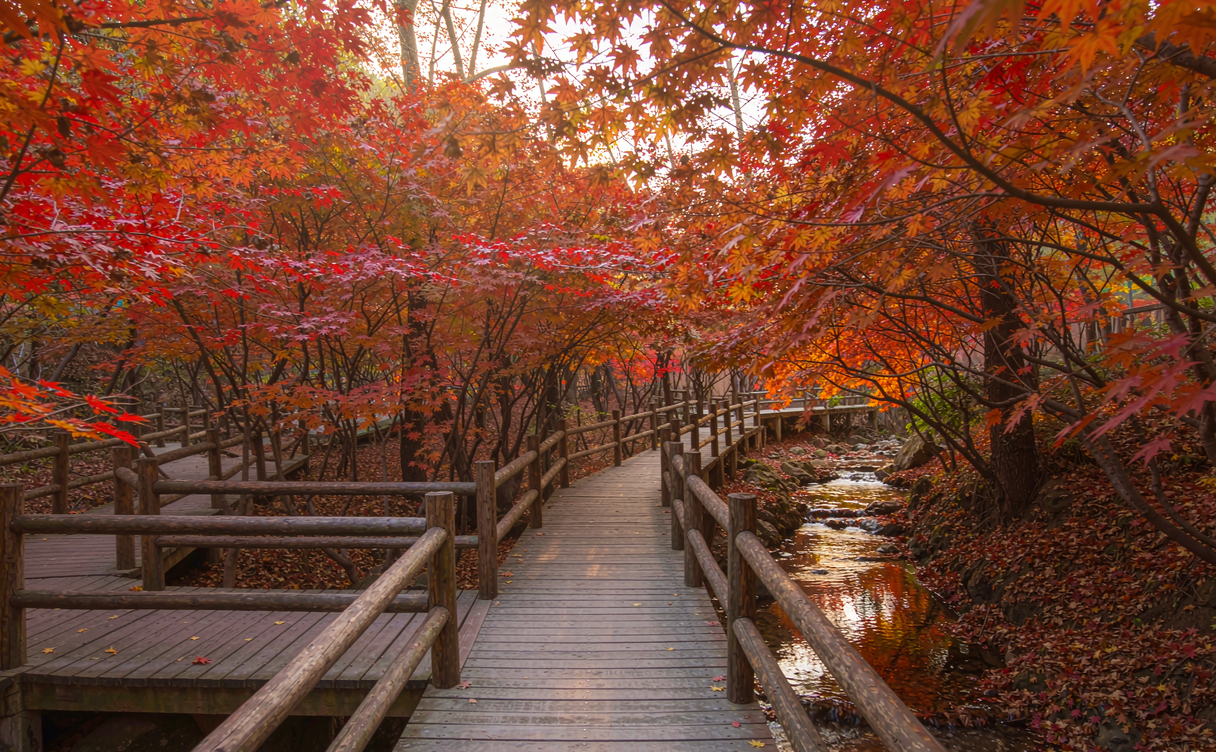
Most visitors arrive chasing the mountain’s reputation as the “Red Leaf Capital of China.” Each autumn, the slopes ignite in a gradient of amber, scarlet, and deep wine that stretches across more than six hundred square kilometers of protected forest. But Guangwu is not a one-season wonder. In spring it is a sea of wild azaleas; in summer it offers cool refuge from the Sichuan basin’s humidity; and in winter the frost-laced gorges have a stark, ink-painting beauty. The best time to visit Guangwu Mountain depends on what you want, though for most international travelers the late-October foliage is the headline act.
How to Get There
The practical gateway is Bazhong, a prefecture-level city that connects the mountain to the wider regional rail and road network. Understanding how to get to Guangwu Mountain from Bazhong is the first step of any sensible plan. From Bazhong’s main bus stations, frequent coaches run north to Nanjiang county, and from Nanjiang a shorter hop brings you to the Guangwu Mountain scenic area entrance. The total road journey is roughly two to three hours depending on the season and roadworks. Travelers coming from Chengdu can take a high-speed train to Bazhong and continue by road, which is far more comfortable than the old all-day mountain drives.
For those who prefer to self-drive, the highways have improved dramatically in recent years, and a rental car gives you the freedom to combine Guangwu with the nearby karst systems at your own pace. Whichever way you arrive, base yourself near the scenic area’s eastern gate, where the cluster of guesthouses and small hotels puts the trailheads within walking distance. A solid pre-trip read is our Bazhong travel guide, which covers where to eat, sleep, and refuel before you head into the hills.
Plan your Sichuan trip with our Guangwu Mountain guide recommendations and book the autumn window early to secure lodging.
The Red Leaf Season
Ask any local about timing and they will point you to a narrow window. The Guangwu Mountain red leaves best week typically falls in the final third of October, when the dominant tree species — mainly maple, oak, and poplar — reach peak color almost simultaneously. Miss it by a fortnight and you will find either greenish pre-color or a floor already carpeted in fallen leaves. Weather matters too: a cold snap accelerates the change, while a warm, wet spell can dull the palette.
During this peak week the mountain operates at full capacity, with shuttle buses ferrying visitors between the major viewing platforms. The most photographed spots are the Jiashan and Middle Peak ridges, where the layered hills roll away into the haze and the color seems to have no horizon. Arrive at first light if you want photographs without tour-group crowds, and bring layers — mornings are genuinely cold up high even when the valley is mild.
Nuoshui Karst Caves
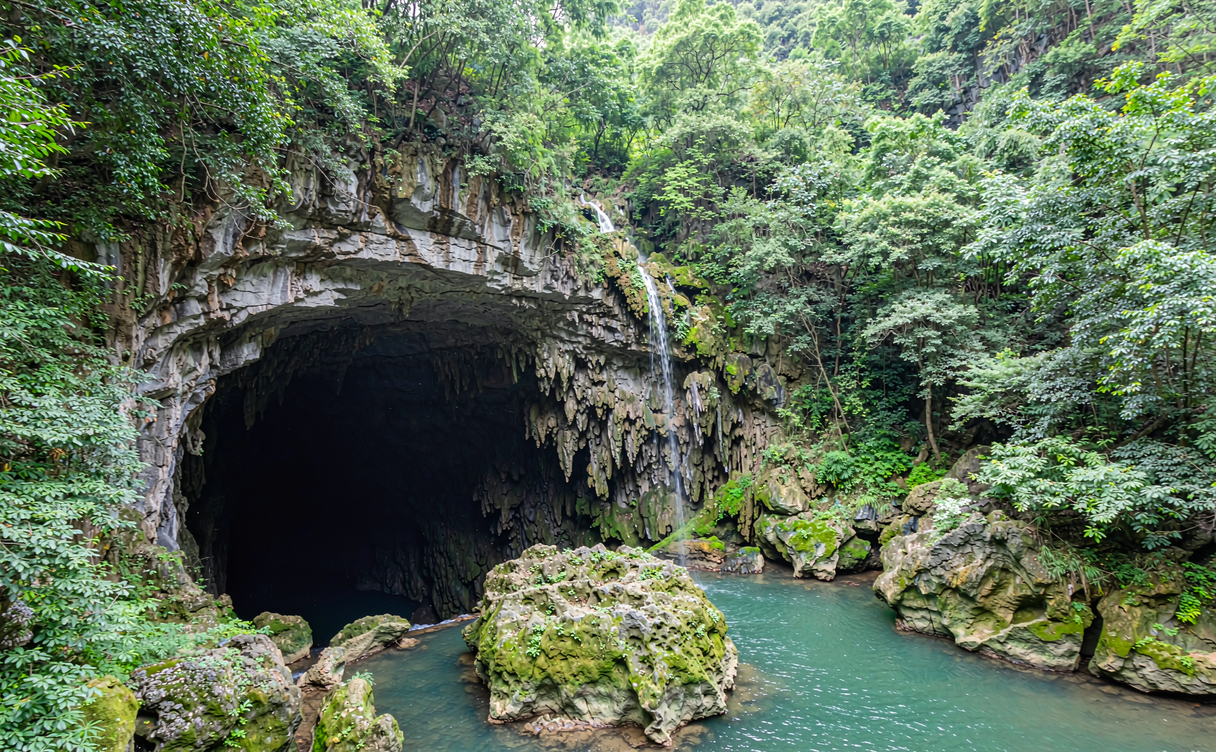
North of the main peaks lies a completely different world: the Nuoshui karst caves Guangwu system, a vast underground network carved by the Nuoshui River over millions of years. This is the “cave country” half of the mountain’s identity, and it is the part most foreign visitors skip — which is precisely why it feels like a discovery. The flagship site, the Nuoshui Cave, threads visitors past colossal stalactite halls, mirror-still underground lakes, and a boat ride along a subterranean river that emerges blinking into daylight.
The caves stay a constant, cool temperature year-round, making them an ideal afternoon when the weather outside is poor or when your legs need a break from the climbs. Guides at the entrance explain the formation of the limestone formations in basic English, and the walkways are well lit and railed. Combine the caves with a morning on the ridges and you get both halves of the geopark in a single, satisfying day. For travelers who enjoy this kind of hidden geology, our China off the beaten path guide lists several comparable spots worth adding to a longer itinerary.
Hiking the Trails
The Guangwu Mountain hiking trails range from gentle boardwalk strolls to full-day ridgeline treks. Beginners should start with the Shibayue (Eighteen Moon) loop, a well-graded path that links a string of small viewing pavilions without ever demanding serious altitude gain. More experienced hikers can tackle the traverse from the eastern gate over the main crest to the northern valleys, a route of five to seven hours that rewards effort with solitary ridgeline panoramas.
Because the geopark spans such a large area, the shuttle system is your friend. Ride up to a high trailhead, hike down through the forest, and let the bus collect you at the bottom — this preserves energy for the sections that matter. Carry water and a rain shell regardless of forecast; the microclimate here generates sudden mountain weather that can soak an unprepared hiker in minutes.
Where Guangwu Fits in a Sichuan Trip
Guangwu is best understood as part of a wider arc of karst and canyon scenery across western China. If you love the underground rivers here, the soaring cliffs of the Enshi Grand Canyon guide in neighboring Hubei will feel like a natural next stop. For vertigo-inducing quartz sandstone peaks, the Wulingyuan guide in Zhangjiajie remains the gold standard. Both pair beautifully with a Guangwu visit if you have two weeks and a taste for dramatic topography.
Autumn travelers in particular should browse our best autumn destinations in China roundup, which ranks Guangwu among the country’s top foliage escapes. And if you are still shaping the broader skeleton of your holiday, our best things to do in China overview helps you balance headline sights with quieter natural wonders like this one.
Compare Guangwu with other autumn foliage hotspots using our destination guides before locking in your travel dates.
Practical Tips and Conservation
The geopark’s UNESCO status means entry fees fund genuine conservation, and visitors are asked to stay on marked trails and pack out all waste. Cell coverage is patchy on the higher ridges, so download offline maps before you set out and tell your guesthouse your planned route. English signage is limited outside the main gates, so a translation app and a few written Chinese place names in your notes will smooth the rough edges.
Food inside the scenic area is basic but hearty — think Sichuan noodles, smoked mountain bacon, and sweet potatoes roasted over open fires at the trailhead stalls. For a proper meal, return to the town at the base, where small restaurants serve the region’s peppery cuisine at prices that feel like a throwback. Accommodation books out completely during the red leaf peak, so reserve weeks ahead if your dates are fixed.
The official geology and conservation background is documented by the UNESCO Global Geoparks network, which maintains the listing for the Guangwushan–Nuoshuihe site and explains why this landscape is protected at an international level. It is worth a read before you go, if only to appreciate the scale of the karst and forest systems you will be walking through.
Final Thoughts
Guangwu Mountain rewards the traveler who is willing to venture a little past Sichuan’s greatest hits. The combination of an epic autumn color display and a world-class cave system is rare, and the relative absence of foreign tourists means the experience still feels authentic rather than staged. Whether you come for the Guangwu Mountain red leaves best week, the cool summer escape, or the silent drama of the Nuoshui karst caves Guangwu, you will leave with photographs and memories that the usual itineraries simply cannot supply.
Plan for at least two full days to do the area justice, three if you want to hike leisurely and still explore the caves. Build your trip around the weather and the foliage reports, keep your itinerary flexible, and let the mountain set the pace.
Start building your custom Guangwu Mountain itinerary today and combine the red leaves with the Nuoshui caves for the full geopark experience.