

Carved into the rust-red cliffs of the Qilian Mountains, the Mati Temple grottoes are one of Gansu province’s most dramatic yet underrated Buddhist sites. Often called the “Thousand Buddha Caves of the Horse Hoof,” this cluster of shrines, stairways, and meditation cells clings to a vertical stone forest just outside Zhangye. Unlike the famous painted caves farther west, the Mati Temple grottoes reward visitors with vertigo-inducing wooden walkways, a sense of vertical adventure, and a quieter, more contemplative atmosphere. This Mati Temple grottoes guide will help you plan a rewarding day trip from Zhangye, understand the site’s layout, and decide how it compares with other Silk Road cave temples.
What Are the Mati Temple Grottoes
The name Mati means “horse hoof” in Chinese, and local legend says a heavenly horse left a hoof print in a rock here, which became a sacred relic preserved inside one of the caves. The site dates back more than 1,600 years to the Northern Liang period, when monks began hollowing meditation rooms and Buddha halls out of the soft sandstone cliffs. Over the centuries, additional caves, temples, and pavilions were added, creating the layered complex you see today.
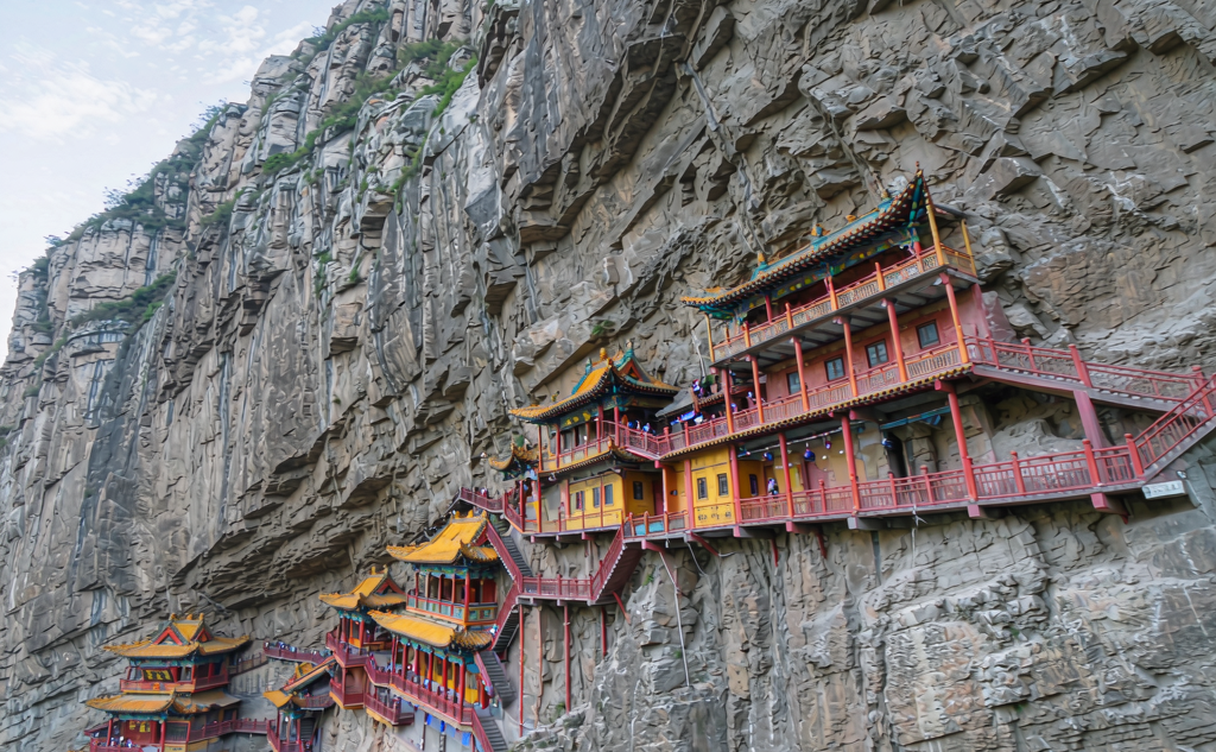
The Mati Temple grottoes sit inside a canyon where wind and water have sculpted towering red pillars of rock. The caves are not all naturally formed; many were hewn by hand and then connected by wooden staircases and plank walkways bolted to the cliff face. Walking through the complex feels less like a museum visit and more like a vertical pilgrimage. Statues of Sakyamuni, Bodhisattvas, and guardian figures line the dim interiors, and a few caves retain faded murals in mineral pigments.
The Legend and the Layout
The complex is divided into several sections spread along the canyon. The most visited areas are the North Temple, the South Temple, the Thousand Buddha Caves, and the famous Thirty-Three Day Cave. Each has its own character, and together they make up a half-day of gentle climbing and photo stops.
According to the legend, a revered monk was meditating when a celestial horse appeared and stamped the ground, leaving a clear hoof impression in stone. That stone was enshrined, and the whole mountain became a place of worship. Whether or not you believe the story, the sense of myth is hard to shake as you ascend narrow staircases with the canyon dropping away below.
The Thirty-Three Day Cave
The highlight for most visitors is the Mati Temple thirty-three day cave Zhangye experience. This is a seven-story vertical warren of 33 linked grottoes that you climb by steep wooden stairs and ladders. The number thirty-three references the thirty-three heavens of Buddhist cosmology, and the route spirals upward through dim chambers, past small Buddha statues, until it reaches an upper balcony with sweeping views over the red rock canyon.
This is not a walk for anyone with severe vertigo or mobility issues. The steps are narrow, the railings are basic, and in places you duck through low passages. But the payoff is tremendous: a genuine sense of what it meant to live and pray in a cliff monastery. Give yourself at least an hour just for this section, and wear shoes with good grip.
How to Get to Mati Temple from Zhangye
The grottoes lie about 65 kilometers south of Zhangye city, roughly a 90-minute drive into the Qilian foothills. Knowing how to get to Mati Temple from Zhangye is the first step to a smooth visit.
The most flexible option is to hire a private car or join a day tour, which lets you combine the grottoes with other regional sights. Public buses run from Zhangye to the nearby town of Matisi, but departures are limited and the final stretch still requires local transport. If you are self-driving, the roads are paved and well signed in both Chinese and English, and there is a parking area at the entrance.
Many travelers pair the grottoes with a sunset at the Zhangye Danxia Rainbow Mountains, since both sit within easy reach of the city and show off different faces of Gansu’s red geology.
Mati Temple Ticket and Cable Car
Understanding the Mati Temple ticket and cable car setup will save you time at the gate. Entry is by a combined ticket that covers the scenic area, the main temples, and the Thirty-Three Day Cave. There is an optional cable car that carries visitors up toward the upper cliff temples, useful if you want to skip part of the climb or save energy for the cave stairs.
Prices change by season, so check the official board on arrival. As a rule, arrive early to buy tickets before tour groups, and keep your ticket handy because it is checked at several points inside the canyon. The cable car is weather dependent; on windy or rainy days it may pause operation, in which case you simply walk the trails.
Best Time to Visit Mati Temple
The best time to visit Mati Temple is late spring through early autumn, from May to October, when the canyon roads are clear and the weather is mild. Summer brings lush green meadows around the red cliffs, and the contrast makes for spectacular photographs. Autumn, especially September and October, offers crisp air and golden light that flatters the sandstone.
Winter is quiet and atmospheric but cold, and some facilities reduce hours. Avoid the busiest holiday weeks of Chinese Golden Week in early October if you prefer solitude, though the site rarely feels as crowded as the major painted-cave attractions.
Mati Temple Versus Maijishan Grottoes
A common question for Gansu travelers is Mati Temple versus Maijishan grottoes. The two are both cliff cave temples, but they deliver very different experiences. Maijishan, near Tianshui in eastern Gansu, is celebrated for its exquisite clay sculptures and towering cliff-face statues, approached by dramatic exterior walkways. Mati Temple is rougher, more vertical, and centered on the adventurous climb through the Thirty-Three Day Cave.
Choose Maijishan if your priority is art history and refined sculpture. Choose Mati Temple if you want a hiking-and-climbing adventure with spiritual atmosphere and fewer crowds. Many Silk Road itineraries include both, since they sit at opposite ends of the province and showcase the range of cave-temple architecture.
Planning a Gansu Silk Road Itinerary
The Mati Temple grottoes make an excellent stop on a broader Hexi Corridor route. Zhangye itself is a hub: from here you can head west to the fortressed city of Jiayuguan, continue to Dunhuang’s desert caves, or loop north toward Jiuquan. Each leg connects a different chapter of the Silk Road story.
If you want context before you go, the Gansu travel guide to Jiayuguan explains the great fort that once guarded the empire’s western edge, while the Jiuquan travel guide covers the satellite town famous for its historic well. Farther west, the Dunhuang Mogao Caves guide introduces the UNESCO cave art that crowns the route, and the Gansu Jiayuguan Fort page goes deeper on the military architecture. For a broader plan, see our list of the best things to do in China.
Beyond the grottoes, Zhangye offers grassland rides, Tibetan monasteries, and the colorful Danxia landforms that have made the region famous on social media. A relaxed two or three days lets you enjoy the city without rushing.
Tips for a Great Visit
Bring water and a light snack, since food options inside the scenic area are limited. Dress in layers, because canyon temperatures shift quickly between sun and shade. A headlamp or phone light helps in the darker grottoes, and a wide-angle lens captures the scale of the stone forest.
Respect the active Buddhist spaces: some chambers are still used for worship, so speak quietly and ask before photographing monks or devotees. Drones are restricted near the cliffs, so check rules before flying.
Nearby Attractions to Extend Your Trip
If you have extra days, the Zhangye area rewards slow travel. The Danxia geopark is the headline sight, but the nearby grassland and the horse-hoof legend sites add depth. Travelers continuing the Silk Road often move from Zhangye to Jiayuguan and then on to Dunhuang, a sequence that builds from mountain cliffs to desert caves.
The Mati Temple grottoes may not have the fame of the great painted caves, but that is precisely their charm. Here you climb, you pause, and you look out over a red canyon that has drawn pilgrims for sixteen centuries. For anyone exploring Gansu, this cliff monastery is a memorable and manageable adventure.
For deeper historical background on the region’s cave temples and the Silk Road in Gansu, consult the Mati Temple entry on Wikipedia, an independent reference on the site’s history and layout.
Ready to walk the cliff stairways yourself? Plan a Gansu Silk Road trip that pairs the Mati Temple grottoes with Zhangye Danxia and Jiayuguan Fort. Browse our Zhangye guides and start building your itinerary today.
Want a guided experience? Book a private Zhangye tour that includes round-trip transport, skip-the-line tickets, and a local expert who can explain the horse-hoof legend. Read our related article on the best things to do in China for more inspiration.
Still deciding between cave temples? Compare the adventurous climb at Mati Temple with the refined sculpture of Maijishan, then continue west to the Mogao Caves in Dunhuang. Check the Dunhuang Mogao Caves guide to round out your Silk Road plan.