

Push a cube of properly made hong shao rou with your chopstick and it should tremble — not fall apart, not resist, just a slow, gelatinous wobble that tells you the collagen has done its work. That one test separates memorable red-braised pork belly from the dry, chewy versions that give the dish a bad reputation outside China. I have cooked this dish well over a hundred times, burned the caramel more than once, and I still think it is the most instructive recipe in the Chinese home-cooking repertoire. Get it right and you understand sugar color, braising and patience all in a single pot.
What Hong Shao Rou Actually Is
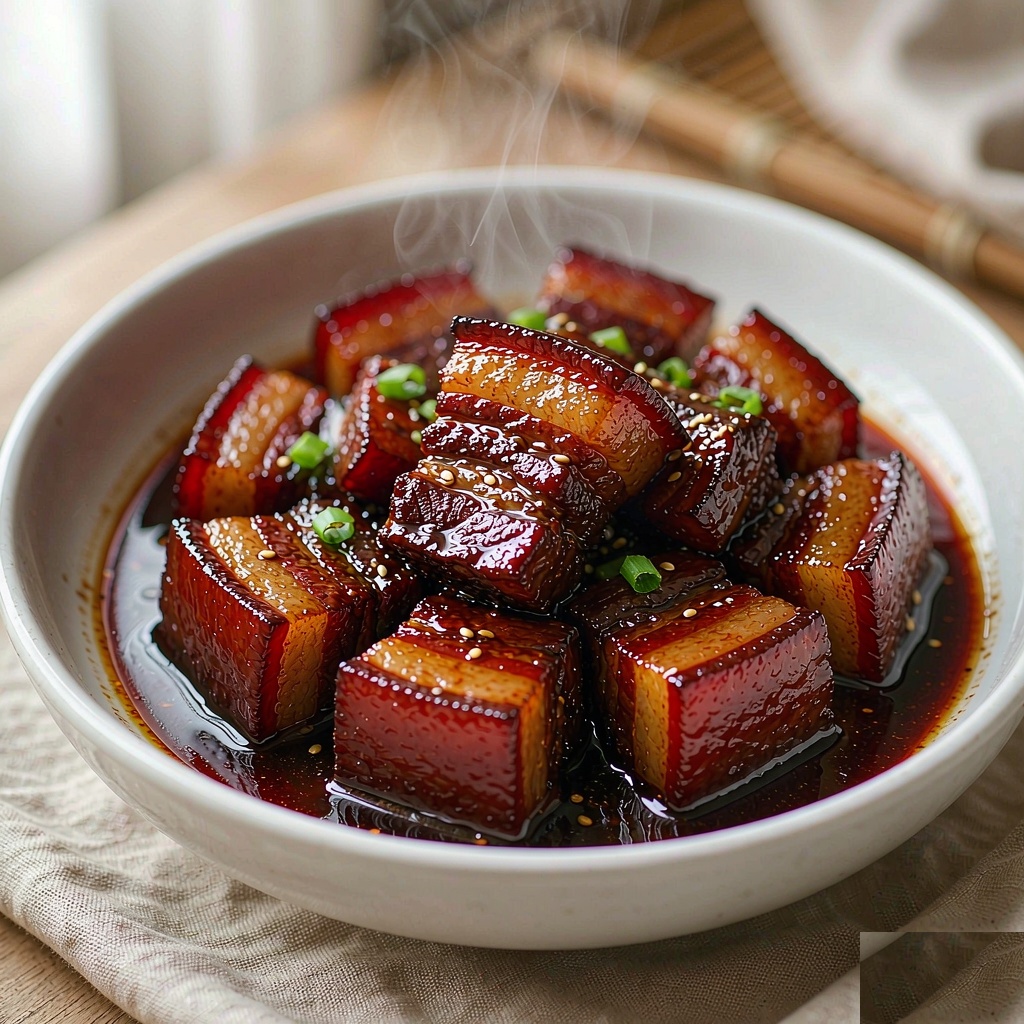
Hong shao rou (红烧肉) translates plainly as “red braised pork”: cubes of pork belly slowly braised until the sauce turns a deep mahogany and every piece wears a glossy lacquer. The red comes from soy sauce and, in the classic eastern versions, from caramelized sugar — a technique called tang se, sugar color, which predates soy-heavy shortcuts by centuries. The flavor sits in the middle of the savory-sweet spectrum: no chili heat, no sour notes, just salted caramel richness, warm spice from star anise, and the unmistakable silkiness of well-rendered pork fat.
The texture is the whole point. Each cube should show clean alternating bands of fat and lean, with the fat turned translucent and barely holding its shape. If you have only ever eaten sweet and sour pork from a takeaway menu, this is a different animal entirely — no batter, no frying, no sharp vinegar hit. It is a slow dish, closer in spirit to a French daube than to a stir-fry, and it tastes even better reheated the next day.
The Cut Matters More Than the Recipe
Buy proper pork belly, not lean “stir-fry belly” and not pre-sliced bacon. You want a slab with even, distinct layers — roughly equal bands of lean, fat and skin — because those layers are what keep the meat juicy through a long braise. Skin-on is traditional in Shanghai and Jiangsu homes and adds body to the sauce; skin-off is easier to eat and perfectly acceptable. Ask the butcher for a center-cut slab about three centimeters thick, then cut the cubes yourself so they stay uniform. For four servings you need around 900 grams. Frozen belly is actually easier to cut into neat cubes — thirty minutes in the freezer firms it up beautifully.
Ingredients
- 900 g pork belly, cut into 3–4 cm cubes
- 30 g rock sugar (about 2 tablespoons; white sugar works in a pinch)
- 3 tablespoons light soy sauce
- 1 tablespoon dark soy sauce, for color rather than saltiness
- 2 tablespoons Shaoxing wine
- 3 thick slices ginger
- 3 scallion stalks, knotted
- 2 star anise
- 1 small piece of cassia bark or cinnamon stick (optional)
- About 500 ml hot water, enough to just cover the meat
- 1 tablespoon neutral oil for the caramel
How to Cook It, Step by Step
- 1. Blanch the pork. Put the cubes in a pot of cold water, bring it to a boil, skim the gray foam that rises, and let it bubble for three minutes. Drain and rinse the meat in warm water. This removes scum and impurities so the final sauce stays clean and glossy.
- 2. Dry and render. Pat the cubes thoroughly dry. Put them in a dry wok over medium-low heat for four or five minutes, turning occasionally, until the fatty faces sear and a couple of tablespoons of fat collect in the pan. Pour off all but a thin film. This step is optional, but it keeps the finished sauce from sitting in a layer of grease.
- 3. Make the sugar color. Add the oil and rock sugar to the wok over the lowest flame. Stir gently as the sugar melts, then stops stirring and watch: the syrup moves from pale gold to amber in under a minute. The moment it looks like dark honey, go to the next step. Burnt sugar smells acrid and will make the whole pot bitter — there is no fixing it once it turns.
- 4. Coat the meat. Tip in the pork and toss quickly so every face picks up caramel. Expect it to spit; stand back. Two minutes of tossing gives the cubes their base color.
- 5. Season. Add the Shaoxing wine around the edge of the wok, then both soy sauces, the ginger, scallion knots and star anise. Stir for thirty seconds until the aroma lifts.
- 6. Braise low and slow. Pour in enough hot water to just cover the meat. Bring to a bare simmer, then cover, drop the heat to its lowest setting, and leave it for 60 to 75 minutes. Stir once or twice. If the water level drops below the meat, top up with hot water, never cold.
- 7. Reduce the sauce. Remove the lid, raise the heat to medium-high, and let the liquid bubble down until it coats the back of a spoon — usually eight to twelve minutes. Toss the cubes as the sauce thickens so every face gets lacquered. The sauce should cling, not pool.
- 8. Rest, then serve. Take the pot off the heat and let it sit ten minutes. The sauce tightens as it cools slightly, and the flavor settles. Scatter with sliced scallions if you like.
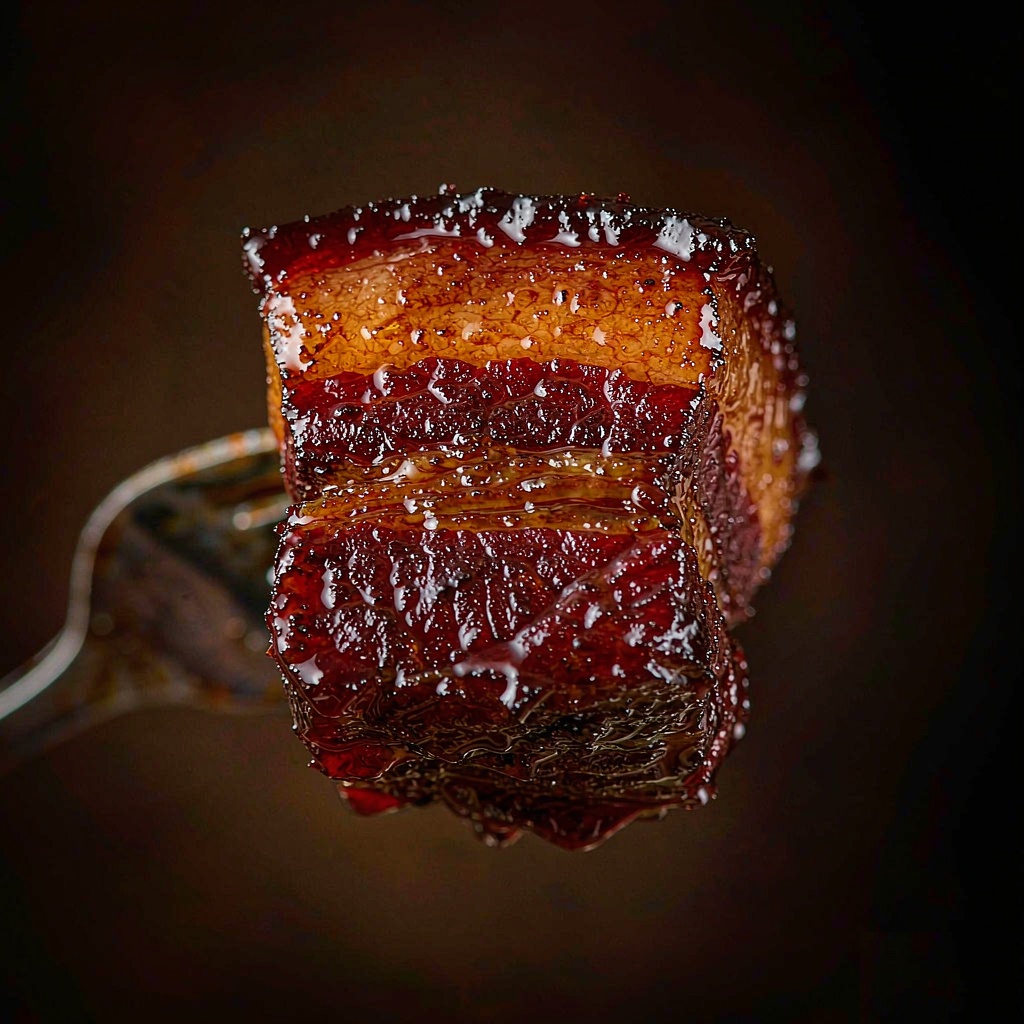
How do you know it is done? Slide a chopstick into the fattest cube. It should meet almost no resistance — the same feel as poking a ripe peach. If the chopstick sticks, cover and give it another fifteen minutes; belly is forgiving, and extra time in the braise only helps. The photo below shows the texture you are after: distinct layers, translucent fat, a shine that comes from gelatin rather than added thickeners.
Who It Suits — and Who Should Skip It
This is cold-weather food, appetite food, the dish you make for a table of people who have been out in the wind all day. It suits big eaters, fans of comfort dishes like beef bourguignon or dongpo pork, and anyone who likes sweet-savory flavors. It is also a smart choice for feeding guests, because it holds warm for an hour and reheats flawlessly, which almost no stir-fried dish can claim.
On the other hand, be honest with yourself about what it is: a rich dish built on pork fat and sugar. If you are managing cholesterol, keeping calories down, or dealing with gout, one or two cubes alongside plenty of rice and greens is a reasonable compromise — a whole bowl of sauce over rice is not. People who avoid alcohol should know the Shaoxing wine mostly cooks off, but it can be omitted entirely with only a small loss of depth. And anyone sensitive to sweet braises should start with less rock sugar; you can add, but you cannot remove.
Regional Versions Worth Knowing
Order hong shao rou in different cities and you will meet different dishes under the same name. The Shanghai version, part of the city’s benbang home cooking tradition, leans noticeably sweet and often keeps the skin on; it is the style most travelers encounter first. Neighboring Jiangsu and Zhejiang provinces take the sweetness further — Wuxi’s pork dishes are almost dessert-adjacent — while the refined kitchen traditions further north are covered in any decent Huaiyang cuisine guide, where the same braising logic appears in dishes like braised pork meatballs. Hunan’s Mao-style hong shao rou famously skips soy sauce altogether and builds all its color from caramelized sugar, with a fiercer, more purely porky flavor.
Family variations run everywhere: hard-boiled eggs simmered in the pot for the last twenty minutes, squares of dried tofu, or dried bamboo shoots from the Zhejiang hills tucked in alongside. Once you understand the method, these are not new recipes — they are the same braise wearing different clothes. That, more than any single dish, is the lesson of the eight great regional cuisines of China: shared techniques, local accents. If you are mapping an eating route through the country, this dish alone justifies a stop in Shanghai, Suzhou and Changsha, and it slots neatly into any serious China food tour itinerary.
Five Things I Learned the Hard Way
- Rock sugar beats white sugar. It melts slower, giving you a wider window before it burns, and the finished glaze has a rounder shine.
- Make it a day ahead. Overnight in the fridge, the fat solidifies on top so you can lift most of it off, and the flavor soaks deeper into the lean. Reheat gently with a splash of water.
- Never add cold water mid-braise. It shocks the fat and can make the meat tighten up. Keep a kettle of hot water next to the stove.
- Dark soy is for color, light soy is for salt. If you swap them, you get a black, over-salted pot. If you only have one soy sauce, use light and add a little more sugar color.
- Leftovers freeze well for a month. Freeze the cubes with a few spoonfuls of sauce in a flat bag; thaw in a pan with a lid over low heat.
Hong shao rou asks for two hours of mostly unattended pot time and repays it with one of the most satisfying plates in Chinese cooking. Make it once following the steps above, and by the third batch you will not need a recipe at all — you will know the amber stage of the caramel by smell, the doneness by chopstick, and exactly how much sauce you want left in the pan. That is when it stops being a dish from a restaurant menu and becomes your own Tuesday-night staple.