

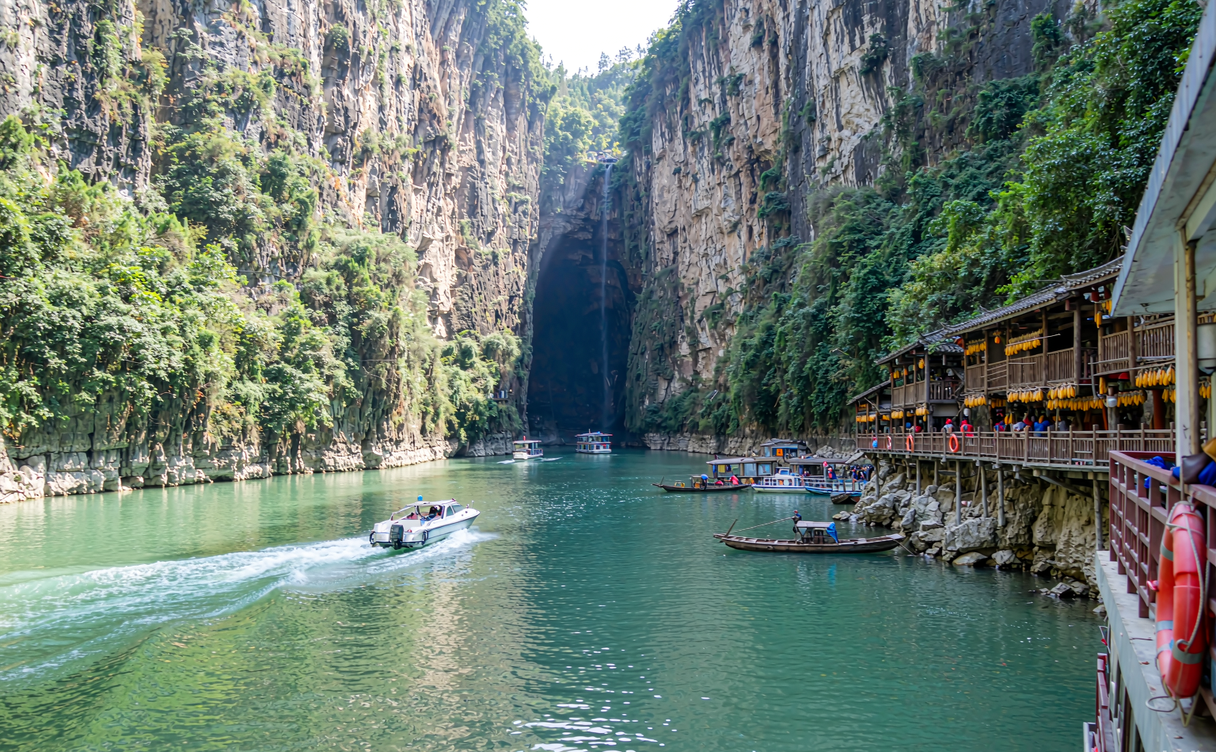
Hubei, China spends most of its reputation on the Yangtze and the dam at Sandouping. Thirty kilometres upstream of the dam, on a tributary that most international itineraries never mention, there is a canyon that looks like the Yellow River’s cousin and behaves like a Swiss lake. This Qingjiang Gallery guide is the case for adding it: a boat run through flooded karst gorges in the Tujia territory of western Hubei, China, where the water reads jade green for most of the year and the cliffs are tall enough to hide the sun until nine in the morning.
The Qingjiang River rises in the west of Enshi Prefecture and runs east to meet the Yangtze in Changyang, a Tujia autonomous county under Yichang. Its lower course was drowned by the Geheyan dam reservoir in the 1990s, and that drowned stretch is the scenic area sold as the Qingjiang Gallery. Roughly 60 kilometres of waterway, cliffs on both sides, and a boat trip that still takes most of a morning.
Book the morning sailing and take the first boat of the day. The Qingjiang Gallery itinerary improves if you are on the water before eight, when the mist is still in the ravines and the Enshi tour groups have not yet formed. Decide at the same time whether you base in Yichang or Enshi, because that sets your drive.
Where the Qingjiang Gallery Sits
Two administrative names confuse visitors, and they are worth sorting out before you book anything.
The Qingjiang Gallery scenic area sits inside Changyang Tujia Autonomous County, which belongs to Yichang. It is often sold as part of an Enshi trip because the prefecture and the county share the same river and the same Tujia culture, and because the upper reaches of the Qingjiang run through Enshi’s Lichuan and Badong. Tour operators treat it as either.
Practical geography:
- Geheyan pier. The main boarding point, about 25 km west of Changyang county town and roughly 60 km from Yichang city.
- Enshi city. The prefecture seat, roughly 200 km west of the pier along the river road. It has the better hotels and the Tusi city.
- Yichang. The bigger transit city, with the airport and the high-speed station, about 100 km east of the pier.
- Wuhan. Some 450 km east, four and a half hours by car, or two and a half on the railway.
The water in the gallery is a reservoir, which means the level moves. In the flood season the colour goes milky with sediment after heavy rain, and in the dry winter it drops enough to expose sandbanks and sometimes to shorten the route. Neither kills the visit; both change it.
How to Get to Qingjiang
The honest version of how to get to Qingjiang is that there is no direct transport to the pier worth naming, and everyone ends up on a coach or a hired car.
From Yichang. The easiest. Take the G318 west toward Changyang, then turn to Geheyan. Around two hours door to door and the road is good. Buses run from the Yichang long-distance station; a hired car lets you stop at the Tujia villages on the ridge.
From Enshi. Around four hours by road. The road follows the river through Badong and the gorge road north of Changyang, which is slow and beautiful and definitely worth doing once.
By rail. Enshi station and Yichang East are both served by high-speed trains from Wuhan and Chongqing. The nearest station to the pier is in Changyang, and the local taxis there will find the pier if you ask.
By air. Enshi and Yichang both have airports. Yichang is the better gateway if the Qingjiang Gallery is the main target, because the dam and the Three Gorges are on the same road, and the Three Gorges Dam guide explains how to combine them sensibly.
Once you are at the pier you are not going anywhere under your own power. It is a boat park.
Best Time to Visit Qingjiang Gallery
April through October, with May, June, September and October the best months. The rule is simple: clearer water means a better trip, and the best time to visit Qingjiang Gallery is the week after a dry spell rather than any fixed date.
The reservoir sits behind the Geheyan dam and behaves like the Yangtze system above it, so heavy rain upstream turns the water grey-brown within a day. After a dry week it comes back to jade. Locals watch the colour more closely than the calendar.
- May and June. Warm enough, vegetation full, and the thunderstorm season just starting. Take a rain shell.
- July and August. Hot in the sun and cold in the shade on the water. Festival events run in the Tujia villages in July.
- September and October. The best combination of clear water, comfortable air and stable weather. Peak holiday crowding on the National Day week, before and after which the pier is quiet.
- November to March. The water is clear and the gorges are spare, but the boat runs on a shorter schedule, the wind on the water is real, and some of the smaller village stops close.
Things to Do at Qingjiang Gallery
The things to do at Qingjiang Gallery are mostly on the water and mostly about getting off it.
Take the full boat run. The standard sailing leaves Geheyan in the morning, calls at two or three village stops, and returns in the afternoon. It is three to four hours round trip and it is the reason people come.
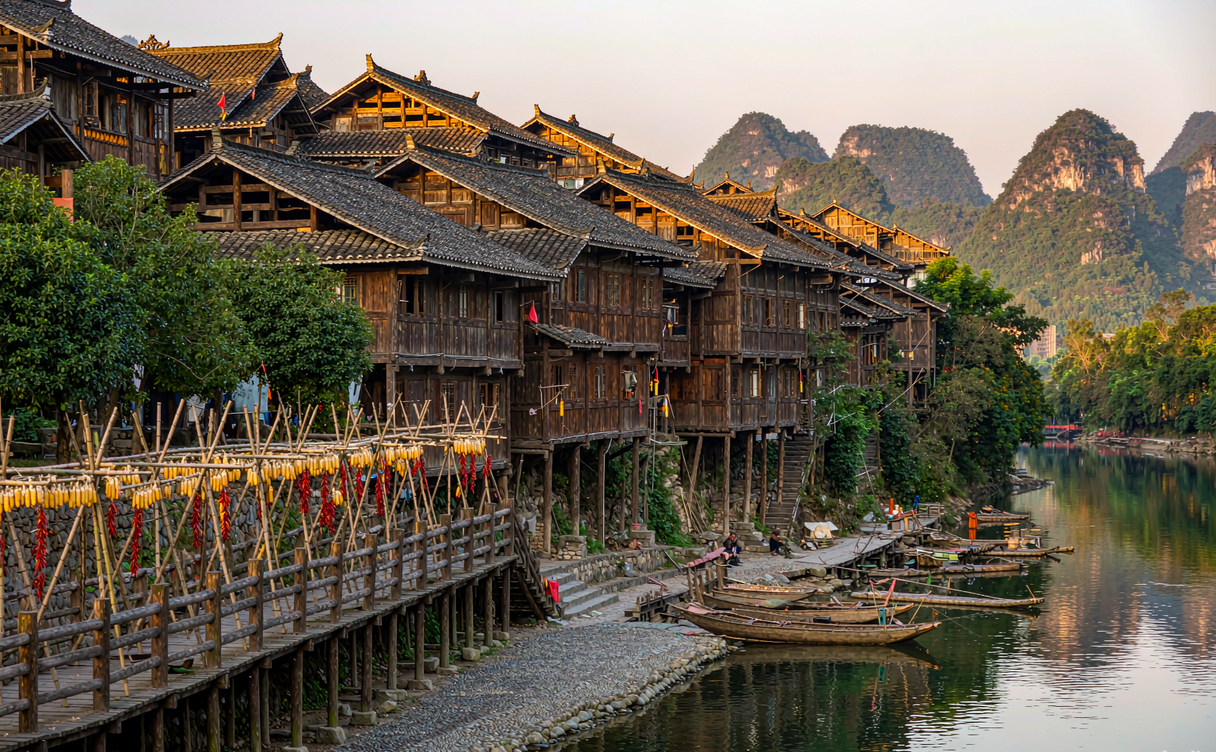
Walk the Tujia village on the bank. Villages are still working places here. Women weave the西兰卡普 brocade on looms outside the door, and it is far better value to buy directly than in a shop in Yichang.
Eat Qingjiang fish on the boat. The reservoir is a commercial fishery and the fish are firm and sweet. Steamed with ginger, or in a sour soup, or simply grilled. This is the single best thing on the trip.
Photograph the cliff-face waterfalls. Several short falls drop straight into the water after rain.
Do the upper gorge separately. Above the reservoir the Qingjiang is a shallow, fast limestone stream — a different day and a different permit.
Combine with Enshi’s canyon. The Enshi travel guide covers the Grand Canyon and the caves, which pair well with a river day.
A Qingjiang Gallery Itinerary for Three Days
Here is a Qingjiang Gallery itinerary that fits a short Hubei stop without feeling rushed.
Day 1 — into Changyang. Arrive from Yichang in the afternoon, check in at Geheyan or Changyang town, walk down to the pier to see the timetable board and understand the sailing list. Dinner on the river road.
Day 2 — the boat. First sailing at around 7:30 am, village stops through the late morning, back to the pier by early afternoon, then a long afternoon and evening in the village. Hot spring if you are staying at Geheyan.
If you have a fifth day, push south to the Wuhan travel guide cities and end in the provincial capital, or read the Yangtze river cruise guide to work it into a longer river journey.
Choose the boat, the day and the base this week. Book the morning sailing, take a wind layer even in July, and keep one afternoon free for the Tujia village rather than rushing back. A Qingjiang Gallery guide is only useful once you know which pier you are leaving from.
Where to Stay
Three bases, each with a different trade-off.
The Qingjiang River Enshi section below the dam is what makes Geheyan worth sleeping in: the closest base to the pier, a handful of hotels and guesthouses, quiet evenings, and the option to be first on the boat. Prices run 200 to 450 RMB in the season.
Enshi city. The prefecture seat: the best hotels, the Tusi city, the night market, and a four-hour drive to the pier. Choose this only if the Qingjiang Gallery is one of several stops.
If you are travelling from the north of the province, base yourself in Wuhan for a night first — the Wuhan food guide will tell you what to eat there before the long run west.
Eating Well
The food of this stretch is Tujia and it is worth more attention than it gets.
- Qingjiang fish, the signature. Ask for it steamed or in a peppery brown sauce, and order it for the whole boat if you are eating on board.
- Tujia smoked pork, cured over a winter of kitchen smoke and sliced thin.
- Hezha, coarse buckwheat paste served as a staple with sour radish.
- Enshi jade tea, a steamed green tea from the hills above the river, good enough to buy on the pier.
A fish lunch on the boat costs around 60 to 120 RMB per person depending on the size of the fish. In Changyang town, a bowl of noodles is 15 to 25.
Mistakes to Avoid
Do not buy the cheapest ticket without asking whether the sailing is the full run or a short local shuttle. The two are different products and the shorter one is often sold at almost the same price.
Do not plan the boat on the same day as the Three Gorges Dam visit in the wrong order — you will be back at the pier tired and both sites deserve daylight.
Do not wear sandals. The pier deck can be hot, the boarding ramp is a barge plank, and the village walk after the boat is gravel and cow manure.
Do not assume phone signal across the water; it holds in the bays and drops out in the narrows.
Do not skip the insect step in summer. The bank vegetation is bad for midges at dawn and there is no shop on the water.
Book the first sailing, base yourself at Geheyan or Changyang, and give the gorge a full day. If your route runs through Wuhan or Yichang, read the relevant city guide first, and leave the last evening for the fish.
For wider context on the province, China Daily’s Hubei and Yangtze travel coverage reports the river and dam projects better than any guidebook, and it is the most useful English source for sailing schedules during the flood season.
The Qingjiang Gallery is a working reservoir with a working fishing economy inside a canyon made for pictures. It is not remote and not wild, and it is far better for that. Take the early boat, eat the fish, and buy the brocade at the loom, and the day in Hubei, China will sit comfortably beside the bigger names on your list.