

You have almost certainly eaten in Shaxian. It is the tiny district south of Sanming in inland Fujian that spawned the most widespread restaurant chain in China, the place where a bowl of wontons, a plate of peanut-sauce noodles and a clay pot of meat soup cost less than a coffee. What most travellers never do is go and look at it, which is a shame, because this Shaxian travel guide is about a town that is genuinely worth the detour even if you came for the food and not the scenery. I spent three days here in November 2025 eating my way along the back streets, and came away with a stubborn feeling that the reputation is accurate and the reality is better.
How to get to Shaxian
Shaxian is in the middle of Fujian, roughly 200 kilometers west of Fuzhou and about 260 kilometers north of Xiamen, which is why the honest answer to how to get to Shaxian is: come by train and accept one bus transfer. The district has no high-speed station of its own. Most trains stop at Sanming North (三明北) on the Ningde-to-Fuzhou line, roughly 25 kilometers north, or at Sanming Station on the older line, about 20 kilometers away. From Fuzhou South, Sanming North is around an hour; from Xiamen North, between 1.5 and 2.5 hours depending on the service.
From either station, a shared taxi or a county bus into Shaxian town takes 30 to 45 minutes and costs RMB 15 to 30 by cab, less by bus. Buses leave from the Sanming North coach terminal until early evening. If you are pairing the trip with a coastal leg, our Xiamen travel guide is the natural companion piece, and you can run Fuzhou to Sanming to Xiamen as one clean clockwise route. Fly into Fuzhou or take a direct flight from wherever you flew in, since inland Fujian has no international airport.
Take the Fuzhou south train, get off at Sanming North and share a taxi into town. It is the fastest possible way to reach Shaxian and it costs barely more than the local bus.
Shaxian snack streets: where the food actually is
Shaxian is small enough that you can walk the whole eating core in twenty minutes, which is the strange thing about it. The famous row is along the old market area east of the Sanming boundary, where unmarked counters sit next to half-demolished building sites and the smell of steaming bamboo baskets cuts through everything. Locals call these Shaxian snack streets, and there are three separate ones: the old market lane, the stretch around the district government road, and the newer cluster near the Culture Park where the younger vendors set up.
For a full rundown of what to eat in Shaxian, this section is it. Go early and go late. I ate at 6:30am on my first morning at a counter where an old man was still folding the pleats of 蒸饺 by hand, and the whole room was six workers in pyjamas. By 11am the tour groups arrive, the baskets are still steaming but the good dumplings are gone, and the lanterns come out at 5pm for the evening 卤味. My personal rule in this town is that the best bowl is the one you eat at the counter before the rush.
What to eat in Shaxian
The canon here is short and worth learning, because ordering well is the entire skill. The four classics the locals call the si da ming dan, the four famous leading ladies, are the steamed dumplings (蒸饺), the wonton (扁肉), the noodles with peanut sauce (拌面) and the clay pot soup (炖罐). Order them together for a set meal that runs RMB 8 to 15, which is the cheapest sit-down food in China outside a village wedding.
Then the eight supporting dishes, or ba da jin gang: the willow-leaf bun (柳叶包), the scallion-pork bun (葱肉包), the shaomai, the taro dumpling (芋饺), the sweet potato dumpling, the fried rice cake, the braised pork with soy, and the 卤味 platter. For the fuller regional picture behind all of it, our Fujian Min cuisine guide explains why Fujian cooking splits into the coastal Min river tradition and the inland mountain tradition, and Shaxian sits right on that fault line, which is why it eats more like the hills than Xiamen does.
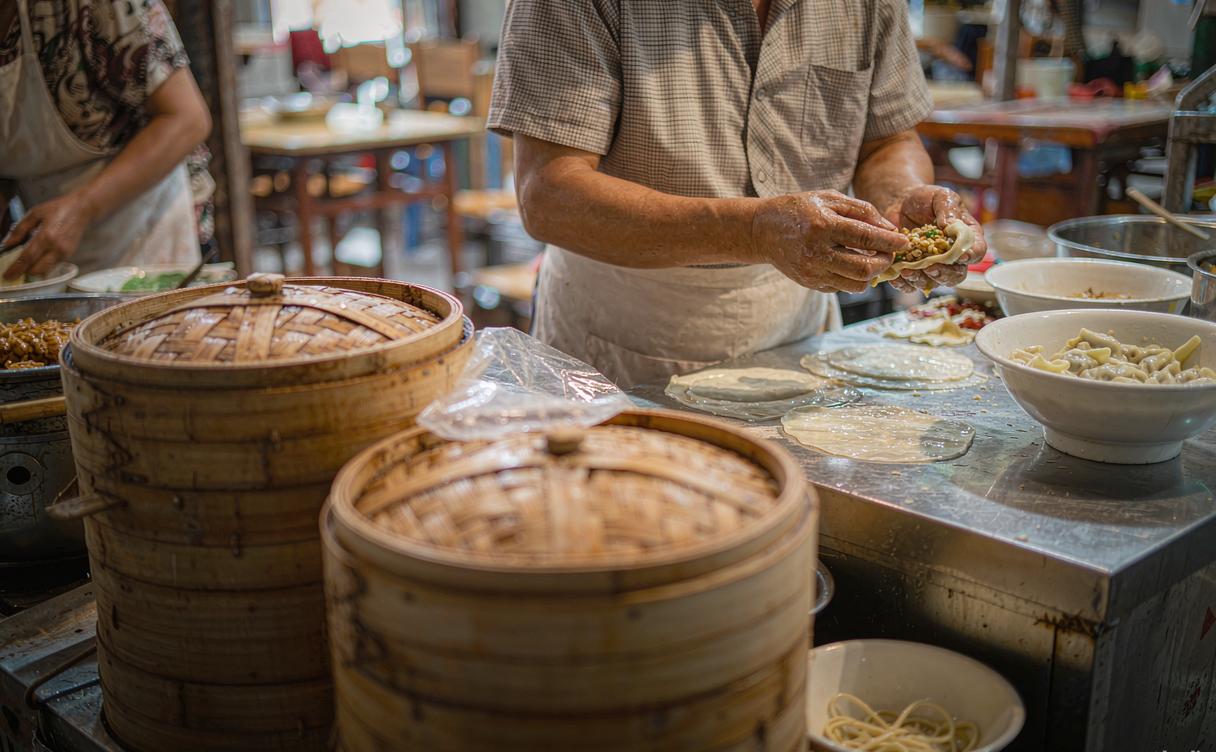
The dumpling, the wonton and the pot
The detail that changed my visit: the Shaxian wonton is called bianrou and it is not a Cantonese wonton. The wrapper is thicker, the filling is minced pork with a little spring onion, and the broth is a clear bone soup with a splash of sesame oil, not the peppery red soup you get elsewhere. Eat it first, from the bowl, with vinegar and a bit of chopped coriander.
The clay pot is the dish worth sitting down for. 炖罐 is a small black earthenware pot, sealed, simmered for hours, and sold for RMB 6 to 12 depending on the contents: chicken with goji, pork rib with candy tangerine peel, duck with yam, pork knuckle with lotus root. You pick it up from a stack of pots under a cloth in the corner and the shop steams it while you eat the noodles. It is the single best value in the town and almost every foreign visitor I met had been pointed at dumplings instead.
Why Shaxian snacks ended up everywhere
Part of the fun of visiting is understanding the export, and Shaxian snacks are one of the few Chinese regional foods that travelled out of one county and rewritten itself everywhere it landed. Shaxian snacks reached maybe 60,000 to 80,000 outlets across China, most of them tiny family shops run by people from this one district, and the chain grew out of people taking a basket and a steamer with them to whatever city they moved to. Workshops here in Shaxian county Fujian still run the same way: the folding table, the stacked baskets, the pot of broth kept warm all day, and a shopkeeper who will cook for you while checking his phone.
If you want the outside view on how a regional repertoire became a national chain, China Daily covers the Fujian food boom in its Fujian travel and food coverage, and it is a fair companion to what you will see on the street. I would also send you to our Fujian buddha jumps off the wall guide if you are building a Fujian food itinerary out of Fuzhou, because the fancy version of the province’s cooking and the Shaxian version are two ends of the same appetite.
A Shaxian itinerary with somewhere to go
Do not make this a food stop with nothing around it. Two days is right. Day one: in by midday, the market lane at 4pm, dumplings and bianrou for dinner, clay pot at the counter, early night. Day two: Taining Danxia landform, about 1.5 hours north by bus, for the red cliffs and the bamboo river.
Day three if you have it: the Fujian tulou. They are a long haul from here, but if your loop already runs south, our Fujian tulou villages guide will tell you how to fit the earth buildings into a Fujian week without backtracking.
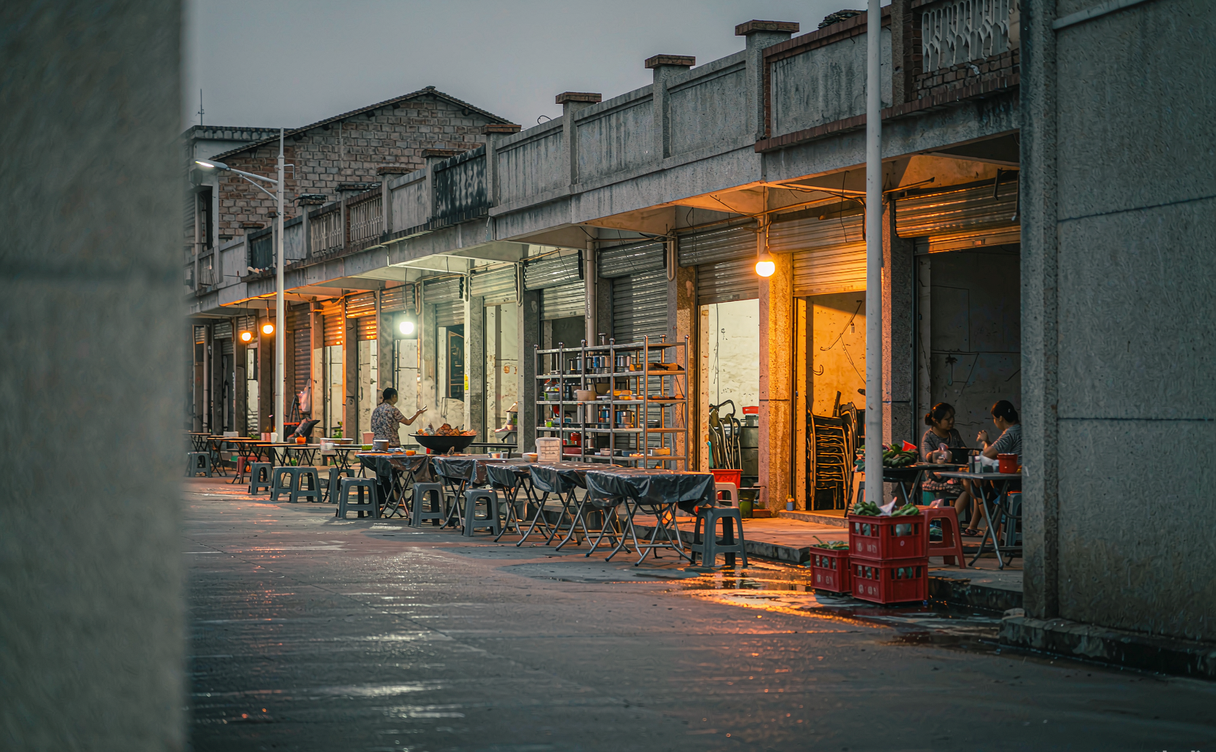
Two nights here is enough to eat the whole canon twice and still see Taining. Book the Sanming North train the night before, because the good counters close early and you want a full day.
Where to stay, and what it costs
Shaxian town is small, so the choice is narrow: a county hotel near the district centre at RMB 130 to 220 a double, or a business hotel out by the ring road for less. Do not expect international chains. The old market lane has three or four guesthouses above the snack shops and they are clean and loud in the morning.
Budget about RMB 180 to 280 a day here, and that is with two proper meals and a shared taxi. Prices in Shaxian county Fujian are the lowest I have found in a county town anywhere in the province. Eating is not the expense; transport is, since the cab from Sanming North is a fixed, unavoidable RMB. Rooms do sell out during the spring festival period when relatives come home, and the whole district fills for the snack-culture festival in the autumn.
Practical notes that will save you money
Do not photograph the vendors without asking first; several of them have been photographed thousands of times and some find it tiresome. Do not order the largest portion, because the classic set is built for one person and the portions are already right. Do not drink the tap water; the broth is served boiled. And if the shop only has a Chinese menu, point at the pot and the basket rather than guessing, which in my experience gets you the better dish two times out of three.
Come to Shaxian for two reasons and it will not disappoint: the food is the real thing rather than the chain version, and the town is a working Chinese county town that has been thoroughly written about as a subject and barely visited as a place. Eat the wonton at seven in the morning, walk the lanes at dusk, and get the train out before the afternoon heat.
This Shaxian travel guide is the short detour most Fujian itineraries skip. Put two nights here between Fuzhou or Xiamen and the earth buildings, and treat the snack streets as the actual reason to come rather than the city around them.