

If you drive north out of Chengdu toward the alpine lakes of Jiuzhaigou, you pass through a walled town that was already a frontier garrison when the road was only a horse track. Songpan sits at about 3,000 metres in the northern part of Sichuan’s Aba Tibetan and Qiang Autonomous Prefecture, and for most of the last century it existed mainly as a staging point — somewhere to change vehicles, buy supplies and breathe noticeably harder. This Songpan travel guide is written for the visitor who wants to stop there rather than drive straight through, and who wants to know what a night at altitude actually costs before committing to it.
The older name for the place is Songzhou, and the Ming dynasty fortifications that give the town its silhouette were raised in the 1380s along the trade road linking the Chengdu plain with the Tibetan plateau. That road still matters here, except now it carries coaches full of visitors heading for a World Heritage river valley.
If this is your first trip into the highlands of China, read our China travel guide for first-timers before you book anything — altitude, weather and transport all behave differently up here.
Why Songpan Deserves a Night, Not Just a Lunch Stop
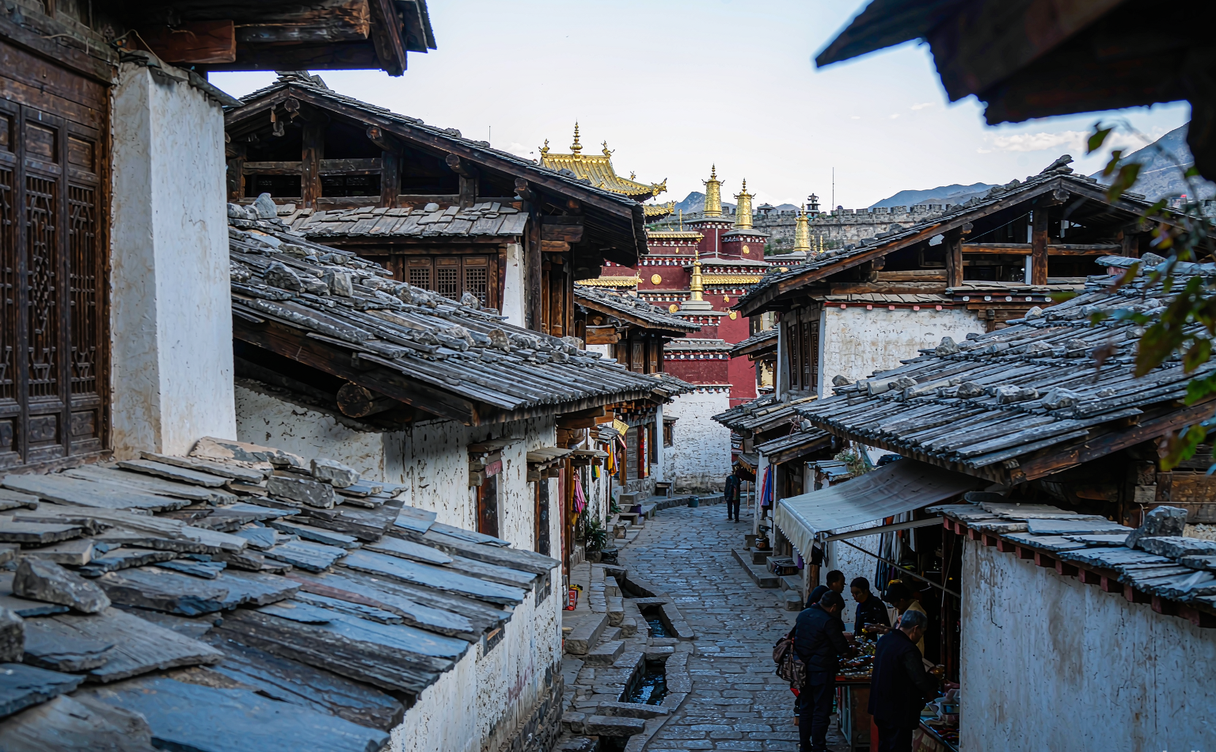
Most foreign visitors treat Songpan as pure logistics: a bed between Chengdu and Jiuzhaigou. That is a mistake in both directions. The old town inside the walls is a genuine piece of frontier architecture — rammed-earth ramparts roughly a kilometre long, two-tiered gate towers, and lanes behind them where households still keep livestock through the cold months. The upper towers are Qing repairs over Ming bases, and the whole circuit takes an hour if you take it at the pace the altitude demands.
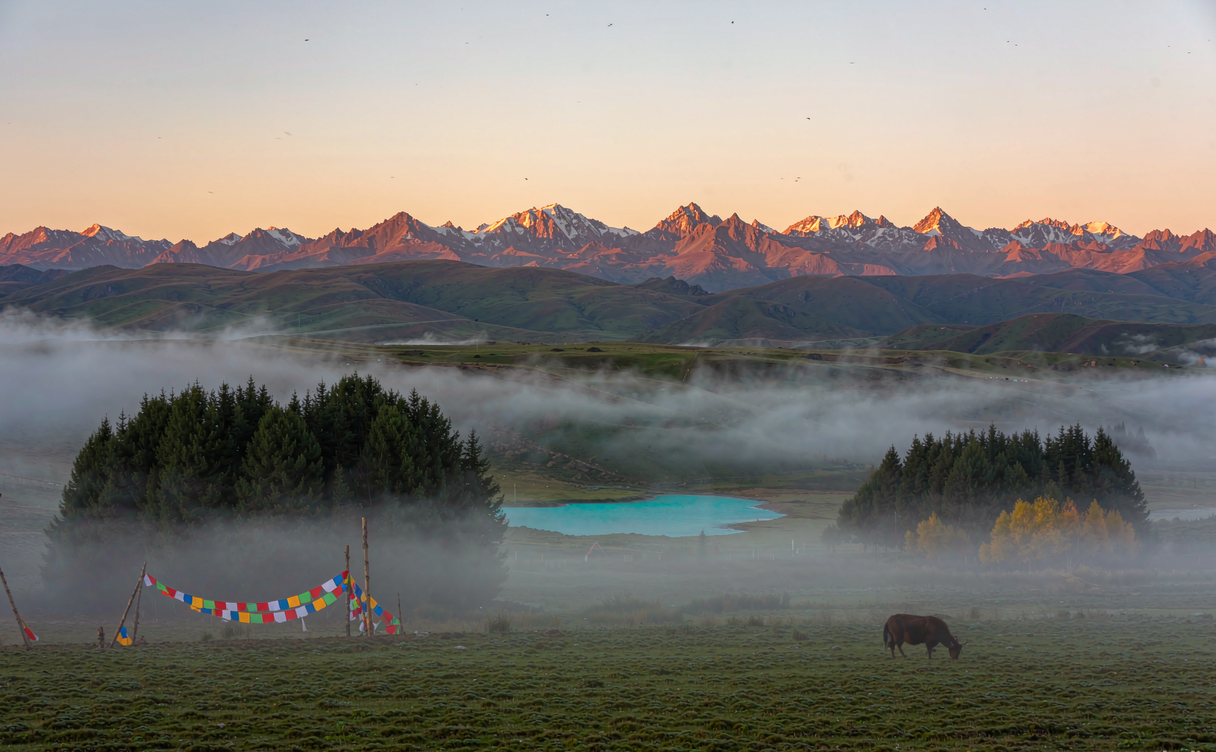
Walk a short way south of the centre and the ground opens out at the headwaters of the Min River, which runs down to the Yangtze from here. Nothing about it looks dramatic from the road, which is precisely why it is worth walking to. The area is home to Tibetan and Qiang communities, and the cultural register shifts the moment you leave the plain: butter tea on the shop counters, whitewashed chortens at the household gates, and far more visitors in Tibetan dress than you will see anywhere between Chengdu and Xi’an.
Things to Do in Songpan Beyond the City Wall
The things to do in Songpan are concentrated, and that is good news for a short visit: walls, market, one high valley, one monastery town.
Begin at dawn on the ramparts. They face east, catch the light first, and for the first half hour you will have the gate towers almost to yourself. Come down from there into the market street, where the morning business is yak butter, wool, potatoes from the lower valleys and — in late spring and early summer — cordyceps sold by weight by sellers who can tell you exactly which slope it came from.
Within the old town, a cluster of modest sites rewards a slow morning: a Confucian school compound rebuilt in the Qing manner, a town-god temple with a roof carried up into swallowtail ridges, and several courtyard guesthouses converted from merchant houses with the timber frame left honestly exposed. Out at Chuanzhusi, about 30 km south of the county seat, the Jiuzhaigou Huanglong Airport sits in a broad valley and the Red Army Long March monument stands on the flat ground above it, a tall white obelisk most visitors photograph from a bus window without ever stopping.
For serious walking, the Huanglong valley lies about 56 km north of town and counts among the highest-altitude scenic areas open to visitors in China, its terraced limestone pools climbing from around 3,200 m to nearly 3,600 m. A full guide to Jiuzhaigou and Huanglong covers ticketing, the shuttle system and how many hours each leg needs. Beyond it, Xuebaoding, the Snow Treasure Mountain, is the highest peak in the range and a long day’s scramble for anyone properly acclimatised. Both valleys were inscribed by UNESCO in 1992, and the UNESCO World Heritage listing for Huanglong describes the calcified terrace formation in the official language.
How to Get to Songpan
The honest answer to how to get to Songpan depends on where your journey begins and how much altitude you want to meet on day one.
From Chengdu, the new Sichuan–Qinghai railway now reaches this corridor, with Songpan and Huanglong among the stops; expect roughly 2.5 to 3.5 hours from Chengdu and fares in the region of ¥110–180 by second class. If train travel in China is new to you, our guide to riding China’s high-speed trains walks through passport checks, ticket collection from the machine or counter, and seat selection.
The older option still works: a coach from Chengdu’s Chindu bus station to Songpan covers some 330 km in seven to nine hours over mountain road, ¥70–110. It is cheaper and it lets you watch the valley climb, but it is a hard day. Driving yourself is common among independent travellers and costs much the same once fuel and tolls are counted. The road from Jiuzhaigou to Songpan runs roughly 180 km and four to five hours, climbing steadily the whole way.
Best Time to Visit Songpan
The best time to visit Songpan is June through September. The grasslands around the county turn green, wildflower patches come up along the road shoulders, and the daily rhythm settles into mild sunny mornings with cold evenings — daytime highs near 20°C in July, nights dropping to about 5°C. Late September and October bring the larch colour and the clearest long views of Xuebaoding, at the price of sharper cold and heavier traffic on the Jiuzhaigou road.
Winter is a different proposition. From December to March the town is bitter — sub-zero nights, hard frost on the walls, occasional closures on the higher passes. The upside is empty streets and serious light for photography. Come then and plan on the Huanglong shuttle running shortened hours, and check road conditions the morning you drive.
Altitude is the real filter, not the season. Most of the old town sits between 2,850 and 3,100 m, and the Huanglong boardwalk goes higher still. Give yourself a full day in Chengdu at low elevation before you sleep here if you can.
Where to Stay and What to Eat
Two clusters make sense. Inside the old town, converted courtyard guesthouses put you two minutes from the walls and the markets, with rooms running ¥180–400 in summer and falling sharply outside peak months. Near Chuanzhusi, hotels gather around the airport and the monument, which suits an early departure from Jiuzhaigou Huanglong Airport but adds thirty minutes of driving to reach the walls.
Food here is worth more than its reputation suggests. Breakfast should be a bowl of salted butter tea and a plate of tsampa; the Tibetan version served in the Songpan lanes is rougher and more savoury than the sweetened tourist version sold elsewhere. Look for yak stir-fried with root vegetables, hand-grilled potato cakes known locally as 洋芋糍粑, and mutton stews through the winter. Dinner for two with a carafe of barley wine lands around ¥120–200. In August, roadside stalls sell wild mushrooms from the surrounding slopes, and they are genuinely good — ask which day’s pick it is before you order.
Two days is enough here, and that is the number I would book. Take one morning for the walls and the market, one full day for the high valley, and keep the third night in hand in case the altitude hits harder than you expected.
A Songpan Itinerary That Fits Around the Big Valleys
A clean Songpan itinerary uses the town as a two-night base. Night one is arrival, a slow walk of the walls and an early sleep. Night two gives you either the Huanglong valley in the morning or an early drive into Jiuzhaigou with a return by afternoon, depending on how your body has handled the height. Three nights lets you do both properly without hurrying, and it is the version I would recommend if you are travelling with anyone over about sixty.
The region pairs naturally with Chengdu. A Chengdu, Dujiangyan and panda base morning bolts onto the same trip easily, because the railway line makes the return straightforward, and our guide to the best time to visit China will help you weigh this corner of Sichuan against the coast or the east.
Practical Pitfalls
Buy travel insurance that covers altitude, or at least know where the descent route is — the road to the plain is long, but descending is the cure. Drink more water than feels necessary, skip alcohol on the first evening, and walk up slowly rather than talking your way up. Carry small-denomination cash for the market and for the old-town guesthouses, since card payment is universal in Chengdu and much less reliable at 3,000 m. And understand that the stone lanes inside the walls are genuinely uneven; good boots beat a stylish shoe.
The walls are free to walk and there is no admission charge to simply being in the Songpan ancient town in Sichuan — the best Songpan itinerary I know runs the ramparts at dawn, the market by eight, and the valley in the afternoon, all within walking distance of the same bed. Guided walks of the ramparts and the smaller temple compounds are available through your guesthouse for ¥100–200. The one thing I would skip on a short visit is the costume photoshoot on the gate tower — it is heavy, it costs more than it is worth, and the light is better twenty minutes earlier anyway.
Use this as your base camp: book two quiet nights in the old town, then add the Huanglong day and a Jiuzhaigou morning around them, and you will have covered both the wall and the water on one trip.