

If you spend any time eating in Sichuan, you will eventually meet the dish that locals cook more often at home than any other. Twice cooked pork, known in pinyin as hui guo rou, is the quiet champion of Sichuan home cooking. It is not the flashiest plate on the table, and it rarely appears on the glossy banquet menus that tourists photograph. Yet ask a Chengdu grandmother what she makes for a Tuesday dinner and the answer is often this: fatty pork, sliced thin, flash fried with leeks, garlic, and a spoonful of fermented bean paste until the edges curl and crisp.
This guide explains what twice cooked pork is, where it came from, how it is made, and where to eat the best version on a trip to Sichuan. We will also answer the questions travelers most often type into search boxes, like what hui guo rou actually means and whether the dish is as spicy as its reputation suggests.
What Is Twice Cooked Pork Made Of
The name describes the method rather than the ingredients. Sichuan twice-cooked pork starts with a piece of pork belly that is first simmered whole in water with ginger, scallions, and sometimes a little cooking wine. That is the first cooking. The meat is then cooled, sliced, and returned to a hot wok for a second, fast stir fry. Hence the name twice cooked.
The classic version, hui guo rou, relies on three things that define its flavor. The first is pork belly with a good ratio of fat to lean, because the fat keeps the slices silky rather than dry. The second is pixian bean paste, a fermented chili and broad bean paste from Pixian county near Chengdu that gives the dish its deep, salty, slightly funky red base. The third is a vegetable that can stand up to the pork. In Sichuan the traditional choice is green garlic shoots, called suan miao, which taste like a sharper, more aromatic version of leek. Outside the province, restaurants often substitute leeks or cabbage stems, but the soul of the dish stays the same.
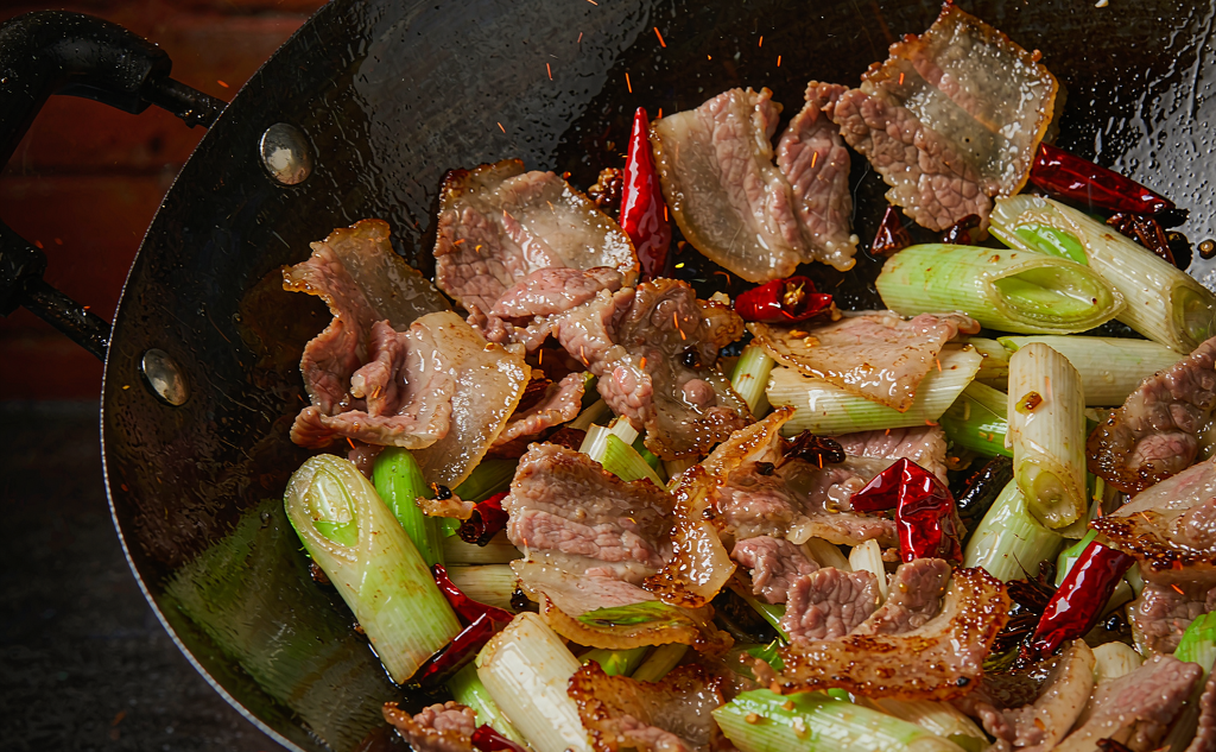
A proper plate should look glossy and red tinged, never swimming in sauce. The pork curls into little cups as the fat renders, and the bean paste clings to every surface. That balance is why Sichuan home cooking prizes the dish: it is cheap, uses pantry staples, and turns a humble cut of pork into something craveable.
The History Behind Hui Guo Rou
Like many great regional dishes, hui guo rou grew out of practical necessity. In the towns and villages of Sichuan, pork was a luxury saved for festivals and the arrival of guests. Cooks learned that simmering a whole piece of belly, then slicing and re frying it the next day, used leftovers without wasting a scrap. The second frying also helped preserve the meat before refrigeration existed. Over time the technique moved from frugal households into restaurants, and by the twentieth century twice cooked pork had become a standard of Sichuan home cooking taught to nearly every home cook in the province.
The dish is closely tied to the wider story of Sichuan cuisine, a style built on the clever use of chili, fermented beans, and Sichuan peppercorn to create the famous numbing and spicy sensation called mala. If you want to understand the pantry that makes hui guo rou possible, our sichuan-cuisine-guide breaks down the core ingredients, from pixian bean paste to the regional peppercorns that give the food its tingling finish.
How Twice Cooked Pork Is Cooked
The method is simple to describe and harder to perfect. Start by simmering the pork belly in plain water until it is just cooked through but still firm. Some cooks add ginger and scallion to the poaching liquid; others keep it bare so the pork’s flavor stays clean. Pull the meat out, let it cool completely, and then slice it as thin as you can manage, about two millimeters. Thin slices mean more surface area to crisp in the wok.
Heat a wok until it smokes lightly, add a small amount of oil, and lay the pork in. Let it sit undisturbed for a moment so the fat renders and the edges brown. Then push it to the side and add pixian bean paste, stirring it in the oil until the raw edge cooks off and the kitchen smells intensely savory. Toss in garlic, ginger, and the green garlic shoots or leeks, then finish with a splash of soy sauce, a touch of sweet fermented sauce called sweet bean paste, and sometimes a few drops of rice wine. The whole second stage takes two or three minutes. Overcook it and the pork toughens; the goal is pork that is crisp at the rim and tender in the middle.
This fast, high heat finish is the signature of Sichuan home cooking: quick and built around one or two bold seasonings rather than a long list of subtle ones.
Is Twice-Cooked Pork Spicy
The short answer is yes, but mildly, and nothing like the mouth burning heat of a dry fried chili dish. The red color comes mostly from fermented bean paste, which is salty and earthy more than hot. Real Sichuan twice-cooked pork does include some heat, and many home cooks add fresh chilies, but the defining sensation is savory richness from the pork fat and bean paste, not pure fire.
What many first timers notice instead is mala, the numbing tingle from Sichuan peppercorn. Traditional hui guo rou does not always contain peppercorn, but neighboring dishes do, and the flavor family is unmistakable. If you are sensitive to chili, ask for a milder version; most Chengdu restaurants will dial the heat down while keeping the bean paste flavor intact.
Where to Eat Twice Cooked Pork in Chengdu and Sichuan
You do not need a fancy restaurant to eat good hui guo rou. In Chengdu the best versions often turn up at small neighborhood spots where the menu is short and the wok is always hot. Look for places where the pork is sliced to order rather than pre cooked in bulk. A telltale sign of quality is curled, slightly blistered slices rather than flat, steamed looking ones.
For travelers, Chengdu is the natural base. The city is compact, walkable, and obsessed with food, and nearly every local eatery serves some take on Sichuan home cooking. Our chengdu-travel-guide lists the neighborhoods where you can hop between a bowl of noodles and a plate of twice cooked pork in a single evening.
Outside the capital, the dish appears everywhere from Chongqing side menus to rural guesthouses in the countryside. Wherever you are in Sichuan, a home style restaurant will have it. The external reference for the broader culinary tradition is useful too: the Sichuan cuisine overview on Wikipedia explains how hui guo rou fits into the regional repertoire alongside mapo tofu and kung pao chicken.
If you are building a longer China itinerary around food, our best-things-to-do-china covers regional eating experiences from street snacks to cooking classes, and our china-travel-guide-for-first-timers explains how to order, pay, and navigate menus that may not have English translations.
Twice Cooked Pork Versus Other Sichuan Dishes
Travelers sometimes confuse hui guo rou with other pork dishes. It is not the same as kung pao chicken, which is poultry with peanuts, nor is it mapo tofu, which is soft bean curd in a chili sauce. What sets twice cooked pork apart is the two stage cooking and the use of pork belly rather than lean meat. The result is richer and chewier than most stir fries, and it pairs perfectly with plain steamed rice to cut the salt and fat.
In Sichuan home cooking, hui guo rou anchors a simple meal: one plate of pork, one bowl of rice, one stir fried green vegetable, and dinner is complete. That everyday role is exactly why it earns the title of the province’s most famous home dish.
FAQ
What is hui guo rou
Hui guo rou is the pinyin name for twice cooked pork, a Sichuan dish of simmered then stir fried pork belly with fermented bean paste and garlic shoots. You do not need the written characters to order it; saying hui guo rou or pointing at a photo works in most restaurants.
Is twice-cooked pork the same as crispy pork belly
No. Crispy pork belly is deep fried and served with crackling skin, while Sichuan twice-cooked pork is simmered and then quickly stir fried, so the skin stays soft and the fat renders rather than crisps hard.
Can I make hui guo rou without pork
You can follow the same two stage method with firm tofu or thin sliced chicken thigh, though purists would call the result a different dish. The bean paste and garlic shoots carry most of the flavor, so the swap still tastes recognizably Sichuan.
What drink goes with twice cooked pork
A cold local beer or a cup of mild tea balances the salt and fat. In Sichuan many people pair it with rice wine or a light lager, and the numbing heat is tamed nicely by something cold rather than something spicy.
Tips for Ordering and Cooking at Home
When you order in a restaurant, look for hui guo rou on the menu and expect a red, glossy plate. If the pork looks pale and watery, it was likely rushed; a good version should have blistered, curled edges. At home, the most common mistake is slicing the pork too thick or skipping the cool down step, which makes the meat steam instead of sear. Chill the simmered belly for at least thirty minutes, sharpen your knife, and keep the wok screaming hot.
Twice cooked pork rewards practice more than fancy equipment. Once you master the rhythm of simmer, slice, and flash fry, you have a reliable weeknight dish that travels straight from the kitchens of Sichuan home cooking to your own stove.