

The first time you watch a Guangzhou yum cha cart lady make cheung fun, you barely have time to register the motion. She pours a pale rice batter onto a long perforated stainless tray, slides it into a stacked steamer, and ninety seconds later drags it out, flips the tray over a board, and with a few swift passes of a long steel blade rolls the sheet into a glossy white cylinder. No frying, no boiling — just steam and a batter that sets into something between a noodle and a cloud.
That speed is the whole secret. Rice noodle rolls, known in Cantonese as cheung fun and across English menus as “rice noodle rolls,” are one of the few dim sum dishes cooked in front of you that finish in under two minutes. Get the batter right and the texture is unforgettable: slippery, faintly elastic, cool against the heat of the sauce. If you have ever wanted a rice noodle rolls recipe that actually comes out silky at home, the technique matters far more than the ingredient list — and the technique starts with understanding what the dish is.
What Exactly Is Cheung Fun?
Cheung fun is a steamed sheet of rice milk, rolled up while still warm and cut into fingers. At its core it is nothing more than ground rice, water, and a little oil — no egg, no wheat flour in the classic version. The batter is spread paper-thin on a hot tray, steamed until just set, then rolled. Fillings are laid on before steaming: whole shrimp, marinated beef, char siu pork, mushroom, or just a beaten egg and scallion.
The name tells you the method. 肠粉 literally reads “intestine noodles,” a nod to the tubular shape, not the contents — there is no intestine in the dish. In Guangdong you will hear 拉肠 (la cheung, “pulled rolls”) for the street-stall version where the maker drags the tray out by hand, and 猪肠粉 (jyu cheung fun) for the plain, unfilled roll sold as a snack with sweet sauce rather than as part of a cheung fun dim sum spread. Both come from the same batter; only the filling and the occasion change.
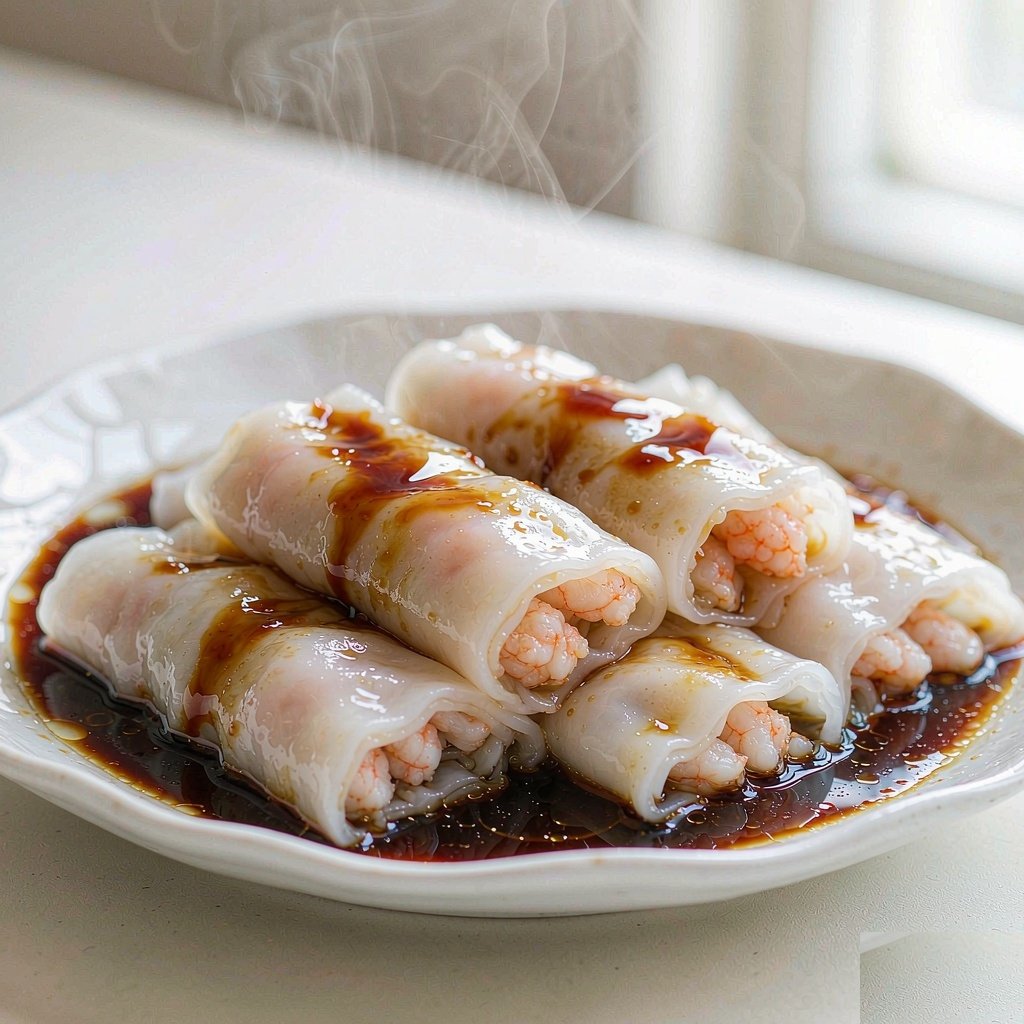
What Does Cheung Fun Taste Like?
If you expect a punch of spice, you will be puzzled. Plain cantonese rice rolls are almost neutral — milky, soft, with a clean rice fragrance and a texture that does the talking. The appeal is mouthfeel: a smooth, slightly chewy slip that yields without resistance. The flavor arrives with the sauce.
That is why the gap between authentic cheung fun vs western versions you meet in a food court is so wide. Outside Guangdong the rolls are often pre-made, kept warm under heat lamps, and drowned in a thick generic sauce. In a proper Cantonese tea house the roll is made to order, still trembling from the steamer, finished with a thin savory-sweet soy glaze you taste more than see. Texture beats seasoning every time, which is the part first-timers miss.
The Core Ingredients, With Amounts
The beauty of a home cheung fun recipe is how short the shopping list is. For a batch that serves two to three:
Core batter:
- 100 g rice flour (long-grain, finely ground)
- 30 g wheat starch (澄粉, gives translucency and snap)
- 20 g tapioca or corn starch (keeps the sheet from tearing)
- 320 ml cold water
- 1 tablespoon neutral oil, plus extra for oiling the tray
- a pinch of salt
Fillings (pick one or mix):
- Shrimp: 150 g peeled, butterflied, lightly salted and peppered
- Beef: 120 g ground beef with a dash of soy, sugar, sesame oil, and a little baking soda for tenderness
- Char siu: 100 g sliced thin
- Egg and scallion: 2 eggs beaten with 2 chopped scallions
The sauce (enough for the batch):
- 3 tablespoons light soy sauce
- 1 tablespoon oyster sauce (or mushroom sauce for vegetarian)
- 1 teaspoon sugar
- 1 teaspoon sesame oil
- 4 tablespoons water
- a pinch of white pepper
Simmer two minutes, then add an optional half-teaspoon cornstarch slurry for gloss. What is cheung fun made of, in one line: rice, water, starch, and a savory glaze. The cheung fun rice flour ratio that works in a normal kitchen is roughly one part flour to three parts water, with the wheat and tapioca starches making up about a third of the dry weight to keep the sheet from going chalky or brittle.
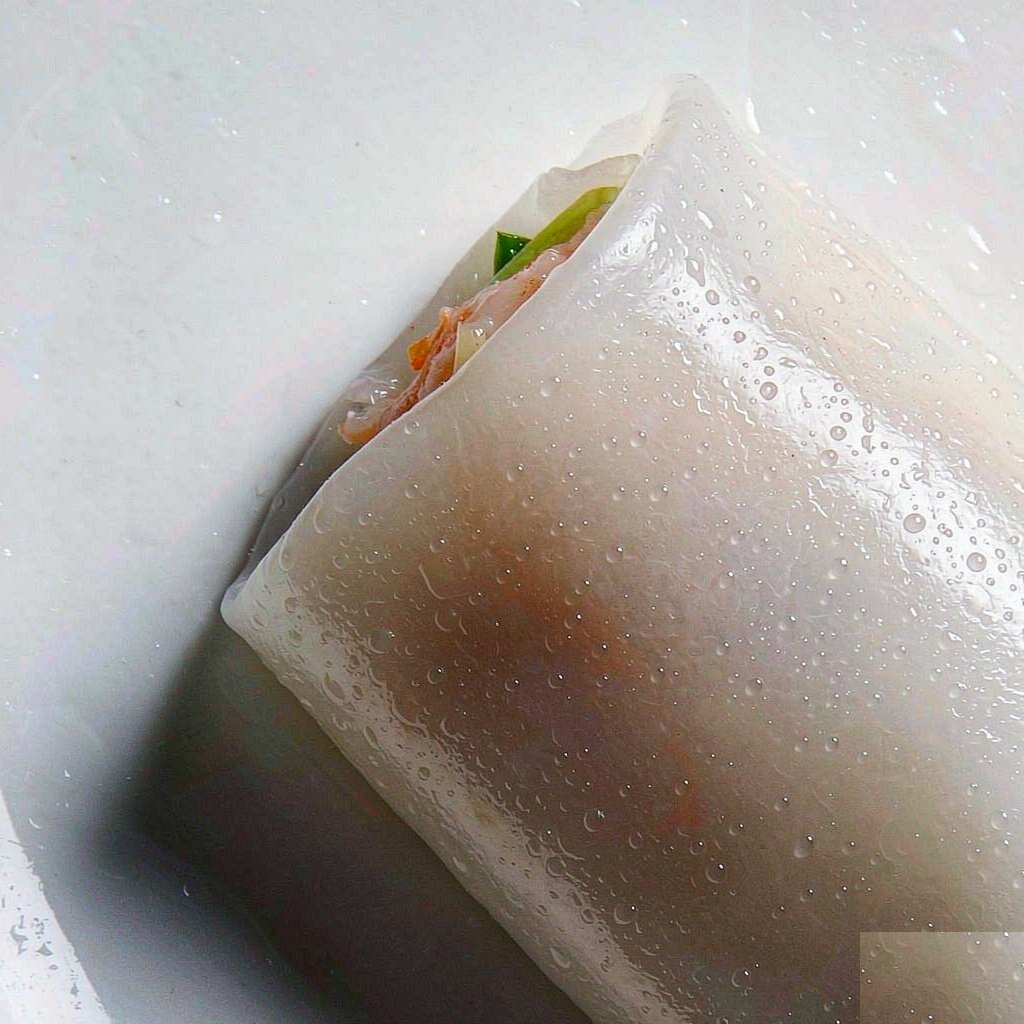
Step-by-Step: How to Make Rice Noodle Rolls at Home
You do not need a stainless steamer tower. A wok with a rack and a flat plate will do. Here is a cheung fun step by step that works in any kitchen, and a rice noodle rolls recipe easy enough for a weeknight.
- Whisk the dry flours with the water until perfectly smooth, then stir in the oil and salt. Rest the batter 20 minutes so the starch hydrates and any foam settles.
- Mix your filling and have it ready by the stove — once steaming starts, everything moves fast.
- Bring a steamer of water to a rolling boil. Lightly oil a flat metal or ceramic plate (a 9-inch pie plate works well).
- Ladle a thin layer of batter — about 2 to 3 mm — onto the plate, tilt to cover, and scatter the filling on top. For egg rolls, pour the beaten egg over the batter.
- Steam on the rack, covered, for 90 seconds to 2 minutes. The sheet is ready when it looks opaque and pulls away from the edges but is still soft.
- Lift the plate out, loosen the edge with a spatula, and roll the sheet from one side using the spatula or a butter knife. Slide it onto a warmed plate.
- Repeat with the rest of the batter, re-oiling the plate each time. Stack the rolls as they come.
- Whisk the warm sauce and pour it over the rolls just before serving. Serve immediately — they stiffen as they cool.
How to make rice noodle rolls without a steamer: if you have no steamer at all, use a lidded wok or a large pot with a trivet and a heatproof plate; the key is trapped steam, not the equipment. Some home cooks use a non-stick loaf pan set inside a bamboo steamer. The rolls will be slightly less translucent than a professional tray but taste the same. The mistake that ruins most first attempts is batter that is too thick — keep it pourable, like thin cream.
The Sauce Is the Dish
A rice noodle roll with the wrong sauce is a missed opportunity. The classic glaze is light soy balanced with a little sugar and sesame oil, thin enough to pool at the bottom of the plate and be soaked up by the roll. In Hong Kong you will also meet a peanut or sesame version; in Chaozhou a sharper, almost clear soy with fried garlic. Whatever the region, the sauce should enhance, not mask.
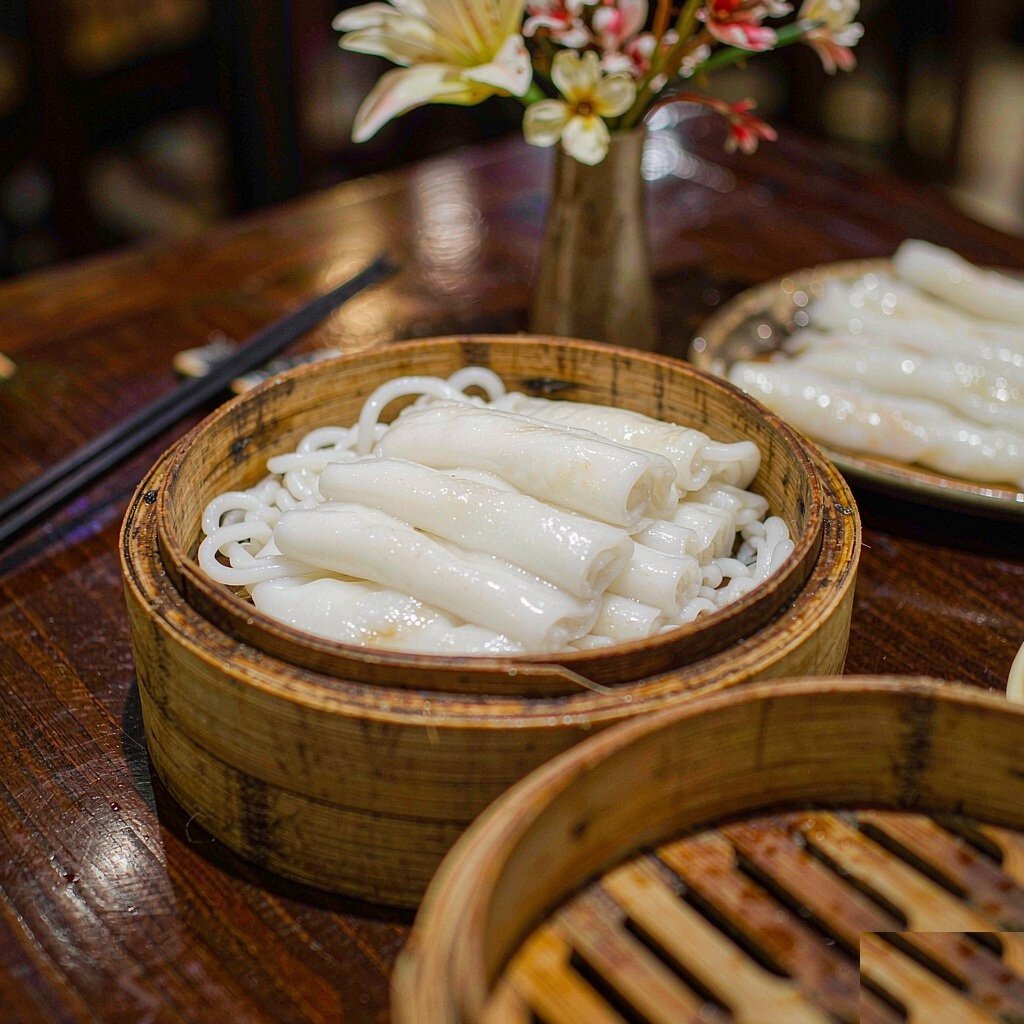
Who Should Order Cheung Fun — and Who Might Skip It
Cheung fun is the great equalizer of the dim sum table. It suits almost everyone:
- Children and older diners, because it is soft, easy to chew, and mild.
- Travelers new to Cantonese food, as a gentle entry before bolder dishes.
- Anyone wanting a lighter bite, since the rolls themselves are low in fat.
Who should pause:
- People watching sodium — the soy glaze is salty; ask for sauce on the side.
- Those avoiding gluten entirely — traditional soy sauce contains wheat, though the roll itself is rice-based.
- Shellfish allergy sufferers should avoid the shrimp version and confirm the sauce is plain.
- Calorie counters: a plate of three shrimp rolls with sauce runs roughly 250 to 350 kcal, modest, but char siu and beef versions climb higher.
Regional Twists: Guangzhou, Hong Kong, and Chaozhou
The dish barely changes, but the culture around it does. In Guangzhou, the birthplace of the modern roll, you eat it at yum cha among the clatter of trolleys, filling usually shrimp or beef, sauce thin and savory. If you plan a trip, our Guangzhou food guide walks you through the best tea houses and what else to order alongside it.
Hong Kong turned cheung fun into a canvas: you will find fillings from dried scallop to truffle, and the famous “exploding” versions stuffed with hot soup. Walk into any cha chaan teng and a plate of 猪肠粉 with sweet soy is a few-dollar breakfast. The best cheung fun in Hong Kong is a matter of fierce local debate, usually settled in favor of the tiny shops that still pull each sheet by hand.
Chaozhou and Shantou do something different. Their rice sheets, often called guo tiao, are broader and used in soup rather than rolled dry, but the batter logic is identical. Our Chaozhou food guide covers where to try them. And across Guangdong the street “pulled roll” stall — where the maker drags a single wide sheet straight off the steamer onto a board and chops it — remains the most satisfying way to eat one.
For the bigger picture of how this dish sits inside the morning ritual, see our Cantonese dim sum guide, which explains the full yum cha order and which plates to pace yourself with. Cheung fun is usually an early round, eaten while hot, before the fried and baked items arrive.
Frequently Asked Questions
Can you make cheung fun without a steamer?
Yes. A lidded wok or pot with a trivet and a flat oiled plate produces trapped steam that sets the batter. A non-stick loaf pan inside a bamboo steamer also works. You lose a little translucency but not the taste, and the batter and sauce stay identical to a restaurant version.
Is cheung fun gluten free?
The roll itself is made from rice and starch, so it contains no wheat. The catch is the sauce: standard soy and oyster sauce both contain wheat and are not gluten free. Ask for a tamari-based glaze, or make your own with gluten-free soy, and the dish is safe for most gluten-sensitive eaters.
How many calories are in cheung fun?
A typical restaurant plate of three plain shrimp rolls with sauce is about 250 to 350 kcal. The roll is low in fat; the calories climb with richer fillings like char siu or beef and with extra oil in the sauce. It is one of the lighter dim sum choices on the cart.
What is the difference between cheung fun and rice noodles?
The cheung fun vs rice noodles question comes up often. Both start as rice, but cheung fun is a fresh sheet steamed from a liquid batter and rolled while warm, giving it a soft, slippery bite. Rice noodles (ho fun, sen maw) are milled, extruded or cut, and usually dried or sold as ribbons for stir-frying and soup. Cheung fun is steamed and eaten immediately; rice noodles are cooked and sauced after.
What is the best filling for rice noodle rolls?
Shrimp is the default for a reason — it stays sweet and lets the texture lead. Beef is richer and more savory; char siu adds smoke; egg and scallion is the mildest. For a first try at home, shrimp or egg are the most forgiving and show off the silky sheet best.
How do you eat cheung fun?
How to eat cheung fun is simpler than it looks: use chopsticks to lift a piece, letting the sauce drip, and eat it in two or three bites while hot. Do not wait — the rolls firm up as they cool and lose their slip. Pour any remaining sauce from the plate over the last pieces rather than leaving it behind.
There is a reason the same few stalls in Guangzhou have lines out the door at seven in the morning. Cheung fun is humble ingredients turned into something with no equivalent off a steamer, and once you have eaten a roll pulled seconds from the tray, the pre-made version never quite satisfies again. Make a batch at home, keep the batter thin, and you will understand the 90-second magic without leaving the kitchen.