

This Putuo Mountain guide is for travelers who want a calm, spiritual pause on China’s east coast. Putuo Mountain (普陀山) is one of the four sacred mountains of Chinese Buddhism, set on a small island in the Zhoushan archipelago of Zhejiang, China. It honors Guanyin, the bodhisattva of mercy, and draws pilgrims and photographers alike with its cliffside temples, pine paths, and the steady sound of waves against stone. The island is car-light, the air is salty and clean, and the mood is reflective rather than busy. If you are building a route through the region, the island pairs beautifully with a few unhurried days in Hangzhou.
Content Preview
- Putuo Mountain Guide: Best Time to Visit
- Putuo Mountain Guide: How to Get There
- Top Things to Do on Putuo Mountain
- Where to Stay Near Putuo Mountain
- Sample Putuo Mountain Itinerary
- FAQ
Putuo Mountain Guide: Best Time to Visit
The best time to visit Putuo is spring (April through June) and autumn (September through November), when the sea air is mild and the pilgrimage paths are not packed with summer holidaymakers. Daytime temperatures sit around 18–26°C, and the light over the eastern cliffs is soft and photogenic. Avoid the first week of October, China’s Golden Week, and the Lunar New Year period, when ferries and temples swell with domestic travelers and room prices jump.
The Guanyin birthday observances — the 19th day of the 2nd, 6th, and 9th lunar months — bring the largest pilgrim crowds and the most atmospheric ceremony, with chanting that carries across the water at dusk. If you want atmosphere over quiet, those dates are magical; if you want space, steer clear. Putuo is an island district of Zhoushan, and more on its religious background is on Wikipedia’s Mount Putuo article.
Shoulder days in late June and early September are often uncrowded and green after rain, a good choice if your dates are flexible. The island’s microclimate means it can be a few degrees cooler and breezier than nearby Zhoushan town, which makes the hot months more bearable than you might expect, and the sea light stays photographic right through the humid season.
Putuo Mountain Guide: How to Get There
Most visitors fly or take the train to Hangzhou or Ningbo, then continue by bus to Zhoushan and a short ferry to the island. You can also fly directly into Zhoushan Putuoshan Airport on Zhujiajian Island and ferry across. Ferries run frequently from the Zhujiajian wharf (蜈蚣峙) and Shenjiamen to Putuo Pier, and the crossing takes only 15 to 30 minutes. Buy tickets at the terminal or through the official ferry app to skip the worst of the queue.
| Mode | Route | Time | Approx. Cost |
|——|——-|——|————–|
| Flight + bus | Hangzhou → Zhoushan Putuoshan Airport → ferry | 1h + 1h | ¥400–900 |
| Train + bus | Hangzhou East → Ningbo → Zhoushan | ~2.5h | ¥120–200 |
| Direct bus | Shanghai → Zhoushan | ~4.5h | ¥120–160 |
| Ferry | Zhujiajian wharf → Putuo Pier | 15–30 min | ¥30–50 |
| Taxi | Zhoushan airport → wharf | ~20 min | ¥60–90 |
Once on the island, walk or take the tourist shuttle; private cars are restricted, which keeps the air clean and the mood quiet. Carry your passport, as it is checked at the ferry and at most temple entrances.
Top Things to Do on Putuo Mountain
Puji Temple (Puji Chan Temple)
Puji is the island’s largest and most active temple, fronted by a lotus pond that glows at sunrise. Arrive early to hear the morning bell and watch light fall across the multi-tiered roofs. The halls are busy but the side courtyards stay peaceful.
Nanhai Guanyin Statue
The 33-meter bronze Guanyin stands on the southern headland, facing the sea. Walk the long approach staircase slowly; the view back across the strait is the postcard shot most visitors come for.
Fayu Temple and Thousand-Step Sand
Fayu Temple climbs a wooded hillside in tiered courtyards, while nearby Qianbusha — the Thousand-Step Sand — is a long pale beach where you can actually swim in summer. The contrast of temple and tide is pure Putuo.
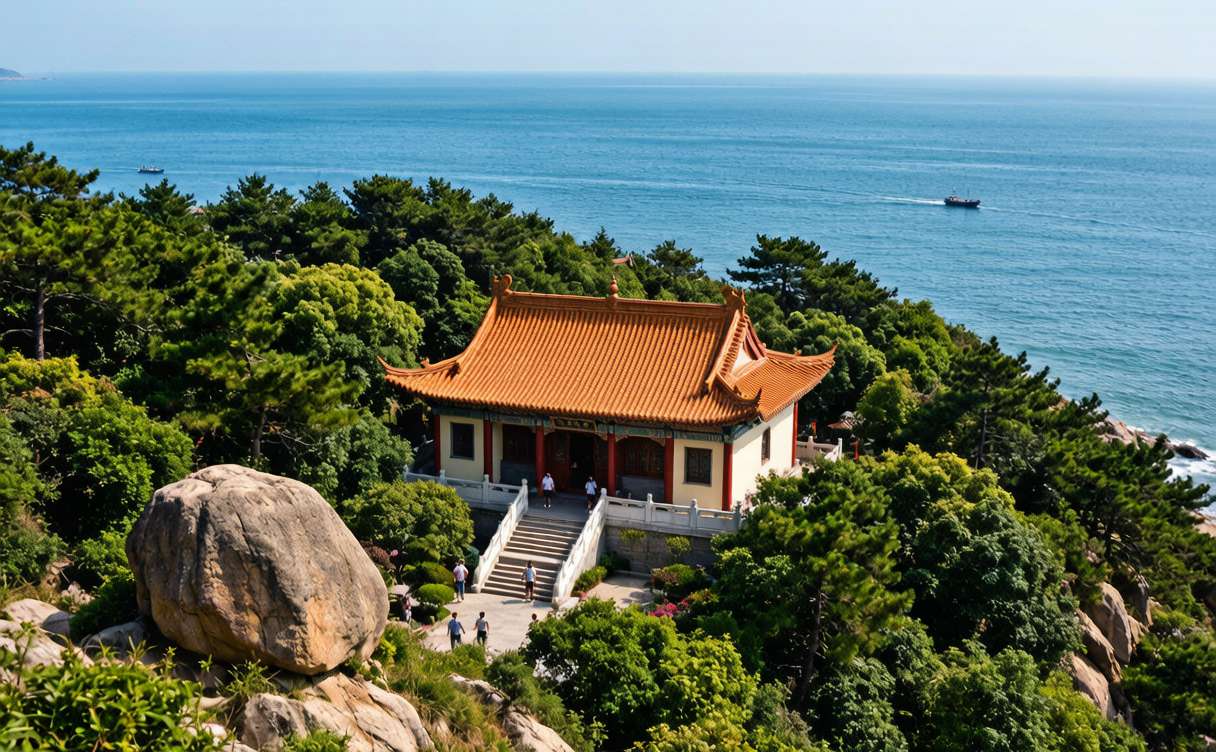
Huiji Temple on the Summit
A steep but short climb (or the cable car) reaches Huiji Temple at the island’s high point. The incense smoke, the pine scent, and the panorama of scattered islets make the effort worthwhile.
Sunset at the Eastern Sea
Find a quiet rock east of Fayu Temple for sunset. Fishing boats return as the light goes amber, and the only sounds are water and wind through the pines.
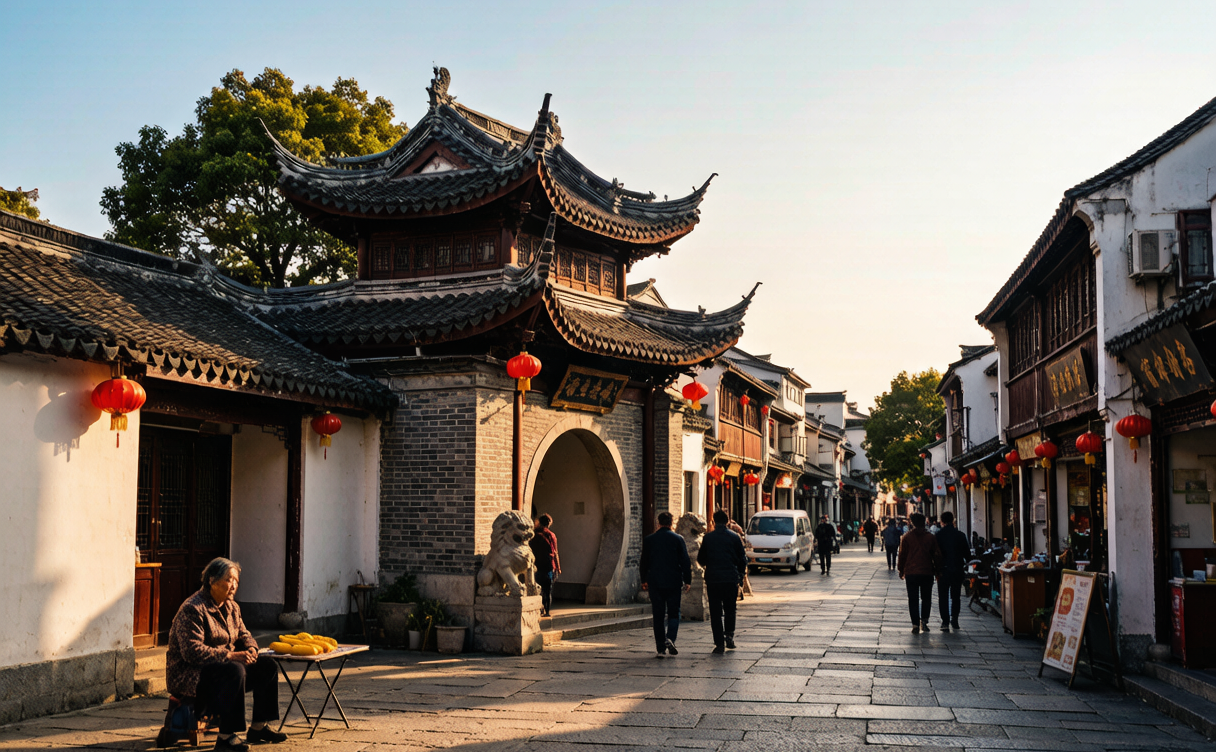
Where to Stay Near Putuo Mountain
Stay on the island if you want the dawn temple bells and the slow evening walk — guesthouses and Zen-style lodges near Puji Temple run about ¥200–500 a night and book out early in peak season. Budget travelers can find simpler rooms from ¥150. If you prefer cheaper rates and more restaurant choice, stay on Zhujiajian or in Shenjiamen and ferry across each morning; the first boat leaves before 7am. Note that island lodges often close reception late, so tell them your arrival ferry.
Putuo Mountain Guide: Practical Tips
A few practical notes will smooth your Putuo Mountain guide plan. Set up mobile payment (Alipay or WeChat Pay) with a bank card before you leave home; on the island, small noodle stalls and tuk-tuk-style carts prefer it, though carrying some cash helps at temple donation boxes. English signage is limited, so save the Chinese names of each sight offline and keep a translation app handy.
Dress modestly for temples — cover shoulders and knees, and remove your shoes where prompted. The island is hilly; wear real walking shoes, not sandals. Bring a light rain jacket even in dry months, as sea weather turns quickly. Ferries can pause in strong wind, so avoid booking a tight same-day connection to the airport. Finally, if this is your first trip to the country, our China travel guide for first-timers covers visas, payments, and SIM cards in plain language.
Sample Putuo Mountain Itinerary
Day 1: Ferry across from Zhujiajian, check in near Puji Temple, and walk the evening incense route around the lotus pond.
Day 2: Sunrise at Nanhai Guanyin, morning at Fayu Temple, afternoon swim or stroll at Thousand-Step Sand, sunset on the eastern rocks.
Day 3: Cable car to Huiji Temple at the summit, slow lunch, and the midafternoon ferry back to the mainland.
FAQ
Is Putuo Mountain worth visiting if I am not Buddhist? Yes. The coastal scenery, architecture, and quiet paths appeal to anyone who enjoys temples and sea air, even without a religious interest.
How long should I stay? One full day covers the highlights; two nights lets you feel the island’s rhythm. Three days is generous.
Can I drive onto the island? No. Private cars are restricted; you park on the mainland and ferry across, then walk or shuttle.
What should I wear? Modest, comfortable clothing and good walking shoes. Bring a layer for sea breezes and a rain jacket.
Is it crowded? It can be, during Golden Week, Lunar New Year, and Guanyin birthdays. Spring and autumn weekdays are calm.
By Karl — Last updated July 27, 2026