

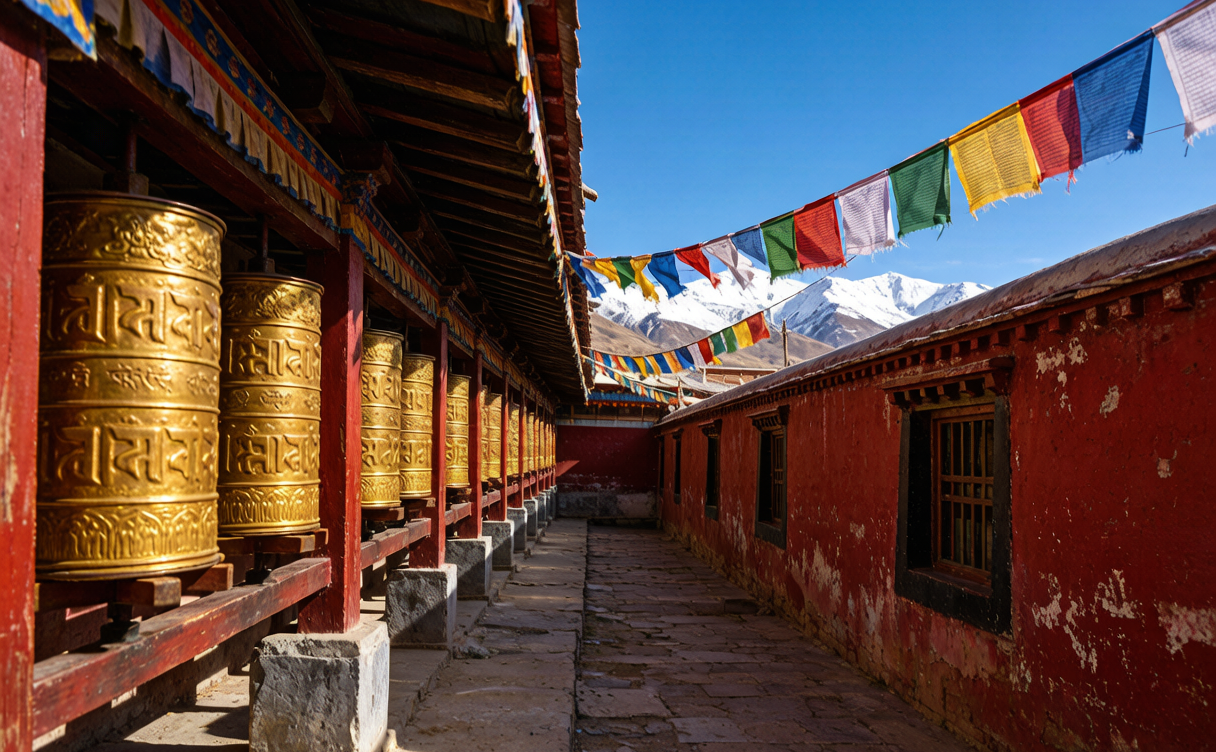
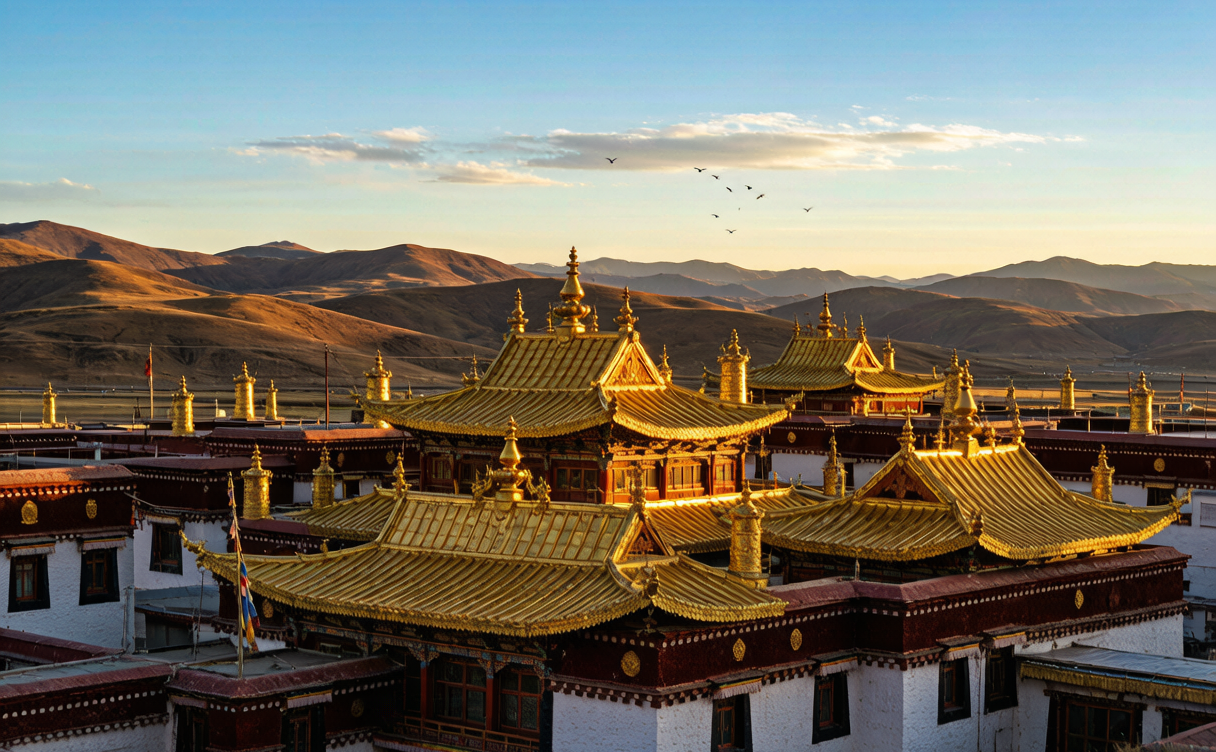
This Labrang Monastery guide is for travellers who want the atmosphere of the high-plateau monasteries without the altitude and logistics of the far west. Labrang (拉卜楞寺) sits in Xiahe County of Gansu, China, in the Gannan Tibetan Autonomous Prefecture, and it is one of the six great monasteries of the Gelug school of Tibetan Buddhism. With its white walls, gilded roofs and a 3.5-kilometre prayer-wheel corridor, it feels like Lhasa, Tibet, China moved east and lowered its elevation. This article covers the Labrang Monastery guide essentials: how to get to Labrang Monastery, the best time to visit Labrang Monastery, the things to do at Labrang Monastery, the Labrang Monastery entrance fee, and a set of Labrang Monastery travel tips.
Content Preview
- What Labrang is, and why it anchors Gannan
- Best time to visit Labrang Monastery, with festival dates
- How to get to Labrang Monastery from Lanzhou and Xining
- Things to do at Labrang Monastery: the corridors, the halls, the town
- Labrang Monastery entrance fee and what it covers
- Where to stay in Xiahe
- A two-day sample itinerary
- FAQ with a dated signature
The Grand Estate of Gannan
Founded in 1709, Labrang grew into one of the largest monastic universities in the Tibetan Buddhist world, once home to several thousand monks. The estate spreads across a flat river valley: six main assembly halls, dozens of smaller temples, and rows of monk quarters wrapped by the world’s longest prayer-wheel corridor. Unlike the remote cliff monasteries, Labrang is a living town as much as a monument — you walk through it, not around it.
The setting is the point. Xiahe sits at about 2,900 metres, high enough for big skies and thin air but far below the passes of the western plateau, so most visitors feel fine after a slow first day.
Best Time to Visit Labrang Monastery
June to early September. The short, bright summer. The grassland around Xiahe turns green, the air is clear, and the monaster’s festivals cluster in this window. This is the best time to visit Labrang Monastery for both weather and atmosphere.
Late September to October. Cold nights but golden grassland and few tourists. Excellent light for photography and empty corridors.
January to February. Bitterly cold, but the Tibetan New Year (Losar) can fall in this period, with masked dances and ceremonies. Dates shift with the lunar calendar, so check locally.
Avoid the worst of winter (December–February) unless you come for Losar; many guesthouses close.
How to Get to Labrang Monastery
Xiahe has no train station; the nearest railheads are Lanzhou to the north and Xining to the west. Road transport connects both.
| From | Mode | Typical duration | Approx. cost |
|—|—|—|—|
| Lanzhou → Xiahe (Labrang) | Bus from Lanzhou south bus station | 3 hr 30 min | ¥75–95 (US$11–13) |
| Lanzhou → Xiahe | Private car with driver | 3 hr | ¥600–800 (US$84–112) |
| Xining → Xiahe | Bus or car via Gannan | 4 hr | ¥120–160 (US$17–22) |
| Lanzhou Zhongchuan Airport (LHW) → Xiahe | Private car | 3 hr 30 min | ¥700–900 (US$98–126) |
Xiahe town is small and walkable; the monastery is a ten-minute stroll from the main guesthouses. Our Gannan travel guide covers the wider prefecture and its grassland towns, while our Lanzhou travel guide explains the gateway city and its noodle culture. If you are coming from the Qinghai side, our Xining travel guide details the route over the rolling eastern plateau.
Things to Do at Labrang Monastery
Walk the prayer-wheel corridor
The 3.5-kilometre ring of rotating wheels is the signature experience of the things to do at Labrang Monastery. Locals walk it clockwise at dawn and dusk; join them, turn each wheel, and you have circled the whole estate. Allow an hour.
The main assembly hall (Grand Golden Temple)
The Tsogchen, the largest hall, holds a vast seated Buddha and ranks of cushions for the monks’ debates. Photography inside is restricted, but the interior — smoke, butter lamps, deep carpet — is the spiritual core.
The debating courtyard
In the afternoon, younger monks gather to debate scripture in a rhythmic call-and-clap style. It is theatrical and genuine at once, and the best free show in town. Ask before photographing individuals.
The hilltop viewpoint
A short climb behind the monastery gives the classic wide shot of the white-and-gold roofs against the valley. Go at golden hour.
Xiahe town and the grassland
The town has Tibetan tea houses, yak-meat noodles and shops selling prayer flags. A short drive reaches open grassland with nomad tents in summer — our Gannan travel guide maps the best stretches.
Labrang Monastery Entrance Fee
| Item | Approx. cost |
|—|—|
| Monastery entrance ticket | ¥40 (US$6) |
| English guided tour (per group) | ¥150–200 (US$21–28) |
| Photography permit (some halls) | Free / included |
The Labrang Monastery entrance fee is modest and covers the compound and main halls. A guided tour is strongly recommended — the site’s meaning is in its rituals, not its stones. Tickets are sold at the gate and accept foreign cards; carry your passport.
Where to Stay
Xiahe town (recommended). Family guesthouses and a few mid-range hotels within walking distance of the monastery. Foreigner registration is normal at the larger properties.
Higher-end. One or two full-service hotels near the entrance cater to tour groups; book ahead in July and August.
Nearby grassland. Summer yurt camps outside town offer nomad-style stays, cold at night but memorable.
For a wider regional plan, our Kangding travel guide covers the next plateau town south into Sichuan, useful if you are extending the route.
Sample Itinerary: Two Days
Day 1 — arrival and the corridor
- 13:00 arrive Xiahe from Lanzhou; check in
- 15:00 walk the prayer-wheel corridor clockwise
- 17:30 hilltop viewpoint at golden hour
- 19:30 Tibetan hotpot in town
Day 2 — halls and debates
- 08:30 enter the main assembly hall
- 10:00 guided tour of the side temples
- 14:00 monk debating in the courtyard
- 16:00 drive to Langmusi or back to Lanzhou
Labrang Monastery Travel Tips
- Acclimatise slowly. At 2,900 metres, take the first half-day easy; avoid alcohol and big meals on day one.
- Dress and behaviour. Cover shoulders and knees; walk clockwise; never point at monks or touch objects in the halls.
- Hire a guide. The entrance fee alone tells you nothing. A guide unlocks the debate, the halls and the iconography.
- Photography. Corridor and exterior yes; inside halls usually no. Ask first, always.
- Cash. The gate takes cards, but tea houses and stalls want WeChat Pay or cash. Carry ¥200.
- Festivals. If your dates are flexible, aim for a summer ceremony or Losar; the monastery transforms.
FAQ
Is Labrang Monastery worth visiting?
Yes, especially for travellers who want Tibetan Buddhist culture at a manageable elevation. The scale, the prayer-wheel walk and the debates are unforgettable, and Xiahe is an easy base. For wider context on the Gelug tradition, China Highlights’ Labrang Monastery guide is a helpful external reference.
How do I get to Labrang Monastery from Lanzhou?
Buses run from Lanzhou’s south station in about 3.5 hours, or a private car takes 3 hours. The monastery is a short walk from Xiahe’s guesthouses.
What is the Labrang Monastery entrance fee?
Around ¥40 for the compound and main halls, with a guided tour an extra ¥150–200 per group. No foreigner surcharge.
What is the best time to visit Labrang Monastery?
June to early September for green grassland and festivals, or late September to October for golden light and quiet corridors. Losar in winter is special but cold.
Do I need altitude preparation?
Mildly. At 2,900 metres most people are fine, but arrive hydrated, move slowly on day one, and consider a night in lower Lanzhou first if you are altitude-sensitive.
Written by Karl · Updated August 21, 2026