

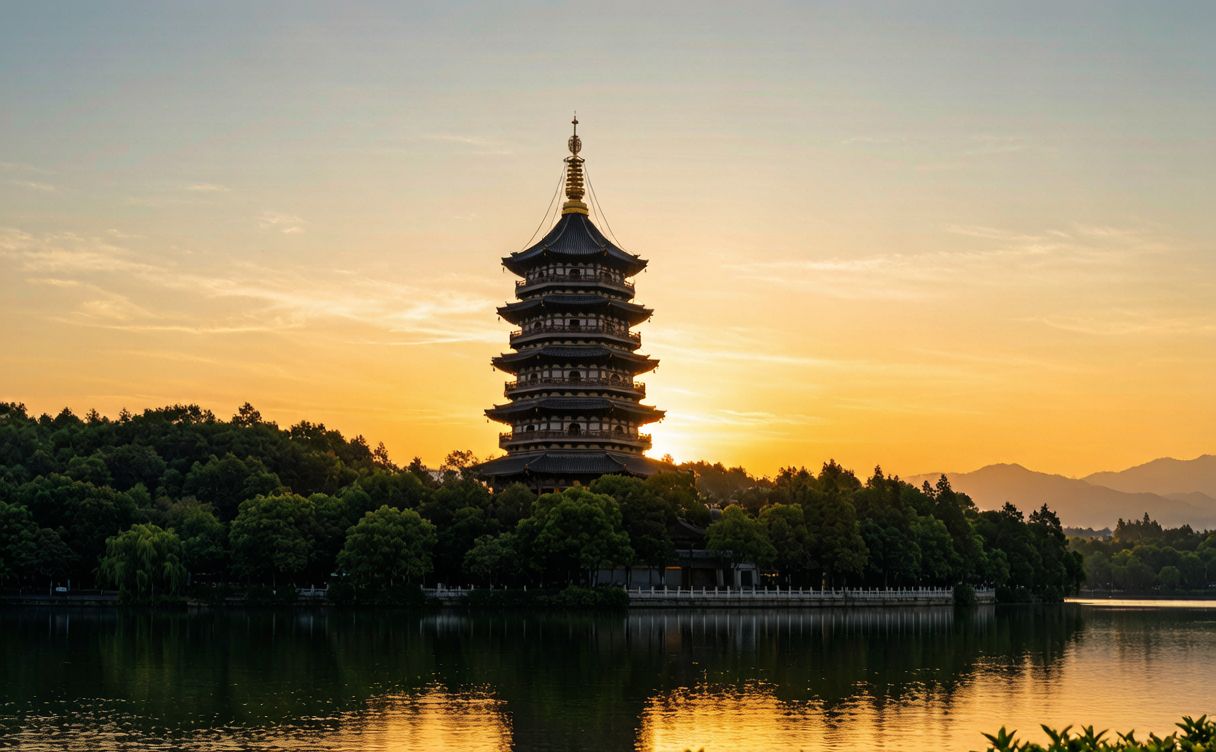
If you ask me for the single best spot to watch the sun melt into West Lake, I’ll tell you without hesitation: climb Leifeng Pagoda. I’ve stood on that viewing deck at golden hour more times than I can count, and it never gets old. Leifeng Pagoda (Leifeng Ta) sits on the south shore of West Lake in Hangzhou, and it’s one of those rare places where a thousand years of legend, a dramatic fire-and-rebuild story, and a genuinely great view all come together.
In this guide I’ll walk you through exactly how to get there, what’s inside, why the sunset is worth the climb, and the practical tips I wish I’d known on my first visit. Whether you call it Leifeng Pagoda West Lake or just the Hangzhou pagoda, this is a stop you shouldn’t skip.
A quick note on expectations: Leifeng Pagoda is a popular, ticketed attraction, not a hidden temple in the hills. On busy days it can feel touristy, and the modern reconstruction divides opinion among purists. But for a first-time visitor to Hangzhou, the combination of story, setting, and sunset view is hard to beat — and the elevator makes it accessible to almost everyone, including families with kids and travelers who’d rather not climb hundreds of stone steps.
Getting There
Leifeng Pagoda (Leifeng Ta) stands on Sunset Hill (Leifeng Hill), right on the southern bank of West Lake, opposite the small island of Nanping. It’s roughly a 10-minute walk from the popular Nanshan Road area and about 15 minutes on foot from the famous Su Causeway.
The easiest way for first-timers is the Hangzhou metro. Take Line 1 to Longxiangqiao and transfer to a taxi or bus, or take a tourist shuttle bus that drops you near the south gate of the scenic area. If you’re already touring the lake by foot or bike, follow the southern lakeshore east from Jingci Temple — the pagoda looms into view within minutes.
I usually arrive by didi (ride-hailing app) and get dropped at the Leifeng Pagoda scenic area entrance on Nanshan Road. From there it’s a short, well-paved walk to the ticket gate. Entry is ticketed (around 40 RMB), and the price includes the elevator ride up and access to all exhibition floors.
What to See
Here’s something that surprises most visitors: the pagoda you see today is a modern reconstruction built right over the original ruins. The original Leifeng Pagoda was first built in 975 AD during the Five Dynasties period, then collapsed in 1924 after centuries of weathering and brick theft by locals who believed the bricks brought luck. When archaeologists excavated the base in 2001, they found a hidden underground chamber with a precious gilded silver casket containing Buddhist relics. The new tower, finished in 2002, was deliberately built as a steel-and-wood structure on top of the preserved old stone foundation.
I love that the designers left the original brick base exposed on the ground floor. You walk in and see the actual collapsed ruins through glass, then take an elevator up to the viewing levels. It’s a clever blend of museum and monument.
Inside, each floor has woodcarving panels depicting the Legend of White Snake (Bai She Zhuan), the famous folktale in which a white snake spirit falls in love with a mortal man and is imprisoned under this very pagoda by the monk Fahai. As you climb, the carvings tell the story floor by floor — a nice touch that makes the history feel alive rather than dusty.
Don’t miss the bronze bells and the intricate ceiling murals on the top floor. And look down through the viewing windows at the original foundation; it really drives home how old this site is.
The Sunset View
This is the main event, and the reason the hill is literally called “Sunset Hill.” From the open-air viewing deck on the top floor, you get a sweeping panorama of the entire West Lake — the causeways, the islands, the boats, and the city skyline behind. When the sun drops low, the water turns gold and the far hills go violet. It’s the classic “Leifeng Pagoda in the Evening Glow” (Leifeng Xi Zhao), one of the Ten Scenes of West Lake.
I recommend timing your climb so you reach the top 30 minutes before sunset. The deck gets crowded, so claim a railing spot early. Bring a light jacket even in summer — it gets breezy up there. The view facing west toward the lake is the money shot; the east side looks over the city, which is prettier after dark when the lights come on.
If you’re a photographer, a tripod is allowed but space is tight. Shoot with a wide lens to capture both the lake and the pagoda’s own eaves in the frame — that’s the postcard composition everyone wants.
One detail I appreciate as a repeat visitor: the top deck has engraved markers pointing out the other Nine Scenes of West Lake, so you can orient yourself and plan where to go next. On a clear day you can pick out the Broken Bridge, the Su and Bai causeways, and the Three Pools Mirroring the Moon islet. It turns the pagoda into a natural orientation point for the rest of your lakeside exploring.
Tips
A few practical things I’ve learned that will make your visit smoother:
- Go late afternoon, not morning. The pagoda faces west, so the light and the view are best in the late afternoon and at sunset. Mornings are fine for avoiding crowds but you’ll miss the famous glow.
- Buy tickets online in advance through the official WeChat mini-program or major travel apps, especially on weekends and Chinese holidays when lines can be long.
- Wear comfortable shoes. There’s a gentle hill walk from the road plus stairs between floors once you exit the elevator.
- Combine it with Jingci Temple next door — it’s a quiet, lovely temple with its own famous bell, and the two make a perfect half-day loop on the south shore.
- Avoid the midday heat in summer (June–August); the open deck offers little shade.
- Watch for the night lighting. After dark the pagoda is illuminated and looks magical reflected in the lake — a different but equally worthwhile experience if you can’t make sunset.
Best Time
Hangzhou has four distinct seasons, and each changes the Leifeng Pagoda experience. Spring (March–May) brings mild weather and fresh green hills — my personal favorite for clear, soft light. Autumn (September–November) is the most comfortable, with crisp air and the best chance of a dramatic sunset. Summer is hot and humid but the lake is lush; winter is cold but occasionally you’ll catch a rare snow dusting that turns the scene into a painting.
For the smallest crowds, visit on a weekday and aim for the off-peak windows right after the morning opening or in the last two hours before closing. For the best photos, target the clear days of late autumn.
If you’re building a multi-day Hangzhou plan, I’d pair the pagoda with a boat ride on the lake in the morning and tea tasting in the Longjing village in the afternoon — that gives you water, history, and culture in one relaxed day. The south shore where Leifeng sits is also the calmest side of the lake, so it’s a good place to decompress if the northern hotspots feel overwhelming.
Want a fuller plan for the lake itself? Start with our West Lake Hangzhou guide for a complete walking route around the shoreline.
Good to Know
The site is managed as part of Hangzhou’s West Lake Cultural Landscape, a UNESCO World Heritage area. For official opening hours, ticket prices, and seasonal events, check the Hangzhou tourism board before you go, since times shift around public holidays.
Leifeng Pagoda is wheelchair accessible via the elevator to the upper viewing levels, though the ground-floor ruin exhibition has a couple of steps. Plan about 60–90 minutes for the full visit including the walk from the road, the climb, and time on the deck.