

Most visitors to Hainan land in Haikou or Sanya and never venture to the northwest, where the island bends into a quieter, stranger shape. Danzhou sits on that curve, a sprawling prefecture city built around the old port of Baimajing and the Yangpu Peninsula. A Danzhou travel guide is really a guide to the Hainan that tour brochures forget: black basalt cliffs, ancient salt pans still worked by hand, and long beaches where you might be the only foreigner for miles.
This corner of the island moves at a different speed. The seafood is cheaper than Sanya, the hotels are half the price, and the things to do in Danzhou Hainan lean toward slow mornings and empty horizons rather than resort pools. If you have already done the headline beaches and want Hainan off the beaten path, this is where the island starts to feel like itself.
Getting to Danzhou
The fast route is the high speed train from Haikou, which reaches the Danzhou area in roughly an hour and a half, with the line continuing south toward Sanya. Trains stop at Danzhou or Baimajing stations depending on the service, and from there a taxi covers the last stretch to the coast. If you are driving, the expressway from Haikou is smooth and well signed, and a car gives you the freedom to reach the scattered coastal sites that buses serve poorly.
A common plan is to fly into Haikou, spend a night in the capital, then head west. Our Haikou travel guide covers the airport, the ferry to the mainland and the old town, which makes a natural first stop before the slower northwest. For the contrast, the Sanya beach travel guide shows what the busy southern coast looks like, so you can decide which version of Hainan you prefer.
The volcanic coast and the salt pans
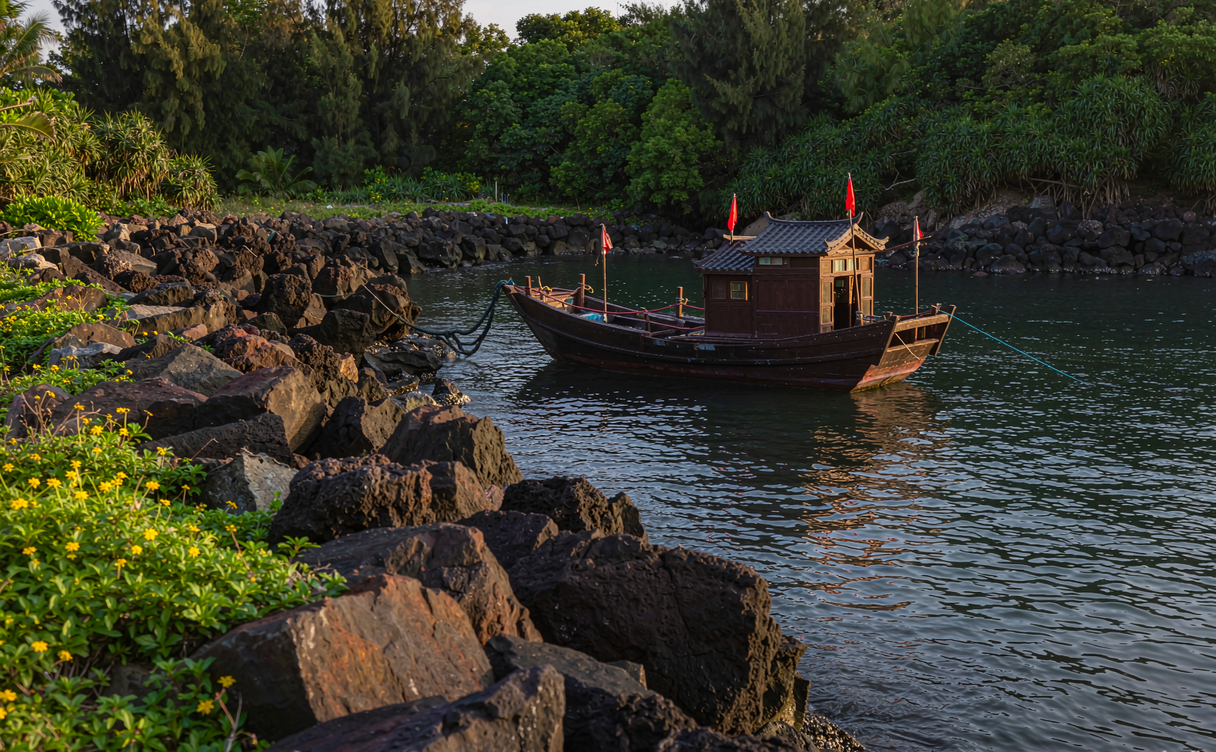
The signature sight is the Danzhou Volcanic Coast, a national geological park where lava flows met the sea and cooled into twisted black shorelines. You can walk the rim of old craters, watch waves slam into basalt stacks, and see why locals call this the land the fire left behind. It is raw and untamed compared with the groomed sands further south, and the wind never quite stops.
Just inland on the Yangpu Peninsula lie the ancient salt fields, a thousand year old system of shallow stone pans where villagers still evaporate seawater into coarse salt under the sun. Mornings are best, when the pans mirror the sky and the salt rakers are at work. There is no ticket booth and no crowd; you simply wander the causeways and watch a craft that has outlasted every dynasty.
For broader context on Hainan’s shoreline, our China beaches guide compares the island’s coasts with the mainland’s, while the Sanya Yalong Bay page describes the polished resort end of the spectrum. The Dongpo Academy in Zhonghe town, where the Song dynasty poet Su Shi was exiled, is the cultural anchor of the region; you can read about its history on the Wikipedia page for Dongpo Academy, which explains why a Hainan backwater became a center of classical learning.
Beaches, hot springs and slow days
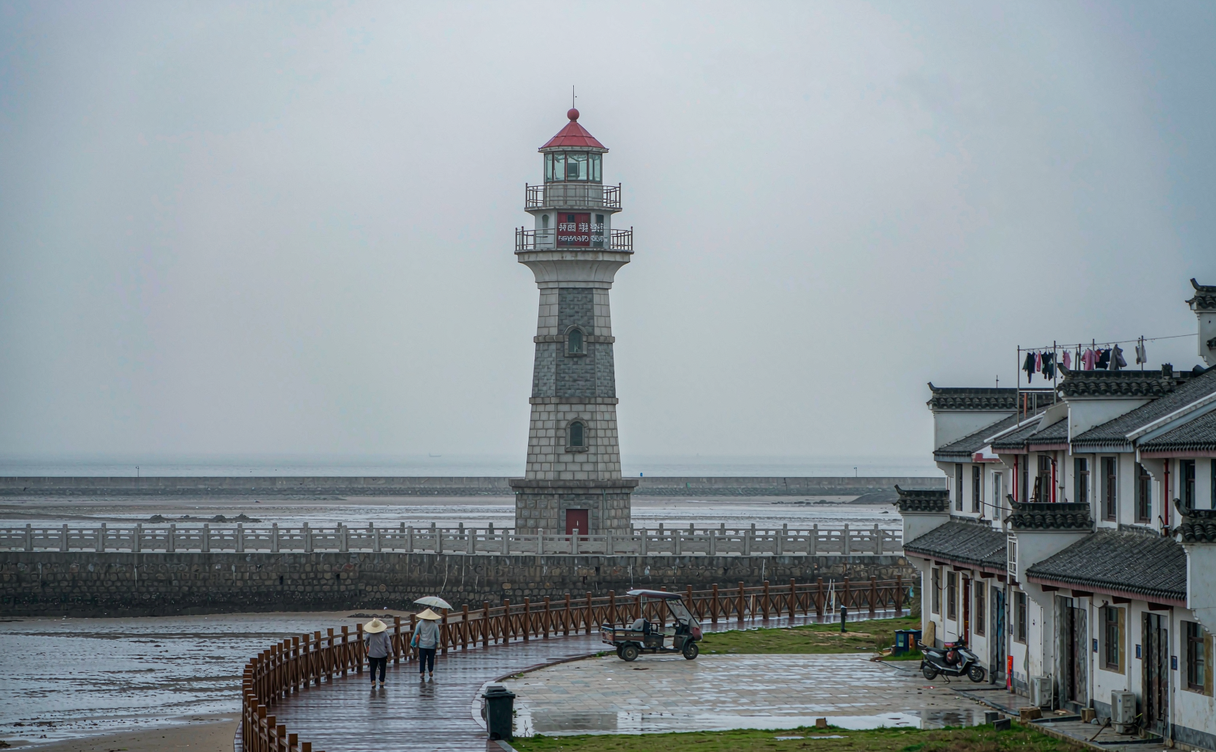
The Danzhou beaches themselves are the reward for coming this far. North of Baimajing, stretches of pale sand open up with barely a sunbed in sight, good for long walks and terrible for anyone who needs a beach bar every hundred meters. The water is clean, the surf is gentle in summer, and the sunsets over the Qiongzhou Strait are the kind you photograph badly and remember clearly.
If you want a second dose of nature, the Hainan tropical rainforest park guide describes the forested interior to the south, where canopy walks and cool streams offer relief from the coastal heat. Closer in, the Lanyang hot springs make an easy afternoon soak, and the nearby wetland areas draw migratory birds in winter. None of it is packaged, which is exactly the appeal for travelers who dislike queues.
Eating in Danzhou is a seafood education. The Yangpu peninsula and the fishing villages land crab, shrimp and reef fish that go straight from the boat to the wok, and the local style leans light, letting the brine and the lime do the work rather than heavy sauce. Try the braised sea snails, the steamed grouper with scallion, and the cold green mango salad that cuts the salt. Most places have no English menu, so point at the tank or follow what the next table ordered; the bill will be a pleasant surprise compared with Sanya resorts.
For a sit down night out, the food streets behind Baimajing station fill after eight with hotpot rings and grilled squid stands, and a few older cafes serve the island’s reliable black coffee. Stay options run from a handful of business hotels near the train to guesthouses out by the volcanic coast, where you fall asleep to the wind and wake to a fishing boat horn. Book the coast rooms ahead in peak winter, when the snowbirds from the north fill them.
The best time to visit Danzhou is from November to April, when the humidity drops and the temperatures sit in the mid twenties, warm enough for the water and cool enough for the salt pans. Summer brings heat and the occasional typhoon, so check the forecast before any coastal plan, and treat a red alert day as a museum day rather than a beach day. The lunar new year period fills the trains, but outside those weeks the northwest stays calm, and even the popular viewpoints rarely feel crowded. If you can, time a visit to a clear winter morning, when the basalt catches the low light and the whole coast looks carved from iron.
A workable Danzhou travel itinerary runs three days. Day one: train from Haikou, settle in Baimajing, walk the evening beach. Day two: volcanic coast in the morning, ancient salt fields at Yangpu after lunch, hot springs at dusk. Day three: Dongpo Academy and Zhonghe old town, then continue south or loop back to Haikou. With more time, the Wanning travel guide points to surf town further down the east coast, an easy next step for the same traveler.
Danzhou rewards patience. The sights are spread out, the English signage is thin, and you will sometimes eat pointing at the tank. That friction is the point: this is Hainan before the resorts, where the sea sets the schedule and the salt pans keep their thousand year rhythm. Bring a scooter or a patient driver, a good map app, and a tolerance for plans that bend.
For travelers who came to China expecting only the great cities, the northwest coast of Hainan is a gentle correction. The Danzhou beaches, the volcanic headlands and the old salt pans together make a case for going where the ferries and the influencers do not. Stay a few nights, learn the names of two or three dishes, and let the quiet do the work. The island has louder corners, but few of them are this honest.