

We have helped dozens of travelers turn a holiday curiosity into real conversational ability, and in our experience there is no faster way to study Mandarin in China than to live it for a month in a city where nobody speaks your language. Classrooms abroad teach grammar; China teaches survival. This guide covers where to study, what it costs, which visa actually works for a language stay, and how to build a routine that gets you ordering hotpot without pointing within three weeks.
Best cities to learn Chinese in China
The cliché is true: Beijing gives you crisp broadcast-standard pronunciation and a cultural gravity that motivates, while Shanghai gives you international buzz and more English-leaning peers. We steer serious beginners toward Beijing for the accent and Shanghai for the lifestyle. Chengdu and Kunming are cheaper, warmer, and friendlier to slow learners on a budget. All of these sit firmly on the mainland, where Mandarin is the only language you will hear. University language centers (Beijing Language and Culture University, Shanghai Jiao Tong, Fudan) run semester and short-term tracks; private boutiques like That’s Mandarin or Hutong School run flexible weekly packages with smaller classes.
How much does it cost
Prices are reasonable compared with Western language schools. A group intensive at a university runs 4,000 to 7,000 RMB per month for 15 to 20 class hours a week. Private boutiques charge 150 to 300 RMB per hour one-on-one, or 6,000 to 12,000 RMB for a four-week immersion with activities. Homestay add-ons cost 2,500 to 4,500 RMB a month including two meals. We tell travelers to budget 8,000 to 15,000 RMB all-in for a focused month, plus rent. Speaking of rent, a Beijing hotel guide is useful for the first two weeks while you apartment-hunt, even if you later move to a longer let.
The visa question
This is where most plans stall. A tourist (L) visa technically forbids enrollment, but short trial classes at a private school are tolerated and common. For anything past a month, you need an X2 (short-term study, under 180 days) or X1 (long-term) visa, which requires a school admission letter and JW202 form. We have seen travelers denied at the border for overstaying an L visa while “studying,” so if your goal is a real China language study visa, apply properly through a licensed school before you fly. The paperwork takes two to four weeks; build it into your timeline.
Immersion that actually works
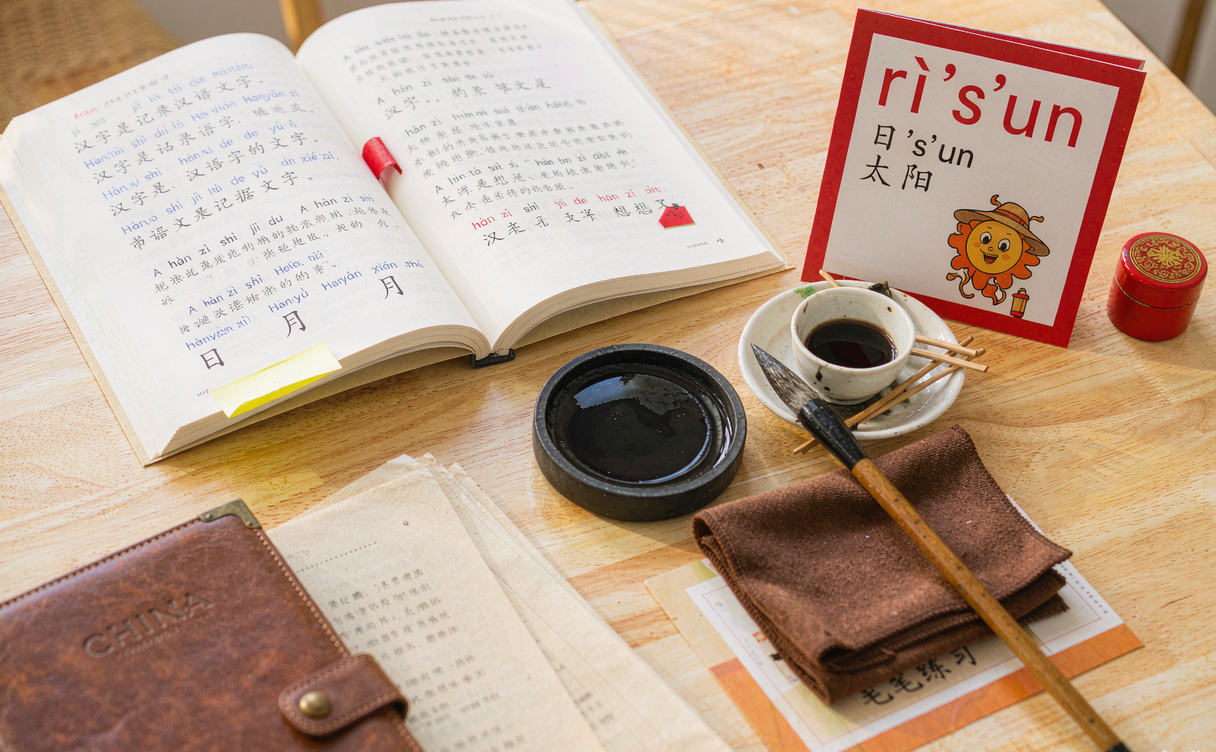
A study Chinese immersion program only works if you leave the classroom. We coach our travelers to do four things: take a language partner (language-exchange apps pair you with locals who want English), shop at wet markets daily, watch one episode of a Chinese sitcom without subtitles, and ban English at meals. The biggest jump in fluency we see comes around week three, when embarrassment finally loses to necessity. Carry a notebook, record new words on your phone, and review on the metro — dead time is free study time.
Learn Mandarin as a tourist
Not everyone wants a visa. You can learn Mandarin as a tourist by stacking a two-week holiday with morning classes and afternoon exploring. Many boutiques sell “tourist track” packages of 10 to 20 hours that fit an L visa comfortably. Combine it with our Mandarin phrases for travelers cheat sheet and you will leave able to haggle, direct a DiDi, and chat with a grandparent in a park. That is a better souvenir than any tea set.
Apps, tools and daily practice
Your phone is your tutor. Pleco is non-negotiable for a dictionary; HelloChinese is the best structured beginner app; Anki handles spaced repetition. For navigation and translation on the go, our China travel apps guide lists the tools we install on every client phone before they land. We also recommend a cheap fitness-band style voice recorder to capture your own speaking drills — hearing your tone mistakes is humbling but effective.
What to expect in class
University groups run 8 to 15 students and move fast; boutiques run 1 to 4 and adapt to you. Pinyin comes first, then characters around week two — do not skip characters, even if you only want to speak, because reading menus unlocks independence. Teachers are patient but expect homework. We have found that students who do 30 minutes nightly outpace those who cram before tests by a wide margin. Exams are optional; progress is not.
Staying safe and sane
Air quality, food spacing, and homesickness are the real risks, not crime — China is safe for solo language students. Join a WeChat group for your school so you get event invites and ride shares. Keep a local SIM and Alipay working from day one; our apps guide covers setup. If a school pressures you toward an unclear visa arrangement, walk away — legitimate programs are transparent about paperwork.
Choosing the right program
Not all schools are equal, and the flashy ones are not always the effective ones. University centers are cheaper and more structured but move at the pace of the slowest student; private boutiques cost more but adapt daily. We tell travelers to ask three questions before paying: what is the maximum class size, how many teachers hold a Mandarin teaching certificate, and can you sit in on a trial lesson? A good school says yes to all three. Avoid any operator vague about X-visa paperwork or pushing you to stay on a tourist visa for months — that is the most common way learners get stuck.
A realistic monthly budget
Beyond tuition, plan living costs. A shared apartment near a university runs 1,500 to 3,000 RMB a month; a private studio 3,000 to 5,500 RMB. Food is cheap if you eat locally — 30 to 60 RMB a day at canteens and noodle shops — but Western cafes in expat areas double that. A SIM and data cost 50 to 100 RMB a month. Add 500 to 1,000 RMB for weekend trips and materials. Most of our travelers land at 6,000 to 12,000 RMB a month all-in outside tuition, still a fraction of a language stay in Europe or North America.
Mistakes we see beginners make
The biggest is translating in your head instead of thinking in Chinese from day one — describe objects around you aloud. The second is skipping characters; even conversational learners who read a few hundred navigate cities far more independently. The third is only socializing with other foreigners; we push every client into at least two language exchanges a week. The fourth is cramming — 30 focused minutes daily beats a drained three-hour Sunday session. We have watched these four fixes take a struggling student to basic fluency inside a single semester.
What comes after your first month
A month gets you survival Mandarin; two or three gets you conversations. If you catch the bug, roll your short course into a semester X2 program, or move to a smaller city where Mandarin is the only option and rent drops. Many travelers pair study with slow travel — a week of classes in Chengdu, a week in Kunming — which keeps motivation high. However far you go, the first month is the wall, and getting over it is mostly about showing up daily.
Planning a Shanghai study stay? Book your first two weeks near class using our best hotels in Shanghai guide so you can apartment-hunt by day and study by night.
Want a smoother first month on the ground? Read our China travel apps guide to set up maps, translation, and payments before your flight.
Ready to compare schools and neighborhoods? Book your base with our best hotels in Beijing guide so you can walk to class and practice Mandarin with locals in the surrounding lanes each evening.
For the linguistic background behind the accent you will be learning, the Standard Chinese page on Wikipedia explains how Putonghua was standardized and why tones matter.