

Serviced apartments in China are the accommodation most visitors overlook, yet they are often the smartest choice once your trip passes the one-week mark. Unlike a hotel room, a serviced apartment gives you a kitchenette, a washing machine and a living space, usually at a lower nightly rate than a comparable hotel once you stay a month. This guide explains when they beat hotels, names the reliable international and domestic brands, breaks down the real monthly costs, and shows you how to book a long stay apartment in China without the usual headaches.
Why Serviced Apartments in China Make Sense for Longer Stays
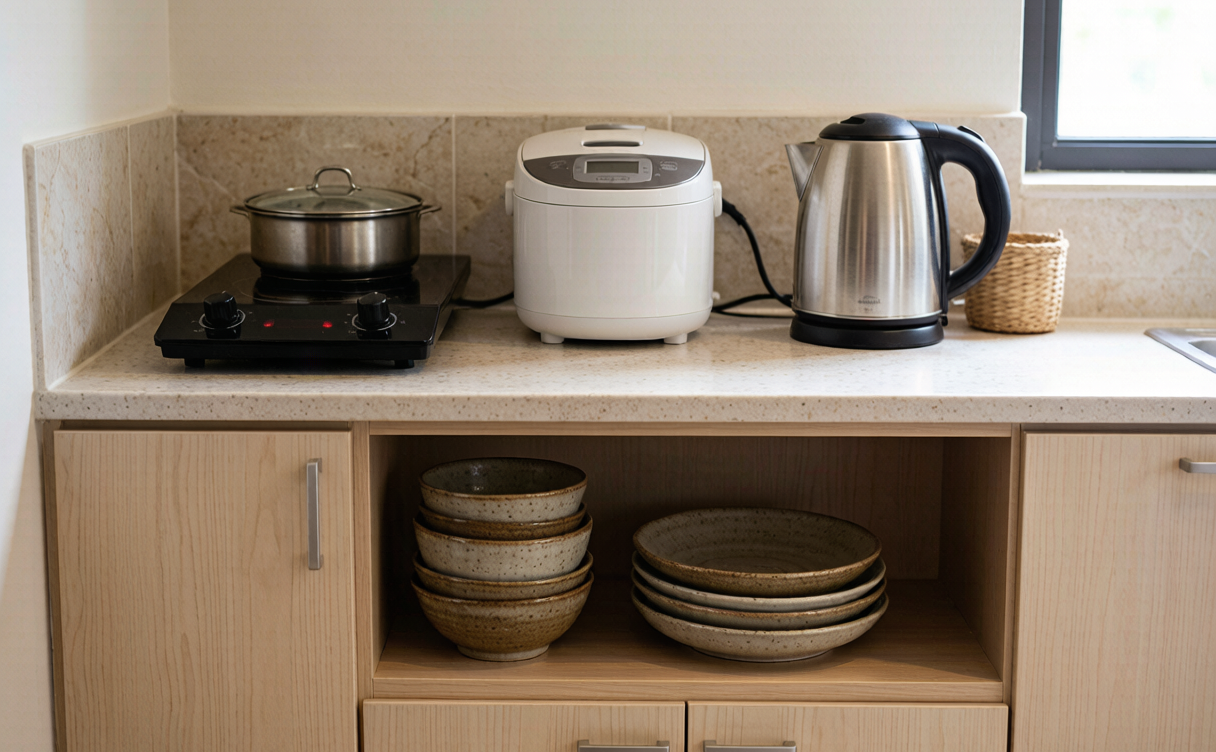
The moment your stay stretches beyond seven nights, a standard hotel room starts to feel cramped and expensive. A serviced apartment flips that equation: you get a separate bedroom or studio with a real kitchen, so you can cook a few meals, store groceries, and do laundry without hunting for a laundromat. For families, business travellers on rotation, or anyone slowing down to study Mandarin, that extra space is worth more than any hotel loyalty point.
Another quiet advantage is consistency. A good serviced apartment building has a front desk that handles the same police registration as a hotel, so you avoid the foreigner-licence problem that plagues small guesthouses. If you are still deciding between formats, our broader hostel versus hotel in China guide lays out the trade-offs clearly, and our China homestay guide covers the shorter rural alternative.
Utilities and internet are included in almost every managed building, so there are no separate bills to set up — a real plus when you would otherwise spend your first week arranging a broadband connection. Families benefit most: a one-bedroom with a sofa bed comfortably houses two adults and a child, and having a kitchen means you control meal times and dietary needs without relying on restaurant hours. For longer working trips, the separate living room also gives you a place to take video calls away from the bed.
Serviced Apartment vs Hotel in China: The Real Difference
On paper a hotel looks simpler, but the numbers tell a different story for long stays. A mid-range hotel in a tier-one city runs ¥500–¥900 (US$70–$125) a night, which adds up to ¥15,000–¥27,000 a month. A serviced apartment in the same area typically charges ¥8,000–¥18,000 a month (US$1,100–$2,500) for a studio or one-bedroom, a saving of 30–50 percent once you pass thirty nights. You also save on food by cooking.
| Factor | Hotel (per month) | Serviced apartment (per month) |
|——–|——————-|——————————-|
| Nightly rate | ¥500–¥900 | ¥270–¥600 equivalent |
| Kitchen | Rare | Standard |
| Laundry | Paid service | In-unit machine |
| Best for | Under 1 week | 1 week plus |
The trade-off is that serviced apartments usually require a minimum stay of seven to thirty nights and offer less daily housekeeping — often weekly rather than daily. For a short city break they are not worth it; for a month they are hard to beat.
Where to Find Them: Ascott, Somerset and Local Brands
The most reliable international operators are Ascott and its Somerset apartments in China, which run professionally managed buildings in Shanghai, Beijing and other major cities with English-speaking teams and foreigner-ready registration. Citadines, a sister brand, targets shorter stays, while local players such as Cifi and Mofang operate hundreds of buildings at lower prices with varying English support.
For a long stay apartment Shanghai foreigner travellers will find the deepest choice, especially in Jing’an, Xuhui and Pudong, where expat-oriented buildings cluster near metro lines. Our where to stay in Shanghai guide maps these districts, and our where to stay in Beijing guide covers the capital’s Chaoyang and Haidian clusters for longer visits.
Beyond Shanghai and Beijing, managed serviced apartments now appear in Guangzhou, Shenzhen, Chengdu, Hangzhou and Nanjing, usually in the central business district or near a major university. Prices outside the top two cities are noticeably lower, often 20–30 percent cheaper for the same floor area, which makes a longer stay in a second-tier city surprisingly affordable. Local brands tend to cluster around metro interchanges, so check the walking distance to the nearest line before you commit, because a ten-minute walk quickly becomes a chore in summer heat or winter cold.
How to Book a Long Stay Apartment in China
Learning how to book a long stay apartment in China starts on the same platforms you use for hotels. Trip.com and Booking.com both list serviced apartments with monthly-rate filters, and Airbnb still operates in China for short-to-mid stays, though its long-stay inventory is thinner. For the big brands, book direct through the operator’s website to unlock the best monthly rate and avoid platform fees.
When you enquire, state your passport country, the exact dates, and that you need foreigner registration. Ask for the all-in monthly price including utilities and Wi-Fi, because some buildings quote a low base then add management fees. Pay a deposit of one month’s rent by international card where possible, and get the contract or confirmation in writing before you transfer anything substantial.
China Monthly Rental for Tourists: What It Really Costs
A China monthly rental for tourists varies sharply by city and district. In Shanghai or Beijing, a furnished one-bedroom serviced apartment runs ¥9,000–¥20,000 (US$1,250–$2,800) a month in central areas, dropping to ¥5,000–¥9,000 (US$700–$1,250) in the suburbs with a longer metro commute. Second-tier cities such as Chengdu or Hangzhou are roughly 30 percent cheaper for equivalent space.
Remember the hidden costs: a deposit equal to one month’s rent, sometimes a utility cap, and a possible agency fee of half a month’s rent if you go through a broker. Against this, cooking at home can save ¥1,500–¥3,000 a month on food. Our China travel budget per day guide shows how lodging fits the wider picture, and for a more local flavour our China homestay guide explains shorter rural stays.
Common Pitfalls When Renting Long Term
The first trap is the “fake monthly rate” — a listing priced per night that balloons when you ask for a month. Always request the monthly figure in writing. The second is registration: confirm the building can file your police record, because some residential rentals cannot, leaving you technically unregistered. The third is the deposit return; photograph every room on arrival and agree the checkout condition in the contract.
Noise and building quality vary widely, so visit or video-call a current tenant before committing to a longer lease. Avoid handing over more than one month’s deposit up front to an unknown landlord, and never sign a twelve-month contract unless you are certain of your plans — most serviced operators offer flexible month-to-month terms precisely for travellers.
Seasonality also matters. Demand and prices peak during the spring festival travel period in late January or February and during the October national holiday, when monthly rates can rise 15–20 percent and availability tightens. If your dates are flexible, scheduling a stay in the quiet winter months of December or early March often secures both a better building and a lower rate, and you will share the gym and lobby with far fewer long-term neighbours.
FAQ: Staying in Serviced Apartments as a Visitor
Do serviced apartments accept foreigners? The managed brands do, because they hold the same licence as hotels. Private residential rentals may not, so stick to recognised operators for peace of mind.
Is a kitchen worth it for a short trip? Only if you stay two weeks or more; otherwise the savings rarely beat the convenience of hotel dining.
Can I negotiate the monthly rate? Often yes, especially for stays of two months plus or in the low season from December to February, when operators discount to fill buildings.
What about internet and TV? Managed buildings include Wi-Fi in the rent, but many international streaming services are blocked on local networks. Download shows before you travel, or rely on a roaming plan and a laptop for entertainment during quiet evenings at home.
According to Lonely Planet’s China travel guide, serviced apartments have become a fixture of China’s major cities, giving travellers the space and savings that a hotel room cannot match on a longer visit.