

Wuxi is the Jiangsu city that sits on the northern shore of Taihu, China’s third-largest freshwater lake, and in our experience it is the easiest place in the Yangtze Delta to combine big-city comfort with a genuine lakeside holiday. You get the cherry blossoms of Turtle Head Isle, the 88-meter Lingshan Grand Buddha, and a belt of hot-spring resorts within a 40-minute train of Shanghai. The phrase best hotels in Wuxi splits between lakefront resorts and city-center towers, and the single biggest choice is which of those two you want, because they deliver completely different trips.
Where to stay in Wuxi: lake vs. city
Where to stay in Wuxi splits cleanly between Binhu District (the lake shore, Lingshan, Yuantouzhu, and the Nianhua Bay cultural town) and Liangxi District (the old city center, Nanchan Temple, the canal, and the main railway station). Choose Binhu if your plan is Taihu sunsets, blossom season, and the Buddha; choose Liangxi if you are passing through, traveling on a budget, or want maximum dining and metro access. We have based blossom-chasers in Binhu and rail-hoppers in Liangxi, and the split spares people a 40-minute commute at the wrong end of the day. Our Wuxi travel guide lays out the districts and the blossom-timing so you can pick without second-guessing.
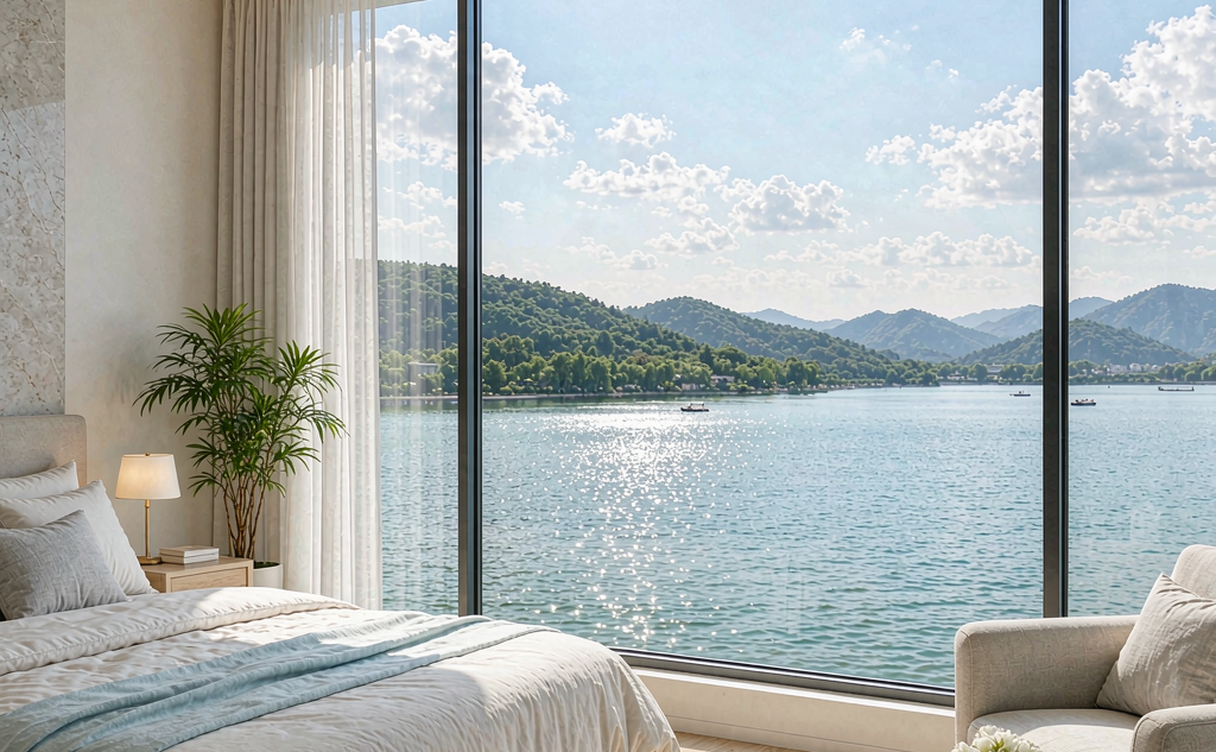
Wuxi Taihu lake resorts and the hot springs
The headline Wuxi Taihu lake resorts are the lakeside properties in Binhu, several of which pipe natural hot-spring water into indoor and outdoor pools. The Wuxi Taihu Hotel (a long-standing lakeside house) and the cluster of spring resorts around the Mashan peninsula offer rooms from ¥700–1,300 in peak season, with balcony views across the water and evening soak access. We send honeymooners and anyone escaping Shanghai’s summer here; the combination of a lake sunrise and a mineral soak is exactly what Wuxi does better than its flatter neighbors. For a Wuxi luxury hotels plan, the international chains — Marriott, Crowne Plaza, and Sheraton among them — operate in Liangxi and near the high-speed rail with deluxe rooms at ¥650–1,000 and dependable club lounges, which suit conferences and families who want a pool and a kids’ club.
A Wuxi hotel near Lingshan is best solved by the Nianhua Bay cultural town beside the Grand Buddha, where zen-style boutique resorts (wood, slate, and courtyard quiet) run ¥800–1,400 and let you walk to the Buddha before the coach crowds arrive. We rate an early-Lingshan morning as the best single hour in Wuxi, and only the Nianhua Bay properties deliver it on foot, which is why we route Buddha-focused travelers there rather than into the city center.
Wuxi budget hotels and station picks
Wuxi budget hotels follow the national pattern: Atour, Vienna, HanTing, and Home Inn pack the metro stops and the railway station approaches, with private rooms from ¥170–300 including breakfast. If you arrive at Wuxi Railway Station or Wuxi East (high-speed, ~30 minutes to Suzhou, ~45 to Shanghai), a station-area room saves a transfer; if your goal is the lake, book in Binhu and DiDi the last mile. One logistics note: the metro reaches the lake only partway, so Binhu stays usually mean taxis (¥15–35) for the final stretch. Non-Chinese passport holders should confirm “foreigner-friendly” (外宾接待) at smaller lakeside inns, as a few are not licensed for overseas guests. The lake itself is the draw, and our Taihu Lake guide explains the blossom windows and the ferry points, while our best hotels in Suzhou page is the natural eastern add-on once you have done the shore.
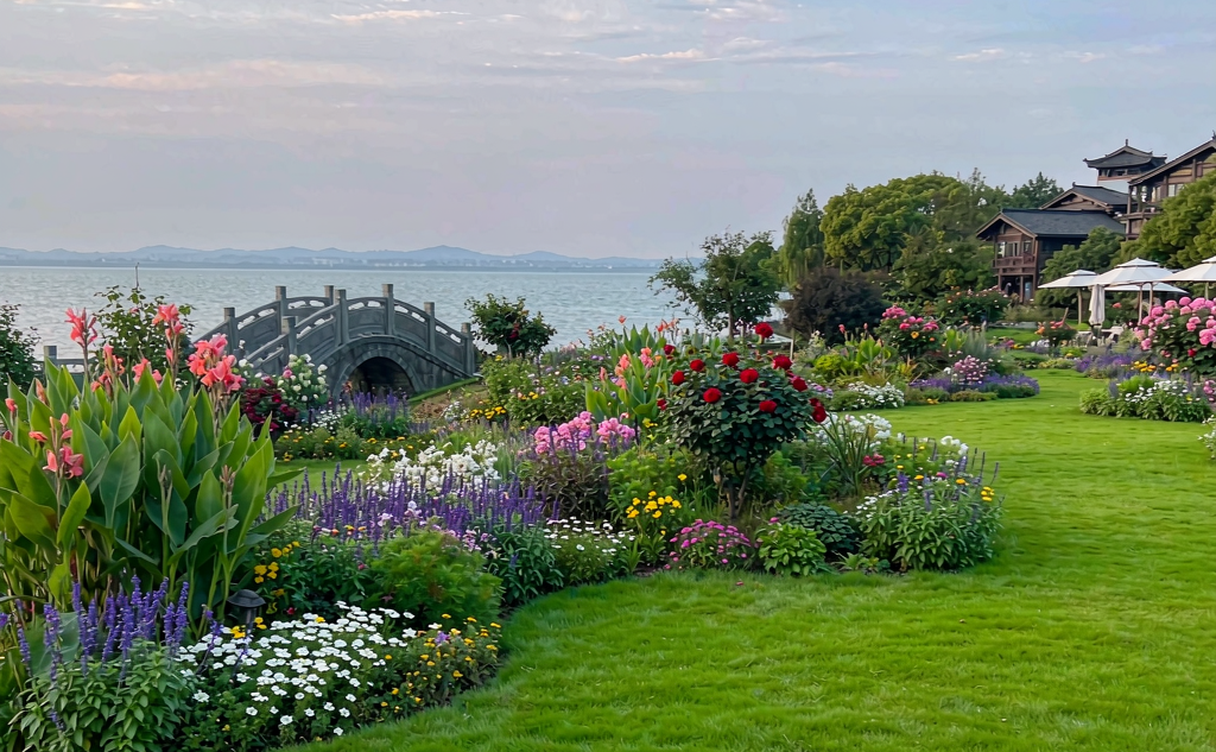
Timing, transport, and the price rhythm
The two standout windows are late March (cherry blossom season at Yuantouzhu — book months ahead) and October–November (clear air, warm lake days, thin crowds). Summer is hot and humid but good for the water and the springs; winter is grey and cold on the shore. Rates peak during the National Day holiday and the blossom weeks, when the same Binhu room can double; the soft weeks in April and November are the value window. Background on the lake itself is on Wikipedia’s Taihu page if you want the geography before you book. Within the Delta, high-speed rail is the backbone, and we usually pair a Wuxi night with a Suzhou garden stop to the east and a Hangzhou stay to the south, or fold the whole thing into a wider Hangzhou travel guide loop that also takes in a Suzhou travel guide finish for the classical gardens.
What to expect in the room
Wuxi hotels track the national standard: kettle, slippers, thermos of boiled water, and a free breakfast of congee, noodles, and pickles. The lake resorts add balconies and spring pools; the Nianhua Bay properties add courtyard calm and a tea set; city chains add gyms and club floors. One Wuxi-specific tip: in blossom season the lakefront rooms sell out first and the “lake view” inventory is limited, so book the view specifically rather than assuming the resort address guarantees it. We have had travelers arrive at a “Taihu” hotel only to face a car park, so we name the room type in writing when we book for clients, and we flag the same caution to anyone planning a spring visit on a tight weekend.
Booking tips that save money and stress
Rates in Wuxi are quoted per room with tax and breakfast included, and even the lake resorts throw in the morning buffet, so the headline price is the real price rather than a teaser. We tell blossom-season travelers to book the lake-view room with free cancellation the moment Yuantouzhu announces its dates, because those specific rooms sell out first and the walk-up price can double overnight. Loyalty members at the global chains often get a club-floor upgrade mid-week, which adds a lounge and a pool to a ¥700 city room for nothing, and at the lakeside houses a paid upgrade to a balcony room is almost always worth it for the sunrise. The biggest saving is timing: the same Binhu resort that runs ¥1,300 in late March or the National Day week drops to ¥800 in a quiet April or November week, easily enough to cover a spring soak and a lake dinner. For the Lingshan morning we treat a Nianhua Bay room as non-negotiable — the ¥200 premium over a city chain buys you the Grand Buddha before the coach crowds arrive, and that single quiet hour is the best value in the whole city. We also remind travelers that Wuxi’s two metro lines only reach partway to the lake, so a Binhu room that looks cheap on the map can cost an extra ¥30 each way in taxis — factor that into the “deal” before you book, and save the splurge for the one night you actually sleep by the water.
A quick neighborhood cheat-sheet
One night only: book Binhu for the lake, but accept a taxi to dinner. Blossom trip: lock the lake-view room months ahead and base at Yuantouzhu’s edge. Buddha focus: stay in Nianhua Bay and walk to Lingshan at opening. Rail hop: Liangxi near the station. We have refined this over many bookings, and the rule is consistent — the lake is why you came, so pay for the view once and save on the chain room the night you travel. Wuxi rewards travelers who treat the shore as the destination rather than a stopover.
Reserve the lake view early: compare resorts and live rates in our Suzhou travel guide area as a regional benchmark, especially if you are targeting the late-March cherry blossom window at Yuantouzhu.
Pair the lake with the gardens by following our best hotels in Hangzhou guide for a southern Delta finish, and time the stay around the blossoms and the Lingshan morning.
Want the whole shoreline? Read our Hangzhou travel guide to plan the southern leg, then add Wuxi and Suzhou for a relaxed Jiangnan route we recommend to first-timers.