

Shaoxing is the water town that many travelers read about in Lu Xun’s stories before they ever buy a ticket to China. In our experience it is also the most livable of the Jiangnan canal cities: small enough to walk, saturated with black-awning boats and stone bridges, and famous for the yellow wine (huangjiu) that has been brewed here for two millennia. The phrase best hotels in Shaoxing really means canal-side guesthouses for most visitors, and we almost always steer first-timers toward a room over the water rather than a generic tower, because the whole point of Shaoxing is the canal right outside your window.
Where to stay in Shaoxing: old town vs. new
Where to stay in Shaoxing comes down to the old city versus the modern edges. The Yuecheng District old town wraps Lu Xun’s former residence, Shen Garden, and the canals; this is where the Shaoxing water town hotels live, in converted lane houses a few steps from the boat jetties, and it is the right base for a first visit. The Keqiao District to the west is the textile-trade hub, with the newer international chain towers and the high-speed rail station; it is convenient for business or for an early train, but you trade away the atmosphere. We have based sightseers in Yuecheng and late-arriving rail travelers in Keqiao, and the split works cleanly across the trips we plan.
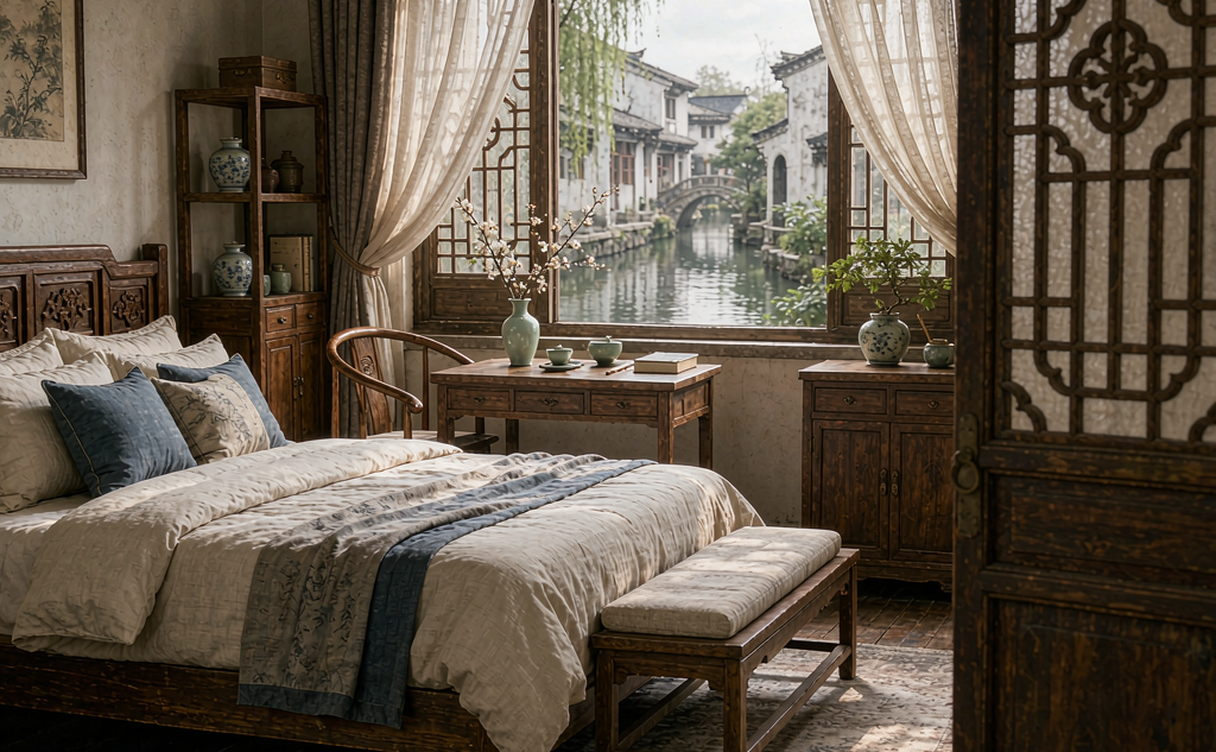
Shaoxing boutique guesthouses on the canal
The standout Shaoxing boutique guesthouses are the small conversions along the waterways — timber-framed lane houses with slate courtyards, paper lanterns, and a free pot of local yellow wine at check-in. The best-known is the Shaoxing Xianheng Hotel, a characterful property named for the inn in Lu Xun’s story “Kong Yiji,” with period furniture and a location steps from the former-residence lanes; rates run ¥500–900 for a courtyard room. We have sent writers and photographers here and they come back raving about the early-morning quiet, before the boat tours start and the lanes fill. For travelers who want the water-town feel without the longer trip to Wuzhen, these guesthouses are the move, and our Shaoxing travel guide maps exactly which lane holds which house.
A second tier of design hotels has appeared near the East Lake (Donghu) and the calligraphy landscapes, blending minimalist interiors with canal views at ¥400–650. They suit couples and remote workers who want calm and good Wi-Fi over heritage polish. A Shaoxing hotel near East Lake makes sense if your plan centers on the cliff-backed boat rides and the rock-garden scenery, which sit a short taxi east of the old town; a few mid-range and chain properties have opened in that belt, including international names near the Keqiao rail and business zone where deluxe rooms run ¥600–950.
Shaoxing budget stays and station picks
Shaoxing budget stays are easy to find: the domestic chains — Atour, Vienna, HanTing — line the metro and the station approaches, with private rooms from ¥170–300 including breakfast. If you arrive by high-speed rail (Shaoxing North, roughly 20–35 minutes from Hangzhou East), a station-area room saves a transfer; if you are here for the old town, book in Yuecheng and DiDi the last mile. We flag one quirk: the smallest lane guesthouses are not all licensed for overseas guests, so non-Chinese passport holders should confirm “foreigner-friendly” (外宾接待) before paying, the same caveat we give for every Jiangnan water town. The bigger water towns nearby are worth a side trip, and our Hangzhou Wuzhen water town guide and our Xitang water town guide cover where to sleep out there if you want to compare the set-pieces.
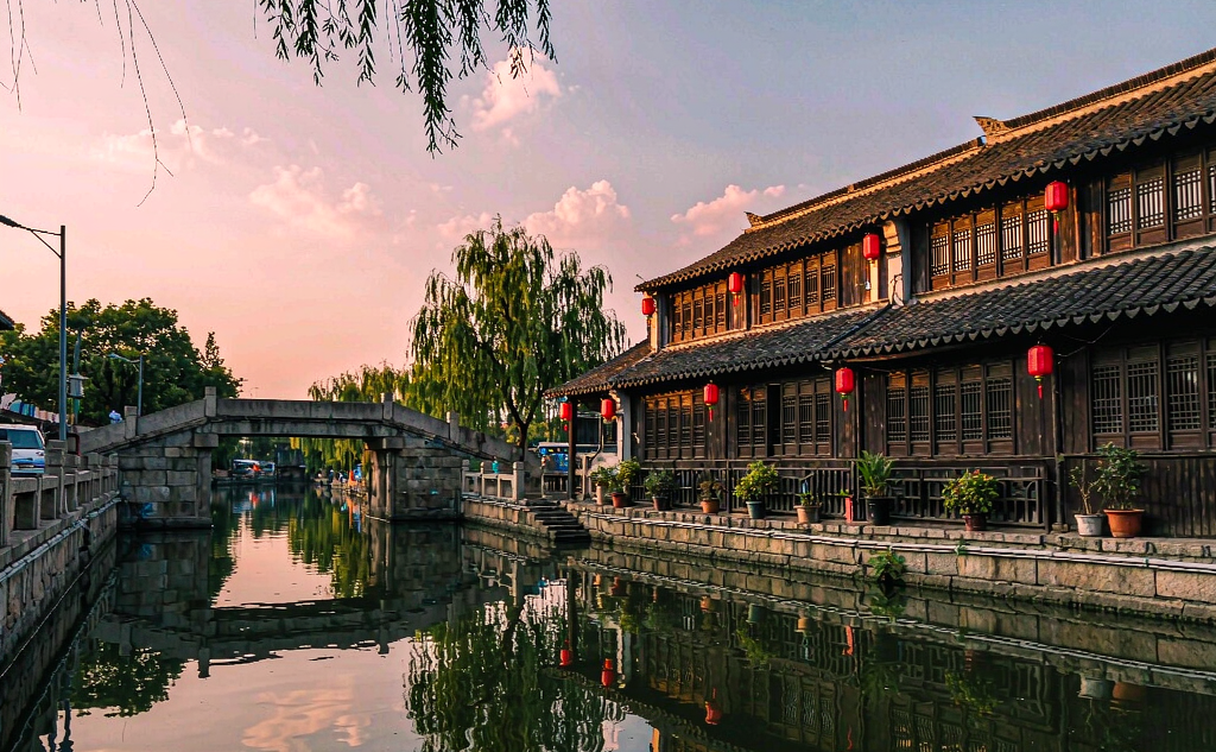
Pairing Shaoxing with the bigger canal towns
Shaoxing is the gentle introduction to the canal country, but visitors often want the grander set-pieces too. Wuzhen and Xitang, both in nearby Jiaxing, are easy add-ons and pair naturally with a Hangzhou base. For a broader Jiangnan loop we usually combine a Shaoxing night with a Hangzhou stay and a Suzhou stop, since the three cities sit within an hour or two of each other by high-speed rail. Background on the city itself is on Wikipedia’s Shaoxing page if you want the literary and wine-making history before you go. We usually tell first-timers to spend one night in Shaoxing itself and treat Wuzhen as a day trip, because the old town’s evening calm is the part you cannot get at the larger, busier towns.
Timing, transport, and prices
Spring (March–May) and autumn (September–November) are ideal: the canals are green, the humidity is manageable, and the yellow-wine festivals in autumn are worth timing around. Summer is hot and the boat queues lengthen; winter is quiet and atmospheric under low mist but cold in unheated old houses, so confirm your room has good heating. Rates peak during the October holiday and spring-break weekends; the soft weeks in April and November are the value window. Within the region, high-speed rail is the backbone — Shaoxing to Hangzhou is well under an hour, and a Hangzhou travel guide plan usually folds Shaoxing in as a half-day or overnight side trip. DiDi inside the city is cheap (¥10–25), and the black-awning boat rides are priced per segment (roughly ¥30–60) rather than per hour, so budget a little for the jitney that links the lanes to Shen Garden.
What to expect in the room
Shaoxing guesthouses trade some polish for character: expect kettle, slippers, and a thermos of boiled water as standard, plus that welcoming cup of warm yellow wine. The lane houses can be creaky and lightly heated in deep winter, so pack a layer. Chain properties are fully climate-controlled and include the usual free breakfast of congee, noodles, and pickles. Our standard advice: spend the atmosphere night in a canal guesthouse and the practical night (arrival or departure) in a chain near the station, and you get both sides of Shaoxing without compromise. The guesthouse breakfast is simpler but the location more than compensates, and we have yet to hear a traveler regret choosing the lane house over the tower once they have watched the morning mist lift off the water.
Booking tips that save money and stress
Rates in Shaoxing are quoted per room with tax and breakfast included, and the free morning congee is standard even at the lane guesthouses, so the price you see is the price you pay. We steer first-timers to book the canal room with a flexible cancellation, because the old town is small and a rainy spring weekend can make a second night indoors feel long — a refundable rate lets you slip out to Wuzhen instead. Loyalty members at the global chains near the rail station sometimes get a club-floor upgrade mid-week, which adds a pool and a lounge to a ¥700 room for free. The clearest saving is the shoulder season: the same lane house that runs ¥900 in the October holiday drops to ¥600 in a quiet April week, and the autumn wine festival is the one date we actually advise booking months ahead rather than hoping for a walk-up. Budget travelers should note that the station-area chains are half the price of the lanes and only 20 minutes from the center by DiDi, so a split stay is the smart play.
A quick neighborhood cheat-sheet
One night only: book a Yuecheng lane guesthouse and walk to Lu Xun’s residence at dusk. Two nights: add a chain near the station for a climate-controlled, well-heated second night in winter. Rail arrival: Keqiao saves a transfer. We have refined this over many bookings, and the pattern is consistent — the canal room is the memory, the chain room is the convenience — so split your stay and you keep both. Shaoxing rewards a slow pace, and the right room is the one where you can step straight from the threshold into the water town.
Reserve the canal-side room early: compare guesthouses and live rates in our best hotels in Hangzhou guide as a regional benchmark, since the best Shaoxing lane houses sell out on autumn weekends.
Build the water-town route with our Hangzhou travel guide as the spine, then add Shaoxing as an easy overnight before the bigger towns.
Want the grander set-pieces too? Add the Suzhou travel guide for the classical gardens and finish your Jiangnan loop with a canal-town crawl we recommend to first-timers.