

Deep in the karst hills of northwest Guangxi, Bama Yao Autonomous County has built an international reputation on a single remarkable statistic: an unusually high number of residents who live past 100. We first drove into Bama on a humidity-heavy afternoon, expecting a quiet backwater, and instead found wellness seekers from across China breathing deeply at cave mouths, sipping spring water, and walking the green riverside paths that locals credit for their longevity. On our last visit, a 102-year-old woman in the longevity village poured us tea and laughed at how many cameras had pointed at her over the years. That mix of genuine local tradition and earnest health tourism is what makes Bama worth the journey.
This guide explains when to go, how to arrive without a car, what the longevity story actually involves, and how to build a restful itinerary that pairs Bama with the bigger draws of Guangxi.
When is the best time to visit Bama
The best time to visit Bama is autumn, from October to November, and spring, from March to April. Both windows bring mild temperatures, lower humidity, and clear river views, which is exactly what the wellness crowd comes for. We generally steer clients away from July and August, when Guangxi turns hot and sticky and the caves feel crowded; the rainy season also runs from May to September, with afternoon downpours that can wash out a riverside walk.
Winter in Bama is short and mild compared with northern China, with daytime highs often in the teens Celsius, so it works as an escape from colder cities. Whenever you travel, pack light layers: mornings along the Panyang River are cool and the caves stay a constant, slightly chilly temperature year-round. Locals told us the “best air” is right after a rain, when the negative-ion counts at the cave mouths spike, and we noticed the same calm that keeps drawing repeat visitors back.
How to get to Bama
Learning how to get to Bama is the first hurdle, because the county has no airport and no direct high-speed station of its own. The nearest airport is in Nanning, about a three to four hour drive, and the smaller Baise Airport is roughly two hours away by car. The most efficient rail option is the Guiyang-Nanning high-speed line, which put Hechi West Station within about 90 minutes of Bama; from Hechi West you take a hired car or a shuttle bus for the final stretch.
For most travelers, the practical route is a high-speed train to Nanning, then a long-distance bus to Bama that takes around four hours and costs roughly 80 to 110 yuan. We have also arranged private transfers straight from Nanning or from Guilin for clients who want to combine the two, a drive of about five to six hours that breaks up nicely with a stop near the Li River. Once in Bama, the scattered sites are best reached by car or e-bike, since public transport between the longevity village, the caves, and the river is infrequent and slow.
Things to do in Bama
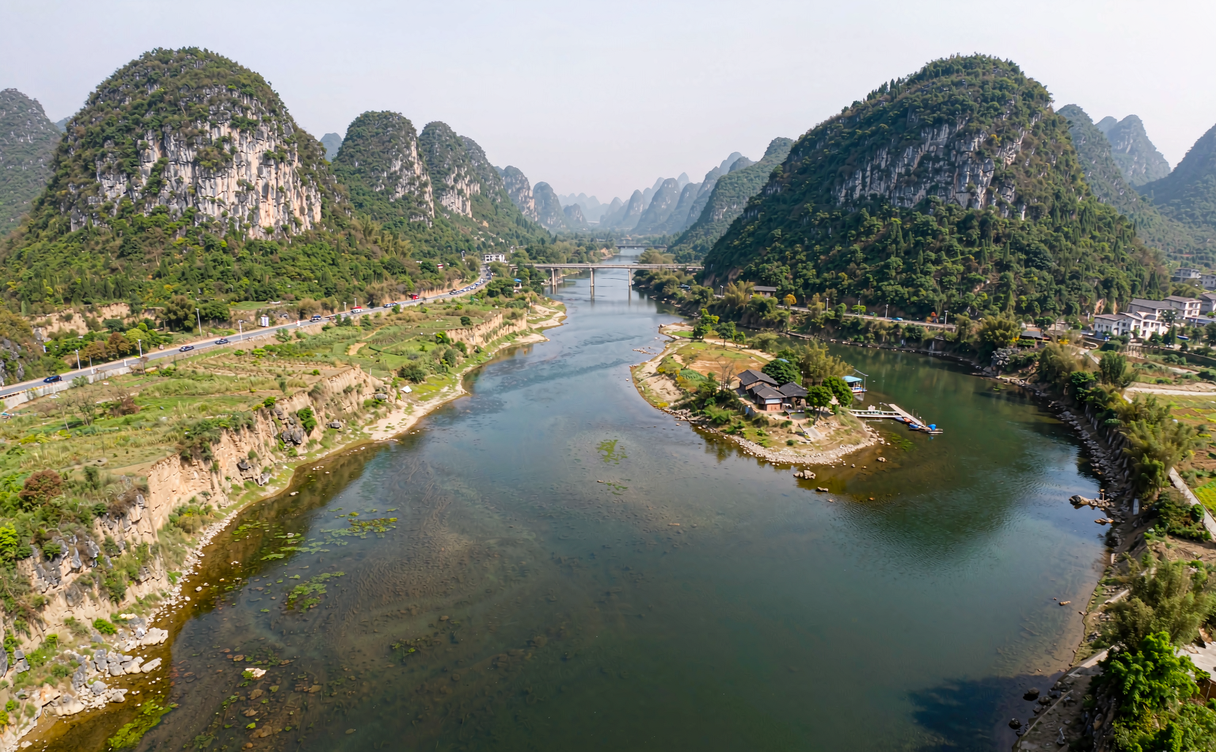
The list of things to do in Bama centers on slow living rather than sightseeing sprints. The Panyang River is the scenic backbone: a jade-green karst stream where you can take a short boat ride, watch cormorant fishermen, and stroll the paved paths that wind between the hills. Bai Mo Cave, the so-called “Hundred Devils Cave,” is the spiritual heart of the wellness scene, a vast limestone chamber where visitors sit for hours breathing the air they believe is unusually rich in negative ions. Entry is usually 80 to 100 yuan.
Beyond the cave, the longevity village of Bapantun and the nearby settlement of Poyue have become low-key wellness communities where retirees rent rooms for the season, join morning exercise groups, and eat a simple diet of coarse grains, river fish, and local vegetables. We joined a tai chi group one misty morning and came away convinced that the real attraction is the pace, not any single monument. For a different view, the Shanjia area offers rice terraces and quiet lanes where children still ride bicycles to school.
The Bama longevity village
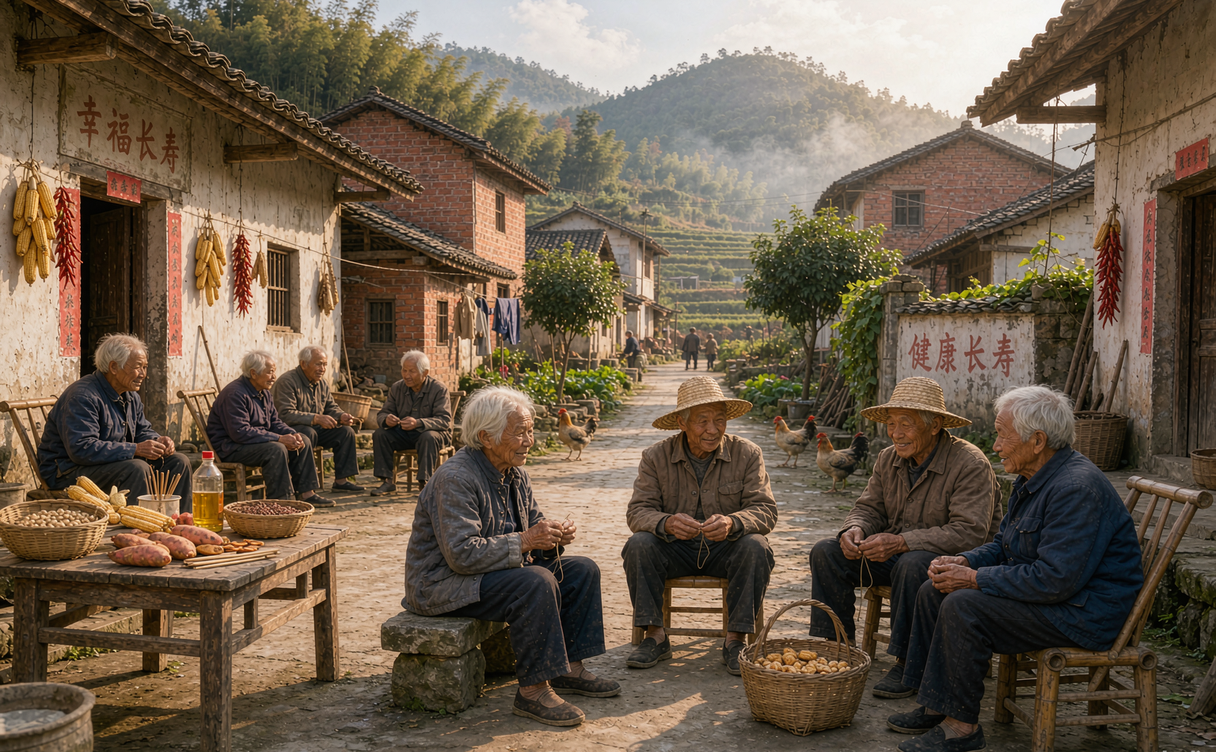
No Bama trip is complete without understanding the Bama longevity village story, because it shapes everything you will see. Local centenarians attribute their health to a combination of clean mountain air, mineral-rich spring water, a low-fat diet, and a calm, communal lifestyle. Chinese researchers have studied the area for decades, and the county now markets itself as an “international longevity region,” which draws both scientists and tourists.
We encourage visitors to approach this with respect rather than spectacle. The families we met were gracious but tired of being treated as exhibits, so we recommend buying tea or handicrafts directly from them instead of just photographing. A small donation to the village welfare fund is appreciated and goes further than another selfie. The truthful takeaway is that Bama’s lessons are ordinary, good diet, gentle exercise, strong community, and clean surroundings, which any traveler can borrow without buying a ticket.
Bama wellness tourism in practice
Bama wellness tourism is more lifestyle than spa. Visitors come to “breathe the ions” at Bai Mo Cave, to drink from designated spring outlets, and to walk barefoot on the cool river stones that locals believe improve circulation. You will see people hanging out at the cave mouth with folding chairs, reading or dozing, treating the limestone chamber like a natural waiting room. It sounds odd until you sit there yourself and notice how quickly your shoulders drop.
If you want a more conventional treatment, the county town has hot spring resorts where a soak costs around 100 to 180 yuan and includes access to indoor and outdoor pools fed by local geothermal water. We suggest budgeting a half-day for the springs after a morning at the cave, then a quiet dinner of river fish and bitter greens. Our Yangshuo countryside guide covers a different but complementary style of Guangxi slow travel if you want to extend the relaxed theme.
Where to stay and what it costs
Bama is built for long, slow stays, so accommodation ranges from basic guesthouses at 120 to 250 yuan a night to comfortable hot spring resorts at 400 to 800 yuan. Wellness seekers often rent a room by the month in Poyue or Shanjia for 1,500 to 3,000 yuan, which includes simple meals. We usually book clients into a county-town hotel for one or two nights and then a riverside guesthouse for the calm.
A realistic daily budget for two people, with entrance fees, a driver, meals, and a mid-range room, runs about 600 to 1,000 yuan. The caves and river are the main ticketed costs; everything else is refreshingly cheap. Mobile payment dominates, so set up Alipay or WeChat Pay before you arrive, and carry some cash for the village stalls that still operate offline.
A Bama travel itinerary
Here is the Bama travel itinerary we recommend, designed for two to three unhurried days. Day one: arrive from Nanning or Hechi West, check in, and take an easy riverside walk along the Panyang River at sunset. Day two: morning at Bai Mo Cave for the ion “treatment” and a spring-water stop, followed by an afternoon in the longevity village and a hot spring soak before dinner. Day three: a slow drive to the Shanjia terraces or a transfer onward to Guilin or Beihai.
For travelers extending the trip, our Li River guide explains the classic Guilin-Yangshuo cruise, while our Nanning travel guide and our Beihai travel guide cover the two cities most visitors use as gateways in and out of Guangxi.
Bama is less a destination than a state of mind, a place that asks you to slow down and notice the air. For background on the county and its demographics, see the overview at Bama Yao Autonomous County on Wikipedia. We have sent stressed-out city dwellers here and watched them leave a few pounds lighter and a few breaths calmer, which is about the best review a quiet corner of China can earn.