

I almost skipped Wulong, Chongqing, China on my first Sichuan–Chongqing loop. I am glad I didn’t. This county, two hours southeast of central Chongqing, holds some of the most theatrical karst landscape in the country: a natural stone arch big enough to swallow a stadium, a sinkhole with vertical cliffs, and the underground galleries of Furong Cave. A Wulong Chongqing travel guide is overdue in my notebook, because the place rewards travelers who actually leave the city and chase the geology.
What Is Wulong Karst, Chongqing?
Wulong is part of the South China Karst, a UNESCO World Heritage area. The headline sights are concentrated in the Wulong Karst National Geology Park (武隆喀斯特): Three Natural Bridges (天生三桥), Longshuixia Fissure (龙水峡地缝), and the Furong Cave system a bit farther out. I covered all three in a single long day with an early start, but two days is more comfortable.
The UNESCO status is worth knowing before you go — you can read the official listing at UNESCO’s South China Karst page, which explains why this limestone terrain is protected and what makes the bridges geologically rare.
Best Time to Visit Wulong
The best time to visit Wulong is April–June and September–November. I went in late May and the gorges were green, the rivers full, and the tourist pressure light. Summer (July–August) brings heavy rain and the risk of fissure closures after storms; winter is cold but the bridges dusted with frost are spectacular and nearly empty.
If you are sequencing multiple Chinese regions, a seasonal China guide helps you avoid the July heat that makes the fissure hike miserable.
How to Get to Wulong
Central Chongqing to Wulong:
- High-speed train: Chongqing North (重庆北) or Chongqing East to Wulong Station (武隆站). About 1 hour 40 minutes, RMB 54–79 second class. This is what I used — reliable and scenic.
- Bus: Four-hour coaches leave Chongqing’s Longtou Temple (四公里) hub, RMB 60. Slower and less comfortable than the train.
- Private car/Didi: Around RMB 500–700 one way; only worth it if splitting with three friends and carrying gear for the cave.
From Wulong Station to the scenic area (仙女山镇, Xiannüshan town, the gateway), take the shuttle bus (RMB 10, 30 min) or a taxi (RMB 40–60). Buy the through ticket at the station tourist desk to skip the queue.
For the rail booking mechanics, a good foreigner train guide walks you through buying with a passport and avoiding the reseller markups.
Things to Do in Wulong
1. Three Natural Bridges (天生三桥)
Three massive limestone arches — Tianlong, Qinglong, and Heilong — strung along a green valley. Entry is RMB 95 plus a mandatory sightseeing elevator/ shuttle (RMB 40 bundled). The walk descends about 500 steps into the gorge and loops back up. I spent two hours here; the scale is genuinely humbling.
2. Longshuixia Fissure (龙水峡地缝)
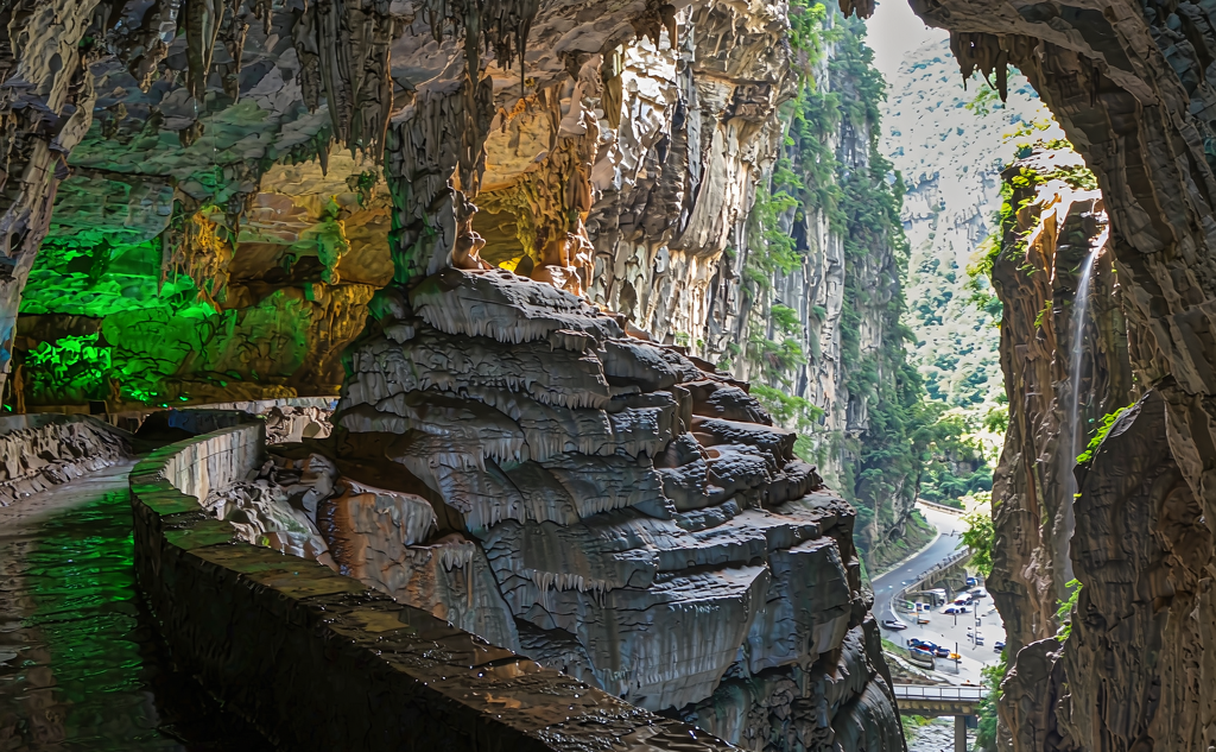
A narrow slot canyon with waterfalls and metal walkways bolted to the cliff. Tickets RMB 105. It is cooler than the bridges and great on a hot day. Note: closes during heavy rain for safety.
3. Furong Cave (芙蓉洞)
The underground palace of stalactites, 40 km from the bridge area. See my dedicated Furong Cave guide for the full ticket and logistics breakdown.
4. Fairy Mountain (仙女山) grassland
If you want a softer landscape, the alpine meadow at 1,900 m has ponies and summer flower fields. Cable car RMB 50. I treated this as a recovery half-day after the gorges.
5. Impression Wulong (印象武隆)
A mountain-staged folk performance by the same team behind the Zhangjiajie and Yangshuo shows. Tickets RMB 238–488, nightly in season.
Wulong Itinerary
Day 1: Train from Chongqing (arrive ~10:00), drop bags in Xiannüshan, do Three Natural Bridges + Fissure (allow 5 hours), evening Impression Wulong.
Day 2: Morning Fairy Mountain, afternoon train to Furong Cave area or back to Chongqing.
If you want to pair this with other natural wonders, Wulong karst ranks among the standout day trips from a major city.
Food in Wulong
Wulong sits in Chongqing territory, so the food is fiery. Try Wulong tofu (羊角豆干), a chewy dried tofu snack from Yangjiao town (RMB 10–15 a bag), and heated tripod pot (碗碗羊肉), a local mutton stew (RMB 45/bowl) that saved me on a cold fissure morning.
For the bigger picture on the regional cuisine, the Chongqing food guide covers the hotpot and noodle culture you’ll meet here, and if your loop extends west, the Chengdu food guide maps the milder Sichuan sibling across the province line.
Photography and What to Pack
Wulong rewards patient photographers. At the Three Natural Bridges, the light is best between 09:00 and 11:00, when the sun clears the eastern rim and lights the arch interiors; I set up a tripod at the Tianlong overlook and waited for a tour group to pass. The Fissure is dark and misty, so bring a fast lens (f/2.8 or wider) and a small travel tripod — my phone struggled there without a stabiliser.
Pack layers even in summer: the gorge bottom sits about 10°C cooler than Xiannüshan town, and the cave-fed spray on the Fissure walkway soaks unsuspecting shorts. I carried a packable rain shell, a refillable bottle (there are fill stations at the bridge rest area), and grippy shoes. Drones are banned across the geology park, so leave yours at the hotel and rely on the viewpoints instead. I also carried spare camera batteries because the cool, damp gorge air drains them faster than the city heat ever did, and a small headlamp helped on the walk-back steps after the cave.
Where to Stay and Booking
Xiannüshan town has the most hotels: chains like Vienna and local inns run RMB 220–450/night. I stayed at a mid-range inn for RMB 280 and walked to the shuttle stop in five minutes. Within the scenic area itself, options are limited and pricier (RMB 600+), so sleep in town and shuttle in.
The through-ticket covering bridges + fissure + shuttle is RMB 235 when bought together — cheaper than separate. Buy at the station or official WeChat mini-program. During the May and October holidays the bridges cap daily entries, so reserve a morning slot a day ahead.
Practical Notes
- Wear real hiking shoes; the fissure walkways are wet.
- Mobile signal inside the caves and deep gorge is patchy — download maps offline.
- English signage is minimal; a translation app and your hotel’s Chinese name on paper help.
Wulong is the kind of place that makes a city-heavy China trip feel complete. One day of arches and fissures, and you understand why this corner of Chongqing earns its UNESCO line.