

Harbin wears its history on its façades. The capital of Heilongjiang Province was built by Russian railway engineers at the turn of the 20th century, and the result is a Chinese city that looks, at street level, like a slice of St. Petersburg dropped onto the Manchurian plain. We have sent travelers here in every season, but the city is undeniable in deep winter, when the Harbin Ice and Snow World turns the Songhua River’s ice into a labyrinth of glowing towers. A Harbin travel guide is for people who want the famous festival and the quieter, year-round character beneath it.
The winter headline
The Harbin International Ice and Snow Sculpture Festival opens each January 5 and runs through February, though the Ice and Snow World park usually opens in late December once the ice is thick enough. Entry is around ¥328, and it is worth every yuan after dark, when the carved castles are lit from within and the whole site glows blue and violet. Go after 4 p.m. to catch both daylight and the evening light show, and wear insulated boots — you will stand on ice for hours, and the cold rises through thin soles faster than you expect.
Things to do in Harbin
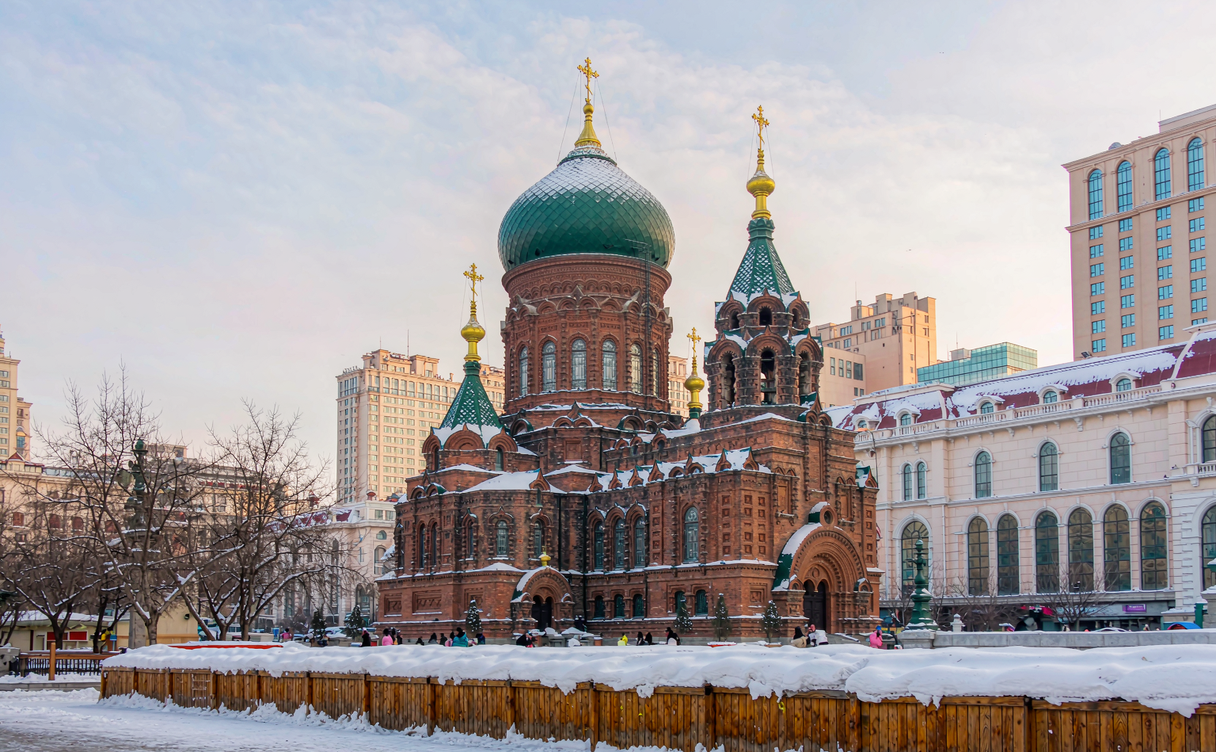
Beyond the ice park, Central Street (Zhongyang Dajie) is the city’s spine: a pedestrian avenue of cobblestones and pseudo-European buildings, lined with the Madie’er ice-cream stands where locals eat cones at −20°C as a point of pride. At its southern end stands the Flood Control Monument on the Songhua River bank, and a short walk east brings you to Saint Sophia Cathedral, a Byzantine-domed former Russian Orthodox church now housing a modest architecture museum (¥30). We recommend visiting Sophia at 8 a.m. before the tour buses, when the square is quiet and the pigeons are the only company.
Across the river, Sun Island (Taiyangdao) hosts the snow-sculpture exhibition in winter and a leafy park in summer, with entry around ¥30–¥50 depending on season. The Siberian Tiger Park on the north bank lets you view endangered Amur tigers from a caged bus (¥90); it is touristy but genuinely memorable, especially with cubs in summer, and the guides explain the conservation program with more seriousness than the gift shop suggests.
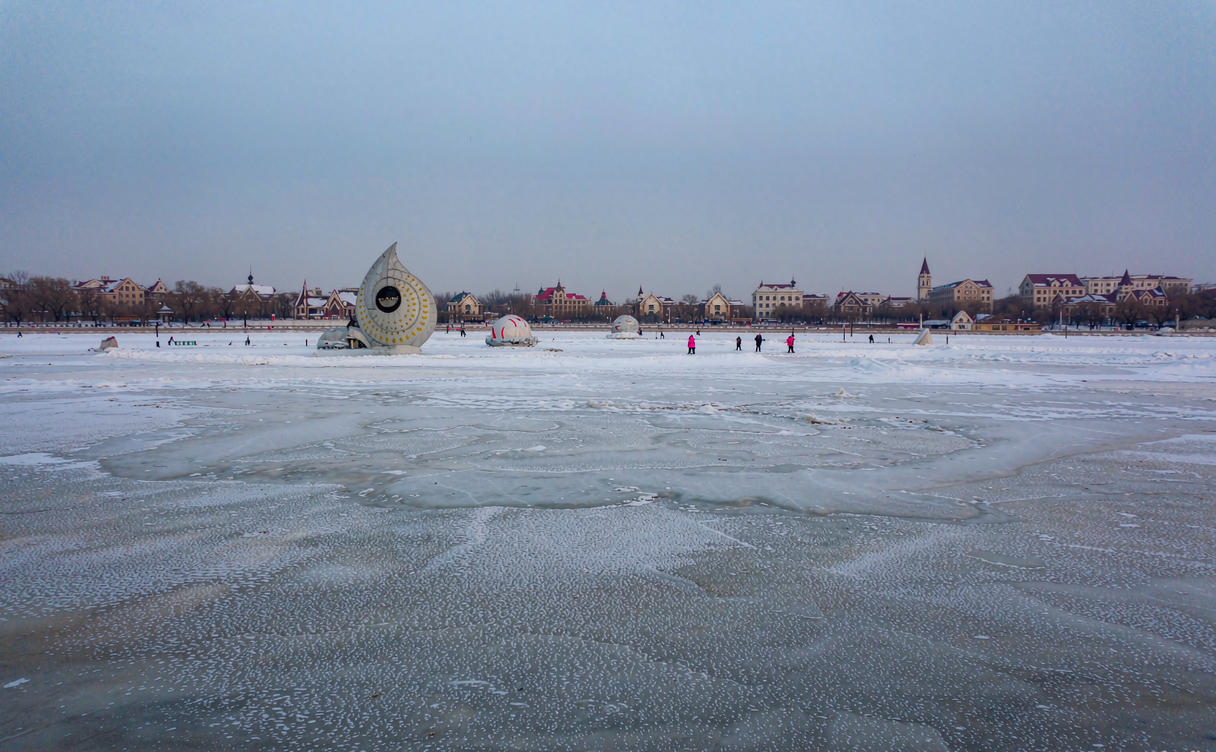
Back on the Songhua, the winter swimmers are a Harbin institution. When the river freezes, locals cut a rectangular hole in the ice and plunge in daily, emerging red-faced to applause from onlookers with thermoses. You do not need to join them — watching from the bank with a hot roasted sweet potato (¥5) is entertainment enough, and it explains a lot about the local relationship with cold. The swimming spot sits a ten-minute walk east of the Flood Control Monument, and the best show is at midday when the sun is highest and the steam off the open water is thickest.
Food is a Harbin specialty all its own. The Harbin red sausage (li’daosi) is sold by the string at Qiaonan market for about ¥40 a jin, and the dark Russian-style lieba bread is a breakfast staple. For a sit-down meal, Dongbei stews of pork, vermicelli, and pickled cabbage run ¥60–¥90 for two. Our Harbin food guide goes deep on where to eat, but the short version is: eat the sausage, eat the ice cream, and try the frozen pear for dessert — it sounds odd and tastes like a sweet, icy apple.
How to get to Harbin
Harbin is a major hub. Harbin Taiping International Airport has direct flights from Beijing, Shanghai, Guangzhou, and Seoul. By rail, the high-speed line from Beijing takes about 5 hours (second class ¥550), and there are frequent connections from Changchun (1 hour) and other Jilin cities. Within the city, the metro reaches both the airport link corridor and Central Street, but for the ice park most visitors take a taxi or the dedicated shuttle bus (¥10–¥20).
Because the city fills during the festival, book early. Our best hotels in Harbin guide highlights stays within walking distance of Central Street, which saves frozen taxi waits at night. If you are extending a northeast loop, our Dalian travel guide shows how to add a coastal city for contrast after the snow, with seafood instead of sausage and a harbor instead of a frozen river.
Best time to visit Harbin
The best time to visit Harbin for ice is December through February, with January the peak for both the festival and the coldest, clearest conditions. Temperatures commonly fall to −20°C to −25°C, so this is a trip that demands real winter clothing — not a fashionable coat but proper insulated layers, gloves, and a hat that covers the ears. We secretly love July and August, when Harbin’s nickname “Ice City” flips and it becomes one of China’s coolest summer retreats, with highs around 25°C and open-air music festivals along the river. Spring and autumn are short and pleasant but lack the signature spectacle.
Harbin winter travel tips from the field
A few notes we always share. Rent or buy proper snow boots and touchscreen gloves before you arrive; the park’s ice surface is merciless on sneakers. Keep your phone warm in an inside pocket — batteries die fast in the cold, and you will want it for photos of the lit towers. The Ice and Snow World closes sections in extreme wind chill, so buy tickets for a forecast-clear evening, and arrive before 4 p.m. to make the most of the daylight-to-dark transition.
Carry cash for the smaller sausage and ice-cream vendors, though most major spots take Alipay and WeChat. A standard room in central Harbin runs ¥300–¥600 in winter high season, dropping to ¥200–¥350 in summer. And build in a rest day: the cold is exhausting, and a slow morning on Central Street with hot coffee is the best cure for ice-park fatigue.
Where Harbin fits in a China trip
Harbin anchors any Heilongjiang or broader northeast itinerary, and pairs naturally with smaller cities for winter sports. If your wider plan leans toward China’s iconic landmarks, the Great Wall makes a natural pairing with these northern cities, helping you balance famous history with quiet frontier towns. Travelers who want a southern green contrast after the snow will find karst hills and rice terraces a world away from the frozen Songhua.
For a broad factual overview of the city’s Russian roots and geography, Harbin is detailed on Wikipedia, including its development as a railway town.
A note on year-round eating
Harbin’s winter food scene gets the attention, but the city eats well in every season, and the regional table rewards a slower look than most visitors give it. The breakfast streets near the old Orthodox church open at 6 a.m. with stacks of lieba, bowls of soybean milk, and vendors frying youtiao; a full morning meal costs under ¥20 and is the best way to meet the city before the tour buses roll in, when the steam from the noodle pots is the only traffic.